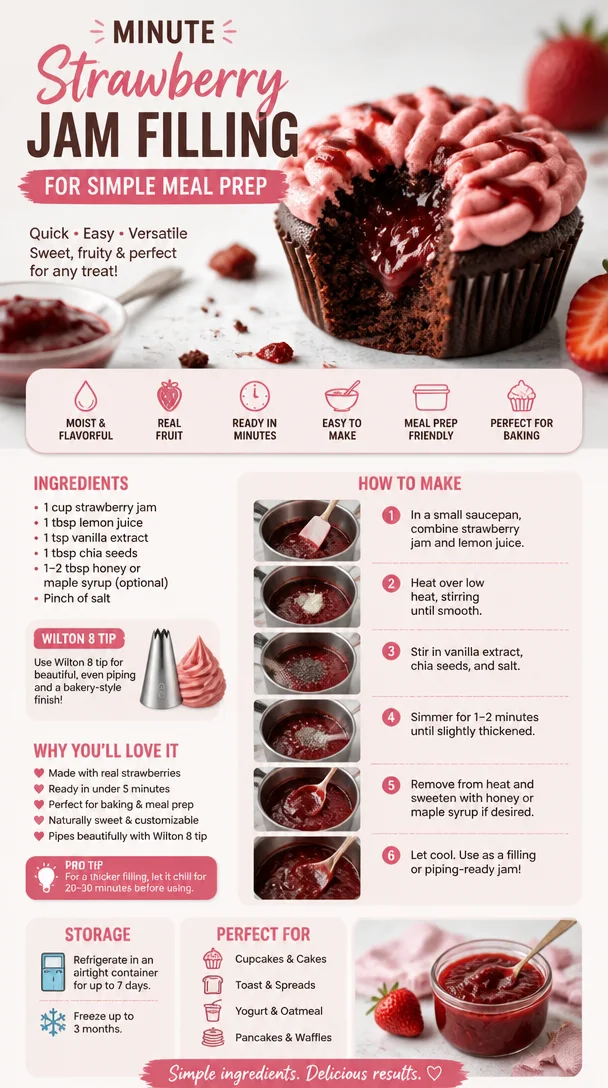
Minute Strawberry Jam Filling for Simple Meal Prep
The Sweetness of Homemade Strawberry Jam Filling: A Heartfelt Guide
Welcome back to my cozy kitchen! It’s Olivia Bennett here, guiding you through a delightful culinary journey that celebrates one of my favorite treats—homemade strawberry jam filling. There’s nothing quite like the joy of spreading freshly made jam on a warm scone, a slice of toasted bread, or even dolloping it atop a luscious cake—yum! Today, we’ll explore not only how to make this delicious filling from scratch but also why it’s a beloved tradition in many homes (including mine).
The scent of strawberries simmering on the stove reminds me of lazy summer afternoons spent in my grandmother’s kitchen. As a child, I would watch her work with a twinkle in her eye, guiding me through each step with love and laughter. "The secret," she would say, "is to use the ripest strawberries you can find. They’re nature’s candy!" The sweet, sticky mixture bubbling away would fill the room with a fragrance that made my mouth water, and I couldn’t wait to taste the final product.
Today, let’s keep that nostalgia alive as we create a vibrant strawberry jam filling that’s sure to become a treasured recipe in your home as well. Not only does it make for a fantastic addition to pastries, desserts, and breakfast items, but it also carries that personal touch that store-bought versions simply can’t compete with. Grab your apron, and let’s get cooking!
A Taste of Nostalgia: My Strawberry Jam Story
Growing up, summer meant strawberry picking with my family. My siblings and I would race each other through the rows of berry-laden plants, eager to fill our baskets with plump, juicy strawberries. It was a tradition that brought us closer, filled our afternoons with sunshine, and rewarded us with the sweetest of treats.
Once we had our bounty, we’d head home, sweaty and giggly, only to dive into my grandmother’s kitchen, where the magic happened. I recall the excitement of watching her cook the strawberries down with sugar, their color deepening into a ruby red as the sweet scent enveloped us. Every spoonful of that warm strawberry jam seemed to hold the essence of our summer adventures, and each jar we sealed was a treasure that would last through the year.
Today, I still make strawberry jam using the same recipe, infused with those delightful memories, and I can’t wait for you to create your own unforgettable experiences with this filling!
Ingredients
Here’s what you’ll need to whip up this luscious strawberry jam filling:
- 2 pounds fresh strawberries: The stars of the show! Look for ripe, sweet strawberries for the best flavor. If strawberries aren’t in season, you can substitute with frozen, thawed strawberries, but ensure they retain some natural sweetness.
- 1 cup granulated sugar: This sweetness balances the tartness of the strawberries. Feel free to use less sugar or sugar substitutes like honey or maple syrup if you prefer.
- 1 tablespoon lemon juice: This adds brightness and helps preserve the color of the strawberries. Freshly squeezed lemon juice is best, but bottled lemon juice works too.
- 1 teaspoon vanilla extract (optional): A touch of vanilla enhances the flavors! You can even use almond extract for a slightly different twist.
- 1 packet fruit pectin: Pectin helps the jam set perfectly. You can use either powdered or liquid based on your preference, and some brands even come low-sugar options.
Step-by-Step Instructions
Step 1: Prepare the Strawberries
Start by washing the strawberries thoroughly under cold water. Remove the green tops and hull the strawberries—this means cutting away the stem and the white part just beneath it. You can slice them in half for quicker cooking, or if you prefer a chunkier texture, leave them intact.
Chef’s Tip: Use a paring knife to hull the strawberries easily, creating a nice, clean cut without wasting fruit!
Step 2: Macerate the Strawberries
Place your cleaned strawberries in a large mixing bowl. Sprinkle the cup of granulated sugar over them, and add the tablespoon of lemon juice. Gently toss the strawberries until they’re all coated in sugar. Let them sit for about 30 minutes. This step draws out the natural juices from the fruit and creates a syrupy mixture that is bursting with flavor!
Chef’s Insight: This process of maceration not only enhances the strawberry flavors but also allows the sugar to dissolve, leading to a smoother jam.
Step 3: Cook the Mixture
Transfer the macerated strawberries into a large saucepan over medium heat. Bring the mixture to a gentle boil, stirring frequently to prevent sticking. Once boiling, add the pectin packet, mixing well to incorporate it into the strawberries effectively.
Chef Hack: If you prefer a smoother consistency, consider using an immersion blender to purée the strawberries to your desired texture!
Step 4: Let it Simmer
Allow the mixture to simmer for about 15-20 minutes, continuing to stir frequently. You’ll notice the mixture thickening and bubbling up like magic. Keep an eye on it to avoid any sticking or burning.
Pro Tip: To check if your jam is ready, place a small amount on a chilled plate. If it holds its shape after a minute, it’s time to turn off the heat!
Step 5: Bottle It Up
Once your jam has reached the desired consistency, carefully ladle it into sterilized jars. Leave a little headspace at the top. Seal the jars with lids while the jam is still hot, and invert them for a few minutes to help create a vacuum seal.
Chef’s Note: Proper sealing will help preserve the freshness of your jam for longer, and these little jars make for lovely gifts!
Step 6: Cool and Store
Let your jars cool completely at room temperature before storing them in the fridge or pantry. Your homemade strawberry jam filling is now ready to shine in all your favorite recipes!
Serving Suggestions
When it comes to serving your homemade strawberry jam filling, the possibilities are endless! Spread it generously on toast, use it as a layer in sponge cakes, or fill pastries for a dessert that will have everyone returning for seconds. You can also swirl it into yogurt or oatmeal for a splash of fruity goodness. If you’re feeling adventurous, try it in savory dishes, like glazing grilled chicken or pork to add a sweet twist!
Recipe Variations
Here are a few fun variations to make your strawberry jam uniquely yours:
- Strawberry Lemon Jam: Add an extra zing by increasing the lemon juice to 2 tablespoons.
- Balsamic Strawberry Jam: Stir in a splash of balsamic vinegar for a sophisticated touch that pairs beautifully with cheese.
- Spiced Strawberry Jam: Infuse with spices like cinnamon or ginger for a warm flavor profile—perfect for fall!
- Strawberry-Basil Jam: Fold in a handful of fresh basil leaves at the end of cooking for a fragrant herbaceous twist.
Chef’s Notes
Every time I make this strawberry jam filling, it’s a warm reminder of love, family, and tradition. Some days, I can hear my grandmother’s voice in my head, guiding me through the steps while I craft this rich blend of flavors. Over the years, I’ve tweaked this recipe to suit my preferences—adding a hint of vanilla one day or tossing in a few raspberries on another for fun.
Cooking is about creativity and exploration, so don’t hesitate to make it your own!Each jar of jam captures not just flavors but also sweet moments, waiting to be shared with those you love.
FAQs and Troubleshooting
-
Why didn’t my jam set?
If your jam is too runny, you may need to cook it a little longer, letting it reach a higher temperature for more evaporation. If using pectin, make sure you followed the quantity correctly! -
Can I use frozen strawberries?
Yes, frozen strawberries are a great option! Just thaw them completely and drain any excess liquid before following the normal steps. -
How long does this jam last?
Properly sealed and stored in a cool place, your homemade strawberry jam can last up to a year in the pantry and a few months in the fridge after opening. -
Is it safe to use jars that don’t seal?
If a jar doesn’t seal, it’s best to refrigerate it and use it within a few weeks. You can also reprocess the jam into a new jar with a new lid for better sealing.
Nutritional Info
Though I haven’t provided specific nutritional information, homemade strawberry jam is generally light and can be enjoyed in moderation. It provides a good dose of vitamin C from the fresh strawberries, with sugar adding sweetness to your meals.
With this guide, you’re now equipped to bring the sweetness of homemade strawberry jam filling into your kitchen. I hope you recreate these cherished memories and make it a family tradition of your own. Happy cooking, my fellow foodies! 🍓💖
Print
Homemade Strawberry Jam Filling
- Total Time: 50 minutes
- Yield: 4 cups 1x
- Diet: Vegetarian
Description
A delightful homemade strawberry jam filling, perfect for spreading on toast or using in desserts, capturing the essence of summer in every jar.
Ingredients
- 2 pounds fresh strawberries
- 1 cup granulated sugar
- 1 tablespoon lemon juice
- 1 teaspoon vanilla extract (optional)
- 1 packet fruit pectin
Instructions
- Prepare the strawberries by washing them and removing the green tops.
- Macerate the strawberries with sugar and lemon juice, then let sit for 30 minutes.
- Cook the strawberries over medium heat until boiling, then add the pectin.
- Let the mixture simmer for 15-20 minutes, stirring frequently.
- Bottle the jam into sterilized jars, leaving headspace.
- Cool the jars at room temperature before storing them.
Notes
For variations, consider adding more lemon juice, balsamic vinegar, or spices for unique flavors.
- Prep Time: 30 minutes
- Cook Time: 20 minutes
- Category: Spread
- Method: Canning
- Cuisine: American
Nutrition
- Serving Size: 2 tablespoons
- Calories: 50
- Sugar: 12g
- Sodium: 1mg
- Fat: 0g
- Saturated Fat: 0g
- Unsaturated Fat: 0g
- Trans Fat: 0g
- Carbohydrates: 13g
- Fiber: 1g
- Protein: 0g
- Cholesterol: 0mg
Keywords: strawberry jam, homemade jam, jam filling, preserves, summer recipes
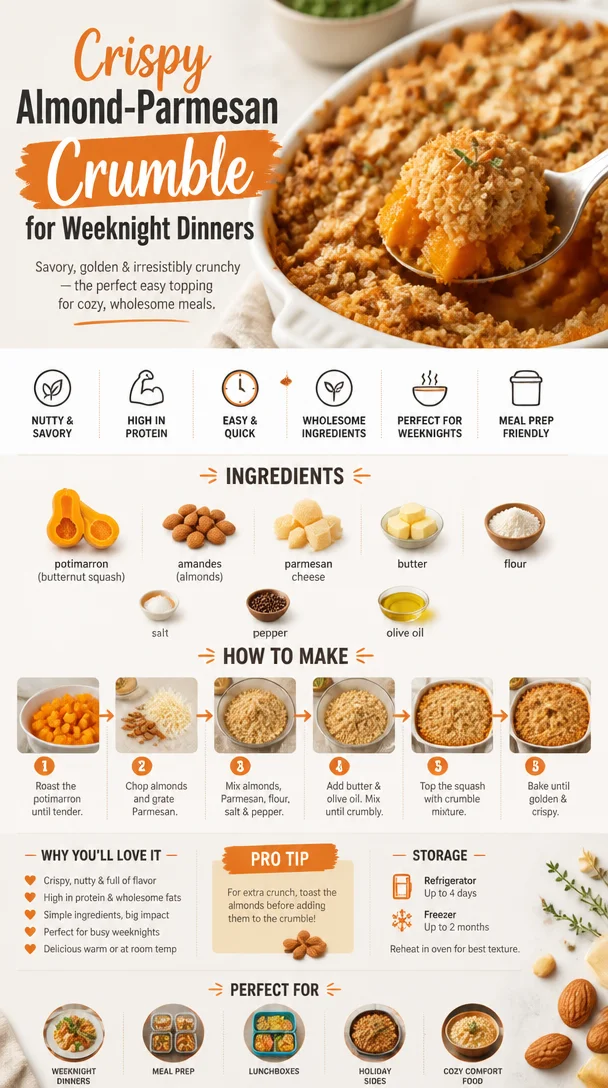
Crispy Almond-Parmesan Crumble for Weeknight Dinners
Discovering the Joy of Crumble aux Amandes et Parmesan
Welcome to my kitchen, friends! Today, I’m excited to take you on a flavor-packed journey that celebrates one of my ultimate comfort foods: Crumble aux Amandes et Parmesan. Imagine a dish that flawlessly marries the nutty crunch of almonds with the rich, umami depth of Parmesan. It’s a delightful creation that transforms a few humble ingredients into a cozy crowd-pleaser, whether served as a side or a main dish.
I’ll never forget the first time I encountered this delightful dish. I was visiting a charming bistro nestled in the heart of Paris—you know, the kind where the tables spill out onto the cobblestone streets and the aroma of baking bread invites you in like a warm hug. I ordered a vegetable crumble topped with the most luxurious almond and Parmesan mixture. When the servers brought it to my table, I could hardly contain my excitement; that golden-brown crust looked like a masterpiece! Just one bite sent me soaring to comfort food heaven—crunchy, creamy, rich, and utterly satisfying.
The beauty of Crumble aux Amandes et Parmesan is that it’s as versatile as it is delicious. It can elevate a classic vegetable medley into something extraordinary, or it can act as a stand-alone dish worthy of a celebratory dinner. Whether you are looking for an impressive side to share or a heartwarming meal to enjoy after a long day, this crumble will fit the bill beautifully. So grab your apron—let’s dive into the recipe and create something unforgettable, just like that day in Paris!
A Cozy Memory in the Kitchen
It was a chilly autumn afternoon, and I was at my grandmother’s house, surrounded by her eclectic collection of cookbooks and the warmth of her well-loved kitchen. She was the queen of bringing family together through food. I remember her teaching me how to make a similar crumble with whatever vegetables were leftover in the fridge. As we chopped carrots, zucchini, and potatoes, she spoke about the importance of not wasting food. That day, she introduced me to the concept of transforming simple ingredients into a delightful dish topped with a crumbly, cheesy mixture.
Her secret? A generous handful of toasted almonds and that magical ingredient, freshly grated Parmesan, layered thick on top. As we pulled our creation from the oven, the aroma wafting through the air was nothing short of magical. I still remember the crunch of that topping paired with the roasted vegetables beneath. That memory has stayed with me, and now I recreate it in my own kitchen, adding touches of my own while keeping that special warmth and love alive in each bite.
Ingredients: What You’ll Need
To create a mouthwatering Crumble aux Amandes et Parmesan, gather these ingredients:
-
Vegetables (about 4 cups mixed):
- Zucchini: A great base vegetable, it adds moisture and a subtle sweet flavor. If you’re out of zucchini, yellow squash or even eggplant work beautifully.
- Carrots: They add a touch of sweetness and vibrant color. Substitute with sweet potatoes for a richer flavor.
- Bell Peppers: Choose any color you like! If you prefer, you can swap them out for leeks for a milder taste.
-
Almonds (1 cup, sliced or slivered):
- Almonds provide a lovely crunch and nutty flavor. No almonds? Go for walnuts or pecans for a different texture and taste.
-
Parmesan cheese (1 cup, grated):
- Parmesan lends a savory umami kick to the crumble. Pecorino Romano can be a fun substitute that offers a tangier flavor profile.
-
Breadcrumbs (1 cup):
- Use plain or seasoned breadcrumbs for added flavor; panko breadcrumbs give extra crunch. For a gluten-free option, try almond flour.
-
Olive oil (1/4 cup):
- Extra virgin olive oil enhances the flavors and helps the crumble reach that golden perfection. For a flavored twist, consider using garlic-infused olive oil.
-
Salt and pepper (to taste):
- Essential seasonings! Always taste as you go to get a perfect balance. You can add herbs like thyme or rosemary for extra warmth.
These ingredients blend together to create a dish that’s not just about flavor but about creativity and making the most of what you have on hand.
Step-by-Step Instructions: Let’s Get Cooking!
Follow this detailed guide to whip up your Crumble aux Amandes et Parmesan:
-
Preheat your oven to 375°F (190°C). This sets the stage for an evenly cooked crumble with that beautifully crispy top.
-
Prepare your vegetables: Chop your zucchini, carrots, and bell peppers into bite-sized pieces. Aim for uniformity so that they cook evenly. If you’re using carrots, consider shaving them into thin ribbons for a tender texture; they’ll soak up the flavors beautifully.
-
Sauté the veggies: In a large skillet, heat about 2 tablespoons of olive oil over medium heat. Toss in your chopped vegetables, seasoning them lightly with salt and pepper. Cook for about 5-7 minutes, just until they start to soften. This step brings out their flavors and prevents the dish from becoming watery.
-
Spread the veggie mixture: Transfer your sautéed vegetables to a greased baking dish. You want them to be in an even layer; it makes for a more beautiful presentation.
-
Prepare the crumble topping: In a separate bowl, combine the sliced almonds, grated Parmesan, breadcrumbs, the remaining olive oil, a pinch of salt, and pepper. Your goal is to create a crumbly mixture that clumps together slightly. If it looks too dry, drizzle in a bit more olive oil.
-
Top it off: Sprinkle the almond and cheese mixture generously over the sautéed vegetables. Make sure it’s evenly distributed for that perfect bake.
-
Bake: Pop the baking dish into the oven and let it bake for 25-30 minutes until the topping is golden brown and the vegetables are bubbling beneath. If you’re feeling adventurous, you can turn on the broiler for a minute or two at the end to get that topping extra crispy—just keep a close eye on it to avoid burning.
-
Cool and serve: Once done, take it out of the oven and let it cool for about 5 minutes before digging in. This allows the flavors to meld.
Chefs Tip: Use this time to set the table or brew a cup of your favorite tea. There’s nothing better than enjoying a warm, home-cooked dish with a cozy beverage!
Serving Suggestions: Time to Plate!
When it’s time to serve your Crumble aux Amandes et Parmesan, consider these delightful presentation tips:
- Use a large spoon to scoop generous portions onto each plate, ensuring everyone gets their fair share of that crunchy topping.
- For a fresh twist, add a squeeze of lemon juice or a sprinkle of fresh herbs like parsley or basil on top before serving. This adds a lovely brightness that complements the rich flavors beautifully.
- Serve it alongside a simple green salad drizzled with balsamic vinaigrette for a well-rounded meal.
Enjoy with your loved ones, and savor the joy of conversation and togetherness that good food brings!
Recipe Variations: Mix It Up!
Get creative with your Crumble aux Amandes et Parmesan! Here are a few variations to consider:
-
Add Protein: Toss in some cooked chicken, turkey, or chickpeas for a heartier dish.
-
Spice It Up: Sprinkle in some red pepper flakes or smoked paprika for a kick.
-
Cheesy Delight: Experiment with different cheeses like goat cheese for a tangy twist, or a mix of cheddar for that super cheesy topping.
-
Seasonal Favorites: Swap out the vegetables based on what’s in season—think roasted squash in the fall or fresh asparagus in the spring!
-
Gluten-Free Option: Substitute breadcrumbs with crushed gluten-free crackers or almond flour to make this dish gluten-free without sacrificing taste.
Chef’s Notes: A Reminder of Love in Cooking
Cooking should always evoke a sense of joy, warmth, and nostalgia. This recipe for Crumble aux Amandes et Parmesan has evolved from my grandmother’s insightful teachings to a dish I can enjoy with my family and friends. Over time, I’ve learned to incorporate newer flavors, like a dash of balsamic vinegar, to create a delightful tang in my vegetable medley. For me, every crumble carries a memory—the laughter shared, the ingredients swapped, and the conversations that flow freely over delicious food.
I hope you create your own cherished memories as you enjoy this delightful dish. The kitchen is a place for love and creativity, so don’t hesitate to put your twist on it!
FAQs and Troubleshooting: Answers to Common Questions
-
What if my topping is too dry?
- If your crumble topping seems too dry, add a touch more olive oil or melted butter to help it clump together. You want that perfect crispy, golden crunch!
-
Can I make this dish ahead of time?
- Absolutely! You can prepare your vegetables and topping in advance, then assemble and bake them when you’re ready. Just add an extra few minutes to the baking time if cooking from a cold state.
-
How can I store leftovers?
- Store any leftovers in an airtight container in the fridge for up to 3 days. Reheat in the oven or microwave until warmed through. The topping may lose a little crunch, but it will still be delicious!
-
What if I don’t have any Parmesan?
- No problem! Feel free to use any hard cheese you have on hand, like aged Gouda or even vegan cheese! Just ensure it has a good flavor to complement the dish.
Nutritional Info (Optional)
While I believe in enjoying food, here’s a rough nutritional breakdown to be mindful:
- Portions: 6
- Calories: 320 per serving
- Protein: 12g
- Carbohydrates: 25g
- Fat: 20g
Nutrition values are approximate and can vary based on exact ingredients used and portion sizes.
As we wrap up this delicious journey together, I hope you feel inspired to whip up your own version of Crumble aux Amandes et Parmesan! It’s more than just a recipe; it’s a celebration of food, memories, and shared experiences. Happy cooking!
Print
Crumble aux Amandes et Parmesan
- Total Time: 45 minutes
- Yield: 6 servings 1x
- Diet: Vegetarian
Description
A comforting dish that combines the nutty crunch of almonds with the rich flavors of Parmesan, transforming simple vegetables into a delightful culinary experience.
Ingredients
- 4 cups mixed vegetables (zucchini, carrots, bell peppers)
- 1 cup sliced or slivered almonds
- 1 cup grated Parmesan cheese
- 1 cup breadcrumbs
- 1/4 cup olive oil
- Salt and pepper to taste
Instructions
- Preheat your oven to 375°F (190°C).
- Prepare your vegetables: Chop zucchini, carrots, and bell peppers into bite-sized pieces.
- Sauté the veggies: Heat 2 tablespoons of olive oil in a large skillet, add chopped vegetables, and season with salt and pepper for about 5-7 minutes.
- Spread the veggie mixture in a greased baking dish in an even layer.
- Prepare the crumble topping: In a bowl, mix sliced almonds, grated Parmesan, breadcrumbs, remaining olive oil, salt, and pepper.
- Top the sautéed vegetables with the almond and cheese mixture.
- Bake for 25-30 minutes until the topping is golden brown and vegetables are bubbling.
- Cool for 5 minutes before serving.
Notes
Experiment with different vegetables or cheeses to create your own variation. For a gluten-free option, use almond flour instead of breadcrumbs.
- Prep Time: 15 minutes
- Cook Time: 30 minutes
- Category: Main Course
- Method: Baking
- Cuisine: French
Nutrition
- Serving Size: 1 serving
- Calories: 320
- Sugar: 5g
- Sodium: 350mg
- Fat: 20g
- Saturated Fat: 4g
- Unsaturated Fat: 12g
- Trans Fat: 0g
- Carbohydrates: 25g
- Fiber: 3g
- Protein: 12g
- Cholesterol: 30mg
Keywords: vegetable crumble, almond, parmesan, comfort food, baking

Air Fryer Butternut Squash Halves: Quick, Crispy Side
Air Fryer Butternut Squash Halves: A Cozy, Flavorful Delight
Welcome to my kitchen, dear friends! Today, we’re diving into the delightful world of butternut squash, specifically in the form of Air Fryer Butternut Squash Halves. If you haven’t experienced the wonder of cooking squash in an air fryer, you’re in for a treat! I can hardly contain my excitement as I think about the sweet, nutty flavor of roasted butternut squash, combined with the ease and convenience of using an air fryer. Whether you’re looking for a simple side dish, a comforting meal, or a nourishing treat, this recipe ticks all the boxes!
But let’s be honest for a moment; cooking doesn’t have to be a wild culinary adventure every time. This recipe is about savoring the simple pleasures of food. The air fryer takes the humble butternut squash to new heights, providing tender, caramelized, and deliciously savory halves in no time at all. Plus, the best part? You can enjoy them on a weeknight or wow your friends at a holiday gathering.
Let’s jump into some kitchen magic! Ready to impress your taste buds and your loved ones with this delicious dish? Buckle up, and let’s get cooking! I promise you, this is not just a recipe; it’s a heartfelt experience.
A Cozy Memory
My love affair with butternut squash started on cool autumn afternoons when my grandma would make her famous roasted squash for Sunday dinners. I can still picture the kitchen filled with the warm aroma of herbs and spices, mingling with laughter and stories shared around the family table. She would slice that squash with such precision, her hands moving like seasoned art. Grandma would always say, “It’s not just about the food; it’s about the love you put into it.”
One day, in her cozy kitchen, while watching her work, I asked her to teach me her secrets. She chuckled and said jokingly, “Oh, dear! There are no secrets in cooking, just a little heart and some kitchen know-how!” That’s exactly what this recipe embodies! It’s about celebrating those nostalgic times, transforming simple ingredients into something heartwarming, and adding your own twist—just like grandma would have wanted.
Ingredients
Here’s what you’ll need to bring this cozy dish to life, along with some helpful tips:
-
1 Medium Butternut Squash
The star of the show! Choose a squash that feels heavy for its size with smooth, unblemished skin. If you can’t find butternut squash, pumpkin or acorn squash is a great substitute. -
2 tablespoons Olive Oil
This adds just the right richness to our squash. If you’re watching your calories, feel free to reduce the amount. You could also use melted coconut oil for a delightful flavor. -
1 teaspoon Salt
Salt enhances the natural sweetness of the squash. If you’re looking for low-sodium options, consider using a pinch of garlic powder or herb seasoning for flavor. -
1/2 teaspoon Black Pepper
Black pepper provides a kick, but if you prefer a milder flavor, you can use white pepper instead. -
1 teaspoon Ground Cinnamon
This is optional, but it adds a warm, sweet note that complements the squash beautifully. For a twist, try nutmeg or allspice instead! -
Fresh Herbs (optional)
Fresh sage or thyme makes for a flavorful herbaceous topping. If you don’t have fresh herbs, dried ones will do!
Step-by-Step Instructions
Let’s get that air fryer humming! Here’s how to make your Air Fryer Butternut Squash Halves step by step:
-
Prepare the Squash
Start by washing and drying your butternut squash. Using a sharp knife, carefully cut it in half lengthwise. If you’re not used to knife work, take it slow and steady; safety first! The flesh is pretty tough, so ensure your knife is sharp. -
Scoop Out the Seeds
Using a spoon, scoop out the seeds and the fibrous strings in the center. This part can be messy, but that’s part of the fun! Save those seeds if you want to roast them later as a crunchy snack. -
Season the Squash
Place the squash halves cut-side up on a large cutting board. Drizzle the olive oil over each half and sprinkle the salt, pepper, and cinnamon. Use your hands to rub the seasoning all over the flesh, ensuring an even coating. This is where the magic begins! Your hands will get a little oily, but that’s just a reminder of the love you’re putting into your dish. -
Air Frying Time
Preheat your air fryer to 370°F (190°C). Once hot, carefully place the butternut squash halves in the air fryer basket, cut-side up. Don’t overcrowd! You want to let the air circulate for that perfect roast. Depending on your air fryer’s capacity, you might need to do this in batches. -
Cook and Check
Air fry the squash for about 25-30 minutes. Halfway through, take a peek and check for tenderness by poking it with a fork. If it glides through easily, you’re all set—if not, let it cook a bit longer. The goal is perfectly tender flesh that’s also caramelized on top. Yum! -
Serving the Squash
Once cooked, carefully remove the squash from the air fryer. Be sure to let it cool for a few minutes before serving. As a finishing touch, sprinkle some fresh herbs on top for a pop of color and extra flavor.
Serving Suggestions
These Air Fryer Butternut Squash Halves are incredibly versatile! You can serve them as a side dish at dinner, stuffed with grains or quinoa for a heartier meal, or simply drizzled with a little balsamic glaze for a touch of sweetness. They pair beautifully with chicken, pork, or even a lovely fall salad.
For a fun presentation, you can place them on a large serving platter alongside some additional sautéed greens or roasted veggies to brighten up the dish.
Recipe Variations
-
Stuffed Squash: After air frying, scoop out some of the flesh and mix it with cooked grains, nuts, cranberries, and spices for a delicious stuffing.
-
Sweet Maple Glaze: Drizzle some maple syrup over the halves in the last few minutes of cooking for a sweet twist.
-
Spicy Kick: Add a sprinkle of cayenne pepper or chili powder for some heat alongside the cinnamon.
-
Cheesy Goodness: Top with crumbled feta or goat cheese before serving for a savory finish.
-
Mediterranean Touch: Blend in sun-dried tomatoes and olives for a unique flavor profile that transports your taste buds straight to the Mediterranean.
Chef’s Notes
Cooking is not just about following a recipe; it’s about experimenting, creating, and making it your own. This Air Fryer Butternut Squash Halves recipe has evolved since I first started making it. Initially, I kept it super simple, but I’ve found that experimenting with spices and toppings allows me to honor the essence of what butternut squash is while adding my own personal flair.
And sometimes, kitchen mishaps become the best stories! One time, I miscalculated the air fryer settings and ended up with a truly caramelized batch of squash—I thought I ruined dinner, but everyone loved the intensified flavor. So don’t sweat it if something doesn’t go precisely as planned; celebrate those "happy accidents!"
FAQs and Troubleshooting
Q1: How do I know when the butternut squash is done cooking?
You’ll want to test the tenderness with a fork. It should slide in easily without resistance. If it feels firm, give it a few more minutes!
Q2: Can I use frozen butternut squash?
Absolutely! Just adjust the cooking time. Frozen squash may need slightly less time, so start checking for doneness at around 20 minutes.
Q3: My squash turned out mushy; what went wrong?
This can happen if the squash was overcooked or if there was too much moisture. Make sure to check it a little earlier next time!
Q4: Can I make this in the oven?
For sure! Preheat your oven to 400°F (200°C) and roast the squash halves for about 40-50 minutes, cut-side up, until tender and caramelized.
Nutritional Info
While I encourage you to enjoy your cooking journey, I know nutrition is important! Butternut squash is loaded with vitamins A and C, high in fiber, and low in calories. It’s the ultimate comforting dish that also provides a nutrient boost—definitely a win-win!
And there you have it! Air Fryer Butternut Squash Halves, bursting with flavor and the warmth of home cooking. I hope this recipe brings as much joy to your kitchen as it does to mine! Whether you whip it up on your own or gather friends and family around, remember to savor each bite and make it your own. Happy cooking, friends!
Print
Air Fryer Butternut Squash Halves
- Total Time: 45 minutes
- Yield: 4 servings 1x
- Diet: Vegetarian
Description
Delight in the sweet, nutty flavors of roasted butternut squash halves, perfectly cooked in an air fryer for a quick and healthy dish.
Ingredients
- 1 Medium Butternut Squash
- 2 tablespoons Olive Oil
- 1 teaspoon Salt
- 1/2 teaspoon Black Pepper
- 1 teaspoon Ground Cinnamon (optional)
- Fresh Herbs (optional, for topping)
Instructions
- Prepare the Squash: Wash and dry your butternut squash. Cut it in half lengthwise with a sharp knife.
- Scoop Out the Seeds: Use a spoon to remove the seeds and fibrous strings in the center.
- Season the Squash: Drizzle olive oil on each half and sprinkle with salt, pepper, and cinnamon. Rub the seasoning over the flesh.
- Air Frying Time: Preheat your air fryer to 370°F (190°C). Place the squash halves cut-side up in the basket.
- Cook and Check: Air fry for about 25-30 minutes, checking for tenderness halfway through.
- Serve the Squash: Remove from the air fryer, let cool, and sprinkle fresh herbs on top before serving.
Notes
Experiment with different spices and toppings like maple syrup, cayenne pepper, or cheese for diverse flavors.
- Prep Time: 15 minutes
- Cook Time: 30 minutes
- Category: Side Dish
- Method: Air Frying
- Cuisine: American
Nutrition
- Serving Size: 1 half
- Calories: 150
- Sugar: 2g
- Sodium: 300mg
- Fat: 10g
- Saturated Fat: 1g
- Unsaturated Fat: 8g
- Trans Fat: 0g
- Carbohydrates: 23g
- Fiber: 4g
- Protein: 3g
- Cholesterol: 0mg
Keywords: butternut squash, air fryer, vegetarian, side dish, healthy cooking
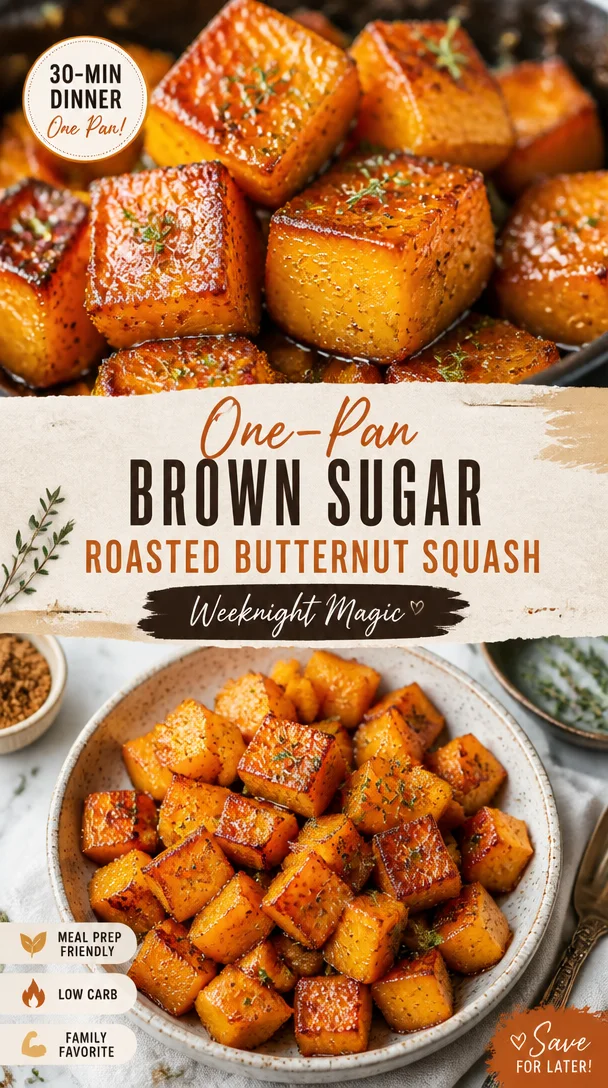
One-Pan Brown Sugar Roasted Butternut Squash (Weeknight)
Brown Sugar Roasted Butternut Squash: A Cozy Kitchen Delight
Welcome to my kitchen! Today, we’re diving into one of my all-time favorite comfort dishes: Brown Sugar Roasted Butternut Squash. As the weather starts cooling down and autumn whispers its arrival, there’s something incredibly special about cozying up with a warm, sweet, and savory dish that feels like a hug in a bowl. This roasted butternut squash recipe is rich, buttery, and kissed with the warm flavors of brown sugar and spices—perfect for adding a touch of fall magic to your dinner table or meal prep.
Imagine the sweet, caramelized aroma filling your kitchen as the squash roasts to golden perfection. Whether served as a side dish at Thanksgiving or enjoyed alongside a hearty grain bowl, this recipe is not only delicious but versatile, too! Plus, it’s so simple to make—if you can chop veggies and set a timer, you’re already halfway there!
So, grab your apron, and let’s embark on this cozy cooking adventure together. Not only will you end up with a delightful dish, but you’ll also find a space to reflect, connect, and enjoy the simple pleasures of cooking!
A Sweet Memory: The First Time I Roasted Squash
The first time I roasted butternut squash, I was a college student trying to impress my friends with my newfound cooking skills. I can still remember the day—it was chilly outside, and the leaves were swirling like dancers in the wind. Armed with my trusty old cookbook, I decided to tackle roasted butternut squash. As I chopped the vibrant orange flesh, the sweet aroma filled my small apartment kitchen, making my roommates flock in like moths to a flame.
With the oven doing its magic, I nervously paced around, waiting for those 30 minutes to pass. When the timer went off, I opened the oven door to find the squash beautifully caramelized, with that irresistible, sweet, and slightly nutty scent wafting through the air. It felt like I had unlocked a culinary treasure! That night, we all gathered around the table, laughter filling the air as we enjoyed our meal. That simple dish ignited my love for cooking and the joy of sharing homemade meals, a tradition I carry on through this blog.
Ingredients You’ll Need
Here’s the rundown of ingredients for this delicious Brown Sugar Roasted Butternut Squash. Each plays a crucial role in creating depth of flavor and that cozy vibe we crave.
-
Butternut Squash (1 medium): The star of the show! Sweet, nutty, and creamy when roasted. You can substitute with acorn or pumpkin if that’s what you have on hand.
-
Brown Sugar (¼ cup): This adds that irresistible caramel-like sweetness. If you want a healthier option, you can use coconut sugar or maple syrup in moderation.
-
Olive Oil (2 tablespoons): This helps in roasting the squash evenly. Feel free to swap it out with melted coconut oil for a different flavor profile.
-
Cinnamon (1 teaspoon): The warm spice perfectly complements the sweetness of the squash. Nutmeg or pumpkin pie spice also works beautifully here.
-
Salt (½ teaspoon): Just a pinch enhances all flavors. Remember, good quality sea salt is a chef’s best friend!
-
Black Pepper (¼ teaspoon): A little kick to offset the sweetness. Try smoked paprika for a more complex flavor twist.
-
Optional Fresh Herbs (½ teaspoon): Such as thyme or rosemary. They add an earthy freshness—perfect if you’re feeling adventurous!
Step-by-Step Instructions
Now, let’s get cooking! Follow these steps closely, and I promise you’ll end up with a stunning dish that will steal the show.
-
Prepare the Squash: Start by preheating your oven to 400°F (200°C). While it heats up, grab your butternut squash. Cutting it can be a bit challenging due to its tough skin. I recommend using a sturdy chef’s knife and being cautious—it’s easy to slip! Cut the squash in half lengthwise, scoop out the seeds with a spoon, and then chop it into bite-sized cubes. If you’re short on time, you can often find pre-cut butternut squash at the grocery store.
-
Mix the Ingredients: In a large mixing bowl, combine the cubed butternut squash, olive oil, brown sugar, cinnamon, salt, and black pepper. Smell that? It’s pure bliss! Toss everything together until the squash is well-coated, ensuring each piece is evenly dressed for roasting. Chef’s tip: Don’t be shy—use your hands for this! You’ll get a better sense of how much oil and sugar is clinging to your squash.
-
Roast, Baby, Roast: Spread the coated squash evenly on a baking sheet lined with parchment paper. This ensures easy cleanup and prevents sticking! Roast in the preheated oven for about 25-30 minutes. Halfway through, give it a good toss with a spatula so every piece gets a chance to caramelize beautifully. The goal is for your squash to be golden brown and fork-tender.
-
Cooling Down: Once ready, take the sheet out of the oven and allow the squash to cool for about 5 minutes. This will allow the flavors to settle in and avoid burning your tongue when you dive in!
-
Serving Time: Transfer the roasted squash to a beautiful serving bowl. Sprinkle with fresh herbs for that extra flair—trust me; your guests will be impressed!
Serving Suggestions
This Brown Sugar Roasted Butternut Squash is fantastic on its own, but let’s get creative! Serve it warm as a side dish alongside roasted chicken or grilled steak, or toss it over a bed of greens for a delicious salad. You can also mix it with quinoa or farro for a hearty, satisfying meal. It’s also incredible nestled into a grain bowl, topped with feta cheese, pumpkin seeds for crunch, and a drizzle of balsamic glaze.
Recipe Variations
Feeling adventurous? Here are a few creative twists to bring to this cozy dish:
-
Maple-Mustard Glaze: Replace the brown sugar with maple syrup and add a teaspoon of Dijon mustard for a sweet and tangy flavor.
-
Spicy Kick: Add a pinch of cayenne or red pepper flakes to the mixture for a delightful and warming heat.
-
Savory Spin: Swap cinnamon with cumin and toss in some chopped garlic. This will transform the squash into a fragrant, savory dish.
-
Herb Infusion: Mix in fresh sage or thyme before roasting to infuse your squash with fragrant herbal notes.
-
Sweet and Tart: Toss in some cranberries or pomegranate seeds after roasting for a burst of color and tartness that pairs perfectly with the sweetness.
Chef’s Notes
Over the years, this recipe has undergone a few transformations in my kitchen. Initially, it started with just olive oil and brown sugar, but as my palate has evolved, I’ve added spices and fresh herbs to enhance the flavors. I’ve even used this roasted squash as a filling in tacos—and let me tell you, it’s a game-changer!
And here’s a little kitchen story for you: One day, I accidentally spilled a whole jar of brown sugar into my bowl. Instead of panicking, I decided to embrace the extra sweetness and ended up with a deliciously caramelized flavor. So don’t be afraid of little accidents—sometimes they turn out to be happy accidents!
FAQs and Troubleshooting
1. My butternut squash didn’t caramelize—what went wrong?
This can happen if your oven isn’t hot enough or if the squash was packed too closely on the baking sheet. Ensure even spacing and that you preheat your oven thoroughly.
2. Can I make this dish ahead of time?
Absolutely! Roast the squash ahead of time and reheat it in the oven or microwave just before serving. It doesn’t lose its charm and flavors even as leftovers!
3. What’s the best way to cut a butternut squash?
Using a sharp knife and a cutting board with a damp towel underneath can help stabilize it. Start by cutting off both ends to create a flat surface for easier handling.
4. How can I store leftovers?
Store any leftover roasted squash in an airtight container in the fridge for up to 3-4 days. Reheat in the oven or the microwave, and enjoy!
Nutritional Information
(Per serving, approximately ½ cup)
- Calories: 150
- Protein: 2g
- Fat: 7g
- Carbohydrates: 25g
- Fiber: 3g
- Sugar: 10g
Isn’t it amazing how something so simple can evoke such joy and warmth? This Brown Sugar Roasted Butternut Squash is more than just a recipe; it’s a reminder to enjoy the little moments in the kitchen and the comfort of good food. Happy cooking, my friends, and may your kitchens always be filled with love and laughter!
Print
Brown Sugar Roasted Butternut Squash
- Total Time: 45 minutes
- Yield: 4 servings 1x
- Diet: Vegetarian
Description
A warm and sweet dish featuring roasted butternut squash caramelized with brown sugar and spices, perfect for fall!
Ingredients
- 1 medium Butternut Squash
- ¼ cup Brown Sugar
- 2 tablespoons Olive Oil
- 1 teaspoon Cinnamon
- ½ teaspoon Salt
- ¼ teaspoon Black Pepper
- ½ teaspoon Optional Fresh Herbs (thyme or rosemary)
Instructions
- Prepare the Squash: Preheat your oven to 400°F (200°C). Cut the squash in half lengthwise, scoop out the seeds, and chop into bite-sized cubes.
- Mix the Ingredients: In a large bowl, combine cubed squash, olive oil, brown sugar, cinnamon, salt, and black pepper. Toss until well-coated.
- Roast: Spread the coated squash on a lined baking sheet. Roast for 25-30 minutes, tossing halfway through, until golden and fork-tender.
- Cooling Down: Allow roasting squash to cool for about 5 minutes.
- Transfer to a serving bowl and sprinkle with fresh herbs if desired.
Notes
This dish can be made ahead of time and reheated before serving.
- Prep Time: 15 minutes
- Cook Time: 30 minutes
- Category: Side Dish
- Method: Roasting
- Cuisine: American
Nutrition
- Serving Size: ½ cup
- Calories: 150
- Sugar: 10g
- Sodium: 300mg
- Fat: 7g
- Saturated Fat: 1g
- Unsaturated Fat: 6g
- Trans Fat: 0g
- Carbohydrates: 25g
- Fiber: 3g
- Protein: 2g
- Cholesterol: 0mg
Keywords: butternut squash, roasted vegetables, fall recipes, vegetarian, cozy meals

Minute Peanut Butter Spider Cookies for Halloween Treats
Peanut Butter Spider Cookies: A Spooktacular Delight
Welcome back to my kitchen, friends! Today, we’re diving into a recipe that’s perfect for Halloween gatherings or anytime you want to add a touch of whimsy to your baking. Picture this: soft, chewy peanut butter cookies adorned with chocolate “spiders” that are as cute as they are delicious. These Peanut Butter Spider Cookies are sure to bring a smile to your face—whether you’re a kid, or just a kid at heart!
What I love about these cookies is their nostalgia. Growing up, Halloween was a big deal in our household. My family’s kitchen transformed into a bakery of sorts, filled with the delicious aromas of spices, sugar, and, of course, peanut butter! We would whip up all sorts of treats to share with friends and neighbors. One of my fondest memories is of my mom and me spending the afternoon shaping dough and crafting the cutest little spider cookies, complete with chocolate legs sticking out. It was an activity filled with laughter, a bit of mess, and a lot of love.
Baking these cookies is not just about satisfying your sweet tooth; it’s about sharing joy and creativity. So roll your sleeves up and grab that apron—it’s time to create something wonderful!
Personal Story
One Halloween afternoon, my mom and I set out to create the most epic dessert for our neighborhood party. We had the typical classics lined up: pumpkin pies, caramel apples, and of course, peanut butter cookies, because, well, they were my favorite! While we were making our plans, I caught a glimpse of a quirky recipe in an old magazine featuring spider cookies. My mom’s eyes lit up, and just like that, we decided to transform our usual peanut butter cookies into something special.
I remember us laughing as we formed the cookies into spider shapes, adding eight chocolate legs made from chocolate-covered pretzels. As they cooled, we giggled about how they might scare some little goblins at the party! The moment of delight on our neighbors’ faces when they saw our "creepy" creations made all the chaos of the kitchen worthwhile. That year, our spooky cookies became a neighborhood hit, and I’ve been making them every Halloween since.
Ingredients
Here’s what you’ll need to whip up these Peanut Butter Spider Cookies:
-
1 cup creamy peanut butter: The star of the show! Creamy peanut butter gives a smooth texture and rich flavor. If you’re feeling adventurous, swap it for crunchy peanut butter for a bit of extra texture.
-
1 cup granulated sugar: Sweetness is essential to balance the saltiness of the peanut butter. You can also use coconut sugar for a deeper flavor if you’re looking for a healthier twist!
-
1 egg: This binds everything together. In case of an egg allergy, you can use a flaxseed egg (1 tablespoon ground flaxseed mixed with 2.5 tablespoons water) as a substitute.
-
1 teaspoon vanilla extract: This lovely ingredient enhances the flavor of our cookies. Choose pure vanilla extract for a more authentic taste.
-
1 teaspoon baking powder: This little agent is what makes our cookies puff up beautifully in the oven. Baking soda can be used instead, but you may need to adjust the amounts slightly.
-
Chocolate-covered pretzels: These are our "spider legs," combining a delightful crunch with chocolatey sweetness. You can use chocolate malt balls or even cookie dough bites if you want to mix it up!
-
Chocolate chips or M&M’s for the spiders’ bodies: Feel free to get creative! Dark chocolate chips add a rich flavor, while M&Ms come in all those vibrant colors—perfect for Halloween fun!
Step-by-Step Instructions
Let’s dive into the delicious process of creating these fantastic cookies.
Step 1: Preheat the Oven
Preheat your oven to 350°F (175°C). Preheating properly helps the cookies cook evenly. Set a timer for a quick ten minutes once you start mixing things up!
Step 2: Mix the Peanut Butter and Sugar
In a large mixing bowl, combine the peanut butter and granulated sugar. Use a hand mixer or a sturdy wooden spoon to blend them until smooth and fluffy. This step is crucial; the more air you incorporate, the softer and tender the cookies will be!
Step 3: Add the Egg and Vanilla
Crack in the egg and pour in the vanilla extract. Mix until everything is well combined. At this point, take a moment to smell that divine peanut buttery goodness—it’s one of the highlights of cooking, wouldn’t you agree?
Step 4: In with the Dry Ingredients
Now, gently fold in the baking powder. If you’re using any optional ingredients, this is the time to introduce them, like a sprinkle of cinnamon or nutmeg for an extra flavor kick!
Step 5: Scoop the Dough
Using a cookie scoop or a tablespoon, scoop out equal portions of dough onto a lined baking sheet. Make sure they’re spaced about 2 inches apart, as they will spread while baking.
Step 6: Bake
Pop your tray in the preheated oven and bake for about 8-10 minutes. Watch closely! You want them to be slightly underbaked as they will continue to firm up as they cool. Once done, remove them from the oven and let them sit on the tray for 5 minutes before transferring them onto a cooling rack.
Step 7: Create the Spiders
Once the cookies have cooled, it’s time for the fun part! Place two chocolate-covered pretzels on each cookie for legs. Then, top each spider with a chocolate chip or M&M for its body. Get creative with their positioning—they can be whimsical or a bit spooky!
Step 8: Enjoy!
Gather your family or friends around and share these delicious treats! You might want to snap a few pictures first; these little creatures are Instagram-ready!
Serving Suggestions
To serve these delightful cookies, place them on a festive platter lined with parchment paper for a charming touch. For an extra whimsical effect, use a Halloween-themed tablecloth and serve them alongside pumpkin spice lattes or a warm glass of apple cider. Your friends will be talking about these cookies long after the last bite is gone!
Recipe Variations
Here are some creative twists you can try with your Peanut Butter Spider Cookies:
- Pumpkin Spice Variation: Add a teaspoon of pumpkin pie spice to the cookie dough for a fall-inspired flavor.
- Nut Allergies: Swap out the peanut butter for sun butter (made from sunflower seeds) for a nut-free version.
- Vegan Version: Use a flaxseed egg in place of the egg, and for a vegan-friendly chocolate option, search for dairy-free chocolate chips.
- Add-Ins: Toss in some chopped nuts or shredded coconut to the dough before baking for added elements of surprise.
Chef’s Notes
These Peanut Butter Spider Cookies have a special place in my heart. Over the years, I’ve experimented with flavors, occasionally swapping out ingredients based on what I had in my pantry. I once added crushed Oreos to the mix—it created a deliciously unique texture that everyone loved! Ultimately, these cookies became a tradition that sparked creativity and brought joy to our table.
And, oh! Speaking of chaos, let me tell you about the time I accidentally grabbed the salt instead of the sugar. Let’s just say that batch did not make it to the neighborhood party! Now I triple-check everything.
FAQs and Troubleshooting
1. My cookies turned out too flat! How can I prevent that?
This can happen if your dough is too warm or if you didn’t add enough flour. Ensure your butter and peanut butter are at room temperature, and chill the dough for 30 minutes before baking.
2. How should I store my peanut butter spider cookies?
Keep them in an airtight container at room temperature for up to a week. If you want to freeze them, layer them between parchment in a container and freeze for up to three months.
3. Can I use natural peanut butter?
Yes, but be cautious! Natural peanut butter is often less sweet and can affect the texture of the cookies. You might need to adjust the sugar or add a bit more flour to get the desired consistency.
4. How do I make these cookies gluten-free?
Simply replace all-purpose flour with a gluten-free flour mix that has a binding agent, like almond or coconut flour!
With these tips, you’re all set for a successful batch of Peanut Butter Spider Cookies!
Now that you have all the details, invite your friends over and create some unforgettable kitchen magic! Happy baking!
Print
Peanut Butter Spider Cookies
- Total Time: 25 minutes
- Yield: 24 cookies 1x
- Diet: Vegetarian
Description
Soft, chewy peanut butter cookies adorned with chocolate “spiders” that add a whimsical touch to your Halloween gatherings.
Ingredients
- 1 cup creamy peanut butter
- 1 cup granulated sugar
- 1 egg
- 1 teaspoon vanilla extract
- 1 teaspoon baking powder
- Chocolate-covered pretzels
- Chocolate chips or M&Ms
Instructions
- Preheat your oven to 350°F (175°C).
- Mix the peanut butter and granulated sugar in a large mixing bowl until smooth and fluffy.
- Add the egg and vanilla extract, mixing until well combined.
- Fold in the baking powder and any optional ingredients like cinnamon or nutmeg.
- Scoop equal portions of dough onto a lined baking sheet, spaced about 2 inches apart.
- Bake for 8-10 minutes until slightly underbaked, then let cool for 5 minutes on the tray before transferring to a cooling rack.
- Create spiders by placing two chocolate-covered pretzels on each cookie and topping with a chocolate chip or M&M.
- Enjoy! Share these delightful treats with family and friends!
Notes
For variations, try adding pumpkin pie spice for fall flavor, or swap peanut butter for sun butter for nut-free cookies.
- Prep Time: 15 minutes
- Cook Time: 10 minutes
- Category: Dessert
- Method: Baking
- Cuisine: American
Nutrition
- Serving Size: 1 cookie
- Calories: 180
- Sugar: 10g
- Sodium: 50mg
- Fat: 8g
- Saturated Fat: 1g
- Unsaturated Fat: 5g
- Trans Fat: 0g
- Carbohydrates: 24g
- Fiber: 1g
- Protein: 3g
- Cholesterol: 20mg
Keywords: Halloween cookies, peanut butter cookies, spider cookies, festive baking

Crispy Chocolate Pretzel Spider Web Treat in 15 Minutes
Chocolate Pretzel Spider Webs: A Fun and Spooky Treat!
Welcome to my kitchen! I’m so excited to share a delightful and spooky treat that’s perfect for your next gathering or Halloween celebration: Chocolate Pretzel Spider Webs! These fun snacks blend sweet and salty flavors, and best of all, they’re super simple to make. Whether you’re hosting a Halloween party, looking for creative snacks for the kids, or just want to indulge your taste buds, this recipe is bound to become a favorite in your home.
There’s something inherently magical about this chocolate pretzel combination. The crunchy twists of the pretzel, the smooth velvety chocolate, and that hint of whimsy from the spider web design bring together everything that I love about cooking at home—creativity, comfort, and a little bit of nostalgia. Each bite cradles cozy moments and great conversations.
In this blog post, I’ll take you through a journey of crafting these sweet and salty delights, alongside stories from my own kitchen adventures. Together, we’ll whip up a batch of Chocolate Pretzel Spider Webs that’ll have you and your guests squealing in delight!
A Trip Down Memory Lane
One Halloween, I remember going to a local pumpkin patch to pick out the best gourds and apples to bake into pies. Among the stalls, there was a quaint little table run by a friendly family who would always have a selection of homemade baked goods. As kids, my sister and I were always drawn to their table, not just for the cookies but for the creative snacks they showcased. It was on that day I first had something like these chocolate pretzel webs – but instead of spiders, they showcased cute little ghosts made of marshmallows!
We each grabbed one and for some reason, the combination of the crunch and sweetness sent my taste buds into overdrive! That memory has stuck with me, and when I created my version of these spooky pretzel webs, I couldn’t help but reminisce about that Halloween day long ago. It’s funny how food weaves its way into our memories and becomes a thread in our life story, isn’t it?
Ingredients
To get started, here’s what you’ll need for your Chocolate Pretzel Spider Webs:
-
Pretzel Sticks
The foundation of your web! Crunchy and salty, they provide the perfect base. Don’t have pretzel sticks? Use regular pretzels or even breadsticks as a substitute. -
Chocolate Chips (Milk or Dark)
Choose your favorite chocolate—milk for a sweeter touch or dark for a more intense flavor. If you’re feeling adventurous, white chocolate also makes a great base for coloring! -
Black Candy Melts
These will give the perfect look to your spider web. If candy melts aren’t available, you can use chocolate mixed with a little vegetable oil to achieve a similar consistency. -
Confectioners Sugar
Just a sprinkle for sweetness! If you need a sugar-free option, you can find alternative sweeteners that work well, too. -
Edible Eyes
To bring your spiders to life! You can buy edible candy eyes from any baking supply store or make your own with small dollops of icing. -
Parchment Paper
Not an ingredient per se, but crucial for setting your webs and keeping everything tidy!
Step-by-Step Instructions
Let’s dive into crafting these delightful treats! Follow along as we build these Chocolate Pretzel Spider Webs step-by-step.
-
Prepare Your Workspace:
Start by lining a baking sheet with parchment paper. This will be where your completed spider webs will rest and harden. -
Melt the Chocolate:
In a microwave-safe bowl, add your chocolate chips. Heat them in 30-second intervals, stirring in between until completely melted and smooth. This should take about 1-2 minutes depending on your microwave power. Pro tip: Avoid overheating the chocolate, as it can seize up. If that happens, simply stir in a teaspoon of vegetable oil to salvage it. -
Dip the Pretzel Sticks:
Take your pretzel sticks and dip them halfway into the melted chocolate. Let the excess drip off and place them on the parchment paper. I love to make a bunch of these at once—perfect for sharing with family! -
Create the Spider Web:
Using a piping bag or a plastic sandwich bag with the corner snipped off, draw circles and lines over the chocolate-covered pretzel sticks to create the web effect. Start from the center and move outward—this is where creativity shines! Don’t worry if it’s not perfect; your webs will turn out adorable regardless! -
Add the Spiders:
While the chocolate is still soft, place two edible eyes on top of each pretzel stick to make them resemble spiders. The kids will love helping with this part! -
Let It Set:
Place the baking sheet in the refrigerator for about 30 minutes or until the chocolate has completely hardened. You can also leave them out at room temperature for a couple of hours if you prefer. -
Serve and Enjoy:
Once the chocolate is set, gently peel the pretzel webs off the parchment paper. They’re now ready to be devoured!
Serving Suggestions
When serving your Chocolate Pretzel Spider Webs, arrange them on a creepy platter surrounded by faux spider decorations or spooky candles for a charming display. You can even place them in a clear jar adorned with festive ribbons for a cute centerpiece. Pair them with some pumpkin spice dip for a deliciously seasonal treat!
Recipe Variations
Feel free to switch things up! Here are some creative twists to keep things fresh:
- Nut Butter Version: Instead of chocolate, use melted peanut butter or almond butter for a unique flavor!
- Add a Crunch: Mix in crushed nuts or sprinkle some chopped toffee on top before the chocolate hardens for an extra crunch.
- Colorful Treats: Use colored candy melts for different holidays or celebrations—think pastel colors for Easter or bright hues for a birthday!
- Gluten-Free: Swap the pretzel sticks for gluten-free options, like rice cakes or gluten-free pretzels.
- Dairy-Free: Use vegan chocolate chips for a dairy-free version that everyone can enjoy!
Chef’s Notes
There’s always room for creativity in the kitchen! Over the years, I’ve experimented with adding different toppings and flavors to this recipe. One of my favorite stories is when I tried to make mini cupcake versions of the spider webs. Let’s just say, they didn’t quite turn out as planned, but they were a delicious, albeit messy, trial!
With each attempt, I learn something new—whether it’s finding the right chocolate to achieve the glossy finish or discovering new designs for the webs. Cooking is a journey, and I cherish every messy moment along the way.
FAQs and Troubleshooting
Q: What if my chocolate seizes?
A: If your chocolate seizes up while melting, try adding a little vegetable oil and stirring it back to a smooth consistency.
Q: Can I make these in advance?
A: Absolutely! You can prepare them a few days ahead and store them in an airtight container to keep them fresh.
Q: How can I make the webs more defined?
A: Use a piping bag with a thin tip for better control, which will create sharper lines and more defined shapes in your chocolate webs!
Q: What can I substitute if I’m allergic to nuts?
A: You can easily swap the chocolate with carob chips or try using sunflower seed butter for that nut-free alternative!
Nutritional Info (if applicable)
While I always encourage you to indulge in these delightful treats, here’s a rough nutritional breakdown per spider web:
- Calories: 130
- Total Fat: 6g
- Saturated Fat: 3g
- Carbohydrates: 17g
- Sugar: 10g
- Protein: 2g
As always, your nutritional needs may vary depending on the brands used and personal dietary choices.
I can’t wait for you to try making these Chocolate Pretzel Spider Webs! They’re more than just a treat; they’re a wonderful way to celebrate creativity and bring people together. Happy cooking, friends, and don’t forget to enjoy every bite!
Print
Chocolate Pretzel Spider Webs
- Total Time: 45 minutes
- Yield: 20 servings
- Diet: Vegetarian
Description
A fun and spooky treat combining sweet and salty flavors, perfect for Halloween gatherings.
Ingredients
- Pretzel Sticks
- Chocolate Chips (Milk or Dark)
- Black Candy Melts
- Confectioners Sugar
- Edible Eyes
- Parchment Paper
Instructions
- Prepare your workspace by lining a baking sheet with parchment paper.
- Melt the chocolate in a microwave-safe bowl, heating in 30-second intervals until smooth.
- Dip the pretzel sticks halfway into the melted chocolate and place on parchment paper.
- Create the spider web using a piping bag or sandwich bag to draw over the chocolate-covered pretzel sticks.
- Add two edible eyes on each pretzel stick while the chocolate is still soft.
- Let the baking sheet sit in the refrigerator for about 30 minutes until the chocolate hardens.
- Serve and enjoy by gently peeling the pretzel webs off the parchment paper.
Notes
Feel free to get creative with toppings and variations, such as using nut butter or gluten-free pretzels.
- Prep Time: 15 minutes
- Cook Time: 30 minutes
- Category: Snacks
- Method: No-Bake
- Cuisine: American
Nutrition
- Serving Size: 1 spider web
- Calories: 130
- Sugar: 10g
- Sodium: 0mg
- Fat: 6g
- Saturated Fat: 3g
- Unsaturated Fat: 2g
- Trans Fat: 0g
- Carbohydrates: 17g
- Fiber: 0g
- Protein: 2g
- Cholesterol: 0mg
Keywords: Halloween treats, chocolate pretzels, spooky snacks, fun desserts

One-Pan Roasted Butternut Squash Recipe for Weeknights
Embrace the Sweetness: A Heartwarming Butternut Squash Recipe
Welcome to my cozy kitchen, food lovers! Today, we’re diving into the delightful world of butternut squash—one of fall’s most beloved ingredients. Whether you’re dodging that winter chill or seeking to impress your friends with your newfound culinary skills, this sweet, nutty gem is a fantastic ingredient to bring warmth and comfort to your table.
Butternut squash isn’t just delicious; it’s also incredibly versatile! You can roast it, mash it, or even blend it into a velvety soup. The possibilities are endless, and today, I want to show you how to create a dish that’s not only easy to make but also packed with flavor and love.
Imagine the scent of roasted butternut squash wafting through your kitchen as you prepare this dish. It’s the kind of aroma that wraps around you like a warm hug, inviting everyone to the table. Cooking for me has always been about sharing moments and creating memories, and there’s something inherently joyful about preparing a meal with love, especially when it comes to a dish as comforting as this.
In this post, we’ll whip up a savory butternut squash and sage risotto that’s bound to become a family favorite. With creamy Arborio rice, roasted squash, and fragrant sage, it’s a dish that bridges the gap between comfort food and gourmet goodness. I promise, once you try this, your loved ones will be singing your praises! So, let’s roll up our sleeves, tie on our aprons, and get cooking!
A Slice of Nostalgia
Growing up, my grandmother would make the best butternut squash soup every autumn. The whole house would fill with the aroma of spices and slow-cooked goodness. I’d watch as she peeled and chopped the squash, her hands moving with a kind of grace that came from years of experience. We’d sit together, her sharing tales from her childhood while we stirred the pot, and it quickly became a tradition I cherished.
Those cozy afternoons inspired my love for cooking, and no dish fills me with nostalgia quite like a butternut squash creation. As I experimented with various recipes over the years, I found a special love for risotto—a creamy, cheesy delight that transforms a simple meal into a memorable feast. This dish feels like a comforting embrace, and I know that with every bite, you’ll be connecting with those same laughs, stories, and cozy moments from your own life.
Ingredients
Here’s what you’ll need to whip up this delightful dish:
-
1 medium butternut squash, peeled and cubed: This serves as the star of the show! Butternut squash is naturally sweet and creamy. If you need a substitute, pumpkin or sweet potato works beautifully.
-
1 cup Arborio rice: This short-grain rice is what gives risotto its signature creaminess. If you’re in a pinch, you can use Carnaroli or even short-grain brown rice, though this will alter the texture slightly.
-
4 cups vegetable broth (or chicken broth): Homemade is ideal, but store-bought works just as well. If you want to lower the salt content, opt for low-sodium broth.
-
1 medium onion, finely chopped: This adds sweetness and depth of flavor. Shallots are great too if you want a subtler flavor.
-
2 cloves garlic, minced: A must-have for any savory dish! Fresh garlic is best, but if you have garlic powder, use about 1/2 teaspoon.
-
2 tablespoons olive oil: For sautéing and drizzling. If you’re looking for a different flavor, consider using avocado oil or even a bit of butter.
-
1/2 cup grated Parmesan cheese: This contributes to the creaminess and a little cheesy goodness. For a dairy-free version, try nutritional yeast.
-
1 tablespoon fresh sage, chopped (or 1 teaspoon dried sage): Sage pairs beautifully with squash, adding an earthy flavor. Thyme or rosemary can also work as tasty substitutes!
-
Salt and pepper to taste: Seasonings are crucial! Freshly cracked pepper adds a lovely kick.
-
Optional: A drizzle of balsamic reduction for garnishing—this adds a touch of acidity and sweetness that elevates the dish.
With these ingredients, you’re all set to prepare a comforting bowl of butternut squash risotto that will have everyone coming back for seconds!
Step-by-Step Instructions
Let’s get down to the delicious part—cooking! Here’s how you can prepare your butternut squash risotto:
-
Prep the Squash: Begin by preheating your oven to 400°F (200°C). While it heats, peel your butternut squash and cut it into 1-inch cubes. Place the cubes on a baking sheet, drizzle with olive oil, and sprinkle with a bit of salt and pepper. Toss to combine. Roast for about 25-30 minutes, or until tender and caramelized around the edges. Chef Tip: Roasting enhances sweetness and depth!
-
Warm the Broth: In a saucepan, heat your vegetable broth and keep it warm over low heat. This will help maintain the temperature when adding it to the rice.
-
Sauté the Aromatics: In a large pot or Dutch oven, heat 2 tablespoons of olive oil over medium heat. Add the chopped onion and sauté for 3-4 minutes, until translucent. Add the minced garlic and fresh sage, cooking for an additional minute until fragrant. Chef Hack: Make sure to keep an eye on the garlic—it browns quickly!
-
Toast the Rice: Stir in the Arborio rice, cooking for 1-2 minutes until it’s lightly toasted. This helps to release the nutty aroma and prepares the rice for absorbing liquids.
-
Add the Broth: Begin adding your warm broth one ladleful at a time, stirring frequently. Allow the rice to absorb most of the liquid before adding more. This will take about 18-20 minutes. Think of it as a labor of love! Tip: This slow, steady process releases the starches, giving risotto its creaminess.
-
Incorporate the Squash: After about 15 minutes of cooking, add your roasted butternut squash pieces into the pot, mixing gently. This will ensure each bite has that delicious squash flavor. Pro Tip: You can reserve a few pieces for garnishing later!
-
Finish With Cheese: Once your risotto is creamy and the rice is al dente, remove it from heat. Stir in the grated Parmesan cheese until melted. Season to taste with salt and pepper. Chef’s Note: If you want that extra creaminess, add a tablespoon of butter!
-
Serve: Your butternut squash risotto is ready! Spoon it into bowls and garnish with the reserved squash, a sprinkle of extra Parmesan, and a drizzle of balsamic reduction if you’re feeling fancy.
Serving Suggestions
For a beautiful presentation, serve your risotto in deep bowls and top with a sprinkle of fresh sage leaves and a light drizzle of olive oil or balsamic reduction. Pair it with a simple arugula salad with lemon vinaigrette to balance out the creamy rice and enrich your dining experience.
Recipe Variations
Feeling adventurous? Here are a few variations to try:
-
Creamy Vegan Version: Substitute Parmesan cheese with nutritional yeast and coconut milk for a creamy base that’s dairy-free.
-
Add Some Protein: Toss in sautéed mushrooms, spinach, or chickpeas for added texture and nutrition—perfect for a hearty meal!
-
Spice It Up: Add a pinch of red pepper flakes to the onions for a hint of heat or stir in some ground nutmeg or cinnamon for a warm spice vibe.
-
Herb Swaps: Don’t have sage? Thyme or even fresh parsley can add a delightful touch! Season according to your pantry.
-
Seasonal Greens: Stir in some kale or Swiss chard at the end of cooking for added vitamins and a colorful presentation.
Chef’s Notes
I have to confess, the first time I made this risotto, I didn’t stir it enough and ended up with a clumpy mess! It was a lesson learned—so trust me when I say that constant stirring is key! Over the years, this dish has evolved from a simple recipe to a celebration of seasonal ingredients, with each rendition evoking a different memory or experience in the kitchen. This risotto has taken me to cozy dinners at home, dinner parties with friends, and even evenings of culinary experimentation. It’s become a beloved staple in my family, and I hope it will become a cherished recipe in yours as well!
FAQs and Troubleshooting
1. Why did my risotto come out too sticky?
If risotto becomes too sticky, it’s often due to either too much stirring or not using enough broth. Remember, slow and steady is key—keep an eye on your rice and add broth gradually.
2. Can I make this risotto ahead of time?
Risotto is best served fresh, but if you have leftovers, you can store them in the refrigerator for 1-2 days. Reheat gently, adding a splash of broth to loosen it up.
3. My risotto is too bland! What can I do?
If your risotto lacks flavor, it may just need more seasoning. Don’t hesitate to add a pinch of salt or more garlic. Also, the quality of your broth matters!
4. What if I don’t have Arborio rice?
If you can’t find Arborio rice, you can use other short-grain varieties like Carnaroli or even sushi rice in a bind. Just keep in mind the texture might change!
Nutritional Info (if applicable)
On average, a serving of butternut squash risotto (without additional toppings) contains approximately:
- Calories: 350
- Protein: 12g
- Carbohydrates: 60g
- Fats: 10g
- Fiber: 4g
Now that you have all the know-how to create this delicious dish, don’t be shy—get cooking! I can’t wait to hear your thoughts and stories as you enjoy this comforting, heartwarming butternut squash risotto. Happy cooking, my friends! 🍂✨
Print
Butternut Squash and Sage Risotto
- Total Time: 45 minutes
- Yield: 4 servings 1x
- Diet: Vegetarian
Description
A comforting and creamy risotto made with roasted butternut squash and fragrant sage, perfect for sharing with loved ones.
Ingredients
- 1 medium butternut squash, peeled and cubed
- 1 cup Arborio rice
- 4 cups vegetable broth (or chicken broth)
- 1 medium onion, finely chopped
- 2 cloves garlic, minced
- 2 tablespoons olive oil
- 1/2 cup grated Parmesan cheese
- 1 tablespoon fresh sage, chopped (or 1 teaspoon dried sage)
- Salt and pepper to taste
- Optional: A drizzle of balsamic reduction for garnishing
Instructions
- Prep the squash: Preheat your oven to 400°F (200°C). Peel the butternut squash and cut it into 1-inch cubes. Place the cubes on a baking sheet, drizzle with olive oil, and sprinkle with salt and pepper. Toss to combine. Roast for about 25-30 minutes until tender and caramelized.
- Warm the broth: In a saucepan, heat the vegetable broth and keep it warm over low heat.
- Sauté the aromatics: In a large pot, heat olive oil over medium heat. Add chopped onion and sauté for 3-4 minutes until translucent. Add minced garlic and fresh sage, cooking for an additional minute until fragrant.
- Toast the rice: Stir in Arborio rice and cook for 1-2 minutes until lightly toasted.
- Add the broth: Begin adding the warm broth one ladle at a time, stirring frequently, until absorbed—this takes about 18-20 minutes.
- Incorporate the squash: After 15 minutes of cooking, add the roasted butternut squash, mixing gently.
- Finish with cheese: Remove from heat and stir in grated Parmesan cheese until melted. Season with salt and pepper.
- Serve: Spoon the risotto into bowls and garnish with reserved squash, extra Parmesan, and balsamic reduction if desired.
Notes
Stir constantly to ensure creamy consistency and avoid clumping. Serve fresh for the best flavor.
- Prep Time: 15 minutes
- Cook Time: 30 minutes
- Category: Main Course
- Method: Stovetop
- Cuisine: Italian
Nutrition
- Serving Size: 1 serving
- Calories: 350
- Sugar: 6g
- Sodium: 400mg
- Fat: 12g
- Saturated Fat: 4g
- Unsaturated Fat: 6g
- Trans Fat: 0g
- Carbohydrates: 45g
- Fiber: 4g
- Protein: 12g
- Cholesterol: 30mg
Keywords: butternut squash, risotto, comfort food, fall recipes, vegetarian

Beginner-Friendly One-Bowl Old-Fashioned Spice Cake
The Cozy Charm of Old Fashioned Spice Cake
Welcome back to my cozy kitchen, dear food friends! Today, I’m thrilled to dive into a recipe that warms the heart and brings nostalgia to the forefront — the delightful Old Fashioned Spice Cake. This cake is more than just a sweet treat; it’s a fragrant hug on a plate that dances with the richness of spices and invites you to slow down and savor life’s simple pleasures.
Imagine walking into your home, greeted by the comforting aroma of cinnamon, nutmeg, and cloves wafting through the air. It’s like wrapping yourself in a warm blanket on a chilly autumn day! Spice cake has a way of evoking those memories, transporting us back to family gatherings, holiday festivities, and the cozy corners of our grandparents’ kitchens.
Through this blog, I want to share not only the recipe for this beautiful cake but also the stories and warmth that come with it. Whether you’re baking for a special occasion or simply indulging in a treat for yourself, my goal is to empower you to create delicious food with love and joy in your heart. So, grab your apron, and let’s embark on this baking adventure together!
A Slice of Memory
Let me take you back to my childhood for a moment. Picture this: a crisp fall afternoon, leaves painting the yard in vibrant shades of orange and gold. I was barely tall enough to see over the counter of my grandmother’s kitchen when she pulled out her well-worn cookbook. With flour dusting the tabletop and a teasing sprinkle of sugar in the air, she set out to make her famous spice cake.
As she measured out the fragrant spices, I was enchanted by each unique scent filling the room — cinnamon, cloves, and ginger. “These spices are like warm hugs for your taste buds,” she would say, a twinkle in her eye. I would watch intently, soaking in every detail as she mixed the batter, gently folding in love and laughter along with the ingredients.
When the cake finally emerged from the oven, golden and puffed, we waited (impatiently) for it to cool before drenching it in cream cheese frosting. There was nothing quite like that first slice, a harmonious blend of sweetness and spice that ignited our taste buds and our hearts. That beloved cake became a staple at family gatherings, and each bite was a sweet reminder of the love and joy that filled our kitchen. Today, I hope to share that same delicious nostalgia with you!
Ingredients
Before we dive into baking, let’s gather our ingredients. Here’s what you’ll need to create this old-fashioned gem:
-
All-purpose flour (2 cups)
- The backbone of our cake, providing structure. Feel free to use a gluten-free blend if you’re looking for a gluten-free option!
-
Granulated sugar (1 1/2 cups)
- This will sweeten our cake beautifully. For a lower glycemic index, consider coconut sugar as a substitute.
-
Baking soda (2 teaspoons)
- Our leavening agent, ensuring the cake rises. Make sure it’s fresh for maximum effectiveness!
-
Ground cinnamon (2 teaspoons)
- The star of our spice show! Cinnamon adds warmth and sweetness. If you prefer a bolder flavor, try Vietnamese cinnamon.
-
Ground ginger (1 teaspoon)
- Adding a zesty kick, ginger complements the sweetness. You can replace it with ground cardamom for a different spin.
-
Ground nutmeg (1 teaspoon)
- Just a pinch can elevate the flavor profile! Freshly grated nutmeg is always a lovely touch.
-
Ground cloves (1/2 teaspoon)
- The secret ingredient that gives spice cake depth. Use sparingly, as it can overpower other flavors.
-
Salt (1/2 teaspoon)
- Balances the sweetness; don’t skip this! A pinch of sea salt can enhance the overall taste.
-
Unsalted butter (1 cup, softened)
- This will keep our cake moist and rich. If you prefer an oil-based cake, avocado oil works wonders too.
-
Large eggs (2)
- Essential for binding and richness. For a vegan option, you can replace them with flax eggs (1 tablespoon ground flaxseed mixed with 2.5 tablespoons water per egg).
-
Buttermilk (1 cup)
- Adds moisture and tang. No buttermilk? Mix regular milk with a tablespoon of lemon juice or vinegar and let it sit for a few minutes!
-
Vanilla extract (1 teaspoon)
- Pure vanilla gives a lovely backdrop flavor. Homemade vanilla extract? Even better!
These ingredients combined will turn into a cake that is as comforting as a cup of hot cocoa on a chilly night. Now, let’s get our hands doughy and throw this cake together!
Step-by-Step Instructions
1. Preheat Your Oven
Before anything else, let’s get that oven warming up! Preheat it to 350°F (175°C). This ensures your cake begins baking at the right temperature for perfectly moist results.
2. Prepare Your Cake Pans
Grease and flour two 9-inch round cake pans. This is crucial to ensure the cakes release effortlessly once baked. You can use a bit of butter or cooking spray, and a light dusting of flour will do the trick.
3. Combine Dry Ingredients
In a medium-sized bowl, whisk together the flour, baking soda, salt, cinnamon, ginger, nutmeg, and cloves. This simple step ensures that the spices and leaveners are evenly distributed throughout your cake, which harmonizes the flavor.
4. Mix the Butter and Sugar
In a large mixing bowl, beat the softened butter and granulated sugar together until it’s light and fluffy. This process takes about 3-5 minutes using an electric mixer. The lightness from the butter and sugar helps to create a tender cake.
5. Add the Eggs and Vanilla
Next, add the eggs one at a time, mixing well after each addition. Let the yolks create that velvety texture! Add the vanilla extract and blend until combined. The batter should be smooth and fluffy.
6. Alternate Adding Dry Ingredients and Buttermilk
Begin incorporating the dry mixture into the butter-sugar mixture gradually, alternating with the buttermilk. Start with a third of the dry ingredients, mix until just combined, add half of the buttermilk, and continue this process until all ingredients are combined. This keeps the batter nice and airy.
7. Pour into Pans
Once your batter is ready, it’s time to pour it into the greased pans. Divide it evenly for uniform cakes and smooth the tops with a spatula.
8. Bake Until Done
Pop the cake pans into the preheated oven and let them bake for about 25-30 minutes or until a toothpick inserted in the center comes out clean. The aroma filling your kitchen will be irresistible!
9. Cool the Cakes
Once baked, remove the cakes from the oven and allow them to cool in the pans for about 10 minutes. Then, gently invert them onto a wire rack to cool completely. Cooling completely is important if you want to frost your cakes without melting your icing!
10. Frosting Time!
Let’s make it pretty! While the cakes cool, you can whip up a luscious cream cheese frosting to slather on top. It’s simple — beat together 8 oz of softened cream cheese, 1/2 cup of softened butter, 2 cups of powdered sugar, and 1 tsp of vanilla extract. Once everything is mixed and creamy, frost the layers generously and stack them together.
Serving Suggestions
To serve, slice the cake into generous wedges and plate them with a sprinkle of cinnamon or a few candied nuts on top for that extra touch of elegance. A scoop of vanilla ice cream by the side makes for a perfect contrast to the spiced cake! This is also a lovely dessert for any gathering or a cozy night in, where you can just enjoy every single bite.
Recipe Variations
- Nutty Spice Cake: Add chopped walnuts or pecans to the batter for an added crunch.
- Fruity Twist: Fold in raisins or chopped apples for an extra layer of flavor and texture.
- Chocolate Lovers: Mix in cocoa powder for a chocolate-spice cake that’s rich and decadent!
- Glazed Alternative: Instead of frosting, drizzle with a simple glaze made of powdered sugar and milk for a lighter option.
- Vegan Makeover: Substitute eggs with flax eggs and use plant-based butter and milk to make this cake vegan-friendly — still delicious!
Chef’s Notes
This Old Fashioned Spice Cake holds a special place in my heart, and over the years, I’ve seen it evolve. I love experimenting with additional spices or tweaking the recipe depending on what I have in my pantry. My version has changed with each family gathering, sometimes incorporating seasonal fruits or daring new flavor experiments. It’s the perfect canvas for creativity!
And let me tell you, if you accidentally overmix the batter or forget an ingredient, it still comes out delicious in its own right. The beauty of home cooking is that it’s a perfect reflection of love, patience, and a sprinkle of imperfection.
FAQs and Troubleshooting
Q: My cake didn’t rise. What went wrong?
A: This can happen for a couple of reasons — check the freshness of your baking soda and make sure your oven is at the right temperature.
Q: Can I bake this in a single pan?
A: Absolutely! If you prefer a single-layer cake, just adjust the baking time and keep an eye on it; it may need a little longer to bake through.
Q: How do I store leftovers?
A: Store the cooled cake in an airtight container at room temperature for up to 3 days. If frosted, keep it in the fridge!
Q: What can I do if the cake is too dry?
A: If you accidentally overbake it, don’t fret! A drizzle of milk or a sprinkle of flavored simple syrup over the top can help soften each slice and revive some moisture.
Nutritional Info
(Note: Please adjust based on specific ingredients used.)
- Serving Size: 1 slice (1/12 of the cake)
- Calories: Approximately 350
- Fat: 15g
- Carbohydrates: 49g
- Protein: 4g
- Sugars: 28g
And there you have it, my lovely friends! This Old Fashioned Spice Cake celebrates that cozy essence of home baking and nourishes not just your body but your soul, too. Give yourself permission to indulge in the process — let the kitchen be a therapeutic space where you can unite with the magic of flavors. I can’t wait to hear about your cake adventures! Happy baking!
Print
Old Fashioned Spice Cake
- Total Time: 45 minutes
- Yield: 12 servings 1x
- Diet: Vegetarian
Description
A delightful old-fashioned spice cake that warms the heart with its fragrant blend of cinnamon, nutmeg, and cloves, perfect for any occasion.
Ingredients
- 2 cups all-purpose flour
- 1 1/2 cups granulated sugar
- 2 teaspoons baking soda
- 2 teaspoons ground cinnamon
- 1 teaspoon ground ginger
- 1 teaspoon ground nutmeg
- 1/2 teaspoon ground cloves
- 1/2 teaspoon salt
- 1 cup unsalted butter, softened
- 2 large eggs
- 1 cup buttermilk
- 1 teaspoon vanilla extract
Instructions
- Preheat your oven to 350°F (175°C).
- Prepare two 9-inch round cake pans by greasing and flouring them.
- Combine the flour, baking soda, salt, cinnamon, ginger, nutmeg, and cloves in a medium bowl.
- Mix the softened butter and sugar until light and fluffy.
- Add the eggs one at a time and mix in the vanilla extract.
- Alternate adding the dry ingredients and buttermilk to the butter mixture, starting and ending with the dry ingredients.
- Pour the batter evenly into the prepared cake pans.
- Bake for 25-30 minutes or until a toothpick comes out clean.
- Cool the cakes in the pans for 10 minutes before inverting them onto a wire rack.
- Frost with cream cheese frosting once cooled.
Notes
Serve with a sprinkle of cinnamon or a scoop of vanilla ice cream for an extra special touch.
- Prep Time: 15 minutes
- Cook Time: 30 minutes
- Category: Dessert
- Method: Baking
- Cuisine: American
Nutrition
- Serving Size: 1 slice
- Calories: 350
- Sugar: 28g
- Sodium: 300mg
- Fat: 15g
- Saturated Fat: 9g
- Unsaturated Fat: 5g
- Trans Fat: 0g
- Carbohydrates: 49g
- Fiber: 1g
- Protein: 4g
- Cholesterol: 60mg
Keywords: spice cake, old fashioned cake, baking, dessert, autumn recipes
Minute Huckleberry Sauce for Pancakes and Desserts
Easy Homemade Huckleberry Sauce: A Sweet Serenade for Your Taste Buds
Welcome to my kitchen, dear friends! Today, we’re diving into the enchanting world of huckleberries with a simple yet delightful recipe for homemade huckleberry sauce. Oh, the joy of making this sauce! It encapsulates everything I love about cooking: nostalgia, creativity, and, above all, irresistible flavor. Whether drizzled over fluffy pancakes, slathered on a warm slice of bread, or elegantly paired with a dollop of whipped cream on dessert, this sauce opens the door to a host of delicious possibilities.
Imagine it’s a lazy Sunday morning. The sun peeks in through the kitchen window, casting a golden glow onto your countertop. The aroma of freshly brewed coffee wafts through the air, and there’s an undeniable urge to create something special. That’s where this huckleberry sauce comes into play! It’s incredibly easy to make, and it brings an air of sophistication to your brunch table without breaking a sweat.
You might wonder what makes huckleberries so special. These little gems are not only delicious but also showcase a fantastic balance of sweet and tart flavors. If you’re lucky enough to live in a region where huckleberries grow wild — or if you’ve secretly stashed some in your freezer from a summer harvest — you’re in for a treat! Let this sauce whisk you away to blissful memories of berry-picking adventures or those delightful moments spent working alongside loved ones in the kitchen.
By the end of this post, I promise you’ll feel confident and excited to whip up this luscious huckleberry sauce, no matter the occasion. So grab your apron, and let’s get started!
A Walk Down Memory Lane: An Ode to Huckleberries
I’ll never forget my first experience with huckleberries. It was a rainy summer afternoon in my grandmother’s kitchen, where the scent of something sweet was constantly floating through the air. As a child, I loved nothing more than helping her out. We’d wait for the rain to let up, and as soon as we could, we’d toss on our rain jackets and head out to the nearby woods, where we knew of a secret spot filled with wild huckleberries.
With baskets in hand, we’d spend hours searching for those tiny, purple-blue orbs, all the while chatting and laughing. The thrill of finding the perfect berries was always exhilarating! When we returned home, we transformed our huckleberry bounty into a sweet sauce that would adorn everything from pancakes to ice cream. Each spoonful was a reminder of those magical summers spent with my grandmother, and today, I carry that love and memory into my kitchen as I share this recipe with you.
Ingredients: The Key Players in Our Huckleberry Sauce
Here’s what you’ll need to create this vibrant sauce:
-
2 cups fresh or frozen huckleberries
Huckleberries can be a bit elusive, but they’re worth seeking out! If you can’t find them, fresh blueberries make an excellent substitute. Just keep in mind that the flavor profile will slightly change. -
1 cup sugar
This sugar helps balance the tartness of the huckleberries. You can use fewer or opt for a sugar substitute if you’re watching your sugar intake — just keep an eye on the sweetness level. -
1 tablespoon lemon juice
A splash of lemon juice brightens the flavor and enhances the fruitiness. If you’re out of fresh lemons, feel free to use bottled lemon juice. -
1 tablespoon cornstarch
Cornstarch thickens the sauce for that luxurious, syrupy texture. If you’re looking for a gluten-free option, this one’s perfect! You can also swap it out for arrowroot powder if you prefer. -
1/2 cup water
This is just enough to help the huckleberries cook down and release their natural juices. If you’d like a more intense flavor, consider using fruit juice, like apple or even cranberry juice.
Step-by-Step Instructions: Creating Huckleberry Heaven
Now, let’s roll up our sleeves and get cooking! Follow these simple steps for a luscious homemade huckleberry sauce:
-
Prepare Your Ingredients:
Start by rinsing your huckleberries if they’re fresh. Make sure to sort through them, discarding any that are mushy or spoiled. If you’re using frozen huckleberries, there’s no need to thaw them — they work beautifully straight from the freezer! -
Combine Ingredients:
In a medium saucepan, combine the huckleberries, sugar, lemon juice, cornstarch, and water. Gently stir everything together. A little tip: If you want a smoother sauce, you can mash some of the berries slightly with a fork or potato masher at this stage, as it helps to release their juices. -
Cook and Simmer:
Place the saucepan on medium heat and cook while stirring gently. As the mixture heats up, the sugar will dissolve, and the huckleberries will begin to burst and release their natural juices. This might take about 5-7 minutes. Keep an eye on it, and don’t forget to stir occasionally — it prevents sticking and ensures an even cooking process. -
Thicken the Sauce:
Once the mixture starts to bubble beautifully, reduce the heat to low and let it simmer for another 5 minutes. This will allow the sauce to thicken. If you prefer a thicker sauce, feel free to simmer it a bit longer while stirring. Here’s a chef hack: If you find it’s not thickening to your liking, sprinkle in a bit more cornstarch mixed with a couple of teaspoons of water to avoid clumping. -
Cool and Store:
Once your sauce has reached the desired thickness, remove it from the heat and let it cool for a few minutes. Transfer it to a glass jar or an airtight container once cooled. Your huckleberry sauce can store in the fridge for about two weeks, so you can enjoy it throughout the week!
Serving Suggestions: The Final Touch
Now for the fun part — serving the huckleberry sauce! Here are some delightful ways to elevate your dish:
- Pancakes or Waffles: Drizzle the sauce generously over a stack of fluffy pancakes or crispy waffles for a breakfast that feels indulgent.
- Ice Cream: Swirl the huckleberry sauce over a scoop of vanilla or caramel ice cream for a refreshing dessert.
- Cheesecake: Pour it over a slice of creamy cheesecake before serving for an elegant touch.
- Yogurt Parfaits: Layer huckleberry sauce between yogurt and granola in a glass for a delightful brunch treat.
Recipe Variations: Get Creative!
Feeling adventurous? Here are a few fun variations for your huckleberry sauce:
- Spiced Huckleberry Sauce: Add a pinch of cinnamon or nutmeg for a warm, cozy twist.
- Lemon-Huckleberry Sauce: Replace the lemon juice with lime juice for a zesty kick.
- Herbed Huckleberry Sauce: Toss in some finely chopped fresh mint or rosemary for a fresh herbal note.
- Maple-Cinnamon Huckleberry Sauce: Substitute half the sugar with maple syrup for a unique depth of flavor.
Chef’s Notes: A Dash of Inspiration
This huckleberry sauce has become one of my kitchen staples over the years, thanks to its versatility. I’ve used it in everything from breakfast to dessert, and each time, I’m amazed at how it transforms a dish. If you enjoy experimenting, don’t hesitate to add your own unique flair to the recipe! And remember, cooking is all about enjoying the process and making it your own.
I also love to reminisce about the first time I tried making this sauce on my own after countless afternoons spent with my grandmother. I’ll admit, I spilled the sugar all over the counter, and it felt like my huckleberry adventure was off to a rocky start! But that little mishap made everything taste even better, both from the laughter shared and the delicious outcome.
FAQs and Troubleshooting: Your Kitchen Companion
1. Why did my huckleberry sauce turn out too thin?
If your huckleberry sauce is too thin, it might need to cook a bit longer to allow more water to evaporate and thicken up. Alternatively, you can mix a bit more cornstarch with water and stir it in during the simmering phase.
2. Can I use other berries instead?
Absolutely! This recipe works wonderfully with blueberries, raspberries, or even blackberries. Just adjust the sugar level according to the sweetness of the berries you choose.
3. How long can I store the sauce in the fridge?
Your homemade huckleberry sauce will stay fresh for about two weeks in an airtight container in the refrigerator.
4. Can I can this sauce for later use?
Yes, you can! Just ensure that you follow proper canning procedures for fruit preserves to extend its shelf life.
Now you’ve got everything you need to make this easy and delicious homemade huckleberry sauce! With its balancing sweetness, tartness, and vibrant color, it’s a dish that will surely impress your family and friends. So roll up your sleeves, unleash your inner chef, and enjoy crafting a nostalgic moment right in your kitchen. Happy Cooking!
Print
Easy Homemade Huckleberry Sauce
- Total Time: 25 minutes
- Yield: 2 cups 1x
- Diet: Vegetarian
Description
A simple and delightful recipe for homemade huckleberry sauce, perfect for pancakes, desserts, and more.
Ingredients
- 2 cups fresh or frozen huckleberries
- 1 cup sugar
- 1 tablespoon lemon juice
- 1 tablespoon cornstarch
- 1/2 cup water
Instructions
- Prepare your ingredients: Rinse fresh huckleberries and discard any mushy ones.
- Combine ingredients: In a medium saucepan, stir together huckleberries, sugar, lemon juice, cornstarch, and water.
- Cook and simmer: Heat on medium and stir until sugar dissolves and berries burst, about 5-7 minutes.
- Thicken the sauce: Reduce heat to low, simmer for 5 minutes until thickened.
- Cool and store: Let the sauce cool before transferring it to an airtight container.
Notes
This sauce can be enjoyed for up to two weeks in the refrigerator.
- Prep Time: 10 minutes
- Cook Time: 15 minutes
- Category: Sauce
- Method: Cooking
- Cuisine: American
Nutrition
- Serving Size: 2 tablespoons
- Calories: 100
- Sugar: 21g
- Sodium: 2mg
- Fat: 0g
- Saturated Fat: 0g
- Unsaturated Fat: 0g
- Trans Fat: 0g
- Carbohydrates: 25g
- Fiber: 3g
- Protein: 0g
- Cholesterol: 0mg
Keywords: huckleberry sauce, homemade sauce, dessert topping, berry sauce
Joanna Gaines Peach Cobbler: 15-Minute Summer Dessert
The Ultimate Joanna Gaines Inspired Peach Cobbler Recipe
Welcome to my kitchen! Today, we’re diving into the world of comfort food with a delightful recipe that embodies warmth and nostalgia: Joanna Gaines’ Peach Cobbler. If there’s anything that brings people together quite like the smell of sweet, caramelized peaches mingling with buttery biscuit topping, it’s this classic dish. This peach cobbler is not just about satisfaction; it’s about creating memories, sharing stories, and, of course, indulging in a well-deserved treat after a long day.
Whether you’re serving it at a family gathering, an afternoon picnic, or for a cozy night in, this cobbler has a way of sparking joy and conversation. As you whip up the batter, you might find yourself reminiscing about summertime visits to grandma’s house or backyard barbecues with friends. Each bite is like a warm hug — light, flaky, and packed with juicy peaches that transport you directly to those sunny memories.
So, grab your apron, pour yourself a cup of something warm, and let’s embark on this peachy adventure together. With summer fruit at its peak, there’s no better time to whip up this easy, delicious dessert that’ll have everyone asking for seconds! Trust me, once you make this cobbler, it’ll become a staple in your home, a dish you return to time and time again.
All set? Let’s get cooking!
A Slice of Nostalgia
I remember the first time I made a peach cobbler. It was a spontaneous decision one summer afternoon when the sun was shining, and the air was thick with warmth. I was rummaging through my kitchen when I stumbled upon a bag of fresh peaches that had been given to me by a neighbor. They were perfectly ripe, just waiting to be transformed into something magical.
Gathering my ingredients, I decided to channel my inner Joanna Gaines — because who doesn’t want to cook like a modern-day culinary queen with a charming farmhouse vibe? As I sliced the peaches, the sweet, fragrant aroma filled my kitchen, almost making me giddy with nostalgia. It transported me back to those lazy summer days at my grandmother’s house, where cobblers simmered in the oven, their scents wafting through the open windows.
I decided to make a simple cobbler recipe I had memorized but with a couple of Joanna’s signature twists. The first bite was pure bliss, and I knew I had struck gold. Friends gathered and laughed as we dug into that cobbler, topped with a scoop of vanilla ice cream, each bite sparking stories and joy. Since that day, I’ve made it countless times, adapting it here and there, but always keeping that first adventurous spirit alive.
Ingredients to Bring This Cobbler to Life
Let’s gather our ingredients! Each component plays a vital role in ensuring our peach cobbler is nothing short of perfection:
-
Fresh Peaches (4-6 cups): The star of our show! Choose ripe, juicy peaches for the best flavor. If peaches aren’t in season, feel free to substitute with canned peaches (be sure to drain them well!).
-
Granulated Sugar (1 cup): To enhance the sweetness of those luscious peaches. You can swap it for brown sugar if you prefer a deeper, caramel flavor.
-
All-Purpose Flour (1 cup): This is the base for our cobbler topping. If you’re looking for gluten-free options, almond flour or a gluten-free flour blend works great too.
-
Baking Powder (1 tablespoon): This will give our cobbler the lift it needs. Make sure your baking powder is fresh for that perfect rise.
-
Salt (1/4 teaspoon): Just a pinch to balance the sweetness and enhance the flavors.
-
Milk (1 cup): Whole milk adds richness, but you can use almond milk or any other non-dairy milk if you’re looking to lighten it up.
-
Butter (1/2 cup, melted): Because everything is better with butter! If you’re in a pinch, coconut oil or a dairy-free alternative can be used here.
-
Ground Cinnamon (1 teaspoon): A warm spice that complements the peaches beautifully. Feel free to add nutmeg for an extra depth of flavor.
These ingredients not only create that gooey, irresistible filling and fluffy topping; they also remind us of simple, wholesome cooking.
Step-by-Step Instructions
Now, let’s roll up our sleeves and get to the fun part! Here’s how to whip up this peach cobbler from scratch:
-
Preheat Your Oven: Start by preheating your oven to 375°F (190°C). This ensures that the cobbler bakes evenly and turns golden brown.
-
Prepare Your Peaches: If you’re using fresh peaches, wash, peel, and slice them. Place the sliced peaches in a large bowl and toss them with half of the sugar (about 1/2 cup) and the ground cinnamon. Let them sit for about 10-15 minutes so that they release their natural juices.
-
Mix the Batter: In a separate bowl, whisk together the flour, baking powder, remaining sugar, and salt. Slowly add the milk and melted butter to this mixture, stirring just until combined. Be careful not to overmix; it’s okay if there are a few lumps!
-
Assemble the Cobbler: Grease a large baking dish (about 9×13 inches) with butter or cooking spray. Pour the batter evenly into the bottom of the dish without stirring (yes, it’s supposed to look a bit awkward, but trust the process). Carefully spoon the peach mixture over the batter. Don’t worry if it looks messy; it will all come together beautifully in the oven!
-
Bake to Perfection: Pop the baking dish in the preheated oven and bake for about 40-45 minutes or until the top is golden brown and the filling is bubbly. You’ll want to keep an eye on it in the last few minutes — the aroma will drive you crazy!
-
Let it Cool: Once golden, take it out and let it cool for at least 10-15 minutes before serving. This allows the cobbler to set, making it easier to slice.
Chef’s Tips:
-
Peeling Peaches: A quick tip for peeling peaches is to blanch them. Simply drop them in boiling water for 30 seconds and then transfer them to an ice bath. The skins will slip off easily!
-
Adjusting Sweetness: Before baking, taste your peaches! If they are a bit tart, don’t hesitate to add more sugar to accentuate the sweetness.
-
Layering Flavors: Feel free to add a teaspoon of vanilla extract to the batter for an aromatic touch.
Serving Suggestions
When it comes to serving your peach cobbler, the sky’s the limit! I love to serve it warm, straight from the oven, garnished with a generous scoop of vanilla ice cream or a dollop of freshly whipped cream. The combination of warm cobbler and cold ice cream creates that perfect balance of temperature and texture that takes it over the top. For an extra touch, sprinkle some ground cinnamon or chopped nuts over the top for added crunch.
Recipe Variations
Feeling adventurous? Here are some fun variations to personalize your peach cobbler:
-
Berry Twist: Add in some fresh blueberries or raspberries along with the peaches for a mixed berry cobbler. The tartness of the berries perfectly complements the sweetness of the peaches.
-
Swap the Peaches: Don’t limit yourself to just peaches! Try using apples, cherries, or even apricots in the same recipe for a unique twist.
-
Add Zest: For an extra burst of flavor, add a teaspoon of lemon or orange zest to the peach mixture. It can brighten up the flavors in a delightful way.
-
Brown Butter: For a nutty flavor, brown the butter before adding it to the batter. This adds a deeper richness and a unique twist that is sure to impress.
Chef’s Notes
This peach cobbler recipe has traveled through my kitchen, evolving with each batch I make. I remember one particularly hilarious mishap where I grabbed a container labeled "sugar" from my pantry — only to realize later it was actually salt! Talk about a salty surprise! Since then, I’ve learned to check my containers. But, every experience in the kitchen is a lesson, and I love that. The best part about making things yourself is how unique each creation can be, just like the stories behind them.
Each summer, I make it a goal to experiment with whatever fruit is in season, and peach cobbler always takes me back to simplicity and joy. Over the years, I’ve shared this recipe with friends, family, and even at potlucks, and it has never failed to delight!
FAQs and Troubleshooting
-
Why is my cobbler too runny?
- If your cobbler is too runny, it could be that the peaches had too much juice or you didn’t use enough flour. Next time, consider adding a tablespoon of cornstarch to the peach mixture to help thicken it up.
-
Can I make this a day in advance?
- Absolutely! You can prepare everything the day before and store it in the fridge. However, for the best results, I recommend baking it fresh on the day you plan to serve it.
-
What can I use if I don’t have baking powder?
- If you don’t have baking powder, you can make a substitute using 1/4 teaspoon of baking soda with 1/2 teaspoon of cream of tartar or simply use self-rising flour in place of all-purpose flour since it contains baking powder.
-
Can I freeze leftover cobbler?
- Yes! Once cooled, wrap it tightly and freeze for up to three months. To reheat, simply thaw overnight in the fridge and bake at 350°F (175°C) until warmed through.
Nutritional Info
For those curious about nutritional information, here’s a rough breakdown per serving (assuming 12 servings):
- Calories: 270
- Fat: 10g
- Carbohydrates: 40g
- Protein: 3g
- Sugar: 14g
(Please note that these values may vary depending on specific ingredients used.)
Whipping up this Joanna Gaines-inspired peach cobbler not only honors tradition and homemade goodness, but it also celebrates the simple joys in life that food brings. I hope you find as much happiness in creating this dish as I do. Now, let’s bake, gather our loved ones, and enjoy the sweet moments together! 🍑✨
Print
Joanna Gaines Inspired Peach Cobbler
- Total Time: 60 minutes
- Yield: 12 servings
- Diet: Vegetarian
Description
A delightful peach cobbler recipe inspired by Joanna Gaines, featuring sweet caramelized peaches and a buttery biscuit topping.
Ingredients
- Fresh Peaches (4-6 cups)
- Granulated Sugar (1 cup)
- All-Purpose Flour (1 cup)
- Baking Powder (1 tablespoon)
- Salt (1/4 teaspoon)
- Milk (1 cup)
- Butter (1/2 cup, melted)
- Ground Cinnamon (1 teaspoon)
Instructions
- Preheat your oven to 375°F (190°C).
- Prepare your peaches by washing, peeling, and slicing them. Toss with half of the sugar and ground cinnamon, and let sit for 10-15 minutes.
- Mix together the flour, baking powder, remaining sugar, and salt in a bowl. Add milk and melted butter, stirring gently until combined.
- Assemble the cobbler by greasing a baking dish and pouring the batter in. Spoon the peach mixture on top without stirring.
- Bake for 40-45 minutes until golden brown and bubbly.
- Let it cool for 10-15 minutes before serving.
Notes
For added flavors, consider adding vanilla extract or experimenting with different fruits.
- Prep Time: 15 minutes
- Cook Time: 45 minutes
- Category: Dessert
- Method: Baking
- Cuisine: American
Nutrition
- Serving Size: 1 serving
- Calories: 270
- Sugar: 14g
- Sodium: 100mg
- Fat: 10g
- Saturated Fat: 6g
- Unsaturated Fat: 4g
- Trans Fat: 0g
- Carbohydrates: 40g
- Fiber: 2g
- Protein: 3g
- Cholesterol: 30mg
Keywords: peach cobbler, dessert, sweet, Joanna Gaines, comfort food, summer recipe