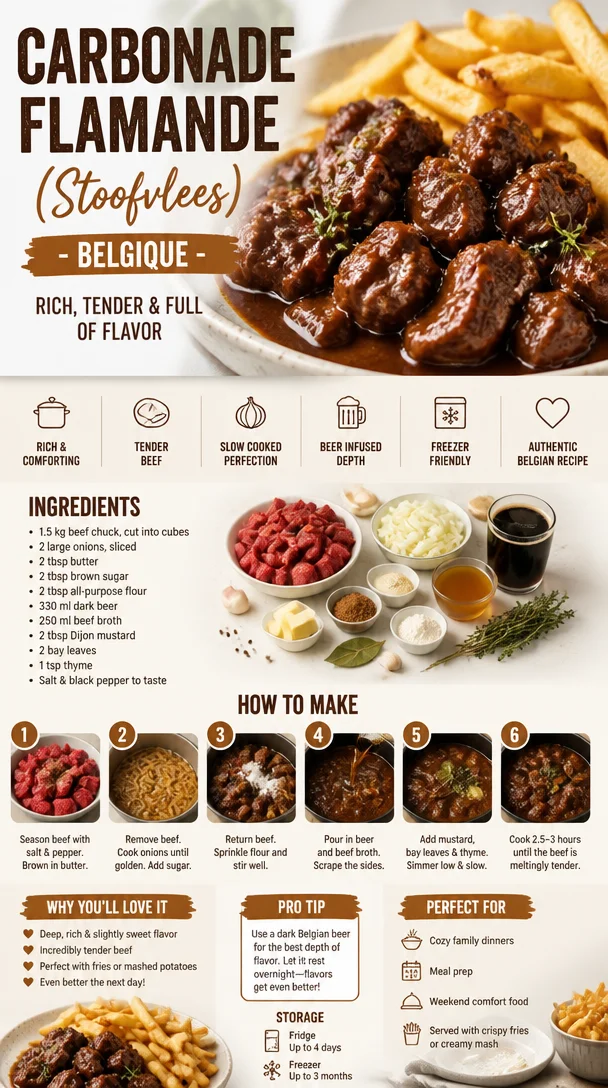
CARBONADE FLAMANDE (STOOFVLEES) – BELGIQUE
Discovering the Comfort of Carbonade Flamande: A Belgian Classic
Welcome to my kitchen! Today, we’re diving into a dish that’s close to my heart and soul—the beloved Carbonade Flamande, or stoofvlees, a traditional Belgian stew that’s as rich in flavor as it is in history. This hearty beef stew is made with tender chunks of beef, slowly braised in a savory blend of dark beer, onions, and aromatic herbs. It’s the kind of dish that warms not just your body, but also your spirit, especially when shared with loved ones. So grab your apron, and let’s get cooking!
A Sweet Nostalgia
The first time I tasted Carbonade Flamande, I was around ten years old, perched on a stool in my grandmother’s cozy kitchen in Belgium. The faint sound of bubbling stew mingled with the warm, inviting aromas that filled the air. My grandmother—a vibrant woman who had a knack for creating magic out of simple ingredients—pulled me close and handed me a wooden spoon, inviting me into her world of flavor.
As she guided me through the process of caramelizing the onions and searing the beef, I soaked in every detail—the way her eyes sparkled when she spoke about each ingredient. It was in that tiny kitchen, with flour dusting the counters and sunlight streaming through the window, that I learned a recipe isn’t just a set of instructions; it’s a love letter to family and friends. This stew wasn’t just about the meal; it was about the stories we shared over dinner, the laughter that echoed in our home, and the warmth of togetherness.
To this day, every time I make Carbonade Flamande, I am transported back to that enchanted kitchen, surrounded by the people I cherish. Trust me, this is not just a meal; it’s a comforting embrace on a plate.
Ingredients
Let’s gather our ingredients! Here’s what you’ll need to create this delightful dish, along with some tips and insights to get you started:
-
2 lbs (900g) beef chuck, cut into 2-inch cubes
- A well-marbled cut will give you the best results. Chuck becomes tender with long cooking times, so don’t skimp here!
-
2 medium onions, thinly sliced
- Onions add sweetness to the dish. You can substitute with shallots for a milder flavor or even leeks for a unique twist.
-
2 tablespoons olive oil
- Extra virgin olive oil is great, but feel free to use canola or vegetable oil if that’s what you have. You need something that can handle high heat.
-
1 tablespoon unsalted butter
- Adds richness, but if you want to keep it dairy-free, omit it or use a plant-based butter.
-
1 tablespoon brown sugar
- This helps caramelize the onions beautifully. Light or dark brown sugar works well; dark will add a deeper flavor profile.
-
4 cups Belgian dark beer
- The star of the dish! Use a rich brown ale or dubbel beer. For a non-alcoholic version, opt for a dark, non-alcoholic beer or beef broth.
-
2 cups beef stock
- Homemade stock is best, but store-bought works in a pinch. Beef stock will enhance the stew’s savory notes.
-
1 tablespoon Dijon mustard
- Adds a subtle tang that balances the sweetness. You can substitute with yellow mustard, but it won’t be quite as refined.
-
4 sprigs thyme
- A beautiful herb to complement the beef. Use dried thyme if fresh isn’t available. About a teaspoon will do.
-
2 bay leaves
- Essential for adding depth of flavor. Fresh or dried will work, but remember to remove them before serving!
-
Salt and pepper, to taste
- Essential to enhance the natural flavors. Use kosher salt for a less salty flavor that still packs a punch.
Step-by-Step Instructions
-
Sear the Beef:
Start by heating the olive oil in a large Dutch oven over medium-high heat. Once the oil is shimmering, add a few pieces of beef at a time (don’t overcrowd the pan!). Sear them until browned on all sides, roughly 5-7 minutes. Remove the beef and set it aside. This step is crucial; it builds flavor through caramelization. -
Caramelize the Onions:
In the same pot, add the butter and sliced onions. Cook them gently, stirring occasionally, for about 10-15 minutes until they become soft and golden. This sweetness is the bedrock of your stew, so don’t rush this process! -
Add Sugar and Beer:
Once your onions are perfectly caramelized, stir in the brown sugar. This will help in creating a wonderful glaze. After it starts to dissolve, slowly pour in the dark beer, scraping up any delicious brown bits from the bottom of the pot—no flavor should go wasted! Allow the mixture to reduce by half, which will concentrate those flavors. -
Combine Ingredients:
Now, reduce the heat to low and add the seared beef back to the pot along with the beef stock, Dijon mustard, thyme, bay leaves, and season with salt and pepper. Stir everything together, ensuring the beef is submerged in the liquid. -
Simmer It Down:
Cover your pot with a lid, leaving it slightly ajar, and let it simmer for 2 to 3 hours. Stir occasionally to prevent sticking. The key here is low and slow—this will make your beef melt-in-your-mouth tender. A tip? If you have an oven-safe pot, you can transfer it to a preheated oven at 325°F (160°C) for more even cooking. -
Check for Doneness:
After a few hours, check the beef for tenderness. It should fall apart easily with a fork. If it’s still a bit tough, give it more time; great flavor takes patience! -
Adjust Seasonings:
Once you’ve achieved the perfect texture, taste the stew and adjust the seasoning if necessary. You might want to add a touch more mustard or sugar to balance it out—every palate is different!
Serving Suggestions
Serve your Carbonade Flamande with creamy mashed potatoes, hearty bread for dipping, or a side of steamed vegetables. You can also garnish with fresh parsley for a pop of color. It’s the perfect dish to be enjoyed around the table with loved ones, sharing stories and laughter.
Recipe Variations
-
Vegetarian Version: Substitute the beef with hearty vegetables like mushrooms, eggplant, and lentils. Use vegetable stock instead of beef stock.
-
Spicy Kick: Add a chopped red chili or a spoonful of paprika for a spicy twist!
-
Herbaceous Boost: Try adding rosemary or a splash of balsamic vinegar for added depth.
-
Beer Alternatives: Use red wine instead of beer for a different flavor profile.
-
Noodle Love: Serve over buttered egg noodles instead of potatoes for a comforting twist!
Chef’s Notes
Over the years, I’ve played around with Carbonade Flamande in ways that make it unique to my family. One memorable instance was when I experimented by adding a hint of orange zest, which brightened the stew beautifully! It’s delightful how a little flair can elevate a classic dish. Embrace the process, and don’t be afraid to make it your own—cooking should be a cozy adventure!
FAQs and Troubleshooting
-
What type of beer should I use?
A rich Belgian beer is ideal, but any dark ale will suffice. Just avoid overly hoppy beers, as they might overpower the flavors. -
How do I thicken the stew if it’s too thin?
If your stew is too watery, remove the lid during the last half hour of cooking to allow it to reduce. Alternatively, mix a tablespoon of cornstarch with two tablespoons of cold water, then stir it into the stew until thickened. -
Can I make this in advance?
Absolutely! In fact, the flavors deepen when made a day ahead. Just reheat gently on the stovetop. -
What can I do with leftovers?
Leftover Carbonade Flamande makes a delicious filling for a pie or can be used as a sandwich filling on crusty bread!
Nutritional Info
This dish is rich and hearty, providing a satisfying meal infused with nutrients from the beef and vegetables. It can be enjoyed as part of a balanced diet, especially on chilly evenings when you need something warming!
So there you have it—my take on Carbonade Flamande! I hope it becomes a beloved recipe in your kitchen, just as it has in mine. Happy cooking!
Print
Carbonade Flamande
- Total Time: 195 minutes
- Yield: 4 servings 1x
- Diet: None
Description
A traditional Belgian stew made with tender beef, dark beer, and aromatic herbs, perfect for warm gatherings.
Ingredients
- 2 lbs (900g) beef chuck, cut into 2-inch cubes
- 2 medium onions, thinly sliced
- 2 tablespoons olive oil
- 1 tablespoon unsalted butter
- 1 tablespoon brown sugar
- 4 cups Belgian dark beer
- 2 cups beef stock
- 1 tablespoon Dijon mustard
- 4 sprigs thyme
- 2 bay leaves
- Salt and pepper, to taste
Instructions
- Sear the beef: Heat the olive oil in a large Dutch oven over medium-high heat. Sear the beef until browned on all sides, about 5-7 minutes, then remove and set aside.
- Caramelize the onions: In the same pot, add the butter and onions, cooking until soft and golden, about 10-15 minutes.
- Add sugar and beer: Stir in the brown sugar, then pour in the dark beer, scraping up brown bits from the pot and allowing the mixture to reduce by half.
- Combine ingredients: Reduce heat to low and add the seared beef back to the pot with beef stock, Dijon mustard, thyme, bay leaves, and seasonings. Stir to combine.
- Simmer it down: Cover and let simmer for 2-3 hours, stirring occasionally, until the beef is tender.
- Check for doneness: The beef should easily fall apart; if not, cook longer.
- Adjust seasonings: Taste and adjust seasonings as needed.
Notes
Serve with creamy mashed potatoes, bread for dipping, or steamed vegetables. Garnish with parsley for added color.
- Prep Time: 15 minutes
- Cook Time: 180 minutes
- Category: Main Course
- Method: Braising
- Cuisine: Belgian
Nutrition
- Serving Size: 1 serving
- Calories: 450
- Sugar: 6g
- Sodium: 600mg
- Fat: 18g
- Saturated Fat: 6g
- Unsaturated Fat: 9g
- Trans Fat: 0g
- Carbohydrates: 40g
- Fiber: 2g
- Protein: 36g
- Cholesterol: 100mg
Keywords: beef stew, Belgian cuisine, comfort food, hearty meals, traditional recipes
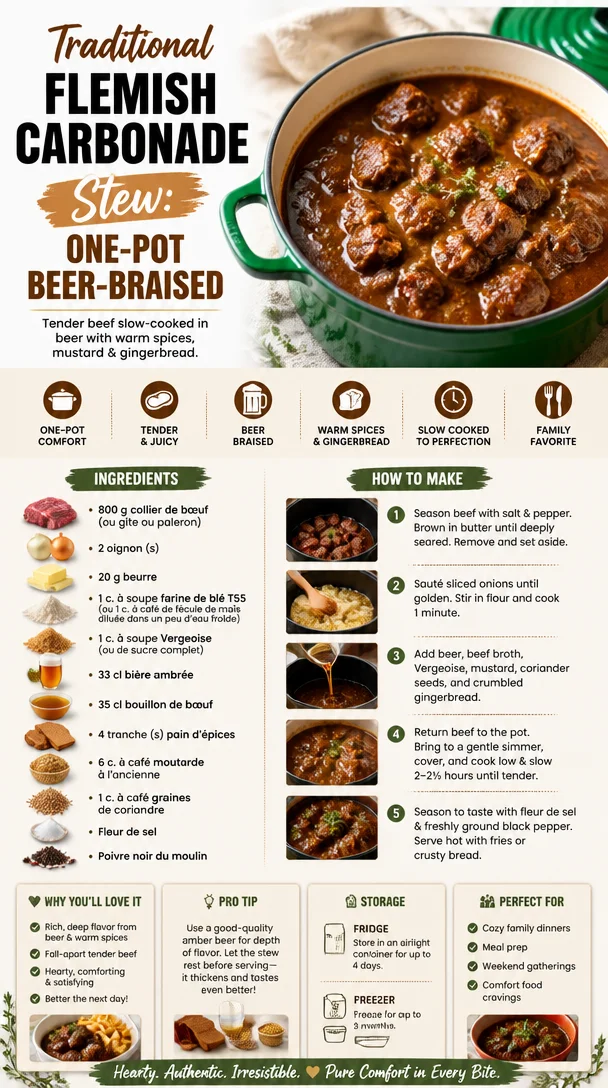
Traditional Flemish Carbonade Stew: One-Pot Beer-Braised
The Cozy Delight of Carbonade Flamande: A Taste of Tradition
Welcome to my cozy kitchen, fellow food lovers! Today, I’m thrilled to take you on a delightful culinary journey to Belgium with a dish that warms the soul and fills the home with irresistible aromas: Carbonade Flamande, also known as Flemish Beef Stew. If you’ve never experienced the joy of slow-cooked beef simmered in rich beer and accented with sweet onions, then buckle up for a recipe that’s destined to become a cherished part of your cooking repertoire.
Growing up, some of my fondest memories were crafted in the kitchen with my family, where food was always more than just a meal; it was an event, an experience to be savored. I can still recall the first time I tasted Carbonade Flamande. I was probably ten years old and my dad, sporting his favorite apron that read "Kiss the Cook," decided it was time to share his secret recipe with me. The kitchen filled with the smells of caramelizing onions, hearty beef, and a splash of dark beer that instantly transported me to a cozy café nestled in the heart of Brussels, where the stew was a house specialty. Cooking with my dad was not just about following a recipe; it was about bonding, laughing, and sharing stories—a tradition that has woven itself into the fabric of who I am as a chef.
Ingredients
To make this traditional dish come alive, you’ll need the following ingredients:
-
Beef Chuck (2-3 pounds): This cut is perfect for slow cooking; it becomes incredibly tender as it simmers. If you’re looking for a leaner option, you could substitute it with brisket, but be aware that the resulting stew might be less flavorful.
-
Beer (2-3 cups, preferably Belgian ale): The beer is what elevates this dish to gastronomic heights! A fruity amber ale works wonders here. If you’re avoiding alcohol, you can use non-alcoholic beer or beef broth mixed with a tablespoon of vinegar for a similar acidity.
-
Onions (2 large, thinly sliced): Sweet onions caramelize beautifully, adding depth to the stew. If you prefer a sharper bite, go for yellow onions. For a sweeter flavor, you could even use shallots or red onions.
-
Garlic (3 cloves, minced): Essential for adding that aromatic punch! Fresh garlic is best, but in a pinch, garlic powder can be used (1 teaspoon should do the trick).
-
Thyme (1 teaspoon, dried): This herb brings a lovely earthiness to the dish. Fresh thyme is excellent too—just double the amount!
-
Bay Leaves (2): These leaves add subtle flavor depth while the stew cooks; just remember to remove them before serving!
-
Brown Sugar (1 tablespoon): This helps to balance the bitterness of the beer and enhance the overall sweetness of the dish. You could substitute it with honey or maple syrup if you’re feeling adventurous.
-
Mustard (1 tablespoon, preferably Dijon): A touch of mustard ties all flavors together and promises a kick! If Dijon isn’t available, spicy brown mustard works well too.
-
Beef Broth (2 cups): Use low-sodium beef broth to control the salt level in your dish. Chicken broth can be a lighter substitute if necessary.
-
Salt and Pepper: To taste. Always season as you go!
This hearty mix of ingredients is not only comforting, but it makes your kitchen feel like a second home!
Step-by-Step Instructions
-
Prep Your Ingredients: The first step in creating this delightful dish is gathering all your ingredients and preparing them. Slice your onions thinly, mince the garlic, and cut your beef into 1-2 inch chunks. Trust me, taking the time to prep is worth it—your cooking process becomes so much smoother!
-
Brown the Beef: Heat a large Dutch oven or heavy pot over medium-high heat. Add a splash of oil and let it shimmer. In batches, sear the beef until browned on all sides, about 4-5 minutes per batch. Don’t overcrowd the pan, as this can lead to steaming instead of browning. This caramelization is key as it adds layers of flavor!
-
Caramelize the Onions: Remove the beef from the pot and set it aside. In the same pot, add your sliced onions. You might need to add a bit more oil if there’s none left. Cook the onions slowly over medium heat, stirring occasionally, until they turn golden brown and caramelized. This should take about 15-20 minutes. The patience pays off, trust me!
-
Add the Garlic: Once the onions are beautifully caramelized, toss in the minced garlic and cook for another minute, just until fragrant. You want that gorgeous garlicky aroma to fill your kitchen, but be careful not to burn it!
-
Deglaze with Beer: Now comes the fun part! Pour in the beer and use a wooden spoon to scrape up the delicious bits left at the bottom of the pot (this is called deglazing). Let it simmer for about 5 minutes, allowing the alcohol to evaporate a bit while the flavors meld.
-
Add Back the Beef: Return the browned beef to the pot, along with any juices that have collected. Next, stir in the broth, thyme, bay leaves, brown sugar, and mustard. Give it a good stir, and then bring it to a gentle simmer.
-
Slow Cook: Reduce the heat to low, cover, and let your Carbonade Flamande simmer for about 2 to 3 hours. The longer, the better! Stir occasionally and add a bit more broth or water if it looks too thick. You’ll know it’s ready when the beef is fork-tender, tantalizing your taste buds with its heavenly aroma!
-
Final Seasoning: Taste the stew once it’s done cooking; you might want to add a pinch of salt or pepper more. Adjust to your preference before serving.
-
Plate and Serve: Serve your stew hot, over a bed of fluffy mashed potatoes, crusty bread, or steamed rice to soak up every last bit of that delicious sauce.
Serving Suggestions
When it comes to serving Carbonade Flamande, presentation can elevate the experience! Ladle the stew generously into shallow bowls, and make sure to drench it with plenty of that rich sauce. A sprinkle of fresh parsley on top adds a beautiful pop of color. Pair it with a fresh green salad or some roasted vegetables for balance. And don’t forget a good loaf of crusty bread—it’s perfect for that final scoop of sauce!
Recipe Variations
Here are a few creative twists to consider, just in case you want to mix things up:
-
Vegetarian Version: Use robust mushrooms (like shiitake or portobello) and hearty vegetables like carrots and parsnips in place of beef. A good-quality vegetable broth and dark beer will still give a fantastic flavor.
-
Add Spices: Toss in a few peppercorns or a hint of allspice for an extra layer of flavor complexity.
-
Add Vegetables: Experiment with adding diced carrots or celery for a heartier stew.
-
Overnight Flavor: For an even richer flavor, prepare the stew a day in advance. Let it cool, refrigerate it overnight, and then reheat gently on the stovetop—this gives the flavors time to meld.
-
Gluten-Free: Use gluten-free beer and broth to adapt this recipe for those with gluten sensitivities.
Chef’s Notes
Making Carbonade Flamande has been a labor of love in my kitchen for years. I’ve played around with it, trying different types of beer and adjusting it to fit what I have on hand. One time, I made it with a sour beer, and while it was an adventure, let’s just say I learned to stick to traditional dulce choices! What I adore about this dish is that every family has their own twist. Whether it’s serving it with a side of fries or there’s a secret spice that has been passed down, there’s always room for creativity.
Ah, and I must share this funny moment: the first time I attempted this recipe alone, I completely misread ‘bay leaves’ as ‘basil leaves’ and ended up with a very confused stew. After that, I made it a habit to double-check my pantry—who knew herbs could be so tricky?!
FAQs and Troubleshooting
1. My stew turned out too salty. What did I do wrong?
Salt is in many ingredients, including broth and beer. Start with low-sodium broth and add salt gradually during cooking. If your stew is too salty, you can balance it with some sugar or by adding more vegetables to absorb the extra salt.
2. Why is my beef tough?
Braised dishes like this rely on low and slow cooking. If the beef isn’t tender, it may need more time to cook. Don’t rush this process; it can take a couple of hours for the beef to break down and become fork-tender.
3. Can I make this in a slow cooker?
Absolutely! After browning the beef and onions on the stovetop, transfer everything into your slow cooker. Cook on low for about 6-8 hours or on high for 3-4 hours.
4. What’s the best way to store leftovers?
Store any leftovers in an airtight container in the refrigerator for up to 3 days. This dish actually tastes better the next day as the flavors continue to develop. You can also freeze it for up to 3 months; just be sure to let it cool completely before transferring it to freezer bags!
Nutritional Info
This recipe serves approximately 6-8 people. The following information is an estimate based on ingredients and portion sizes:
- Calories: 400-500 per serving
- Protein: 40-45g
- Carbohydrates: 20-25g
- Fat: 15-20g
- Fiber: 2-3g
There you have it, my friends! A warm, hearty bowl of Carbonade Flamande that’s perfect for bringing loved ones together. This dish doesn’t just fill bellies; it fills hearts and creates memories. So gather your ingredients, roll up those sleeves, and let your kitchen be the heart of good food and good times. Happy cooking!
Print
Carbonade Flamande
- Total Time: 210 minutes
- Yield: 6-8 servings
- Diet: Carnivore
Description
A traditional Belgian beef stew slow-cooked in rich beer and sweet onions, perfect for cozy gatherings.
Ingredients
- Beef Chuck (2-3 pounds)
- Beer (2-3 cups, preferably Belgian ale)
- Onions (2 large, thinly sliced)
- Garlic (3 cloves, minced)
- Thyme (1 teaspoon, dried)
- Bay Leaves (2)
- Brown Sugar (1 tablespoon)
- Mustard (1 tablespoon, preferably Dijon)
- Beef Broth (2 cups)
- Salt and Pepper to taste
Instructions
- Prep your ingredients: Slice the onions thinly, mince the garlic, and cut the beef into 1-2 inch chunks.
- Brown the beef: Heat a large Dutch oven over medium-high heat, add oil, and sear the beef until browned, about 4-5 minutes per batch.
- Caramelize the onions: In the same pot, cook the sliced onions until golden brown and caramelized, about 15-20 minutes.
- Add the garlic: Toss in the minced garlic and cook for another minute until fragrant.
- Deglaze with beer: Pour in the beer and scrape up the bits from the bottom of the pot. Simmer for about 5 minutes.
- Add back the beef: Return the browned beef to the pot and stir in the broth, thyme, bay leaves, brown sugar, and mustard.
- Slow cook: Reduce heat to low, cover, and let simmer for 2-3 hours until the beef is fork-tender.
- Final seasoning: Taste and adjust with salt and pepper before serving.
- Plate and serve: Serve hot over mashed potatoes, crusty bread, or steamed rice.
Notes
For added flavor, consider preparing the stew a day in advance to let the flavors meld. This dish pairs beautifully with a fresh green salad or roasted vegetables.
- Prep Time: 30 minutes
- Cook Time: 180 minutes
- Category: Main Course
- Method: Slow Cooking
- Cuisine: Belgian
Nutrition
- Serving Size: 1 serving
- Calories: 450
- Sugar: 5g
- Sodium: 600mg
- Fat: 17g
- Saturated Fat: 6g
- Unsaturated Fat: 9g
- Trans Fat: 0g
- Carbohydrates: 22g
- Fiber: 2g
- Protein: 40g
- Cholesterol: 100mg
Keywords: beef stew, Belgian cuisine, Carbonade Flamande, comfort food, slow cooking
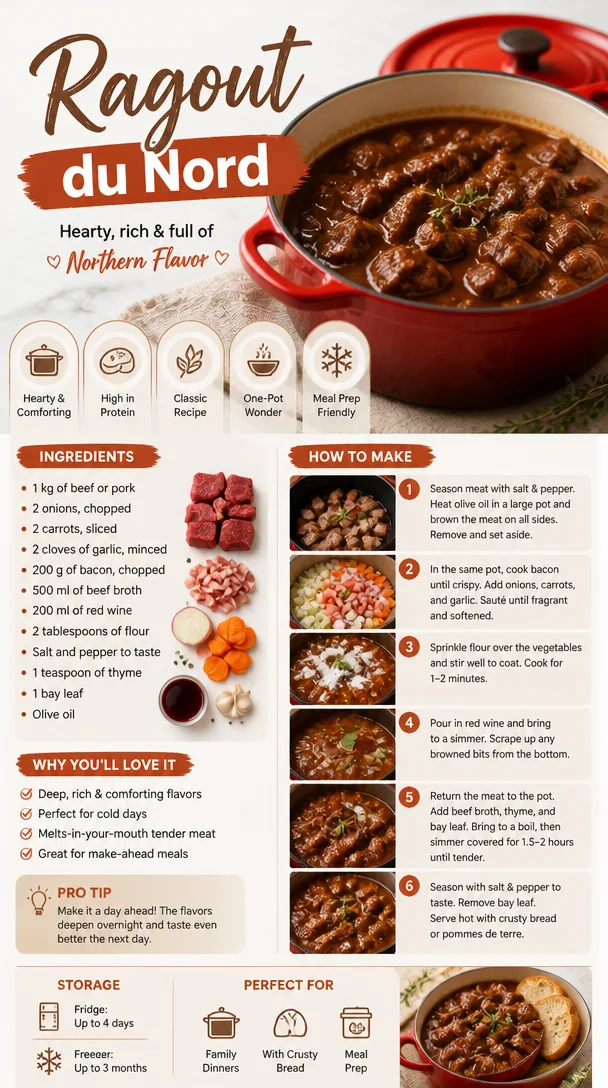
Ragout du Nord
Discover the Comfort of Ragout du Nord: A Cozy French Classic
Welcome to my kitchen! Today, we’re whipping up a dish that’s not just a meal but a warm embrace in a bowl—Ragout du Nord. This scrumptious French masterpiece hails from the northern region of France, a place where hearty meals are a way of life. Just the thought of it brings back memories of savoring tender meat, perfectly cooked vegetables, and that wonderfully rich sauce, all adorned with a sprinkle of fresh herbs.
Ragout du Nord is one of those recipes that holds the power to bridge generations and bring families together. I remember the first time I tasted this dish. I was visiting my grandmother in her quaint little home filled with the aroma of simmering goodness. She always had a knack for making every meal feel special, but there was something about this ragout—it felt like a celebration of flavors and warmth. I’d sit at her wooden table, munching away as she shared stories of her own childhood, wrapped in the cozy comfort of love and home-cooked meals.
As I cook today, I aim to recreate that feeling, to capture the very essence of togetherness and pleasure that only a homemade meal can offer. So roll up your sleeves and get ready to turn those simple ingredients into something unforgettable. Whether you’re inviting friends over for dinner or just indulging in a night in with a good book, Ragout du Nord is guaranteed to make your kitchen feel like a home.
Personal Story: A Moment in Grandma’s Kitchen
One of my most cherished memories relates to my grandmother and her infamous Ragout du Nord. It was a chilly Saturday afternoon in January, and I remember the snow gently falling outside as we huddled inside, the warmth of the kitchen wrapping around us like a cozy blanket. She always said, “Cooking is a form of love.” As we chopped vegetables together, her hands guiding mine, she shared stories about her own grandmother, who first taught her this recipe.
The dish was cooking away on the stove, filling the air with a combination of simmering meats and earthy vegetables, and I could hardly wait to dig in. When the ragout finally made its way to the table, it was like magic. We laughed, we talked, and every bite was a reminder of the love that had gone into it. That’s the beauty of cooking—it’s not just about nourishing our bodies; it’s about feeding our souls.
When I recreate this dish, I can feel her presence—her laughter, her wisdom, and that unmatchable warmth. I hope to inspire you to create your own memories in the kitchen, filled with love and laughter.
Ingredients
Here’s everything you need to create your very own Ragout du Nord:
- Beef (Chuck or Brisket): The star of this dish! Use cuts that are great for slow cooking. Chuck is well-marbled and tender after hours of simmering. If you’re looking for a leaner option, brisket works wonderfully too!
- Lardons (or Bacon): These little gems add a smoky depth to the dish. If you prefer a healthier alternative, turkey bacon can do the trick without sacrificing too much flavor.
- Onions: Sweet and aromatic, onions are a foundational flavor-building block. If you’re not a fan, shallots can offer a milder, more delicate taste.
- Carrots: They bring sweetness to the ragout. You can substitute with parsnips for a slightly different flavor or even use sweet potatoes!
- Garlic: Just a few cloves will infuse the dish with warmth. Depending on your preference, you could also use garlic powder, but fresh is always better!
- Tomato Paste: This gives the ragout its rich color and depth. If you’re looking for a lighter option, consider using a fresh tomato chopped finely.
- Red Wine: A splash of red wine enhances the complexity of flavors. For a non-alcoholic version, you can substitute with grape juice mixed with a bit of vinegar.
- Beef Broth: This is the base of our beautiful sauce. If you’re short on time, low-sodium store-bought broth can work just as well.
- Fresh Herbs (Thyme and Bay Leaves): They add lovely fragrance and flavor. In a pinch, dried herbs can work, but fresh herbs bring the dish to life!
- Salt and Pepper: These are essential for seasoning. Remember to taste as you go, adjusting to suit your preferences!
Step-by-Step Instructions
Now that you have your ingredients ready, let’s get cooking! Here’s how to bring your Ragout du Nord to life:
-
Prep Your Ingredients: Start by chopping your onions, carrots, and garlic. Aim for a consistent size so they cook evenly. This way, every spoonful is a perfect balance of flavors. Pro tip: if you’re chopping onions and tend to tear up, try wearing glasses—it might just help!
-
Brown the Meat: In a heavy-bottomed pot or Dutch oven, heat a few tablespoons of oil over medium-high heat. Add your beef, making sure to brown it on all sides. This step is crucial, as it seals in flavors. Don’t rush it—let it caramelize beautifully! Once browned, set the meat aside.
-
Cook the Lardons: In the same pot, throw in the lardons and cook until crispy. The fat from the bacon will partially cook, adding an incredible flavor to your ragout. Allow the lardons to brown and then catch all those delicious bits stuck to the pot (the fond!).
-
Sauté the Vegetables: Toss in the onions, carrots, and garlic. Sauté until the veggies are soft and fragrant, about 5-7 minutes. Fun fact: sautéing at this stage will develop those sweet caramelized flavors that make the dish irresistible!
-
Incorporate Tomato Paste: It’s time to add the tomato paste. Stir it in with the veggies, letting it cook for a couple of minutes. This helps to deepen the flavor profile, bringing out its natural sweetness.
-
Pour in the Wine: Deglaze the pot with red wine, scraping up any flavorful bits clinging to the bottom. Let the wine simmer for 5 minutes, allowing the alcohol to cook off. The richness you’ll get from this step is truly remarkable—your kitchen will smell divine!
-
Combine Everything: Return the browned beef to the pot, along with any juices that have collected. Add the beef broth, thyme, bay leaves, salt, and pepper. Bring everything up to a gentle simmer.
-
Slow Cook: Cover the pot and let it simmer on low for about 2 to 2.5 hours, or until the beef is tender and the flavors have melded beautifully. If possible, check in occasionally—give it a stir and an affectionate little taste!
-
Finishing Touches: Once the meat is fork-tender, taste the ragout and adjust seasoning if needed. Remove the bay leaves and thyme sprigs before serving.
-
Let It Rest: If you have time, let the ragout sit for a bit to cool down and develop even richer flavors—just like good wine!
Serving Suggestions
Plate up your Ragout du Nord with a generous portion of creamy mashed potatoes or fluffy bread to soak up that luscious sauce. Garnish with a sprinkle of fresh parsley for a pop of color and freshness. Don’t forget to pour yourself a glass of the same red wine you used for cooking—it adds a lovely touch to the dining experience!
Recipe Variations
- Vegetarian Ragout: Swap the beef for hearty mushrooms and add lentils for protein. Use vegetable stock and add even more colorful veggies like zucchini or bell peppers.
- Spicy Kick: Add a pinch of red pepper flakes or a diced jalapeño while sautéing the vegetables for a touch of heat.
- Herb Variation: Experiment with herbs like rosemary or oregano for a different flavor profile. They can give the dish an Italian twist if you’re feeling adventurous!
- Smoky Flavor: Use smoked paprika along with your regular spices for a deeper, smokier taste throughout the dish.
Chef’s Notes
Ragout du Nord has evolved so much since the first time I made it. I’ve tried countless variations, from adding different types of wines to experimenting with fresh herbs. One time, I even threw in some dark chocolate! It sounds strange, but it enhances the dish’s richness beautifully. Cooking should always be fun and creative—don’t be afraid to put your own spin on it!
Occasionally, I’ll overhear family and friends reminiscing about their own experiences with ragout, telling tales like mine. It’s heartwarming to see how a single recipe can inspire such variations in flavor and fond memories.
FAQs and Troubleshooting
1. My ragout turned out too salty. What should I do?
If you find yourself in this situation, try adding a splash of vinegar or citrus juice to brighten the flavors. You can also add a little water or broth to dilute the saltiness.
2. The beef is chewy instead of tender. What went wrong?
It’s essential to cook the beef low and slow for sufficient time. If it’s still chewy, give it more time on the stove—an hour or so more shouldn’t hurt!
3. Can I prepare this dish in advance?
Absolutely! Ragout du Nord actually tastes even better the next day after the flavors have melded overnight in the fridge. Just reheat gently on the stove before serving.
4. How can I store leftovers?
Let the ragout cool completely and then store it in an airtight container. It will keep well in the fridge for about 3-4 days, or you can freeze it for up to 3 months. Just secure it tightly in a freezer-safe container!
Nutritional Info
Ragout du Nord is a hearty meal packed with proteins and nutrients from the beef and vegetables. While I encourage you to enjoy this dish as an indulgence, it does provide essential vitamins and minerals, along with satisfying your comfort food cravings!
I hope this article inspires you to whip up your own Ragout du Nord! Cooking is about love, creativity, and the joy of sharing with others. So gather your ingredients, channel your inner chef, and let’s make cuisine that warms the heart and home! Happy cooking!
Print
Ragout du Nord
- Total Time: 170 minutes
- Yield: 6 servings 1x
- Diet: Carnivore
Description
A cozy French classic, Ragout du Nord combines tender beef, flavorful vegetables, and a rich sauce for a heartwarming meal.
Ingredients
- 2 lbs Beef (Chuck or Brisket)
- 4 oz Lardons (or Bacon)
- 2 Onions, chopped
- 3 Carrots, chopped
- 4 cloves Garlic, minced
- 2 tbsp Tomato Paste
- 1 cup Red Wine
- 4 cups Beef Broth
- 2 sprigs Fresh Thyme
- 2 Bay Leaves
- Salt and Pepper to taste
Instructions
- Prep your ingredients: Chop the onions, carrots, and garlic.
- Brown the meat in a heavy-bottomed pot over medium-high heat.
- Cook the lardons until crispy in the same pot.
- Sauté the onions, carrots, and garlic until soft.
- Incorporate the tomato paste and cook for a couple of minutes.
- Pour in the red wine and simmer for 5 minutes.
- Combine everything back into the pot with herbs and broth.
- Slow cook for 120 to 150 minutes until beef is tender.
- Finishing touches: Taste and adjust seasoning, then remove herbs before serving.
- Let it rest before serving for flavor development.
Notes
Serve with creamy mashed potatoes or bread to soak up the sauce. Enhance with fresh parsley.
- Prep Time: 20 minutes
- Cook Time: 150 minutes
- Category: Main Course
- Method: Slow Cooking
- Cuisine: French
Nutrition
- Serving Size: 1 bowl
- Calories: 480
- Sugar: 4g
- Sodium: 600mg
- Fat: 20g
- Saturated Fat: 8g
- Unsaturated Fat: 10g
- Trans Fat: 0g
- Carbohydrates: 29g
- Fiber: 4g
- Protein: 35g
- Cholesterol: 100mg
Keywords: Ragout du Nord, French cuisine, comfort food, beef stew, family recipe