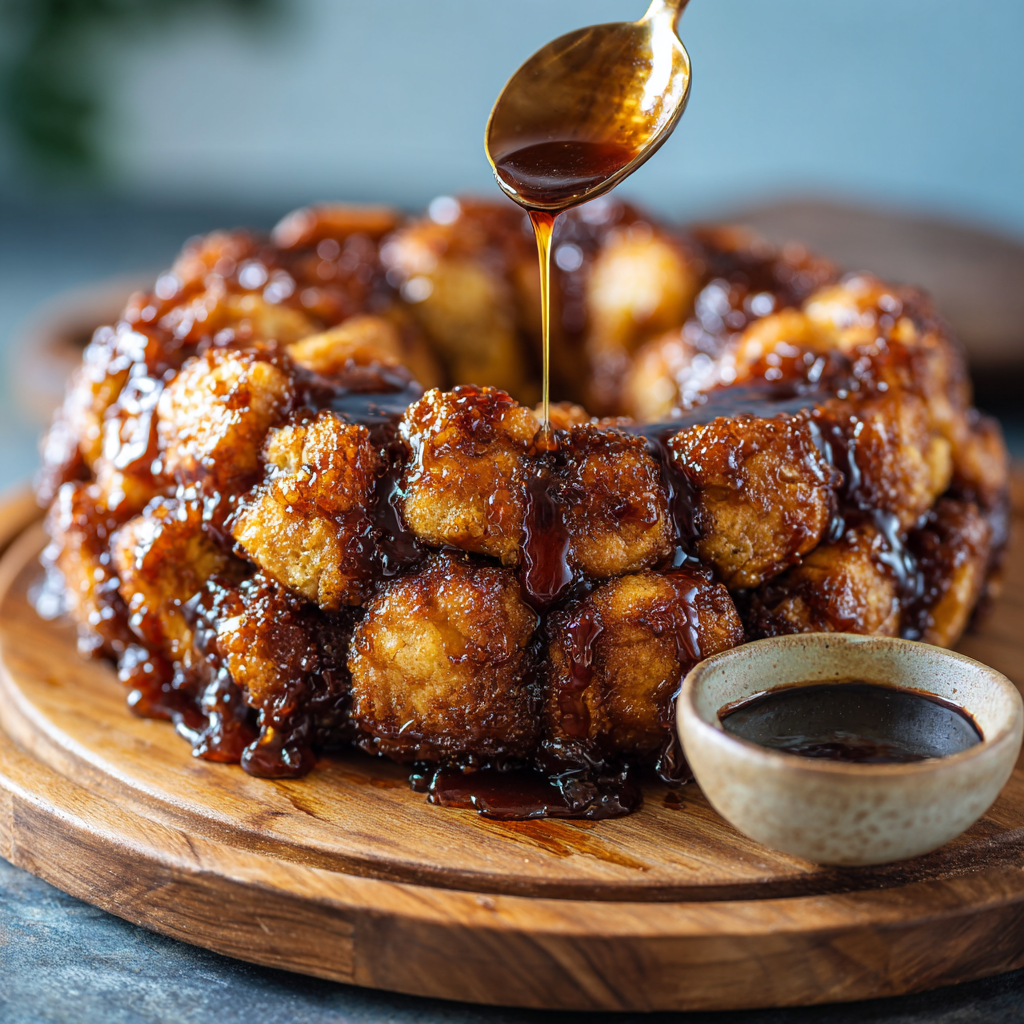
Welcome back to the kitchen, friends! If you’re anything like me, your ideal weekend morning involves a few key ingredients: a cozy apron, a sunlit kitchen, and the kind of smell that pulls everyone out of bed with a happy, rumbling stomach. That magical aroma? Today, it’s the intoxicating, sweet-and-tangy perfume of freshly baked Sourdough Monkey Bread.
Imagine this: soft, fluffy balls of naturally leavened sourdough dough, each one dipped in melted butter, rolled in cinnamon-sugar, and stacked into a glorious tower. As it bakes, a caramel sauce bubbles up and around each piece, creating a sticky, gooey, pull-apart masterpiece. It’s the nostalgic, fun-to-eat treat we all adore, but with the beautiful depth and slight tang of sourdough that makes it utterly, irresistibly special. This isn’t just monkey bread; it’s a labor of love (mostly passive, I promise!) that turns into the show-stopping centerpiece your brunch table or dessert spread has been waiting for. So, grab your starter and let’s make some mess, some memories, and one seriously delicious sourdough creation.
The Joy of a Pull-Apart Project
A Sticky-Fingered Memory
My love affair with monkey bread began not in a fancy bakery, but in my grandmother’s ’80s-era kitchen, with a can of pre-made biscuit dough and a cloud of Pillsbury dust. It was a “special occasion” treat, which in our house could mean anything from a birthday to a successful Saturday morning garage sale. My sister and I would fight for the job of shaking the dough pieces in the sugary bag, our hands getting coated in the process. The real magic, though, was the communal act of eating it. We’d all stand around the still-warm pan, burning our fingertips just a little as we pulled apart steaming, caramel-coated pieces, laughing and declaring which gooey chunk was the best.
When I fell down the sourdough rabbit hole years later, I knew I had to give that memory a from-scratch, fermented twist. My first few attempts were… educational. Let’s just say I learned that sourdough dough is a livelier beast than canned biscuits! But after a bit of tinkering, I landed on this version. It captures all the sticky-sweet joy of my childhood, but with that satisfying, homemade chew and complex flavor that only sourdough can bring. It feels like honoring a tradition while adding my own chapter to the story. Every time I make it now, that same feeling of shared, unpretentious joy comes right back—just with a few more bubbles in my starter.
Gathering Your Sweet & Tangy Toolkit
Here’s what you’ll need to create this pull-apart wonder. The beauty is in the simplicity! A few pantry staples and your bubbly starter are all it takes.
For the Dough:
- 1 cup (about 240g) active sourdough starter, fed and bubbly – This is the star! Your starter should be at or just past its peak, full of life. It should pass the float test (a spoonful drops in a glass of water and floats). This guarantees a good rise and that lovely tang.
- 2 ½ cups (about 320g) all-purpose flour – I use regular, unbleached all-purpose for a tender crumb. For a slightly chewier texture, you can swap in ½ cup of bread flour.
- ⅓ cup (about 80ml) lukewarm milk – Whole milk adds richness, but any milk (even nondairy like oat or almond) works. The warmth helps wake up the yeast in the starter.
- 2 tablespoons sugar – Just a touch to feed the starter and add a hint of sweetness to the base dough.
- 2 tablespoons melted butter, slightly cooled – For tenderness and flavor. Unsalted is my go-to so I can control the salt.
- 1 large egg – The binding agent that adds structure and richness to the dough.
- ½ teaspoon fine sea salt – Crucial for balancing all the sweetness and enhancing flavor. Don’t skip it!
For the Cinnamon-Sugar Coating:
- ½ cup (100g) granulated sugar – The classic sweet coating.
- 1 tablespoon ground cinnamon – Use the good stuff! The aroma as you mix this is pure comfort.
- ¼ cup (½ stick / 56g) melted butter – This is your “glue” to make the sugar and cinnamon stick. I just melt the whole half-stick and use what’s left for greasing the pan.
For the Gooey Caramel Sauce:
- ½ cup (100g) packed brown sugar – Light or dark works; dark will give a deeper, almost molasses-like note.
- ¼ cup (½ stick / 56g) butter – Salted or unsalted is fine here. I often use salted for a nice sweet-salty contrast.
- 2 tablespoons heavy cream (optional, but recommended) – This takes the sauce from “syrup” to “luscious caramel.” For a dairy-free version, full-fat coconut cream is a fantastic swap.
Let’s Build Some Sourdough Magic: Step-by-Step
Don’t let the rise times intimidate you! This is a wonderfully hands-off process. Think of it as a kitchen project that does most of the work while you sleep or go about your day.
Step 1: Make & Bulk Ferment the Dough
In a large bowl, combine the active starter, lukewarm milk, melted butter, sugar, and egg. Whisk it together until it looks like a frothy, lumpy pancake batter. Add the flour and salt. Use a wooden spoon or your hands to mix until a shaggy dough forms. Turn it out onto a lightly floured surface and knead for about 5-7 minutes. You’re looking for a smooth, slightly tacky (but not sticky) dough that springs back slowly when poked. Chef’s Tip: No need for a stand mixer here! This is a small, manageable dough, and the kneading is a great way to connect with the process. Feel the texture change under your hands—it’s the best part.
Place the dough in a lightly oiled bowl, cover with a damp kitchen towel or beeswax wrap, and let it rise at room temperature. This is the bulk fermentation. Let it go for 6-8 hours, or even overnight, until it’s roughly doubled in size. The time will vary based on your kitchen’s warmth and starter strength. Don’t watch the clock; watch the dough!
Step 2: Shape the Dough Balls
Once your dough is beautifully puffy, gently deflate it and turn it out onto a clean surface. No need for extra flour if it’s not too sticky. Using a bench scraper or a sharp knife, divide the dough into roughly 48 equal pieces (about the size of a walnut). I weigh them for uniformity (about 15g each), but eyeballing is perfectly fine! Roll each piece into a smooth ball between your palms. Chef’s Hack: Keep a small bowl of water nearby to dampen your hands if the dough starts to stick while rolling. It works like a charm.
Step 3: The Coating Station & Assembly
Set up your coating station: a small bowl with the melted butter, and another bowl with the sugar and cinnamon mixed together. Grease a 10 or 12-cup Bundt pan generously with butter or non-stick spray. Now, for the fun part! Take each dough ball, dunk it in the melted butter (let the excess drip off), then roll it generously in the cinnamon sugar. Place it in the prepared pan. Continue layering the balls randomly—there’s no wrong way! You’ll likely have two layers.
Step 4: Whip Up the Caramel & The Second Rise
In a small saucepan over medium-low heat, melt the butter for the sauce. Whisk in the brown sugar and heavy cream (if using) until smooth and just beginning to bubble. Remove from heat and let it cool for a minute—you don’t want to pour boiling sauce on your dough. Pour this luscious caramel evenly over the layered dough balls in the pan. Chef’s Insight: The sauce will seem thin; that’s perfect! It thickens and soaks into the bread as it bakes, creating that iconic gooeyness.
Cover the pan loosely with your towel and let it rise again for 1-2 hours, until the dough balls look puffy and are starting to cozy up to each other. They won’t double here, but you should see noticeable expansion.
Step 5: Bake to Golden Perfection
Preheat your oven to 350°F (175°C). Once the monkey bread has puffed up, place the pan in the center of the oven. Bake for 35-40 minutes, until the top is a deep golden brown and the caramel sauce is bubbling vigorously around the edges. Pro-Tip: If the top is browning too quickly, tent it loosely with aluminum foil for the last 10 minutes of baking.
Step 6: The Grand (and Patient) Unveiling
This is the hardest part! Remove the pan from the oven and place it on a wire rack. You must let it cool in the pan for at least 20-25 minutes. This allows the molten caramel to set just enough so your masterpiece doesn’t become a sticky avalanche when you flip it. After cooling, run a thin knife or offset spatula around the inner and outer edges of the pan. Place a large serving plate over the top, confidently say “here goes nothing!” (a little kitchen superstition never hurts), and invert it in one smooth motion. Lift the pan away to reveal your glorious, golden, caramel-drenched sourdough monkey bread!
How to Serve This Gooey Masterpiece
Place the warm, inverted monkey bread right in the center of the table—it’s a sculpture meant to be admired! Let everyone dig in with their hands, pulling apart soft, sticky pieces. For an extra-indulgent touch, I love serving it with a small bowl of extra warm caramel sauce or a side of whipped cream for dipping. A pot of strong coffee or tall glasses of cold milk are the ideal beverage companions. It’s messy, it’s interactive, and it’s guaranteed to spark smiles and sticky fingers all around.
Make It Your Own: Fun Variations
- Citrus Zest: Add the zest of one orange or lemon to the cinnamon sugar for a bright, sunny twist.
- Nutty Crunch: Sprinkle ½ cup of chopped pecans or walnuts between the layers of dough balls before adding the sauce.
- Apple Pie Vibes: Toss the butter-dipped dough balls in a mix of sugar, cinnamon, and a pinch of nutmeg. Add 1 cup of finely diced apples (tossed in a bit of lemon juice) to the layers.
- Chocolate Hazelnut: Swap the cinnamon sugar for a mix of granulated sugar and cocoa powder. Use Nutella thinned with a little melted butter as your “caramel” sauce drizzle.
- Dairy-Free/Vegan: Use plant-based milk, butter, and cream. Replace the egg with a “flax egg” (1 tbsp ground flaxseed mixed with 3 tbsp water, let sit 5 mins). Ensure your sugar is vegan-friendly.
A Few Notes from My (Flour-Dusted) Heart
This recipe is my happy kitchen experiment turned family favorite. It’s evolved from a somewhat dense brick in my early sourdough days to this fluffy, reliable version. My biggest lesson? Trust the process, not the clock. Sourdough runs on its own schedule. If your kitchen is cold, the rises will take longer. If it’s a hot summer day, things will move faster. Look for the visual cues—the bubbles, the puffiness—and you’ll be golden.
I also highly recommend the overnight first rise. Mix the dough after dinner, let it ferment on the counter, then shape and do the second rise in the morning. It makes for the most relaxed, rewarding weekend baking project. And a funny story: I once forgot to add the egg. The bread was still tasty, but it had a much more rustic, chewy pull—a happy accident that taught me just how vital that egg is for the soft, cake-like texture we love. So, measure twice, but know that even “mistakes” can be delicious!
Your Questions, Answered
My dough didn’t rise much during the bulk fermentation. What happened?
This almost always points to a starter that wasn’t active enough. Make sure your starter is recently fed (within 4-12 hours) and passes the float test. Also, check your kitchen temperature. If it’s below 70°F (21°C), the fermentation will be sluggish. Try placing the covered bowl in your (turned-off) oven with the light on for a slightly warmer, draft-free spot.
Can I make this ahead of time?
Absolutely! You have two great options: 1) After assembling the coated balls and sauce in the pan, cover it tightly and refrigerate overnight. In the morning, let it sit at room temp for 1-2 hours to take the chill off and puff up, then bake. Or 2) Bake it fully, let it cool completely, and store at room temp, covered, for up to 2 days. Re-warm the whole thing, covered in foil, in a 300°F oven for 15-20 minutes before serving.
My caramel sauce hardened like candy after baking. Help!
This usually means the sauce was cooked too long before pouring, or the brown sugar was packed too firmly, making the sauce too thick. Next time, just melt the butter and sugar together until dissolved—don’t let it boil for more than a minute. Also, the heavy cream helps prevent hardening. If it happens, don’t worry! The hardened caramel is still delicious; it just gives a crunchy, praline-like texture that’s a different kind of wonderful.
I don’t have a Bundt pan. What can I use?
No problem! A 9×13 inch baking dish or a deep 9-inch round cake pan works perfectly. You’ll lose the classic “tower” shape, but you’ll gain more surface area for crispy, caramelized edges—which, in my book, is a win!
Print
Sourdough Monkey Bread : Sticky, Sweet & Naturally Fermented Fun
Description
This Sourdough Monkey Bread is a warm, shareable treat that fills the kitchen with cinnamon-sugar goodness. Soft balls of naturally leavened dough are coated in butter and spice, baked in a bubbling caramel sauce, and flipped into a gooey centerpiece everyone can pull apart. It’s a fun weekend bake with big payoff—and most of the time is hands-off.
Ingredients
Dough
-
1 cup (240 g) active sourdough starter, bubbly
-
2½ cups (320 g) all-purpose flour
-
⅓ cup (80 ml) lukewarm milk
-
2 tbsp sugar
-
2 tbsp melted butter, cooled
-
1 large egg
-
½ tsp fine sea salt
Cinnamon-Sugar Coating
-
½ cup (100 g) granulated sugar
-
1 tbsp ground cinnamon
-
¼ cup (56 g) melted butter
Caramel Sauce
-
½ cup (100 g) brown sugar, packed
-
¼ cup (56 g) butter
-
2 tbsp heavy cream (optional, for extra richness)
Instructions
-
Make the dough:
In a bowl, whisk starter, milk, melted butter, sugar, and egg. Add flour and salt; mix to a shaggy dough. Knead 5–7 minutes until smooth and slightly tacky. -
First rise (bulk ferment):
Place in a lightly oiled bowl, cover, and let rise at room temperature 6–8 hours (or overnight) until doubled. -
Shape:
Gently deflate and divide dough into ~48 small pieces. Roll each into a ball. -
Coat & assemble:
Dip balls in melted butter, then roll in cinnamon sugar. Arrange in a well-greased Bundt pan. -
Caramel:
Melt butter with brown sugar (and cream, if using) just until smooth. Pour evenly over dough. -
Second rise:
Cover and let rise 1–2 hours until puffy. -
Bake:
Bake at 350°F (175°C) for 35–40 minutes, until deeply golden and bubbling. Tent loosely if browning too fast. -
Unmold:
Cool 20–25 minutes, then invert onto a serving plate.
Notes
-
Starter matters: Use a recently fed, active starter for good lift.
-
Watch the dough, not the clock: Rise times vary with temperature.
-
Don’t overcook the caramel: Just melt until smooth to keep it gooey, not hard.
-
No Bundt pan? Use a deep 9-inch round or 9×13-inch dish.
Nutritional Information*
*This is an estimate provided for informational purposes. Values can vary based on specific ingredients used.
Final Thoughts
Embrace the process. Sourdough baking is a beautiful dance between you, your starter, and time. This monkey bread might not be a 30-minute endeavor, but that’s its greatest gift. It asks you to plan, to anticipate, and to witness the quiet alchemy of fermentation. When you finally flip that pan and reveal the golden, caramel-drenched tower, every hour of waiting becomes worth it. You didn’t just bake bread; you crafted an experience. So, take a photo, gather your people, and dive in. May your weekends be cozy, your coffee strong, and your pulls apart perfectly sticky. Don’t forget to tag me if you share it—I’d love to see your creation!