Your New Weeknight Hero Is Here: Korean-Style Beef Bowls
Hey friends! Olivia here, apron probably a little splattered, kitchen smelling absolutely incredible. Have you ever had one of those days where you’re craving something that hits all the notes—sweet, spicy, savory, seriously satisfying—but you also don’t want to spend your entire evening chained to the stove? Me too. In fact, that exact feeling is what led me straight to the recipe I’m sharing with you today.
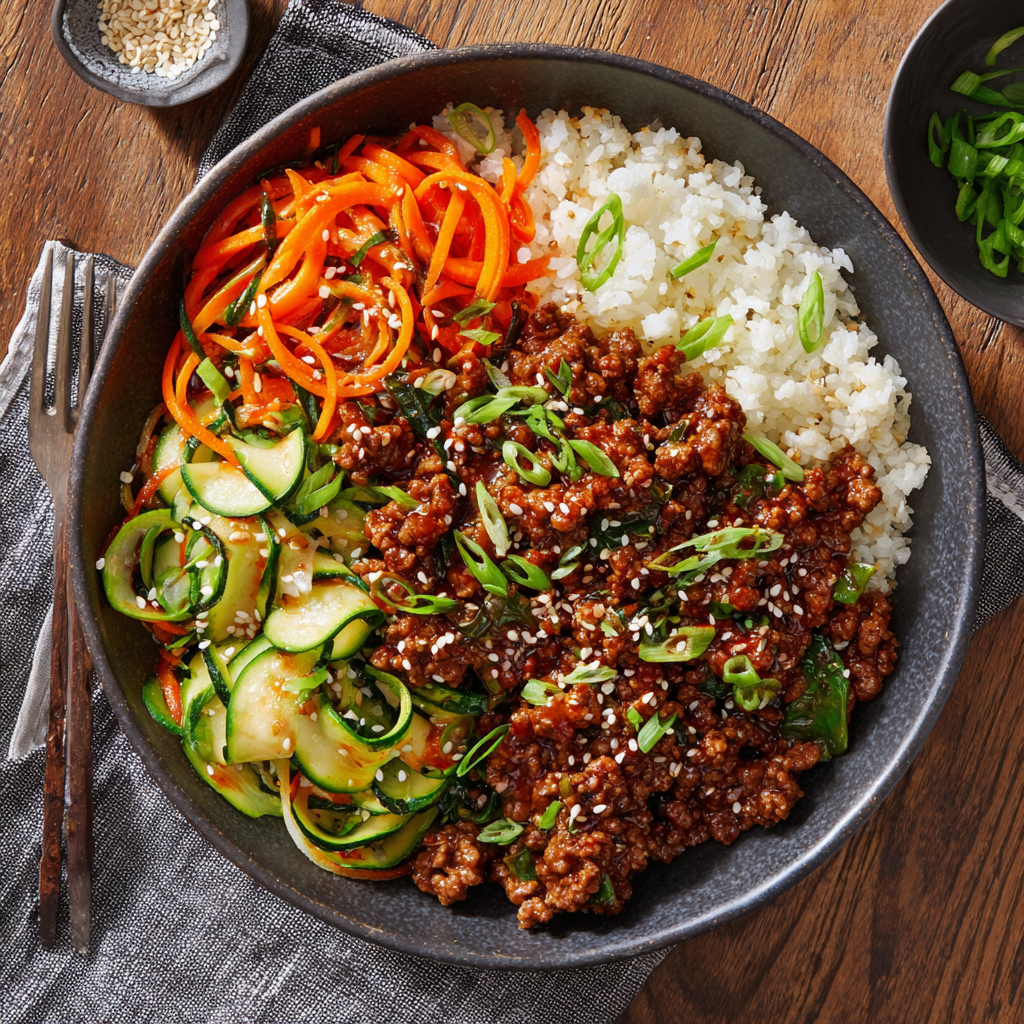
These Korean-Style Beef Bowls are my absolute go-to when I need a dinner that feels like a hug but cooks like a speed demon. We’re talking about lean ground beef, simmered in a glossy, bold sauce made with magical gochujang, paired with fluffy rice (or cauliflower rice for a lighter twist!), and topped with quick-sautéed, sesame-kissed veggies. It’s the kind of meal that makes everyone at the table go quiet for a second… and then immediately ask for seconds.
The best part? You likely have most of the ingredients already, and from start to glorious, messy finish, we’re looking at about 25 minutes. This isn’t just a recipe; it’s your ticket to a stress-free, flavor-packed dinner that delivers a whopping 40 grams of protein per serving. Let’s turn up the heat and get cooking!
The Night This Bowl Became a Legend
This recipe has a special place in my heart because it was born from a happy accident during one of my infamous “Fridge Clean-Out Fridays.” You know the drill: it’s been a long week, the fridge is a landscape of half-used veggies and random jars, and takeout is sounding way too tempting. One particular Friday, I had some ground beef, a sad-looking zucchini, and a jar of gochujang I’d bought for one specific soup and then forgotten.
I started browning the beef, minced some garlic and ginger almost on autopilot, and then stared at that vibrant red paste. “Why not?” I thought. I glumped a big spoonful into the pan, added a splash of soy and a drizzle of honey, and gave it a stir. The aroma that erupted was nothing short of transformative—deep, spicy, slightly sweet, and incredibly savory. Twenty minutes later, my husband took one bite, looked at me, and said, “This is a keeper. This is a ‘make every week’ keeper.” He was right. It’s since become our most-requested quick meal, the one we make for last-minute friends, and my ultimate proof that the best dishes often come from playful, unplanned moments in a cozy kitchen.
Gathering Your Flavor Arsenal
Here’s everything you’ll need to create these incredible bowls. Don’t stress if you’re missing an item or two—I’ve included my favorite swaps and insights so you can cook with confidence!
For the Amazing Gochujang Beef:
- 1 lb lean ground beef (93% or higher): The protein powerhouse! Lean beef keeps things lighter but still incredibly flavorful. Chef’s Insight: You can easily swap in ground turkey, chicken, or even plant-based crumbles here. The sauce is the star!
- 2 cloves garlic, minced: The flavor foundation. Fresh is best for that sharp, aromatic punch.
- 1 tablespoon ginger, grated: Gochujang’s best friend! Ginger adds a bright, warming zing that cuts through the richness. Quick Tip: Keep a knob of ginger in your freezer—it grates easily straight from frozen!
- 2 tablespoons gochujang (Korean chili paste): The HEART of this dish! It’s not just heat; it’s complex, fermented, slightly sweet, and deeply savory. Finding It: Look in the Asian aisle of any major supermarket. Once you have it, you’ll want to put it on everything.
- 2 tablespoons low-sodium soy sauce: For that essential salty, umami depth. Using low-sodium lets you control the salt level perfectly.
- 1 tablespoon sesame oil: The finishing oil. That nutty, toasty aroma is unmistakable and ties the whole dish together. Pro Tip: Always add sesame oil at the end of cooking or off-heat to preserve its flavor.
- 1 tablespoon honey or maple syrup: A touch of sweetness to balance the spice and salt. I love honey, but maple syrup is a great vegan alternative.
- 1 tablespoon rice vinegar: Our secret weapon! A splash of acidity brightens the entire sauce and makes the flavors pop.
For Building Your Bowls:
- 2 cups cooked rice: White, brown, jasmine—your choice! It’s the perfect, fluffy base to soak up all that glorious sauce. My Go-To: I use a rice cooker for foolproof fluffy rice every single time.
- 2 cups mixed veggies (like shredded carrots, zucchini, and spinach): Color, crunch, and nutrition! Use what you love or what’s in your crisper. Bell peppers, broccoli, or snap peas are also fantastic.
- 1 teaspoon each sesame oil & soy sauce: For quickly glazing the veggies as they sauté.
- Sesame seeds and green onions, for garnish: Non-negotiable for me! They add visual flair, a little crunch, and a fresh, oniony finish that lifts the whole dish.
Let’s Get Cooking: Your Step-by-Step Guide
Okay, aprons on! Let’s transform these simple ingredients into something truly spectacular. I’ll walk you through each step with all my favorite kitchen hacks.
- Prep Your Base & Veggies. Before you even turn on the stove, get your rice cooking (if it’s not already done) and chop your veggies. Having everything ready to go (mise en place, as the fancy chefs say!) makes the actual cooking process a smooth, 15-minute breeze. Little Chef Hack: I often use pre-shredded carrots or buy a “stir-fry blend” from the produce section to save even more time.
- Cook the Beef. Heat a large skillet or wok over medium-high heat. Add the ground beef and cook, breaking it up with your spoon, until it’s beautifully browned and no longer pink. This should take about 5-7 minutes. Once it’s cooked, drain off any excess fat. My Tip: Leaving a tiny bit of fat is okay—it adds flavor! Now, add the minced garlic and grated ginger right into the hot beef. The residual heat will cook them perfectly in about 60 seconds, filling your kitchen with the most insane aroma. Don’t let the garlic burn!
- Create the Magic Sauce. This is the fun part! Reduce the heat to medium. To the beef, add the gochujang, soy sauce, that glorious tablespoon of sesame oil, honey, and rice vinegar. Stir, stir, stir until every bit of beef is coated in that sticky, red, fragrant sauce. Let it simmer gently for 3-5 minutes. You’ll see it thicken slightly and cling to the meat. That’s when you know it’s ready. Give it a taste—be careful, it’s hot!—and do a little happy dance.
- Sauté the Veggies. While the beef simmers, heat a separate medium pan over high heat. Add your mixed veggies with a tiny splash of water. Stir-fry for 2-3 minutes until they’re just starting to soften but still have a nice crunch. Right at the end, drizzle them with that teaspoon each of sesame oil and soy sauce, toss to coat, and then take them off the heat. We want them vibrant and crisp-tender, not mushy!
- The Grand Assembly. Time to build your masterpiece! Grab your bowls. Start with a fluffy base of rice. Pile a generous helping of the saucy beef right on top. Artfully arrange (or just dump happily—no judgment!) your sesame veggies next to it. The final flourish: a generous sprinkle of sesame seeds and a handful of thinly sliced green onions. Admire your work for a second… then dig in!
How to Serve It Up in Style
Presentation is part of the fun! I love using wide, shallow bowls so you can see all the beautiful layers. For a real restaurant-style touch, pack the warm rice into a small bowl or measuring cup, then invert it into the center of your serving bowl to create a neat, round mound. Spoon the beef around it and let the veggies cascade over one side. The green onions and sesame seeds go last, like confetti! For a family-style meal, I’ll sometimes put the rice, beef, and veggies in separate serving dishes on the table and let everyone build their own dream bowl—it’s interactive and always a hit.
Make It Your Own: Delicious Twists & Swaps
This recipe is a fantastic canvas for creativity. Here are a few of my favorite ways to mix it up:
- Gochujang Chicken or Turkey: Swap the beef for ground chicken or turkey. You might need a tiny drizzle of extra oil since they’re leaner.
- Spicy “Bulgogi” Style: Add a grated Asian pear or a quarter of a grated apple to the sauce along with the gochujang for a hint of fruity sweetness that’s classic in Korean bulgogi.
- Vegan Power Bowl: Use a plant-based ground “meat” or crumbled extra-firm tofu. Sauté the tofu until golden before adding the sauce. Double-check your gochujang brand is vegan (most are, but some contain dairy).
- “Kitchen Sink” Veggie Delight: Skip the rice and serve the beef and sauce over a huge bed of the sautéed veggies, or even over crunchy romaine lettuce for a killer rice-less bowl.
- Extra Creamy & Rich: Stir a tablespoon of softened cream cheese or a splash of coconut milk into the finished beef sauce for a richer, slightly creamy texture. It’s divine.
Olivia’s Kitchen Notebook
This recipe has evolved so much since that first Fridge Clean-Out Friday! I’ve learned that a splash of rice vinegar is the key to balancing the sweetness, and that grating frozen ginger is a game-changer. One funny fail? I once accidentally used dark soy sauce instead of low-sodium. The flavor was still amazing, but the beef turned a very, very deep, almost blackish color. My husband called it “Midnight Beef.” It tasted great but looked… intimidating. Lesson learned! Now, this dish is on such heavy rotation that I often double the sauce ingredients and freeze half the cooked beef for a “fast-forward” dinner another week. Just thaw, reheat, and assemble with fresh rice and veggies. Dinner is served in 10 minutes flat.
Your Questions, Answered!
Q: My sauce is too thin/watery. What happened?
A: No worries! This usually means there was still a lot of liquid in the pan from the beef. Two fixes: 1) Let it simmer for a few more minutes over medium heat, stirring often, until it reduces and thickens. 2) Make a quick slurry by mixing 1 teaspoon of cornstarch with 1 tablespoon of cold water, then stir it into the simmering beef. It will thicken up in about 60 seconds.
Q: Is gochujang super spicy? Can I make this kid-friendly?
A: Gochujang is more about deep, fermented flavor than blow-your-head-off heat. That said, it does have a kick! For a milder version, start with 1 tablespoon instead of 2. You can also add a little extra honey to sweeten it up. My friend’s kids love it when I do it this way.
Q: Can I meal prep this?
A> ABSOLUTELY. This is a meal prep superstar. Store the cooked beef, rice, and veggies separately in airtight containers in the fridge for up to 4 days. Assemble and reheat individual bowls throughout the week. The beef reheats beautifully in the microwave or on the stovetop with a tiny splash of water.
Q: What’s the best substitute for gochujang if I can’t find it?
A> In a pinch, you can mix 1 tablespoon of Sriracha or another chili-garlic sauce with 1 tablespoon of miso paste or even doctored-up ketchup (ketchup + a dash of soy sauce + a pinch of chili flakes). It won’t be identical, but it will be deliciously savory and spicy!
Korean-Style Beef Bowls : Sweet, Spicy, and Protein-Packed
Description
Hey friends! Olivia here. This is the dinner I make when I want something bold, cozy, and deeply satisfying—but I don’t want to spend my whole evening cooking. These Korean-Style Beef Bowls are fast, flexible, and bursting with flavor thanks to a glossy gochujang sauce that clings to every bite of lean beef.
Ingredients
Gochujang Beef
-
1 lb lean ground beef (93% or higher)
-
2 cloves garlic, minced
-
1 tablespoon fresh ginger, grated
-
2 tablespoons gochujang (Korean chili paste)
-
2 tablespoons low-sodium soy sauce
-
1 tablespoon sesame oil
-
1 tablespoon honey or maple syrup
-
1 tablespoon rice vinegar
Bowls & Veggies
-
2 cups cooked rice (white, brown, or jasmine)
-
2 cups mixed vegetables (carrots, zucchini, spinach, broccoli, or bell peppers)
-
1 teaspoon sesame oil
-
1 teaspoon soy sauce
Garnish (Optional but Recommended)
-
Sliced green onions
- Sesame seeds
Instructions
1. Cook the Rice
Prepare rice according to package directions. Keep warm.
2. Brown the Beef
Heat a large skillet over medium-high heat.
Add ground beef and cook for 5–7 minutes, breaking it up, until browned.
Drain excess fat if needed (leave a little for flavor).
Add garlic and ginger directly to the hot beef and stir for 1 minute, until fragrant.
3. Make the Sauce
Lower heat to medium. Stir in gochujang, soy sauce, sesame oil, honey, and rice vinegar.
Simmer for 3–5 minutes, stirring often, until thick, glossy, and well-coated.
Taste and adjust sweetness or spice if needed.
4. Sauté the Veggies
In a separate pan over high heat, add vegetables with a splash of water.
Stir-fry for 2–3 minutes until crisp-tender.
Finish with sesame oil and soy sauce, then remove from heat.
5. Assemble the Bowls
Divide rice between bowls.
Top with gochujang beef, sautéed veggies, green onions, and sesame seeds.
Serve hot and enjoy immediately.
Notes
-
Add sesame oil last to preserve its nutty aroma
-
Grate ginger frozen for easy prep and bold flavor
-
Simmer sauce uncovered if it needs thickening
- Use low-sodium soy sauce to avoid overpowering saltiness
Nutritional Information*
*Per serving (1 of 3 bowls), calculated with 93% lean ground beef and white rice. For illustrative purposes only.
- Calories: 460
- Protein: 40g (Wowza!)
- Carbohydrates: 28g
- Fat: 22g
- Fiber: 3g
Preparation Details: Prep Time: 10 minutes | Cook Time: 15 minutes | Total Time: 25 minutes | Serves: 3
Loved this recipe? Pin it for later!
Final Thoughts
So there you have it—your new weeknight hero, ready to rescue you from the clutches of boring dinners and takeout temptation. These Korean-Style Beef Bowls are more than just a recipe; they’re a reminder that incredible flavor doesn’t have to be complicated or time-consuming. With a few simple ingredients, a trusty skillet, and a spoonful of that magical gochujang, you can create a meal that feels special, satisfying, and seriously delicious—all in about 25 minutes.
I love this recipe because it’s flexible, forgiving, and full of personality. It works for busy families, impromptu gatherings, or those nights when you just need something that feels like a warm, flavorful hug. Whether you stick to the classic beef version or venture into one of the tasty twists, I hope this dish finds a happy home in your kitchen rotation, just like it has in mine.
Remember, the best meals often come from a little experimentation and a lot of heart. So grab that gochujang, fire up the stove, and make dinner something to look forward to. Happy cooking, friends!
Olivia