Homemade Tahini Recipe: Your Secret Weapon for Creamy, Dreamy Flavor
Hey there, friend! Come on in, grab an apron, and let’s get something straight: that little jar of tahini hiding in the back of your pantry? The one that’s maybe a little… gritty, or has that weird separated oil pool on top? We’re giving it a graceful retirement. Today, we’re making our own.
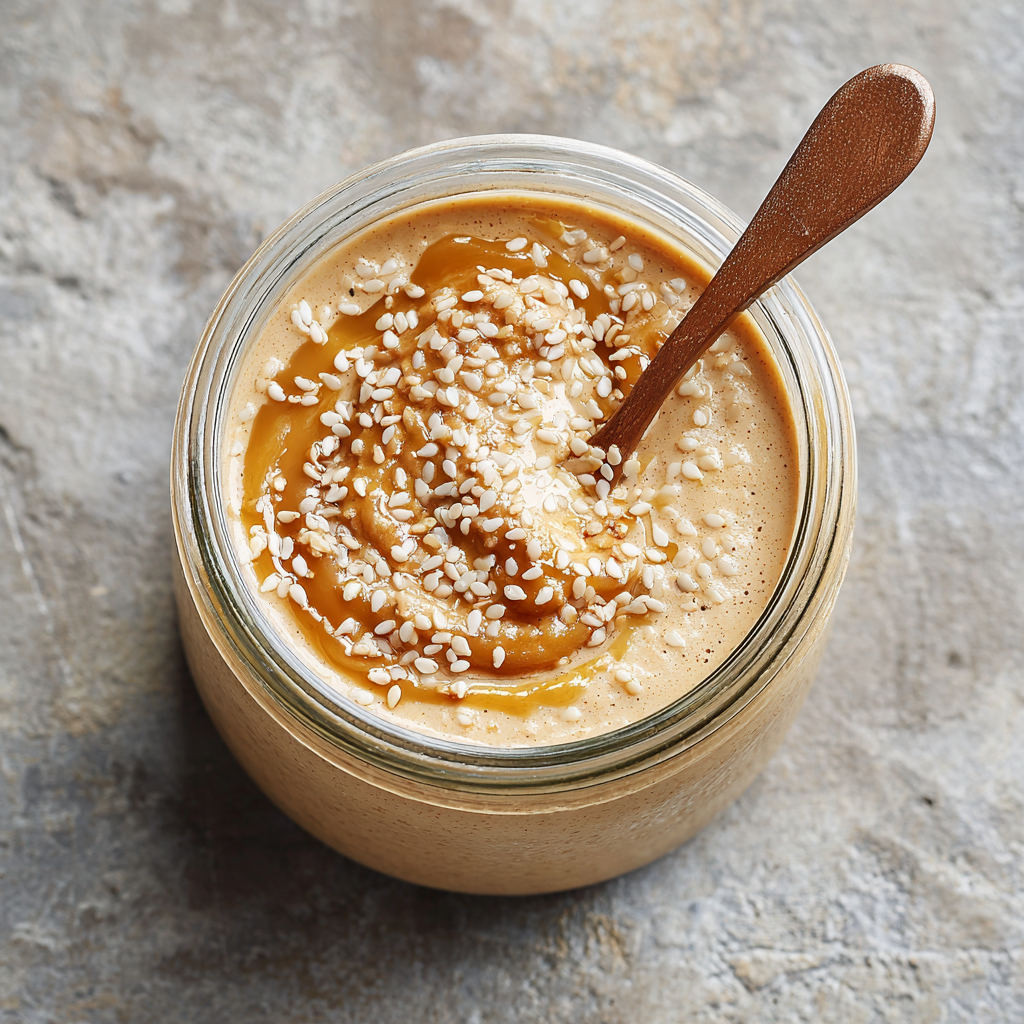
I’m a firm believer that some of the most transformative ingredients in cooking are also the simplest to make from scratch. And tahini—that luxuriously smooth, nutty, subtly bitter sesame paste—is the queen of that category. If you’ve only ever experienced it as a humble hummus ingredient, you’re in for a revelation. This homemade version is a universe away. It’s richer, fresher, creamier, and carries a toastiness that sings of quality and care.
The best part? You need exactly one main ingredient and about 10 minutes. That’s it. No fancy skills, no obscure tools. Just you, some sesame seeds, and a trusty blender or food processor. We’re going to turn those tiny seeds into liquid gold that will become your new kitchen obsession. Drizzle it over roasted sweet potatoes, whisk it into a lightning-fast garlic sauce for grilled chicken, fold it into brownie batter, or yes, make the most incredible hummus of your life. This homemade tahini recipe is about to become your flavor secret weapon. Ready to see how truly easy it is? Let’s go.
My Tahini “Aha!” Moment: A Story from a Sunny Market
My love affair with tahini wasn’t love at first sight. For years, I bought the same supermarket brand, dutifully stirring the stubborn oil back into the thick paste, never quite thrilled with the faintly stale, sometimes bitter result. I thought that was just… how tahini was.
Then, on a trip to visit a friend in Jerusalem, we got lost in the maze of the Machane Yehuda market. The air was thick with the scent of spices, frying falafel, and fresh pita. At a tiny stall overflowing with barrels of nuts and seeds, an older vendor with kind eyes offered me a taste of his tahini. He drizzled it straight from a large vat onto a piece of warm pita. I took a bite, and my entire concept of the ingredient shattered.
It was creamy. Like, silken-pudding creamy. It was deeply nutty but also sweet, complex, and impossibly smooth. There was no grit, no harsh bitterness—just a warm, rounded flavor that made me immediately want another bite. “The secret,” he said with a wink, “is to be friends with the sesame seed. Toast it just enough to wake it up, not to scare it.” That philosophy—respecting the ingredient, handling it with intention—stuck with me. I came home determined to recreate that magic. After a few batches (and a very patient food processor), I realized the secret wasn’t a secret at all. It was just freshness, simplicity, and a little bit of patience. And now, I get to share that “aha!” moment with you.
What You’ll Need: Keeping It Simple & Stellar
Here’s the beautiful part. Our ingredient list is gloriously short. Quality is key here, as there’s nowhere for mediocre ingredients to hide.
- 2 cups sesame seeds (hulled): This is our star! Hulled seeds (the kind without the outer bran) will give you the classic, pale beige, ultra-creamy tahini. You can use unhulled for a darker, more robust flavor and extra fiber, but your tahini will be thicker, slightly grainier, and more bitter. For your first time, I highly recommend hulled for that silky-smooth texture we’re after.
- 2-4 tablespoons neutral oil: Our texture magician. I typically use a mild avocado oil or a light olive oil (not extra virgin, its flavor is too strong). For a deeply aromatic, “next-level” tahini, you can use 1-2 tablespoons of toasted sesame oil blended with a neutral oil. Chef’s Insight: Start with 2 tablespoons and add more only as needed. The seeds release their own oils as they blend!
- A generous pinch of salt (optional): Just a pinch! This isn’t for preservation, but for flavor. Salt acts as a flavor enhancer, rounding out the nuttiness and balancing any subtle bitter notes. I never skip it.
Let’s Make It: Your Step-by-Step Guide to Sesame Gold
Ready? This process is almost meditative. Put on some good music, and let’s transform these seeds.
- Toast the Sesame Seeds: Add your sesame seeds to a large, dry skillet (no oil!) over medium heat. Now, channel your inner market vendor and “wake them up, don’t scare them.” Toast them for 3-5 minutes, stirring or shaking the pan constantly. They’ll become fragrant and take on a very light golden hue. The moment you smell that warm, nutty aroma, they’re done! Pro-Tip: Immediately pour them onto a cool plate or baking sheet. They carryover cook in the hot pan, and we want to avoid burning at all costs—burnt seeds make bitter tahini.
- Let Them Cool (The Patience Step): I know, I know. You want to blend! But letting the seeds cool completely is a non-negotiable chef’s hack. Blending warm seeds creates steam, which can make your tahini seize up or become gummy. Give them 10-15 minutes to come to room temperature. Use this time to wash the pan and set up your food processor.
- The First Blend – From Seeds to Crumbs: Add the completely cooled seeds to your food processor or high-powered blender. Secure the lid and let it run! At first, it’ll sound like a sandstorm. After a minute or so, it’ll form a dry, crumbly paste that clumps together. This is perfectly normal. Stop, scrape down the sides and bottom with a spatula.
- The Magic Transformation – Adding the Oil: Here’s where the alchemy happens. Turn the processor back on. With it running, slowly drizzle in your oil through the feed tube. Start with 2 tablespoons. You’ll witness the magic: the dry crumbs will suddenly collapse into a thick, smooth paste. Let the machine run for a full 1-2 minutes. It will get smoother and smoother. Chef’s Hack: If it still seems too thick or grainy after 2 minutes, stop, scrape, and add another ½ tablespoon of oil. Repeat until it’s pourable but still luxuriously thick.
- Season and Finalize: Add your pinch of salt. Process for another 30 seconds to incorporate it fully. Give it a taste on a spoon. Be amazed. That’s it!
- Store with Love: Scrape every last bit into a clean, airtight glass jar. A mason jar is perfect. It will keep in the refrigerator for up to a month. The oil may separate on top—that’s natural! Just give it a good stir before each use.
How to Use Your Liquid Gold: Serving Suggestions
Congratulations! You now have a jar of culinary magic. Beyond the classic hummus, try these simple ideas: Drizzle it over roasted vegetables (cauliflower, broccoli, sweet potatoes) straight from the oven. Thin it with lemon juice, water, and a crushed garlic clove for an instant, heavenly sauce for grilled meats or falafel. Swirl it into morning oatmeal or yogurt with a drizzle of honey. Or, my favorite lazy dinner: a big spoonful whisked into hot pasta water with a squeeze of lemon, chili flakes, and pasta for a creamy, dairy-free sauce in seconds.
Make It Your Own: Fun Recipe Variations
- Roasted Garlic Tahini: Blend in 2-3 cloves of roasted garlic for a mellow, sweet kick. Perfect for dressings.
- Lemon-Zest & Herb: Add the zest of one lemon and a handful of fresh dill or parsley for a bright, herbaceous spread.
- Spiced Tahini: Blend in ½ tsp each of ground cumin and coriander for a Middle Eastern flair.
- Maple-Cinnamon Tahini: For a sweet version, blend in 1 tbsp maple syrup and ½ tsp cinnamon. Incredible on toast or pancakes.
- Oil-Free (Seed-Only) Tahini: In a powerful blender like a Vitamix, you can often achieve a smooth paste with just seeds, though it will be very thick. Add water by the teaspoon to adjust consistency for dressings.
Chef’s Notes & Kitchen Confessions
This recipe has evolved from a “let’s see if this works” experiment to a weekly staple in my kitchen. My first batch? I over-toasted the seeds and my food processor sounded like it was going to launch into orbit. The tahini was… aggressively bitter. Lesson learned! Now, I’m almost obsessive about gentle toasting and letting the seeds cool.
I also used to add all the oil at once. Big mistake. It splattered everywhere and took forever to emulsify. The slow drizzle is a game-changer—it’s the difference between a cohesive sauce and a messy one. And a funny story: I once tried to quadruple the batch for a party. My poor little food processor overheated and shut down for a “cool-down break.” We had to finish blending in two batches. So, if you’re making a big batch, give your machine a breather! Now, you get to learn from my messy-apron mistakes. Enjoy the smooth, easy journey.
Your Tahini Questions, Answered
Q: My tahini is super bitter! What did I do wrong?
A: The most common culprit is over-toasting the sesame seeds. Even a few extra seconds can push them from “nutty” to “burnt and bitter.” Next time, toast just until fragrant and immediately remove from the pan. Using unhulled seeds can also contribute to a more bitter flavor profile.
Q: It’s too thick/crumbly and won’t get smooth, even with more oil. Help!
A: First, ensure you blended the dry seeds long enough before adding oil—let the processor run for a full minute to start breaking them down. Second, your machine might need a break. Processing generates heat. Stop, let it cool for 5-10 minutes, then try again with a bit more oil. A high-powered blender will always get it smoother than a basic food processor.
Q: How long does homemade tahini last, and how do I store it?
A> In an airtight jar in the refrigerator, it will stay fresh and delicious for about a month. The oil will separate—that’s totally normal and a sign of a natural, non-emulsified product. Just stir it back together before using.
Q: Can I use a blender instead of a food processor?
A> Yes, a high-speed blender (like a Vitamix or Blendtec) works brilliantly and often creates an even smoother texture. A standard blender may struggle with the initial dry blend, so you might need to stop and stir more frequently. Be patient and use the tamper if you have one.
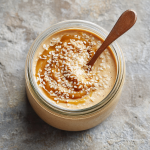
Homemade Tahini Recipe : Creamy, Healthy Sesame Paste
Description
Tahini is one of those small ingredients that makes a big difference. Freshly made tahini tastes smoother, nuttier, and less bitter than most jarred versions—and it’s surprisingly easy to make at home. With just sesame seeds, a little oil, and a blender or food processor, you can create a rich, creamy paste perfect for hummus, sauces, dressings, and desserts.
Ingredients
Ingredients (Makes about 1 cup)
-
2 cups hulled sesame seeds
-
2–4 tablespoons neutral oil (avocado oil, light olive oil, or sunflower oil)
-
Pinch of salt (optional)
Instructions
-
Toast the sesame seeds
Place seeds in a dry skillet over medium heat. Toast 3–5 minutes, stirring constantly, until lightly golden and fragrant. Do not let them darken too much. -
Cool completely
Transfer seeds to a plate and let them cool fully (about 10–15 minutes). This helps prevent a gummy texture when blending. -
First blend
Add cooled seeds to a food processor or high-speed blender. Blend 1–2 minutes until they form a dry, crumbly paste. Scrape down sides. -
Add oil slowly
With the machine running, drizzle in 2 tablespoons oil. Blend until smooth and thick. Add more oil a little at a time until you reach a creamy, pourable consistency. -
Season
Add a pinch of salt if desired and blend 20–30 seconds more. -
Store
Transfer to an airtight jar. Refrigerate up to 1 month. Stir before each use if oil separates.
Notes
-
Use hulled seeds for the smoothest, mildest flavor.
-
Light toast only — over-toasting causes bitterness.
-
Be patient while blending — smoothness improves after each minute.
-
Start with less oil and add gradually.
-
If too thick: blend longer or add 1 teaspoon oil at a time.
Nutritional Information (Per 1 Tablespoon)
Approximate values, as oil amount can vary.
Calories: 90 | Fat: 8g | Saturated Fat: 1g | Carbohydrates: 3g | Fiber: 1g | Protein: 3g | Sodium: 5mg
***
There you have it! Your very own jar of homemade, creamy tahini. I’m so excited for you to crack it open and start drizzling, dipping, and dressing your way to more flavorful meals. Tag me on Instagram @OliviasCozyKitchen if you make it—I love seeing your creations! Now, go enjoy that well-earned, nutty, delicious reward.
Final Thoughts
So here we are, standing side by side in your kitchen—flour dusted on the counter, the warm, nutty aroma of toasted sesame still lingering in the air, and a jar of liquid gold cooling on the counter. You did it.
I meant what I said at the beginning: tahini isn’t just an ingredient. It’s an invitation. It’s the bridge between a good meal and one you remember weeks later. And now, tucked away in your fridge, you have something the store could never quite give you. You have your version—made with your hands, your timing, your patience. That slight variance in toastiness, that perfect drizzle of oil you added drop by drop? That’s not imperfection. That’s signature.
What strikes me every single time I make tahini from scratch isn’t just the transformation of seed to silk—it’s how this humble paste quietly elevates everything it touches without demanding credit. It doesn’t shout. It deepens. It rounds out sharp edges, adds body to sauces, brings roasted vegetables into full bloom. It’s the kitchen equivalent of a really good friend: steady, versatile, and always welcome at the table.