The Herb-Crusted Rack of Lamb That Steals Every Holiday Show
Picture this: the kitchen is buzzing with happy chatter, the oven is humming, and that incredible, savory aroma of garlic and rosemary has everyone drifting in from the living room, asking, “Is it ready yet?” That, my friends, is the magic of a perfectly roasted herb-crusted rack of lamb. It’s the star of the table—the dish that makes an occasion feel special without requiring you to have a culinary degree.
If the thought of cooking lamb feels a little fancy or intimidating, I’m here to tell you to take a deep breath and grab your apron. We’re going to walk through this together, step-by-step. This recipe is my go-to for Easter, intimate dinner parties, or any time I want to turn a regular Sunday into a celebration. It looks absolutely stunning (hello, those elegant, frenched bones!), but the process is surprisingly simple. The secret is in the sear, the flavorful crust, and trusting a simple timer. We’re aiming for tender, juicy, pink-perfect lamb every single time. So, let’s roll up our sleeves, make a little mess, and create something unforgettable. Your table (and your guests) will thank you.
A Lamb Lesson & A Grandmother’s Smile
My love for this dish started in my Nana’s kitchen, though it wasn’t exactly a success story at first. I was about sixteen, determined to impress her by cooking Easter dinner. I chose a rack of lamb from a magazine, feeling very sophisticated. I seared it… a bit too enthusiastically. Let’s just say the smoke alarm became an uninvited guest, and the crust went from “golden” to “decidedly charred.” I was mortified, but Nana just chuckled, opened a window, and said, “Sweetheart, flavor hides a multitude of sins.” She showed me how to gently scrape off the worst of the burnt bits, whip up a quick new herb paste, and roast it anyway.
That lamb, patched up with love and laughter, was still delicious. More than that, it was a lesson I carry with me every time I cook: don’t fear the mistakes, because often, dinner (and joy) is more resilient than we think. Now, whenever the scent of rosemary and garlic hits a hot pan, I think of her. Cooking this dish feels like honoring that spirit—creating something beautiful and sharing it, imperfectly perfect, with the people you love.
Gathering Your Flavor Arsenal
Here’s everything you’ll need to build this masterpiece. I’ve added my little notes and swaps so you can shop and cook with confidence!
- 2 racks of lamb (about 1.5–2 lbs total), frenched: Ask your butcher to “french” the racks—this means cleaning the meat off the ends of the rib bones. It makes for a gorgeous presentation and makes slicing easier. No butcher? Some high-end grocery stores sell them pre-frenched. Chef Insight: Look for racks with a nice, thick layer of fat on top (this is flavor!) and a good amount of meat on the loin.
- 2 tbsp olive oil: Our cooking fat and binder for the crust. A good, robust extra virgin olive oil adds depth.
- 3 garlic cloves, minced: Non-negotiable for that foundational aroma. For a milder flavor, you can grate it instead of mincing.
- 2 tbsp fresh rosemary, finely chopped: Lamb’s best friend! Fresh is key here—dried rosemary can be woody and harsh. If you must sub, use 2 tsp dried, but crush it finely in your palm first.
- 1 tbsp fresh thyme, chopped: Adds an earthy, slightly floral note.
- 1 tbsp fresh parsley, chopped: Brings a fresh, green brightness that balances the richer herbs.
- 1/2 cup breadcrumbs (or panko): Panko gives a lighter, crispier texture, while regular breadcrumbs make a more traditional, tighter crust. Gluten-free? Use your favorite GF panko—it works perfectly.
- 1 tsp Dijon mustard: This is our “glue”! It helps the crust adhere and adds a wonderful tangy background note that cuts through the richness.
- 1 tsp salt & 1/2 tsp black pepper: Seasoning is everything. Don’t be shy with the salt on the meat itself.
- Optional: lemon zest for brightness: A little zest (about 1/2 a lemon’s worth) stirred into the herb mix is my secret weapon. It doesn’t make the dish lemony, just wonderfully vibrant.
Step-by-Step: From Pan to Perfection
Let’s break this down. Follow these steps, and you’ll have a restaurant-quality main dish that’s deceptively easy.
Step 1: Prep & Preheat. Take your lamb out of the fridge about 30 minutes before cooking. This lets it come to room temperature, which is the #1 trick for even cooking. Pat the racks very dry with paper towels—this is crucial for a good sear! While it’s resting, preheat your oven to a hot 400°F (205°C).
Step 2: The Golden Sear. Heat a large, heavy-bottomed skillet (cast iron is my hero here) over medium-high heat. Season the lamb racks generously all over with salt and pepper. Once the pan is hot, place the racks in, fat-side down. You should hear a confident sizzle. Sear for 2-3 minutes until that fat cap is deeply golden and crisp. Don’t move it! Let it develop that beautiful crust. Sear the meaty side for just 1 minute to get some color. Remove from the pan and set aside on a plate. Chef Hack: If there’s a lot of rendered fat in the pan, pour most of it out, but save a tablespoon or two. You can mix it into your herb paste for extra lamb-y flavor!
Step 3: Build That Fragrant Crust. In a medium bowl, combine the olive oil, minced garlic, chopped rosemary, thyme, parsley, breadcrumbs, Dijon mustard, and lemon zest (if using). Mix it well until it looks like a cohesive, fragrant paste. If it seems a bit dry, add another tiny drizzle of olive oil.
Step 4: Crust & Assemble. Brush the top (meaty side, not the bones) of each seared rack with a thin layer of Dijon mustard. This is your edible glue. Then, firmly press the herb-breadcrumb mixture onto the mustard, packing it into an even, generous layer. Don’t be gentle—you want it to stick!
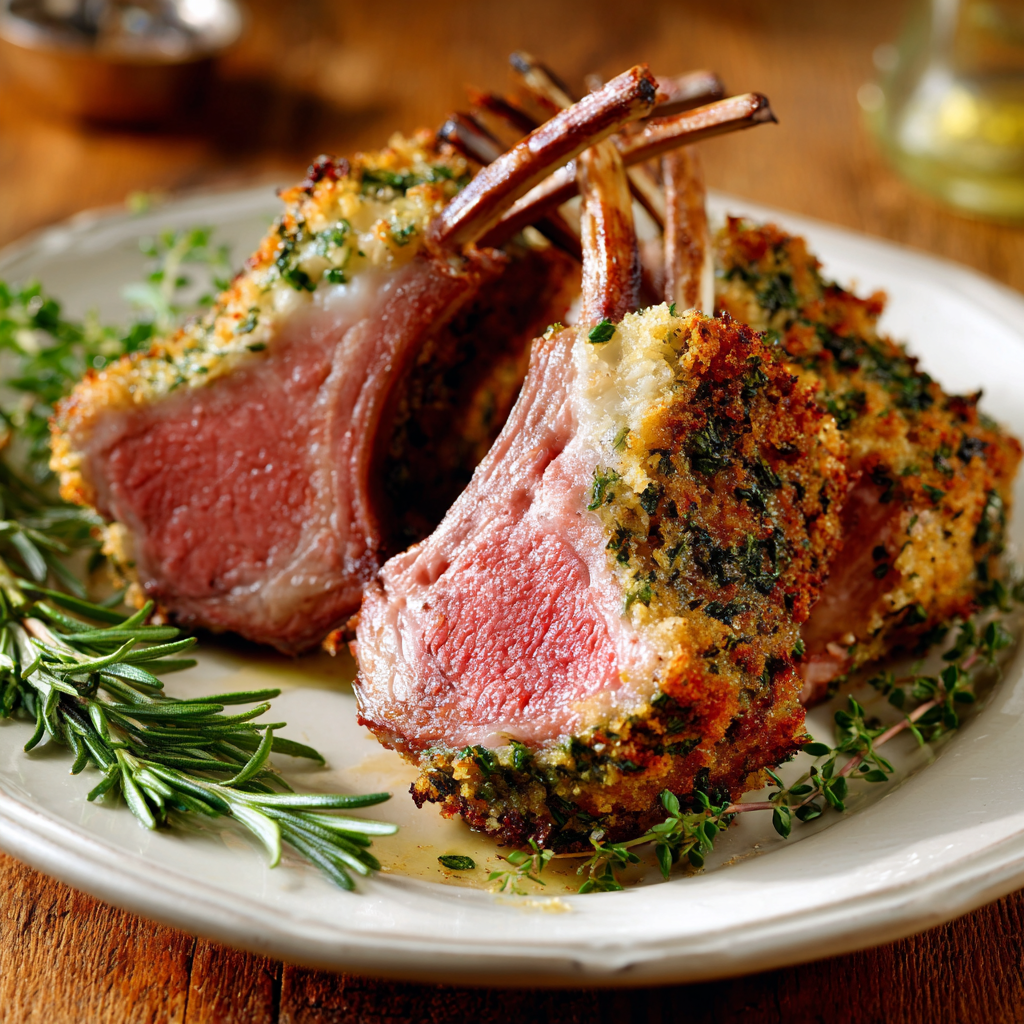
Step 5: The Roast & The Rest. Place the racks, herb-crust side up, on a roasting pan or rimmed baking sheet lined with foil or parchment for easy cleanup. For medium-rare, which is ideal for lamb, roast for 18-22 minutes. The best way to know for sure? Use a meat thermometer! Pull the lamb when the internal temperature reads 130°F (54°C) for medium-rare. Remember: The temperature will rise about 5-10 degrees while resting. Speaking of which… once out of the oven, transfer the racks to a cutting board, tent loosely with foil, and let them rest for a full 10 minutes. This is non-negotiable! It allows the juices to redistribute, ensuring every slice is juicy, not dry.
Step 6: Slice & Serve. Using a very sharp knife, slice between the ribs to create individual chops. Arrange them on a platter, maybe with some fresh herbs for garnish, and prepare for the applause.
Plating Your Masterpiece
Presentation is part of the fun! I love to slice the rack completely and fan the chops out on a large wooden board or a beautiful white platter. Scatter some extra fresh rosemary sprigs, thyme, or even edible flowers around for a pop of color. For a more family-style feel, you can place the whole, unsliced racks on the platter and let someone do the honors at the table—it’s a great little moment. Serve immediately while the crust is crisp and the lamb is warm.
Make It Your Own: Flavor Twists & Swaps
- Mediterranean Twist: Add 2 tbsp of finely chopped sun-dried tomatoes and a pinch of red pepper flakes to the herb paste. Swap parsley for fresh oregano.
- Mustard & Herb Deluxe: Use a mix of whole grain mustard and Dijon for the “glue,” and add 1 tbsp of chopped fresh tarragon to the crust.
- Nutty Crunch: Replace half the breadcrumbs with finely chopped pistachios or walnuts for incredible texture and flavor.
- Spring Herb Garden: Use equal parts fresh mint, parsley, and chives along with the rosemary for a lighter, brighter crust perfect for Easter.
- Garlic Lover’s Dream: Roast a whole head of garlic and squeeze the sweet, soft cloves into the herb paste instead of using raw minced garlic.
Chef’s Notes: Lessons from a Messy Apron
This recipe is my old faithful, but it’s evolved. I used to be terrified of undercooking lamb, which led to… well-done lamb. Not ideal. Investing in a simple digital meat thermometer gave me the confidence to cook it perfectly pink every time. It’s the best $15 you’ll spend for your kitchen confidence.
Another funny thing: I once, in a pre-coffee haze, used Italian-seasoned breadcrumbs. It was… not terrible, but it tasted oddly like lamb meatballs! Stick to plain breadcrumbs or panko so you control the seasoning. Finally, don’t skip the sear. That initial step builds a flavor foundation you just can’t get from the oven alone. Embrace the sizzle!
FAQs & Kitchen Rescue Tips
Q: My herb crust is falling off! What did I do wrong?
A: The most common culprit is not patting the lamb dry before searing, or not using the mustard “glue.” Make sure the meaty side is dry before brushing on the mustard, and really press that crust on firmly. If a little falls off during slicing, just sprinkle it back over the plated chops—no one will know!
Q: Can I prepare this ahead of time?
A> Absolutely! You can sear the lamb and make the herb paste a few hours ahead. Keep them separate in the fridge. Let the lamb sit out for 20-30 minutes before you plan to cook, then apply the crust and roast. Don’t apply the crust hours ahead, as the breadcrumbs can get soggy.
Q: What side dishes do you recommend?
A> This lamb pairs beautifully with creamy, dreamy sides. Think parmesan risotto, whipped goat cheese mashed potatoes, or roasted asparagus with hollandaise. For something lighter, a crisp arugula salad with shaved fennel and a lemon vinaigrette is fantastic.
Q: I don’t have a meat thermometer. How do I know it’s done?
A> The “touch test” can help: press the center of the meaty part gently. For medium-rare, it should feel like the fleshy part of your palm when you touch your thumb and middle finger together. But honestly, for a special cut like this, a thermometer is your best friend for guaranteed results.
Herb-Crusted Rack of Lamb (Elegant Easter & Holiday Main)
Description
A show-stopping centerpiece that’s tender, juicy, and full of flavor! Perfect for Easter, holidays, or any dinner you want to feel special.
Ingredients
-
2 racks of lamb (1.5–2 lbs total), frenched
-
2 tbsp olive oil
-
3 garlic cloves, minced
-
2 tbsp fresh rosemary, finely chopped
-
1 tbsp fresh thyme, chopped
-
1 tbsp fresh parsley, chopped
-
½ cup breadcrumbs (or panko)
-
1 tsp Dijon mustard
-
1 tsp salt
-
½ tsp black pepper
-
Optional: ½ tsp lemon zest
Instructions
-
Prep & Preheat
-
Remove lamb from fridge 30 min before cooking.
-
Pat dry with paper towels.
-
Preheat oven to 400°F (205°C).
-
-
Sear the Lamb
-
Heat a heavy skillet over medium-high.
-
Season lamb with salt & pepper.
-
Place fat-side down in skillet; sear 2–3 min until golden.
-
Sear meaty side 1 min. Remove and set aside.
-
-
Make Herb Crust
-
Combine olive oil, garlic, rosemary, thyme, parsley, breadcrumbs, Dijon mustard, and lemon zest (if using) into a paste.
-
-
Apply Crust
-
Brush seared lamb with mustard.
-
Press herb-breadcrumb mixture evenly on top.
-
-
Roast & Rest
-
Place lamb on a roasting pan, crust-side up.
-
Roast 18–22 min for medium-rare (130°F/54°C internal).
-
Tent with foil and rest 10 min.
-
-
Slice & Serve
-
Slice between ribs into individual chops.
-
Arrange on a platter and garnish with fresh herbs.
-
Notes
-
Pat lamb dry for a crispy crust.
-
Press the crust firmly; mustard acts as glue.
-
Meat thermometer = best friend for perfect doneness.
-
Can prep herb paste and sear lamb ahead; apply crust just before roasting.
Serving Suggestions
-
Parmesan risotto or whipped goat cheese mashed potatoes.
-
Roasted asparagus, hollandaise, or a crisp arugula salad with lemon vinaigrette.
Nutritional Information*
Prep Time: 20 minutes | Cook Time: 20 minutes | Total Time: 50 minutes (including rest) | Servings: 4
*Estimated per serving: Calories: ~520 kcal | Protein: ~34g | Fat: ~40g | Carbohydrates: ~6g
Note: Nutritional information is an estimate based on the ingredients listed and can vary based on specific products used.
Final Thoughts
And there it is—your rack of lamb, glorious and golden, resting on a cutting board while the kitchen settles into that satisfied hush that follows a job well done. The crust is fragrant with rosemary and garlic, the bones are elegantly clean, and somewhere in the distance, your guests are pulling corks and setting out plates. This moment? This is what we cook for.
I think about that sixteen-year-old version of myself, standing in my Nana’s smoke-filled kitchen, convinced I’d ruined Easter. The lamb was too dark, the smoke alarm was still beeping apologetically, and I was this close to bursting into tears. But Nana didn’t panic. She didn’t scold. She just reached for a knife, scraped away the char, and said something I’ve never forgotten: “The only ruined dinner is the one nobody shares.”
That lamb was served. It was eaten. It was loved—not because it was perfect, but because it was made with intention, rescued with grace, and placed on a table surrounded by people who didn’t care about a slightly overzealous sear. They cared that we were together.
So here’s what I want you to take away from this recipe, beyond the temperatures and timing, beyond the herb ratios and the crucial importance of resting: You are more than capable of this.
I know lamb can feel like a “special occasion” ingredient, the kind of thing you order at restaurants but hesitate to attempt at home. It carries this aura of formality, of needing permission. But here’s the truth: a rack of lamb is just a beautiful cut of meat. It wants the same things a good steak wants—high heat, bold seasoning, and someone paying attention. It doesn’t require a culinary degree or a fancy French upbringing. It requires confidence, which you now have, and maybe a meat thermometer, which I hope you’ll finally buy yourself.
And if something goes sideways? If the crust slips or the lamb comes out more medium than medium-rare? So what. Flavor hides a multitude of sins. A little extra rosemary never hurt anyone. And honestly? Your guests aren’t sitting there with a doneness chart; they’re sitting there grateful, hungry, and charmed by the fact that you cooked for them at all.
This dish has a way of making people feel celebrated. There’s something about those elegantly frenched bones, that fragrant, crackling crust, that rosy-pink interior that says, Tonight is special. You are special. And the beautiful, secret irony is that you didn’t have to spend all day in the kitchen to create that feeling. You seared, you crusted, you roasted, you rested. Forty-five minutes, start to finish. And now here you are, the person who made the thing everyone’s photographing.
So go ahead. Carry that platter to the table. Let the “oohs” and “ahhs” wash over you. Watch someone take that first bite and close their eyes involuntarily—that’s the good stuff, the culinary equivalent of a deep sigh. Pour the wine, pass the mint sauce, soak up the warmth of a table full of people you love.
This is the meal you’ll make for anniversaries and Easters, for New Year’s Eve and for no reason at all except that Tuesday felt like it needed a little elevation. This is the recipe your friends will text you about afterward: “Okay, I need that lamb recipe. Immediately.” This is the dish that, years from now, someone will request when they come home for the holidays.
And when they do, you’ll think of this moment. The warmth of the oven. The scent of rosemary still clinging to your sweater. The satisfying heft of a well-seasoned cast iron pan. Maybe even a little smoke alarm that didn’t go off this time.
Because you practiced. Because you trusted yourself. Because you showed up.
Now go make something unforgettable.