Welcome to the Coziest Pot on the Block
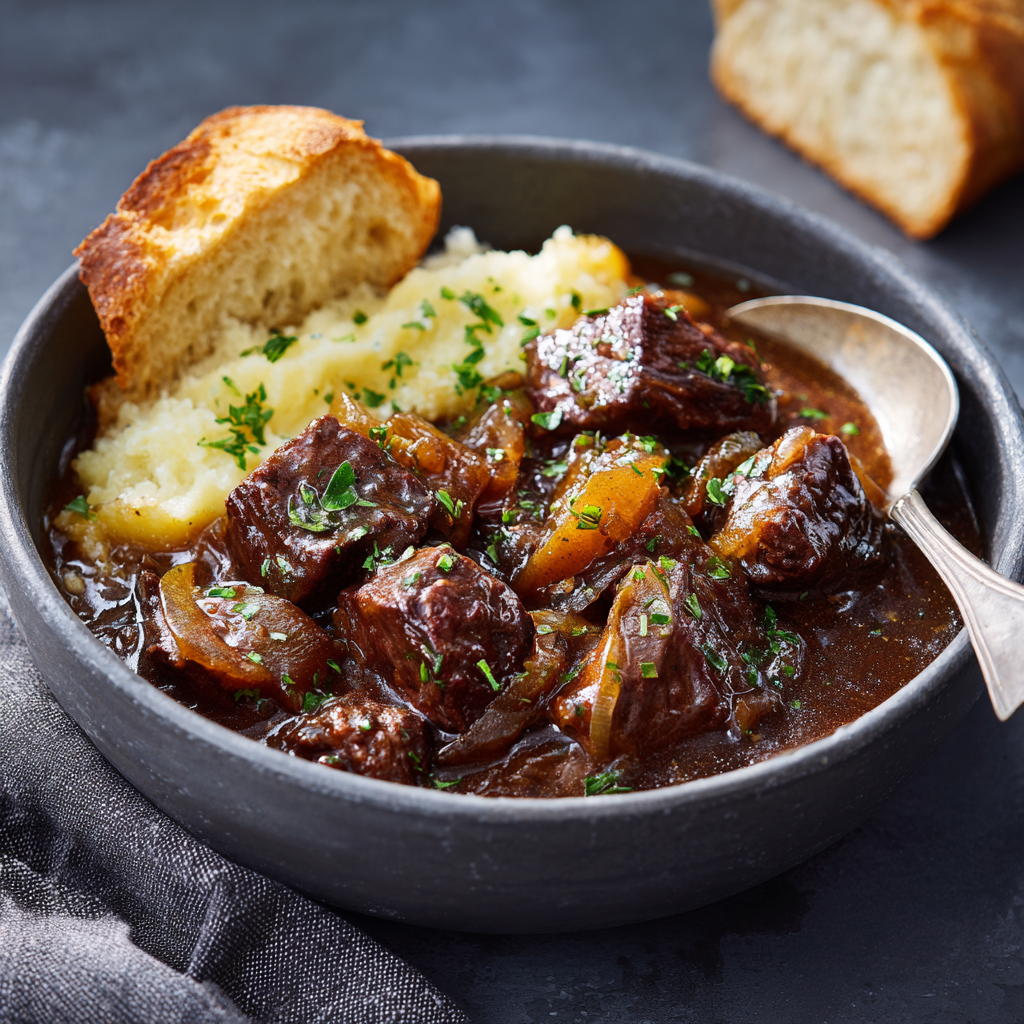
Hey there, friend! Come on in — can you smell that? It’s the kind of scent that wraps around you like your favorite worn-in sweater: deeply savory, sweet with caramelized onions, and with that rich, malty hint that only comes from a good, dark beer. If your idea of a perfect day involves a pot bubbling lazily on the stove, filling your entire home with promises of a spectacular dinner, then you and I are about to become best kitchen buddies. Today, we’re diving into the world of Belgian-Style Beef Stew, or as it’s lovingly known across Belgium, Carbonnade Flamande.
This isn’t just any stew. This is the grandfather of comfort food, a hug in a bowl with a fascinating history. Forget the red wine – here, dark ale is the star, creating a sauce that’s neither too heavy nor too brothy, but something magical in between: rich, glossy, and complex with a gentle sweetness. The beef becomes so tender you can cut it with a spoon, and those slow-cooked onions melt into a silky, golden tapestry of flavor. It’s the dish you make when you want to impress without stress, when you want to spend a rainy afternoon doing something wonderfully productive (like reading a book while your kitchen does all the work), or when you simply need to feed a crowd with soul-satisfying goodness. So, tie on that apron — the messy ones are the most loved — and let’s make some memories.
A Belgian Memory & The Stew That Started It All
My love affair with this stew began not in my own kitchen, but in a bustling, wood-paneled estaminet (that’s a classic Flemish tavern for the uninitiated) in Bruges. It was a drizzly autumn afternoon, the kind that seeps into your bones. My husband and I, damp and chilled from exploring cobblestone streets, ducked into the first place that radiated warmth and the sound of clinking glasses. The menu was simple, and the waiter, with a twinkle in his eye, said, “You must have the Carbonnade. It will fix everything.”
One steaming crock arrived, accompanied by a mountain of crispy frites and a dollop of sharp mayonnaise. The first bite was a revelation. It was familiar in its comfort, like the best beef stew I’d ever had, but uniquely different — deeper, slightly sweet, and utterly intriguing. It sparked a conversation with the waiter about the beer used, the slow cooking, the local tradition. That meal was more than sustenance; it was a story on a plate. I came home obsessed, determined to recreate that feeling of warmth, welcome, and discovery in my own kitchen. This recipe is my tribute to that rainy day in Belgium, and now, I get to share that “fix everything” magic with you.
Gathering Your Flavor Allies
Great dishes start with great ingredients, but let’s keep it real — flexibility is a home cook’s superpower. Here’s what you’ll need and why each component matters. Think of this as assembling your flavor dream team.
- 2 lbs beef chuck, cut into large chunks: Chuck is the undisputed champion of slow-cooking. It has beautiful marbling (that’s the fat running through it) that melts over hours, basting the meat from within and making it incredibly tender. Chef’s Insight: Don’t cut the pieces too small! They’ll shrink as they cook. 1.5 to 2-inch chunks are perfect.
- Salt and black pepper: Season boldly from the start. This is your foundation.
- 2 tbsp flour (for dusting): This isn’t just for thickening later. Coating the beef in flour creates a gorgeous, golden crust when searing, which equals more flavor in your pot.
- 2 tbsp butter & 1 tbsp olive oil: The dynamic fat duo! Butter gives incredible flavor for browning, and the olive oil raises the smoke point so the butter doesn’t burn. It’s the best of both worlds.
- 2 large onions, thinly sliced: The true heart of this dish. We’re going to cook them low and slow until they surrender all their sweetness. Yellow or white onions work perfectly here.
- 3 garlic cloves, minced: Our aromatic punch. Add it after the onions so it doesn’t scorch and turn bitter.
- 1 tbsp brown sugar: This is our secret weapon for helping the onions caramelize and balancing the bitterness of the beer. It adds a subtle, rounded sweetness.
- 1 tbsp Dijon mustard: Don’t skip this! It adds a background tang and depth that brightens the whole stew. Trust me on this one.
- 1 ½ cups dark Belgian ale (like a dubbel or brown ale): The soul of the stew! A malty, slightly sweet dark ale is traditional. Substitution Tip: No Belgian ale? A dark beer like a stout or porter works, but avoid overly bitter IPAs. In a pinch, you can use a non-alcoholic dark beer or even a full-bodied dark soda like Coca-Cola! (Yes, really—it works!).
- 1 cup beef broth: Use a good-quality, low-sodium broth so you can control the salt. This adds another layer of savory depth.
- 1 tbsp red wine vinegar: A tiny splash of acidity at the end is crucial. It lifts all the rich, deep flavors and makes them sing. Think of it as the high note in the symphony.
- 2 bay leaves & 1 tsp dried thyme (or 2 sprigs fresh): Our herbal bouquet. They add a subtle, earthy fragrance that’s quintessentially comforting.
- Optional: fresh parsley, for garnish: A pop of green and fresh flavor right at the end makes the whole dish look and taste brighter.
Let’s Build Some Magic, Step by Step
Okay, team. Let’s fire up the stove. This process is as therapeutic as it is delicious. We’re going to layer flavors like we’re building the coziest flavor skyscraper ever.
Step 1: Brown the Beef (This is Non-Negotiable!)
First, pat your beef chunks very dry with paper towels. This is the golden rule for a good sear—wet meat steams, dry meat browns. Season them generously with salt and pepper, then toss them in the flour until lightly coated. In your heavy-duty Dutch oven or pot, heat the butter and olive oil over medium-high heat until it shimmers. Now, add the beef in a single layer, working in batches. I know it’s tempting to crowd the pot, but don’t! Crowding creates steam and you’ll miss out on those gorgeous, flavorful brown bits (the fond) on the bottom of the pot. Give each piece some personal space. Sear until you have a deep brown crust on all sides, then transfer to a plate. Repeat with the rest of the beef. This step is where we build our first massive layer of flavor.
Step 2: Caramelize the Onions (Practice Patience, It Pays!)
Reduce the heat to medium-low. In all those glorious beefy juices and fat, add all your thinly sliced onions. Sprinkle with a pinch of salt (this helps draw out their moisture). Now, here’s where we relax. Stir them occasionally and let them cook for a good 10-15 minutes. We’re not just softening them; we’re transforming them. Watch them turn translucent, then golden, then a soft, sticky, caramel-brown. This is the second major flavor layer! When they’re beautifully golden, add the minced garlic and the brown sugar. Stir for just 1-2 minutes until the garlic is fragrant and the sugar has melted into the onions.
Step 3: Deglaze & Build Your Flavor Foundation
Time for the fun part! Stir the Dijon mustard into the onion mixture. Now, pour in that dark ale. It will sizzle and steam gloriously. Immediately, take your wooden spoon and scrape up every last browned bit from the bottom of the pot. That, my friend, is pure flavor gold dissolving into your sauce. Let it bubble for a minute. Then, add the beef broth, red wine vinegar, bay leaves, and thyme. Give it a good stir and bring it to a gentle simmer.
Step 4: The Slow Cook (Let Time Do the Work)
Nestle all the seared beef and any accumulated juices back into the pot. The liquid should almost, but not quite, cover the meat. Bring it back to a very low simmer. Now, cover the pot with a tight-fitting lid, reduce the heat to the lowest setting, and walk away. Well, you can stay nearby to enjoy the aroma. Let it bubble gently for 2.5 to 3 hours. You’ll know it’s done when you poke a piece of beef with a fork and it offers zero resistance, practically falling apart. The sauce will have thickened into a luscious, glossy gravy. Give it a taste and adjust the salt and pepper one last time. Don’t forget to fish out the bay leaves!
How to Serve Up This Cozy Masterpiece
Presentation is part of the joy! Ladle generous portions of the stew into deep, warm bowls. I like to garnish with a sprinkle of fresh, chopped parsley for that fresh color contrast. The classic Belgian way is to serve it with a huge pile of crispy Belgian fries (frites) for dipping, or a big hunk of crusty bread to mop up every last drop. For ultimate comfort, a cloud-like bed of creamy mashed potatoes or buttery egg noodles is absolutely perfect. A simple green salad on the side cuts through the richness beautifully. Gather everyone around the table and dig in!
Make It Your Own: Delicious Twists & Swaps
This recipe is wonderfully adaptable. Here are a few ways to play with it:
- The Mushroom Lover’s Twist: Add 8 oz of sliced cremini mushrooms when you’re caramelizing the onions. They’ll add an incredible earthy depth.
- Sweet & Tangy Version: Stir in 1 tablespoon of good-quality apricot jam or fig jam along with the mustard. It complements the beer’s maltiness beautifully.
- Slow Cooker/Crock-Pot Friendly: Complete Steps 1 & 2 on the stovetop. Then, transfer everything to your slow cooker and cook on LOW for 7-8 hours or HIGH for 4-5 hours.
- Instant Pot Shortcut: Use the Sauté function for browning and caramelizing. Deglaze, add everything, seal, and cook on High Pressure for 35 minutes with a full natural pressure release.
- Gluten-Free & Paleo: Use a gluten-free 1:1 flour for dusting, and ensure your broth and mustard are GF. Swap the beer for more broth and a splash of apple cider vinegar with a teaspoon of molasses.
From My Kitchen to Yours: A Few Parting Thoughts
This stew has become my signature “I care about you” meal for new parents, friends moving into a new home, or anyone needing a bit of comfort. It only gets better the next day, as all the flavors marry and deepen, so don’t be afraid to make it ahead! I’ve evolved the recipe over the years — I used to be scared of the sugar, but now I see it as essential. I also once, in a frantic moment, used a chocolate stout when I was out of brown ale, and you know what? It was phenomenal! It just goes to show that cooking is an adventure. The biggest lesson this stew teaches is the power of low and slow. In our fast-paced world, there’s something profoundly satisfying about a dish that simply cannot be rushed. It’s a reminder that the best things are worth waiting for.
Your Questions, Answered!
Q: My sauce is too thin after cooking! How can I thicken it?
A: No worries! This happens sometimes. You have two great options: 1) Simmer uncovered: Take the lid off and let the stew bubble gently for an extra 15-20 minutes. The evaporation will naturally thicken the sauce. 2) Make a slurry: Mix 1 tablespoon of flour or cornstarch with 2 tablespoons of cold water until smooth. Stir this into the simmering stew and let it cook for 5 minutes until thickened.
Q: I don’t cook with alcohol. What can I use instead of beer?
A: Absolutely. The best non-alcoholic substitute is a non-alcoholic dark beer or malt beverage. If you can’t find that, use 1 cup of beef broth plus ½ cup of unsweetened apple juice or prune juice, with an extra tablespoon of red wine vinegar. It will give you that deep, sweet-tangy profile.
Q: Can I use a different cut of beef?
A: You need a cut with good marbling that stands up to long cooking. Chuck is ideal. Beef brisket (cut into chunks) or boneless short ribs are fantastic, though richer. Avoid lean cuts like sirloin or round steak, as they’ll become tough and dry.
Q: How long does it keep, and can I freeze it?
A: This stew is a meal-prep hero! It keeps beautifully in an airtight container in the fridge for up to 4 days. It also freezes perfectly for up to 3 months. Let it cool completely, then freeze in portion-sized containers. Thaw overnight in the fridge and reheat gently on the stove.
Belgian-Style Slow-Cooked Beef Stew : Deep, Rich & Comforting
Description
Belgian-Style Beef Stew (Carbonnade Flamande)
Tender beef in a rich, dark ale and onion sauce—comfort food at its finest!
Ingredients
-
2 lbs beef chuck, cut into 1.5–2 inch chunks
-
Salt & black pepper, to taste
-
2 tbsp flour (for dusting)
-
2 tbsp butter & 1 tbsp olive oil
-
2 large onions, thinly sliced
-
3 garlic cloves, minced
-
1 tbsp brown sugar
-
1 tbsp Dijon mustard
-
1 ½ cups dark Belgian ale (or stout/porter)
-
1 cup beef broth
-
1 tbsp red wine vinegar
-
2 bay leaves
-
1 tsp dried thyme (or 2 sprigs fresh)
-
Optional garnish: fresh parsley
Chef Notes:
-
Chuck is perfect for slow cooking—rich marbling ensures tender, flavorful meat.
-
For non-alcoholic version, substitute beer with 1 cup beef broth + ½ cup unsweetened apple or prune juice + 1 tbsp red wine vinegar.
-
Gluten-free? Use GF flour and check mustard & broth labels.
Instructions
-
Brown the Beef:
Pat beef dry, season with salt & pepper, then dust lightly with flour. Heat butter & olive oil in a Dutch oven or heavy pot over medium-high heat. Add beef in batches, searing until deep brown on all sides. Transfer to a plate. -
Caramelize the Onions:
Reduce heat to medium-low. Add onions to the pot, sprinkle with salt, and cook 10–15 min until soft and golden-brown. Add garlic and brown sugar; cook 1–2 min until fragrant. -
Deglaze & Build the Sauce:
Stir in Dijon mustard. Pour in dark ale, scraping the bottom to lift browned bits. Add beef broth, red wine vinegar, bay leaves, and thyme. Bring to a gentle simmer. -
Slow Cook:
Return beef and juices to the pot. Liquid should almost cover meat. Cover with lid, reduce heat to low, and simmer gently 2.5–3 hours until beef is tender and sauce is glossy. Adjust salt & pepper. Remove bay leaves before serving.
Notes
-
Sauce too thin: Simmer uncovered for 15–20 min or stir in a 1:2 flour-to-water slurry.
-
Beef substitutes: Brisket or boneless short ribs work; avoid lean cuts like sirloin.
-
Make ahead: Keeps in fridge 4 days; freezes up to 3 months. Thaw in fridge and reheat gently.
-
Flavor tweaks: Add mushrooms with onions for earthy depth; a spoon of fig or apricot jam for subtle sweetness.
Nutritional Information*
*This is an estimate provided for informational purposes. Values may vary based on specific ingredients used.
Per Serving (Serves 6): Calories: ~450 | Protein: 35g | Fat: 24g (Saturated Fat: 10g) | Carbohydrates: 18g | Sugar: 6g | Sodium: 580mg
Prep Time: 20 minutes | Cook Time: 3 hours | Total Time: 3 hours 20 minutes | Servings: 6
Final Thoughts: A Legacy in a Pot
And there you have it—the kind of recipe that becomes part of your story. This Belgian-Style Beef Stew is more than a meal; it’s a slow, savory ritual, a tangible piece of comfort that honors tradition while welcoming your own touch. In a world that moves too fast, it’s a gentle, delicious reminder that some things can’t—and shouldn’t—be rushed.
Making this stew is an act of love: for the ingredients transforming in the pot, for the people gathered around your table, and for the simple, profound joy of creating something deeply nourishing. It’s the dish that fills your home with the kind of aroma that makes everyone ask, “Is it ready yet?” with hopeful smiles.
Whether you stick faithfully to the classic method or make it your own with mushrooms, a dash of jam, or a playful beer swap, you’re participating in a centuries-old tradition of cozy, communal eating. This stew doesn’t just feed the body; it warms the spirit. It’s the culinary equivalent of a shared blanket on a cold night.
So, the next time the sky turns gray, or you simply crave the satisfaction of a long-simmered masterpiece, I hope you’ll pull out your Dutch oven and let the magic happen. May your kitchen be filled with its rich, malty perfume, and may every bowl bring the same “this fixes everything” feeling I found on that rainy day in Bruges.
Here’s to slow cooking, good food, and the cozy moments we create around it.
With warmth and a full pot,
Olivia