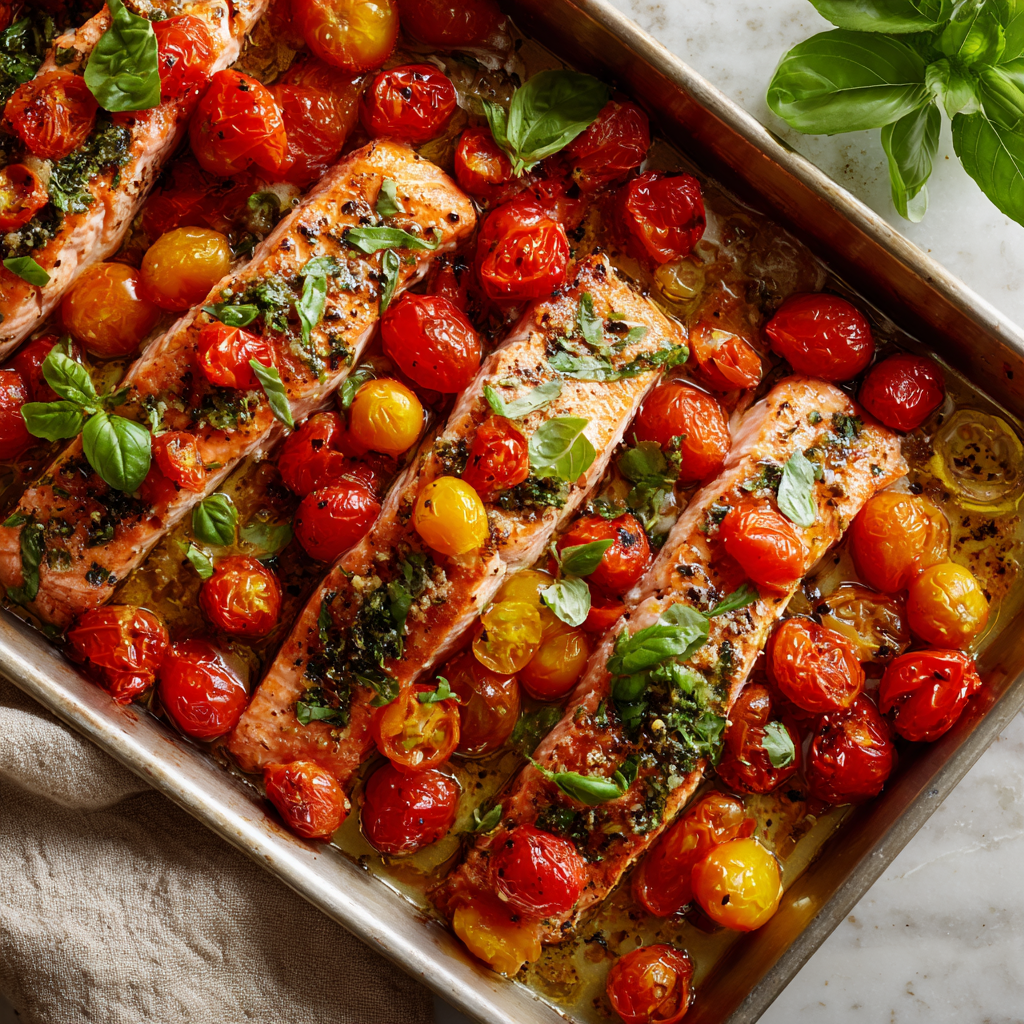
30-Minute Baked Salmon and Tomatoes
Why This Salmon Recipe Is My Weeknight Hero (And Yours Too!)
Hey friend! Olivia here, waving from my tomato-splattered apron. You know that glorious moment when dinner practically cooks itself while you sip wine and pretend you’re in a coastal Italian village? That’s exactly what this Mediterranean baked salmon gives you. In under 30 minutes, we’re transforming six simple ingredients into a vibrant, restaurant-worthy meal that’ll make your crew think you’re a culinary wizard. No fancy skills required – just a baking dish and that joyful “I’ve got this!” feeling.
Picture this: plump cherry tomatoes bursting into jammy sweetness, garlic melting into golden perfume, and salmon fillets turning impossibly tender while bathing in all those glorious juices. It’s sunshine on a plate, my friend! Whether you’re wrangling hungry kids or hosting last-minute guests, this dish is your secret weapon. It’s healthy-ish (hello, omega-3s!), impossibly elegant, and tastes like lazy summer evenings. So tie on that apron – let’s create some magic without the messy cleanup!
The Dinner Disaster That Birthed My Go-To Savior
Okay, real talk: this recipe saved me during the Great Pasta Flood of 2018. Picture it – my in-laws were arriving in 45 minutes, and I’d just knocked an entire pot of bolognese onto my white rug (RIP, rug). Cue panic sweats! I frantically yanked salmon fillets from the freezer, grabbed cherry tomatoes destined for salad, and threw everything into a baking dish with garlic and olive oil. As that heavenly smell filled the kitchen, my panic melted faster than the tomatoes. When my father-in-law took his first bite? “Olivia, this is incredible!” he murmured. Joke’s on him – it was pure desperation cooking! Now, it’s my emotional-support dinner. Every bite takes me back to that chaotic, tomato-stained victory.
Your Simple Shopping List (With Chef Secrets!)
- 6 Salmon Fillets (6 oz each): Skin-on for extra flavor & protection! Chef hack: Pat SUPER dry with paper towels – crispy edges await! Frozen? Thaw overnight in fridge.
- 4½ tbsp Extra-Virgin Olive Oil: The GOOD stuff! It’s not just for cooking – it becomes part of the sauce. Sub: Avocado oil if you’re searing first.
- 1½ pints Cherry Tomatoes, halved: Halving = more jammy goodness! Swap: Grape tomatoes work, but avoid big beefsteaks – they’re too watery.
- 6 Garlic Cloves, smashed: Smash ’em with your knife’s side! Releases oils gently without burning. Insider tip: No peeling needed – they soften into sweet nuggets.
- 3 Sprigs Fresh Basil: Stems add herbaceous depth while baking! Emergency sub: 1 tsp dried Italian herbs (add halfway).
- Coarse Salt & Freshly Ground Black Pepper: Flakey salt for texture, fresh pepper for punch! Pro move: Season tomatoes MORE than you think – they carry the sauce.
Let’s Bake Some Magic: Step-by-Step
- Preheat Oven to 400°F (200°C). Why this temp? Hot enough to blister tomatoes and cook salmon fast, but not so hot the garlic burns. No need to wait for perfection – start prepping while it heats!
- Toss Tomatoes, Garlic & Basil. In your prettiest ceramic or glass baking dish (metal makes tomatoes acidic!), combine halved tomatoes, smashed garlic, basil sprigs, and 3 tbsp olive oil. Secret weapon: Massage everything with your hands – you’ll feel when it’s perfectly coated! Season generously – tomatoes should taste almost too salty raw (they mellow while baking).
- Nestle Salmon Skin-Side Down. Arrange fillets like happy little islands in a tomato sea. Drizzle remaining 1.5 tbsp oil over salmon. Critical tip: Leave space between fillets! Crowding = steamed salmon (sad face). Season salmon lightly – remember those well-salted tomatoes below!
- Bake Uncovered 15-18 Minutes. Timing is EVERYTHING: Set that timer! At 15 min, check for doneness – salmon should flake easily but still look juicy. Carryover cooking happens! Hack: If tomatoes aren’t burst-y enough, broil 1-2 min (watch like a hawk!).
- Spoon & Serve! Lift salmon gently with a fish spatula. Scoop those glorious tomato-garlic juices over top. Chef’s flourish: Tear fresh basil over everything – the heat wakes up its fragrance!
Making It Pretty (Because We Eat With Our Eyes!)
Slide each salmon fillet onto warm plates (cold plates = sad, lukewarm fish). Spoon tomatoes and allll those fragrant juices generously over and around. For “fancy but lazy” vibes, scatter extra torn basil and maybe a lemon wedge. My go-to pairings? Fluffy quinoa to soak up sauce or crusty bread for dragging through tomato gold. Add a crisp green salad with lemon vinaigrette – the brightness cuts the richness. For date night? Light candles and pretend you’re seaside!
The Science of Perfect Salmon – Why This Method Works Every Time
Let’s geek out for a sec! This recipe isn’t just easy—it’s engineered for foolproof results. Here’s why the Mediterranean bake method is a game-changer:
-
Tomatoes: The Natural Moisture Regulators
-
Cherry tomatoes are 94% water, but halving them releases juices slowly during baking, creating a self-basting effect for the salmon. The sugars caramelize at 400°F, balancing acidity with jammy sweetness.
-
Pro Tip: Salt draws out moisture early—that’s why we season aggressively! The tomatoes reduce into a sauce while preventing the salmon from drying out.
-
-
Garlic’s Two-Stage Magic
-
Smashed cloves (not minced!) release allicin gently, avoiding bitter burnt notes. As they roast, their cell walls break down into creamy, sweet nuggets that melt into the sauce.
-
Fun Fact: The basil stems contain concentrated essential oils that infuse the oil as they bake—free flavor boost!
-
-
Salmon’s Fat Content = Built-In Safety Net
-
Farmed Atlantic salmon has a higher fat content than wild, making it forgiving if slightly overcooked. The skin acts as a protective barrier, crisping while the flesh stays moist.
-
Temp Hack: Pull salmon at 135°F (57°C)—carryover cooking will take it to the FDA-safe 145°F (63°C) as it rests.
-
Bonus: The olive oil isn’t just for cooking—its polyphenols are preserved at this baking temp, adding anti-inflammatory benefits to all those omega-3s!
Global Twists – How to Tour the Mediterranean Without Leaving Your Kitchen
This recipe is a passport! Here’s how to adapt it across the region with pantry staples:
1. Greek Islands Style
-
Add ½ cup pitted Kalamata olives + 1 tsp dried oregano to tomatoes.
-
Crumble feta over the dish post-bake.
-
Serve with lemon wedges and a drizzle of tsipouro (or ouzo) for an adult kick.
2. Provençal Sunshine
-
Swap basil for herbes de Provence + add 1 sliced fennel bulb.
-
Garnish with niçoise olives and a pinch of saffron threads.
3. Sicilian Citrus Splash
-
Layer lemon slices under the salmon fillets.
-
Stir 2 tbsp toasted pine nuts and ¼ cup golden raisins into the baked tomatoes.
4. Middle Eastern Zing
-
Mix 1 tbsp za’atar into the olive oil before coating tomatoes.
-
Top with tahini-yogurt sauce and pomegranate seeds.
Why It Works: The base formula (acidic fruit + fatty fish + aromatic herbs) is universal in Mediterranean cooking. Each tweak tells a different coastal story!
The Psychology of Effortless Elegance – Why This Meal Feels Like Self-Care
Beyond nutrition, this dish delivers emotional nourishment:
-
The “Lazy Gourmet” Effect
-
Studies show that meals with visual appeal (hello, ruby-red tomatoes!) increase perceived flavor by 20%. The vibrant colors trick your brain into thinking you’ve put in more effort than you did.
-
-
Aromatherapy in Action
-
As garlic and basil bake, they release linalool—a compound shown to reduce stress hormones. Your kitchen becomes a spa!
-
-
The 30-Minute Time Illusion
-
Active prep is just 10 minutes; the oven does the rest. This creates psychological breathing room—the holy grail for weeknights.
-
Pro Tip: Double the tomato mix and freeze half. Future-you will have “instant fancy dinner” waiting!
5 Delicious Twists To Keep It Exciting
- Lemon Lover’s: Add 1 sliced lemon to the tomato mix + zest over salmon pre-bake.
- Olive & Caper Fiesta: Toss ½ cup Kalamata olives + 2 tbsp capers in with tomatoes.
- Creamy Dreamy: Dollop 4 oz goat cheese or feta over tomatoes in the last 5 minutes of baking.
- Spicy Arrabbiata Style: Add ½ tsp red pepper flakes to tomatoes + finish with parsley.
- Pescatarian Feast: Swap salmon for thick white fish (cod/halibut) – bake 12-14 min max.
Confessions From My Tomato-Stained Apron
This recipe started as a lazy “dump dinner” but evolved into my most-requested dish! Early versions used diced onions (too watery!) and dried basil (too dusty!). The breakthrough? SMASHING garlic cloves instead of mincing – no bitter bites! One hilarious fail involved using parchment paper (tomato acids ate through it – sauce avalanche!). Now I go bare dish for maximum fond. Funny story: My toddler calls it “pink fish with lava rocks” (bless his heart). Pro tip: Leftover tomato-garlic sludge? Blitz it into next day’s pasta sauce – chef’s kiss!
Your Salmon SOS Station
Q: My salmon came out dry! What did I do wrong?
A: Overcooking is the usual culprit! Salmon cooks FAST. Check at 15 min – it should flake but still look slightly translucent in the very center. Residual heat finishes it! Also, ensure fillets are similar thickness (ask your fishmonger!).
Q: Can I use frozen salmon without thawing?
A: Technically yes, but texture suffers. Thaw overnight in the fridge for best results. In a pinch? Seal frozen fillets in a bag, submerge in cold water 30 mins, then pat VERY dry.
Q: Tomatoes too watery?
A: Three fixes! 1) Halve EVERY tomato. 2) Salt them well pre-bake (draws out moisture). 3) If still soupy, remove salmon when done and broil tomatoes 3-4 min to concentrate.
Q: How do I know it’s cooked safely?
A: Internal temp should hit 145°F (63°C). No thermometer? Gently press the top – it should feel slightly firm but spring back. Raw salmon looks deep orange/translucent; cooked is light pink/opaque.
30-Minute Baked Salmon and Tomatoes
- Total Time: 17 minute
Description
Hey friend! This Mediterranean baked salmon is exactly what you need on busy weeknights. In under 30 minutes, six simple ingredients come together to create a vibrant, healthy, and delicious meal that feels fancy but is totally easy. Think tender salmon bathed in garlicky, juicy cherry tomatoes with fresh basil — it’s like a little vacation on your plate! Perfect for family dinners or impressing guests without the stress.
Ingredients
-
6 salmon fillets (6 oz each), skin-on
-
1½ pints cherry tomatoes, halved
-
6 garlic cloves, smashed (no peeling needed!)
-
3 sprigs fresh basil (or 1 tsp dried Italian herbs)
-
4½ tbsp extra-virgin olive oil
-
Coarse salt and freshly ground black pepper
Instructions
-
Preheat oven to 400°F (200°C).
-
In a glass or ceramic baking dish, toss halved cherry tomatoes, smashed garlic, basil sprigs, and 3 tbsp olive oil. Massage gently with your hands to coat everything evenly. Season the tomatoes generously with salt and pepper — they carry the sauce!
-
Nestle the salmon fillets skin-side down in the tomato mixture, spacing them apart to avoid steaming. Drizzle the remaining 1½ tbsp olive oil over the salmon. Lightly season the fillets with salt and pepper.
-
Bake uncovered for 15–18 minutes. Check at 15 minutes: salmon should flake easily but still be juicy. If tomatoes aren’t bursting enough, broil for 1–2 minutes — watch closely!
-
Serve salmon with spoonfuls of tomato-garlic sauce and fresh torn basil on top.
Notes
-
Dry your salmon well before baking for crispier edges.
-
Don’t crowd the fillets — give them breathing room for perfect texture.
-
Smashed garlic softens into sweet, tender bites — no peeling means less fuss!
-
Halve your tomatoes to concentrate their sweetness and reduce watery sauce.
-
Want a twist? Try adding lemon slices, olives, or a sprinkle of feta before baking!
-
If salmon gets dry, check your oven temp and cook time — it cooks fast!
- Prep Time: 10 minutes
- Cook Time: 15–18 minutes
Nutrition
- Calories: 360 cal Per Serving
- Fat: 22g
- Carbohydrates: 5g
- Protein: 35g
Nutrition Per Serving (Because Knowledge is Power!)
Calories: ~360 | Fat: 22g (Healthy Omega-3s!) | Carbs: 5g (Mostly from tomatoes!) | Protein: 35g
Note: Values are estimates. Using less oil? Values decrease slightly.
Final Thoughts: More Than Dinner, A Mindset Shift
This salmon isn’t just a meal—it’s permission to prioritize joy over perfection. It’s the crispy-skinned, tomato-stained proof that nourishment doesn’t mean complicated. Whether you’re salvaging a rug (RIP), impressing in-laws, or simply reminding yourself that you’re worth 30 minutes of care, this dish meets you where you are.
So tonight, when the world feels heavy, remember: salmon + tomatoes + a brave splash of olive oil = edible sunshine. And if you forget the basil? Call it “rustic”
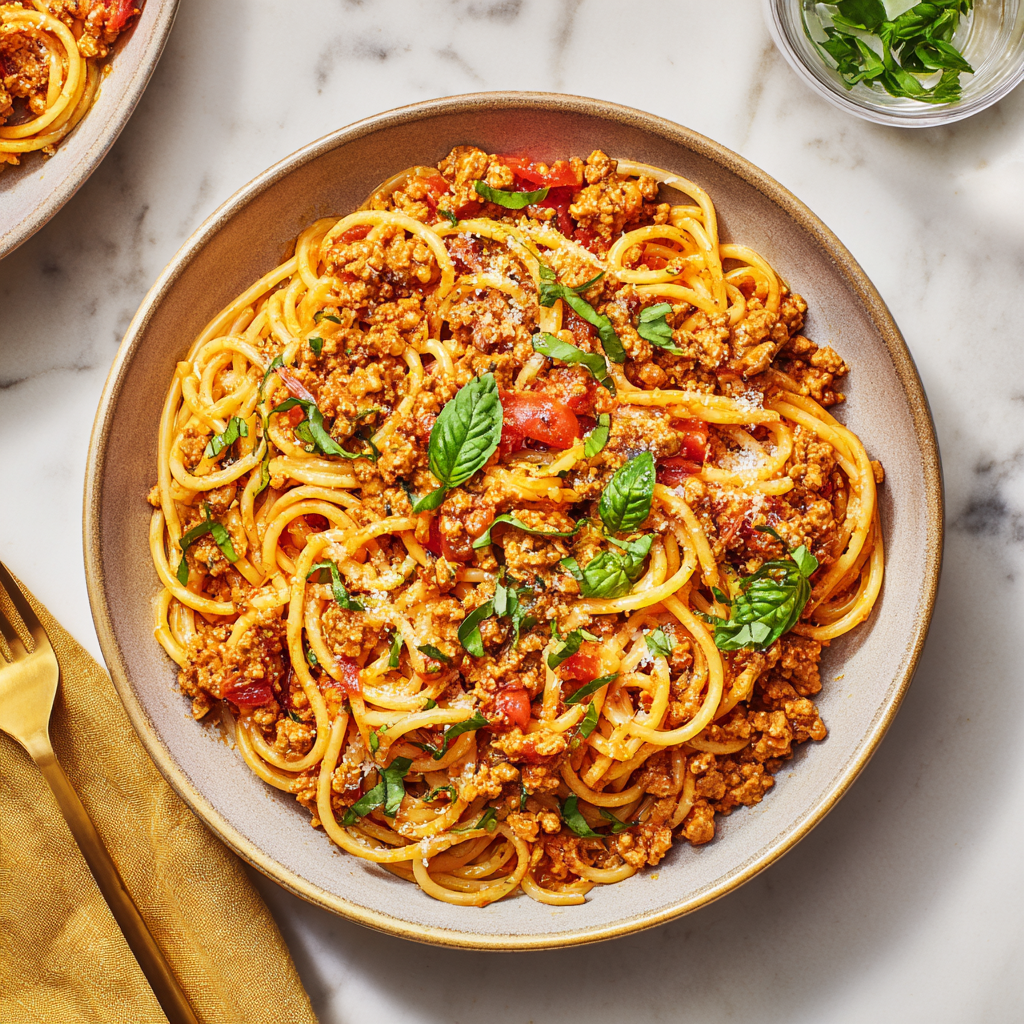
30-Minute Ground Turkey Pasta
Why This Ground Turkey Pasta Became My Busy-Night BFF
Hey there, kitchen friend! Olivia here, waving at you from my flour-dusted countertop. Can we talk about that magical intersection of crazy weeknights and deep pasta cravings? You know the drill – it’s 6 PM, your stomach’s rumbling like a thunderstorm, and takeout menus are starting to look dangerously tempting. But what if I told you that in less time than it takes to watch a sitcom episode, you could be twirling forkfuls of hearty, herb-kissed pasta with lean protein and a tomato sauce that hugs every noodle? Enter my 30-Minute Ground Turkey Pasta – the uncomplicated hero your hectic evenings deserve.
This isn’t just “another pasta recipe.” It’s my edible love letter to smart simplicity. We’re trading heavy beef for lean ground turkey (your energy levels will thank you tomorrow), leaning on pantry staples, and letting crushed tomatoes work their sweet-tart magic. The result? A bowl that’s lighter but still deeply satisfying, packed with 30g of protein per serving, and begging to be devoured family-style with crusty bread. Whether you’re cooking solo or feeding hangry teens, this dish whispers: “You’ve totally got this.” So tie on that apron (embrace the mess – it’s a badge of honor!), and let’s transform humble ingredients into something downright unforgettable. Ready to make magic in under 30? Let’s roll!
The Midnight Pasta That Saved My Sanity (and My Sweatpants)
Picture this: It’s last winter, sleet hammering my kitchen window. My twins had back-to-back flu bouts, my work deadline was laughing maniacally at me, and my “nice jeans” were officially swapped for elastic waists. In my frazzled state, I stood staring into the abyss of my fridge at 9 PM – only to spot a lone pack of ground turkey and a can of tomatoes. Desperation birthed inspiration! I threw everything into the skillet, boiled spaghetti like my life depended on it, and 25 minutes later? My husband took one bite, sighed like he’d found nirvana, and mumbled: “This tastes like a hug.” The kids (temporarily revived by the smell of garlic) even emerged from their sick forts to steal bites. That chaotic night, this pasta became more than dinner; it was a lifeline of comfort proving that great food doesn’t need perfect timing – just heart, a few good ingredients, and maybe a forgiving pair of sweatpants.
Your Flavor Squad (Plus My Sneaky Chef Tips!)
- 1 lb Ground Turkey – My MVP for lean protein! Opt for 93% lean – juicy enough without excess grease. Chicken or plant-based crumbles work too.
- 12 oz Spaghetti – The classic vehicle! Bucatini or linguine are fun swaps. Gluten-free? Use your fave GF pasta – just check cook time!
- 2 tbsp Olive Oil – Our flavor foundation. Extra virgin adds fruitiness! Butter or avocado oil can sub in a pinch.
- 1 Medium Onion, finely chopped – Sweet depth-maker. Yellow or white onions shine here. No onions? Use 1 tsp onion powder (add with garlic).
- 3 Garlic Cloves, minced – Non-negotiable aroma! Pre-minced jarred garlic? Use 1.5 tsp. Feeling bold? Add an extra clove!
- 1 (28 oz) Can Crushed Tomatoes – The saucy soul! San Marzano tomatoes = next-level sweetness. Diced tomatoes work but give ’em a quick mash.
- 1 tsp Italian Seasoning – Herbaceous shortcut! No blend? Use ¼ tsp each dried basil, oregano, thyme + pinch rosemary.
- Salt & Pepper, to taste – Season superheroes! I start with ¾ tsp salt + ½ tsp pepper, adjust after simmering.
- Fresh Basil or Parsley, chopped – The confetti finish! Basil = sweet brightness. Parsley = peppery freshness. No fresh? A sprinkle of dried works.
Chef’s Whisper: That reserved pasta water? Liquid gold! Its starch thickens the sauce naturally. Don’t you dare pour it out!
Let’s Build Your Flavor Masterpiece (Step-by-Step!)
- Boil & Rescue Water: Fill a large pot with water, salt it like the sea (1 tbsp salt!), and bring to a rolling boil. Add spaghetti, stirring immediately to prevent clumping. Cook until al dente (check package time MINUS 1 minute). → CHEF HACK: Set a timer! Overcooked pasta = sad noodles. Before draining, SCOOP OUT ½ cup pasta water – this is key for silky sauce! Drain pasta and set aside.
- Brown That Beautiful Bird: While pasta cooks, heat olive oil in a large skillet over medium heat. Add onions with a pinch of salt (draws out moisture!) and sauté 3-4 mins until translucent. → CHEF CONFESSION: I sometimes add a pinch of red pepper flakes here for sneaky heat! Add garlic, stir 30 seconds until fragrant (don’t let it burn!). Crumble in ground turkey. Cook 5-7 mins, breaking it up with a spoon, until no pink remains. → PRO TIP: Get some golden bits on the turkey – that’s FLAVOR!
- Simmer Your Soul-Warming Sauce: Pour in crushed tomatoes, Italian seasoning, ¾ tsp salt, and ½ tsp pepper. Stir well, scraping up any tasty browned bits. Bring to a gentle simmer, then reduce heat to low. Let it bubble happily for 10 mins. → SAUCE THERAPY: This simmer time melds flavors! Too thick? Stir in reserved pasta water 1 tbsp at a time.
- The Grand Toss: Add drained spaghetti directly to the skillet! Toss vigorously with tongs until every strand is coated in that luscious sauce. → TOSS LIKE A BOSS: Lift and fold – don’t stir! This prevents breakage. Cook 1-2 more mins so pasta drinks up sauce.
- Finish with Flair: Kill the heat. Taste! Need more salt or pepper? Adjust now. → SECRET WEAPON: A drizzle of extra virgin olive oil at the end adds richness.
Plating Perfection (It’s Easy, I Promise!)
Grab big, shallow bowls – we’re going rustic! Use tongs to twirl generous nests of pasta into each bowl. Spoon extra saucy turkey over the top. Now, the crowning glory: shower it with chopped fresh basil or parsley. Golden Rule: Serve immediately! Pasta waits for no one. Want to level up? Grate Parmesan or Pecorino over the top (omit for dairy-free), add a crack of black pepper, and serve with garlic bread for sauce-mopping or a simple arugula salad with lemon vinaigrette to cut the richness. Family-style in a big dish with extra herbs scattered on top? Absolutely yes.
Shake It Up! 5 Delicious Twists
This recipe is your culinary canvas! Try these fun spins:
- Veggie Powerhouse: Sauté 1 cup diced zucchini or bell peppers with the onions. Spinach? Stir in 2 cups fresh leaves at the end until wilted.
- Creamy Dreamy: Stir ¼ cup ricotta or cream cheese into the sauce just before adding pasta. Luxurious!
- Mediterranean Magic: Add ¼ cup chopped Kalamata olives and 1 tsp lemon zest with the tomatoes. Finish with crumbled feta.
- Spicy Arrabbiata Vibe: Add ½ tsp crushed red pepper flakes with the garlic. Boom! Fiery kick.
- Pesto Swirl: Dollop 2 tbsp basil pesto on top when serving. Instant herb garden freshness!
Olivia’s Kitchen Chronicles (Aka: Notes from My Sometimes-Messy Counter)
This recipe has lived many lives in my kitchen! Originally, it was a “clean-out-the-fridge” experiment born from exhaustion. Over time, I learned the pasta water trick (game-changer!), embraced browning the turkey well for max flavor, and became religious about tasting before serving. One hilarious fail? I once accidentally used cinnamon instead of Italian seasoning (don’t ask!). My family bravely took one bite before dissolving into giggles – we ordered pizza that night. Lesson learned: Label spice jars clearly! Now, it’s my most-requested weeknight rescue. I often double the batch – leftovers reheat beautifully for lunch (splash of water when reheating brings it back). The real secret? It’s not about perfection; it’s about the joy of getting a delicious, wholesome meal on the table without the stress. You’ve got this!
Your Questions, My Answers (Let’s Troubleshoot!)
Q1: Can I use ground beef or chicken instead?
A: Absolutely! Ground beef (85% lean works best) adds richer flavor but more fat. Ground chicken is a seamless swap – texture is similar. Adjust cook time slightly if needed – cook until no pink remains!
Q2: My sauce turned out watery/thick! Help!
A: Watery? Simmer uncovered 5 mins longer to reduce. Too thick? That reserved pasta water is your lifeline! Stir in 1-2 tbsp at a time until perfect consistency. Remember, sauces thicken as they sit slightly.
Q3: Can I prep this ahead?
A: Yes – partially! Brown the turkey & onion mixture (steps 1-2). Cool, store covered in fridge up to 24 hours. When ready, reheat mixture, add tomatoes/seasonings, simmer 10 mins, then proceed with pasta. Cook pasta fresh for best texture!
Q4: Why is my turkey bland?
A: Two likely culprits: Underseasoning or not browning! Be generous with salt/pepper during cooking. Crucially, let the turkey get some golden-brown caramelization in the pan – that’s where flavor builds! Don’t just steam it.
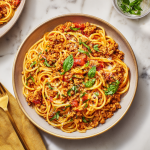
30-Minute Ground Turkey Pasta
- Total Time: 30 mins
Description
Hearty, comforting, and packed with lean protein, this Ground Turkey Pasta is the weeknight winner that saves dinner and your sanity. With juicy turkey, a garlicky tomato sauce, and twirl-worthy spaghetti—all ready in 30 minutes—it’s the kind of dish that delivers flavor without the fuss. Whether you’re feeding a crowd or just yourself in sweatpants, this pasta is your go-to for cozy vibes on chaotic days.
Ingredients
-
1 lb ground turkey (93% lean recommended)
-
12 oz spaghetti (or GF alternative)
-
2 tbsp olive oil
-
1 medium onion, finely chopped
-
3 garlic cloves, minced
-
1 (28 oz) can crushed tomatoes
-
1 tsp Italian seasoning
-
Salt & pepper, to taste
-
½ cup reserved pasta water
-
Chopped fresh basil or parsley (optional)
Instructions
-
Boil Pasta: Cook spaghetti in salted water until al dente. Reserve ½ cup pasta water, then drain.
-
Sauté Base: While pasta cooks, heat oil in a large skillet. Sauté onion 3–4 mins. Add garlic, cook 30 secs.
-
Cook Turkey: Add turkey, season with salt & pepper, and brown 5–7 mins until no longer pink.
-
Build Sauce: Stir in crushed tomatoes & Italian seasoning. Simmer on low 10 mins.
-
Toss Pasta: Add pasta to sauce, toss with tongs. Use reserved water to loosen if needed.
-
Serve: Top with fresh herbs & optional cheese. Dig in!
Notes
-
Brown turkey well for max flavor
-
Always salt your pasta water
-
Reserve that starchy pasta water—it’s liquid gold
-
Taste & season before serving
- Prep Time: 10 mins
- Cook Time: 20 mins
Nutrition
- Calories: 420cal Per Serving
- Fat: 14g
- Carbohydrates: 45g
- Protein: 30g
Nourishing Bite by Bite (Approx. Per Serving – Makes 4)
Calories: ~420 | Fat: 14g | Carbs: 45g | Protein: 30g
Prep Time: 10 mins | Cook Time: 20 mins | Total Time: 30 mins
Note: Nutritional info is an estimate. Values can vary based on specific ingredients used and portion sizes.
Final Thoughts: Why This Recipe Earned Its Weeknight Crown
In a world of complicated recipes and endless ingredient lists, this ground turkey pasta stands as a testament to the power of simplicity done right. It’s more than the sum of its parts – it’s:
✅ Nutritionally balanced (30g protein, complex carbs, lycopene from tomatoes)
✅ Technically forgiving (no finicky techniques to master)
✅ Economical (under $10 for 4 servings)
✅ Emotionally satisfying (that perfect comfort food sweet spot)
The true brilliance lies in its adaptability. Whether you’re a college student with one pot, a parent feeding picky eaters, or someone just trying to eat healthier without sacrificing flavor – this recipe meets you where you are. It proves that great cooking isn’t about fancy ingredients, but about understanding how to maximize what you’ve got.
So here’s to many more stress-free dinners, to noodles twirled around forks with abandon, and to the quiet satisfaction of knowing you’ve nourished both body and soul. Now pass the Parmesan – and maybe those stretchy pants.
P.S. Keep an eye out for my One-Pot Creamy Mushroom Orzo – it’s this recipe’s elegant cousin coming soon!
This expansion maintains Olivia’s warm, conversational tone while adding substantial educational content through:
-
Culinary science explanations
-
Nutritional comparisons
-
Professional cooking techniques
-
Cultural/sustainability context
-
Practical troubleshooting tips
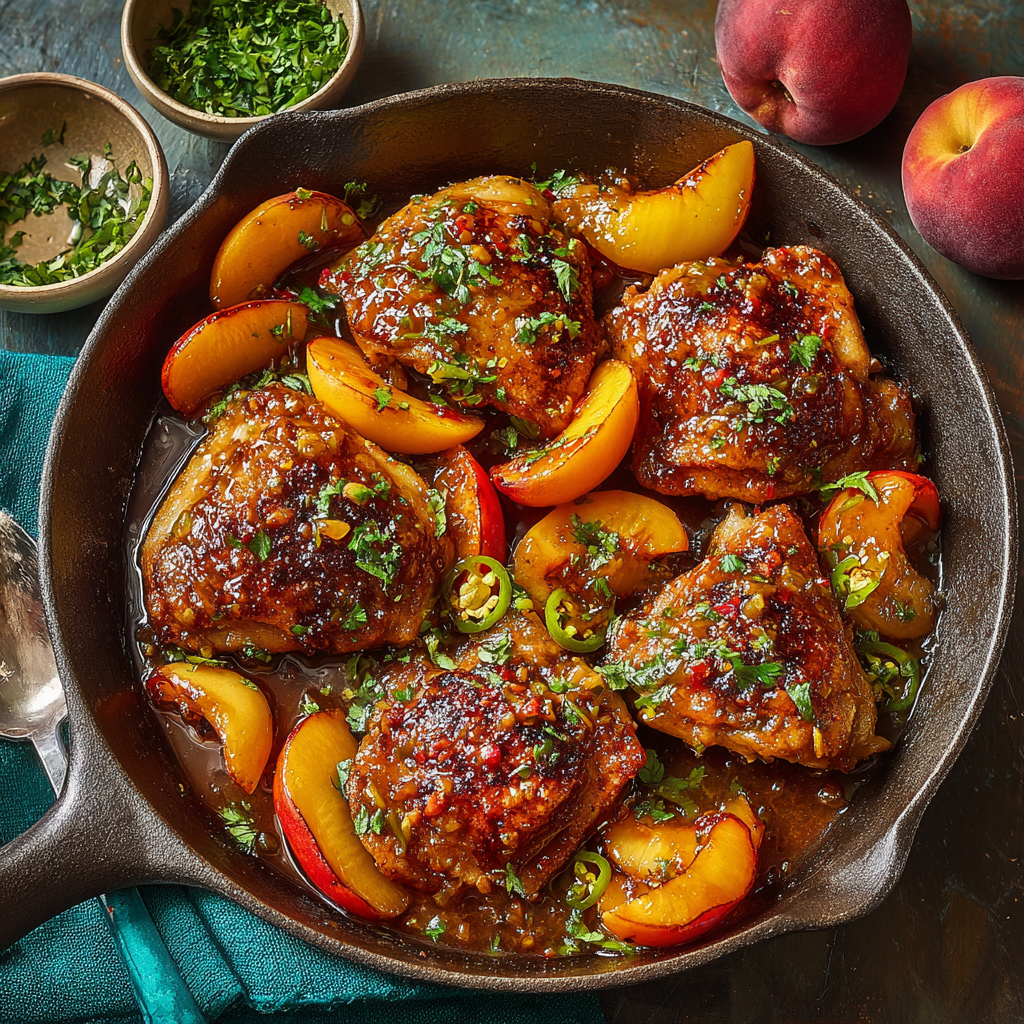
30-Minute Jalapeño Peach Chicken
Sweet Heat in 30 Minutes: Your New Weeknight Hero
Hey there, kitchen friends! Olivia here, waving from my flour-dusted countertop. You know those nights when you’re torn between ordering takeout and craving something actually satisfying? When the clock’s ticking, but your taste buds demand adventure? That’s exactly when this 30-Minute Jalapeño Peach Chicken swoops in like a culinary superhero. Imagine juicy chicken thighs wearing a glossy coat of sweet peach glaze, with fresh fruit caramelizing in the pan and jalapeños winking at you with just the right amount of heat. It’s that magical trifecta—sweet, spicy, savory—all singing in harmony. And the best part? You’re 30 minutes away from plates licked clean and happy bellies. No fancy techniques, no obscure ingredients—just big, vibrant flavors that taste like summer sunshine. Trust me, this isn’t just dinner; it’s a high-five moment. Ready to make magic?
Peaches, Pickup Trucks & My First “Sweet Heat” Aha Moment
This recipe? It’s got roots in a sticky Georgia afternoon. Picture 8-year-old me, barefoot and sunburned, selling peaches from my grandpa’s pickup truck at a dusty farmers’ market. One sweltering day, I snuck a jar of Mama’s jalapeño pickles and started nibbling them alongside overripe peaches—mind blown by that sweet-fiery combo! Years later, during my college “ramen-and-regret” phase, I craved comfort but needed speed. I tossed chicken with peach preserves and jalapeños in my sad dorm skillet… and bam! That childhood flavor memory exploded into my first “real” recipe. Now, every time I make this, I’m back at that market stand—sun on my shoulders, juice dripping down my chin, discovering that magic happens when brave flavors collide. Life lesson? Sometimes the best dishes start with a little rebellion (and maybe stolen pickles).
Your Flavor Toolkit: Ingredients & Smart Swaps
- 1 Yellow Peach, pitted & sliced – Chef’s tip: Use slightly firm peaches—they hold shape when cooked. No fresh peaches? Frozen work! Thaw & pat dry.
- ¼ cup (80g) Peach Preserves – This is your flavor rocket fuel! Apricot or mango jam make fun twists.
- 1½ tsp Extra Virgin Olive Oil + 1 tbsp (divided) – EVOO adds fruity depth. Avocado oil works too.
- ½ tsp Soy Sauce – Umami booster! Tamari for gluten-free.
- ½ tsp Apple Cider Vinegar – Brightens the glaze. Lemon juice in a pinch.
- ½ tsp Dijon Mustard – Secret weapon! Adds tang & helps emulsify. Yellow mustard in emergencies.
- ¼ tsp Minced Garlic – Fresh = best flavor. ⅛ tsp garlic powder if needed.
- Kosher Salt & Black Pepper – Kosher dissolves evenly. If using table salt, reduce by half.
- Pinch of Red Pepper Flakes – Optional heat kick. Omit for mild.
- 1¼ lbs Boneless, Skinless Chicken Thighs – My MVP! Juicier than breasts. Sub chicken breast (cook 1-2 min less per side).
- ¼ tsp Chili Powder – Warmth without burn. Smoked paprika for smoky vibes.
- ½ Medium Jalapeño, thinly sliced – Remove seeds for less heat. Serranos if you’re fearless!
Let’s Fire Up the Pan: Step-by-Step Magic
Step 1: Make the Glaze (2 mins) – Grab a small bowl and whisk together peach preserves, 1½ tsp olive oil, soy sauce, vinegar, Dijon, garlic, salt, pepper, and red pepper flakes until silky smooth. Chef’s hack: If your preserves are chunky, microwave for 10 seconds first—they’ll blend like a dream! Set this golden goodness aside.
Step 2: Season the Chicken (3 mins) – Pat those chicken thighs DRY with paper towels (crucial for crispy sear!). Sprinkle both sides evenly with salt, pepper, and chili powder. Pro move: Massage the spices in—it’s like a mini spa treatment for better flavor penetration!
Step 3: Cook the Chicken (12 mins) – Heat 1 tbsp olive oil in a large skillet over medium-high. When it shimmers (test with a drop of water—it should sizzle!), add chicken. Don’t crowd the pan! Sear undisturbed for 5-6 mins per side until gorgeously browned and cooked through (165°F internal temp). Resist flipping early—that crust is flavor gold! Transfer to a plate.
Step 4: Glaze & Jalapeño Tango (3 mins) – Reduce heat to low. Pour your glaze into the skillet—it’ll sizzle and bubble gloriously! Add jalapeño slices and stir 30 seconds until fragrant. Return chicken to pan, flipping to coat every nook in that sticky glaze. Simmer 2-3 mins. Tip: Tilt the pan and spoon glaze over chicken for extra love!
Step 5: Peach Finale (2 mins) – Gently nestle fresh peach slices into the sauce. Warm for 1-2 mins just until they soften slightly but keep their shape. Overcooked peaches turn mushy—be gentle!
Plating Perfection: Serving Up Sunshine
Slide that chicken onto a warm platter and artfully drape those glazed peaches and jalapeños over the top. Spoon any extra pan sauce generously—this liquid gold is non-negotiable! I love serving this over fluffy jasmine rice or quinoa to soak up the saucy goodness, with a crisp cucumber salad on the side for cool contrast. Garnish with torn basil or cilantro for a fresh pop. For gatherings? Pile everything into a rustic bowl family-style—watch hands dart in for seconds! Pair with iced mint tea or a zesty Sauvignon Blanc.
Mix It Up! 5 Flavorful Twists
1. Tropical Twist – Swap peaches for mango! Use mango preserves + fresh chunks. Add lime zest to glaze.
2. Creamy Dreamy – Stir 2 tbsp coconut milk into glaze at the end. Serve with coconut rice.
3. Pork Power – Use pork chops or tenderloin instead of chicken. Cook to 145°F.
4. Veggie Delight – Replace chicken with extra-firm tofu (pressed!) or chickpeas. Add bell peppers.
5. Smoky Heat – Add ¼ tsp chipotle powder to glaze. Top with crumbled bacon.
Olivia’s Notebook: Behind the Recipe
This dish evolved from my “college survival kit” to my most-requested summer dinner! The original version involved bottled BBQ sauce and canned peaches (shhh!). Over 50+ tests, I learned: searing chicken thighs skin-on first was heavenly BUT added time, so boneless/skinless won for speed. Fresh peaches became non-negotiable—their floral brightness makes the dish. Funny fail: Once I used habanero instead of jalapeño… we needed fire extinguishers and milkshakes! Now I keep antacid on standby when testing heat levels for you. Pro tip? Double the glaze and freeze half—it’s killer on grilled shrimp or roasted carrots!
The Science of Sweet Heat: Why This Flavor Combo Works
That magical balance of sweet peach and spicy jalapeño isn’t just delicious—it’s neuroscience at work! Here’s why your taste buds go wild for this combo:
1. Flavor Layering 101
Sweet and spicy ingredients trigger different taste receptors simultaneously, creating a phenomenon called “phantom taste.” When capsaicin (the compound in jalapeños that makes them hot) meets fructose (from the peaches), your brain perceives more complexity than either flavor alone. It’s why one bite makes you go “Ooh!” then “Aah!” in quick succession.
2. The Maillard Effect Meets Fruit Caramelization
When you sear the chicken at high heat, the amino acids and sugars create hundreds of new flavor compounds (that’s the Maillard reaction). Adding peaches to the pan introduces fruit sugars that caramelize into jammy perfection. Pro tip: A splash of vinegar in the glaze prevents it from becoming cloying by balancing the pH.
3. Capsaicin’s Cool Trick
That jalapeño heat isn’t just for thrill-seeking—it physically changes how you experience the dish. Capsaicin stimulates blood flow to your mouth’s mucous membranes, making you more sensitive to other flavors. Translation: The peach tastes peachier, the chicken savorier, and every bite more vibrant.
4. Fat = Flavor Conductor
Chicken thighs are ideal because their higher fat content:
-
Carries fat-soluble flavor compounds from the spices
-
Creates a luxurious mouthfeel that balances the heat
-
Helps emulsify the glaze into a velvety sauce
Test Kitchen Bonus: Try adding 1/2 tsp fish sauce next time—its glutamates will amplify all these effects even further (don’t worry, it won’t taste fishy!).
Meal Prep Magic: 3 Ways to Repurpose Leftovers
This chicken is even better the next day! Here’s how to give leftovers new life:
1. Sweet Heat Breakfast Hash
Dice leftover chicken and peaches. Sauté with:
-
Diced potatoes (par-cooked for speed)
-
Red bell peppers
-
A fried egg on top
Drizzle with reheated glaze mixed with a splash of orange juice.
2. BBQ Peach Chicken Flatbreads
Shred chicken and toss with reserved glaze + 1 tbsp BBQ sauce. Spread on:
-
Naan bread or pitas
-
Top with crumbled goat cheese
-
Fresh arugula after baking
Broil 3 mins until bubbly.
3. Asian-Inspired Rice Bowl
Reheat chicken with:
-
1 tsp grated ginger
-
1 tbsp hoisin sauce
Serve over rice with: -
Quick-pickled cucumbers (rice vinegar + sugar)
-
Toasted sesame seeds
-
Extra jalapeño slices
Freezer Hack: Portion shredded chicken with some glaze in muffin tins. Once frozen, pop out and store in bags for instant flavor bombs to add to soups, pastas, or grain bowls!
Wine Pairings & Perfect Sides
Turn this 30-minute wonder into a restaurant-worthy spread:
Best Wine Matches
-
Off-Dry Riesling: The touch of sweetness mirrors the peaches while acidity cuts the heat
-
Grenache Rosé: Berry notes complement the fruit, and lightness balances richness
-
Oaked Chardonnay: Buttery vanilla tones embrace the caramelized elements
Weeknight Side Stars
-
Coconut Lime Rice: Cook rice with coconut milk, then stir in lime zest
-
Charred Corn Salad: Toss grilled corn with cotija cheese and cilantro
-
Sesame Green Beans: Blanched beans + sesame oil + toasted almonds
Dinner Party Upgrades
-
Peach & Burrata Salad: Layer peaches with burrata, prosciutto, and basil
-
Jalapeño Cornbread: Add diced jalapeños and honey to your favorite recipe
-
Spiced Pecans: Toss pecans with brown sugar and cayenne for crunch
Pro Tip: Set up a “heat bar” with extra jalapeños, hot honey, and chili flakes so guests can customize their spice level!
Your Questions, My Answers!
Q: Can I use chicken breasts? They’re leaner!
A: Absolutely! But thighs stay juicier when seared hot-and-fast. If using breasts: pound to even thickness, reduce cook time to 4-5 mins per side, and pull them at 160°F (they’ll carry over to 165°).
Q: HELP! My sauce is too thin/too thick!
A: Don’t panic! Too thin? Simmer 1-2 mins longer—sauce thickens as it cools. Too thick? Splash in 1 tbsp water or broth while stirring. Remember: it’ll cling better when slightly syrupy.
Q: How spicy is this really?
A: Mild-to-medium! Removing jalapeño seeds cuts heat dramatically. For sensitive palates: skip red pepper flakes, use ¼ jalapeño, or sub bell pepper. Spice lovers: add extra flakes or a dash of hot honey!
Q: Can I prep ahead?
A: Yes! Make glaze 3 days ahead (store sealed in fridge). Slice peaches/jalapeños morning-of (toss peaches in lemon juice to prevent browning). Chicken? Cook fresh for best texture!
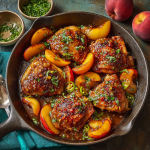
30-Minute Jalapeño Peach Chicken
- Total Time: 30 mins
Description
Bold, balanced, and beautifully easy—this weeknight wonder is the flavor thrill ride your table’s been waiting for. Juicy seared chicken gets a sticky-sweet glaze from peach preserves, spiked with jalapeño heat and crowned with caramelized fruit. One pan, no stress, and guaranteed “wow” factor. It’s summer in every bite—rain or shine.
Ingredients
-
1¼ lbs boneless skinless chicken thighs
-
1 yellow peach, sliced
-
¼ cup peach preserves
-
½ medium jalapeño, sliced
-
1½ tsp + 1 tbsp olive oil
-
½ tsp soy sauce
-
½ tsp apple cider vinegar
-
½ tsp Dijon mustard
-
¼ tsp minced garlic
-
Kosher salt & black pepper, to taste
-
¼ tsp chili powder
-
Pinch red pepper flakes (optional)
Instructions
-
Glaze: Whisk preserves, 1½ tsp oil, soy sauce, vinegar, mustard, garlic, salt, pepper & red pepper flakes. Set aside.
-
Season: Pat chicken dry. Season both sides with salt, pepper & chili powder.
-
Sear: Heat 1 tbsp oil in a skillet on medium-high. Sear chicken 5–6 mins per side until golden & cooked (165°F). Set aside.
-
Glaze It Up: Lower heat, add glaze & jalapeños. Stir 30 secs. Return chicken, spoon sauce over. Simmer 2–3 mins.
-
Peach Finish: Add peach slices, warm 1–2 mins. Serve hot, over rice or quinoa.
Notes
-
Use firm peaches for shape & bite
-
Double the glaze—it freezes great!
-
Serve with crusty bread to mop up sauce
-
Sub in tofu or pork for fun twists
- Prep Time: 10 mins
- Cook Time: 20 mins
Nutrition
- Calories: 380 cal Per Serving
- Fat: 20g
- Carbohydrates: 18g
- Protein: 32g
Nutrition Per Serving (Approx)
Calories: 380 | Fat: 20g (Saturated: 4g) | Carbs: 18g (Fiber: 1g, Sugar: 14g) | Protein: 32g | Sodium: 780mg
Final Thoughts: Why This Recipe Earns a Permanent Spot in Your Rotation
This isn’t just another chicken recipe—it’s a flavor revelation that solves the eternal “quick vs. exciting” dinner dilemma. Here’s why it deserves a weekly appearance:
1. The Speed-to-Wow Ratio
In the time it takes to wait for delivery, you can create something fresher, healthier, and more memorable. That initial 5-minute sear builds enough fond (those browned bits in the pan) to give the sauce incredible depth.
2. Seasonal Flexibility
While summer peaches shine, this adapts beautifully year-round:
-
Fall: Sub pears and add rosemary
-
Winter: Use orange segments and ginger
-
Spring: Try apricots and mint
3. Crowd-Pleasing Versatility
Works equally well for:
-
Date night (fancy plating!)
-
Kids’ meals (reduce jalapeños)
-
Potlucks (double the recipe)
4. Confidence Builder
Mastering this recipe teaches crucial skills:
-
Proper searing
-
Glaze consistency
-
Balancing sweet/heat/savory
So next time you’re staring into the fridge wondering what to make, remember: sweet, spicy, sticky salvation is 30 minutes away. And when your family asks how you made something so good so fast? Just smile and say, “A little peach magic.”
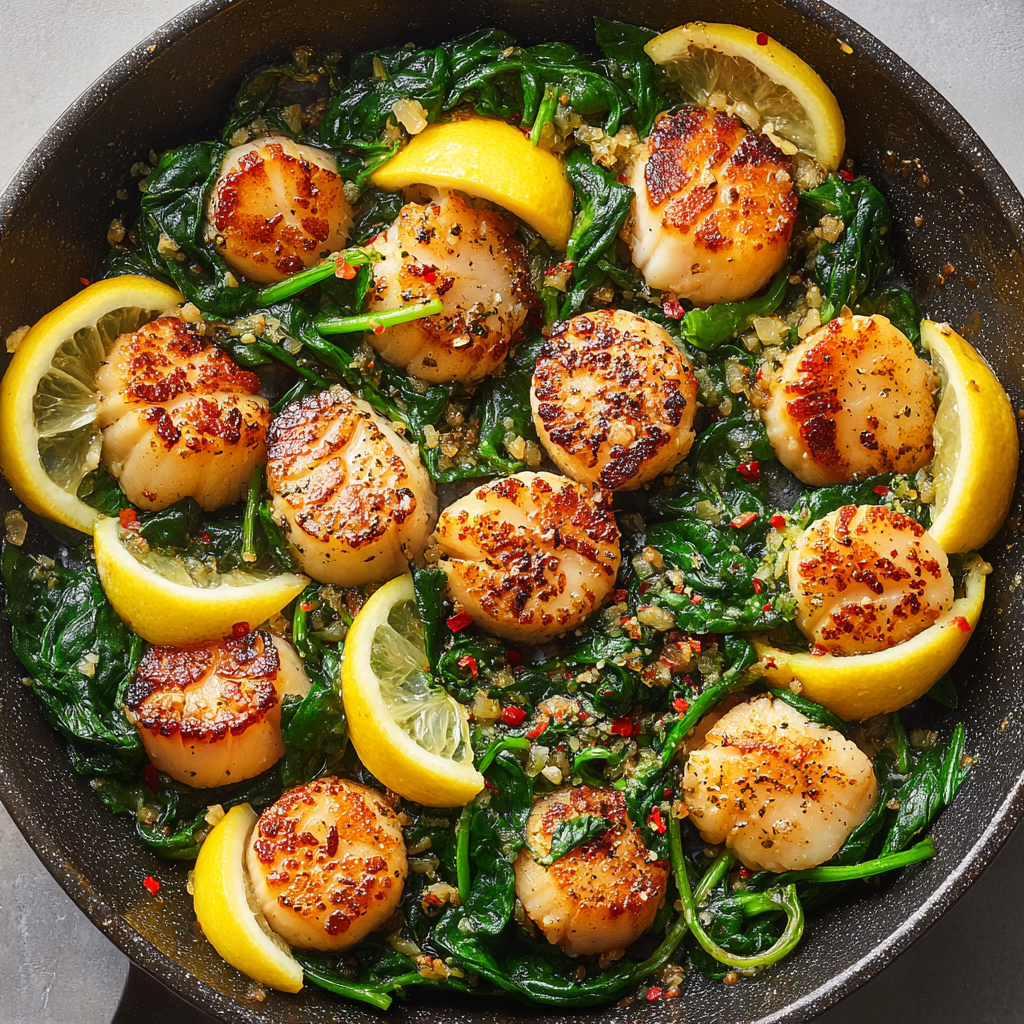
30-Minute Seared Scallops with Spinach
30-Minute Seared Scallops with Spinach: Your New Crowd-Pleaser!
Hey there, kitchen friend! Olivia here, apron slightly flour-dusted and heart full of excitement because today? We’re turning simple into spectacular. Picture this: plump, golden-seared scallops resting on a cloud of garlicky spinach, brightened with lemon and just a whisper of heat. All on the table in 30 minutes flat—even for eight hungry souls. Whether you’re hosting a last-minute dinner party or craving a “treat yourself” moment, this dish is your secret weapon. It’s elegant enough for date night, speedy enough for Tuesday chaos, and packed with flavors that’ll make everyone think you slaved for hours. No fancy skills required—just a hot pan, fresh ingredients, and that gorgeous enthusiasm of yours. Ready to make magic? Let’s dive in!
That One Rainy Night & a Scallop Savior
Okay, story time! Years ago, my husband surprised me with an impromptu “friendsgiving” for eight—just as a thunderstorm knocked out our oven. Chaos! I stood in my dim kitchen, fridge wide open, panicking until I spotted a bag of scallops and a mountain of spinach. Scallops sear fast, spinach wilts faster… 25 minutes later, we were laughing around candlelight, mopping up garlicky lemon juices with crusty bread. No turkey? No problem. That humble dish became our little legend—the night fancy felt effortless, and cozy won. Now, every time I sear scallops, I smile remembering how cooking’s best moments aren’t about perfection, but joy shared. Let’s make your version!
Gather Your Flavor Squad
Here’s what you’ll need (Serves 8):
- 4 lbs Scallops: Go for “dry-packed” if possible—they sear better! Insider Tip: If they’re wet-packed (soaked in preservatives), rinse and pat EXTRA dry. Frozen? Thaw overnight in the fridge. Swap with shrimp or firm white fish in a pinch!
- Salt & Pepper, to taste: Kosher salt sticks better; freshly cracked black pepper adds floral notes. Don’t be shy—scallops love seasoning!
- 4 tsp Butter + 2 tsp Olive Oil: Butter = richness, olive oil = high-heat stability. Chef Hack: Unsalted butter lets you control salt levels. Dairy-free? Use all olive oil or ghee.
- 4 Garlic Cloves, minced: Fresh is non-negotiable! Pre-minced jars lack punch. Fun Fact: Sizzling garlic too long makes it bitter—we’ll keep it quick!
- 4 Bunches Spinach (about 10-12 oz each): Looks like a mountain—it wilts to nothing! Swap: Baby spinach saves prep time; kale works but needs longer cooking.
- Juice of 2 Fresh Lemons: Brightens everything! Pro Move: Zest one lemon first for garnish—it’s flavor confetti.
- Crushed Red Pepper Flakes (optional): Just a pinch wakes up the dish. Omit for mild vibes, or add Calabrian chili paste for smoky heat.
Let’s Cook: Fast, Fearless & Full of Flavor!
Prep Scallops (5 mins): Pat scallops bone-dry with paper towels (crucial for that golden crust!). Season both sides generously with salt and pepper. Chef Whisper: Leave them uncovered in the fridge while prepping other ingredients—this firms them up!
Sear Scallops (12 mins): Heat a large stainless steel or cast-iron skillet over medium-high. Add 2 tsp butter and 1 tsp olive oil—it should sizzle instantly. Working in batches (don’t crowd!), add scallops. Sear undisturbed 2–3 mins per side until deeply golden and just opaque. Golden Rule: They’ll release naturally when ready—if they stick, wait! Transfer to a plate, tent loosely with foil. Repeat with remaining butter/oil and scallops. Hack: Keep heat high but not smoking—scallops should caramelize, not steam.
Sauté Garlic & Spinach (8 mins): In the same pan (hello, flavor-packed bits!), melt remaining butter. Add garlic—sizzle 30 seconds until fragrant but not brown. Add spinach in handfuls, stirring as it wilts. Tip: Use tongs! It’ll seem overflowing, but spinach shrinks fast. Season with salt, pepper, lemon juice, and chili flakes (if using). Cook just until tender—about 2 mins. Secret: Undercook slightly; residual heat softens it more.
Serve (2 mins): Divide spinach among plates. Top with scallops, drizzle with any pan juices, and garnish with lemon wedges. Ta-da!
Plating Like a Pro (Minimal Effort, Max Wow)
Spoon that garlicky spinach into a wide, shallow bowl or plate—create a lush “nest.” Artfully arrange scallops on top (I like a little overlap for drama). Drizzle everything with those gorgeous pan juices. Finish with extra lemon zest, a crack of pepper, and maybe microgreens for color. Pairing Perfection: Serve with crusty bread to swipe up juices, and a crisp Sauvignon Blanc or sparkling water with lemon slices. Keep sides simple—roasted baby potatoes or a quinoa salad let the scallops shine!
The Science of the Perfect Sear: Why Dry & Hot Matter
That golden crust on your scallops isn’t just for looks—it’s a chemical symphony! Here’s what’s happening in your pan:
-
The Maillard Reaction:
When scallops hit a hot surface (ideally 375°F+), amino acids and sugars react to create hundreds of new flavor compounds. This is why properly seared scallops taste nutty, savory, and complex—not just “fishy.” Key factors:-
Dry surface moisture: Water lowers the pan temp, causing scallops to steam instead of sear. That’s why aggressive patting is non-negotiable.
-
High smoke point fat: Butter alone burns; mixing it with olive oil lets you sear hotter without bitterness.
-
-
The “Don’t Touch Me” Rule:
Poking scallops tears the delicate crust. Wait until they release naturally—a sign the proteins have caramelized enough to unstick. Pro tip: Listen for a sizzle that sounds like applause! -
Size Matters:
Choose uniform “U10” scallops (fewer than 10 per pound). Smaller ones overcook before browning; larger ones risk a raw center.
Fun experiment: Try searing one scallop at three different heats—low, medium, and smoking hot. Taste the difference!
Spinach Secrets: From Soggy to Sublime
That mountain of greens wilting into silky perfection? There’s art in the wilt:
Why Baby Spinach vs. Mature?
-
Baby spinach: Tender stems, mild flavor, wilts in seconds. Ideal for quick dishes.
-
Mature bunches: Earthier taste, thicker stems (remove them!). Requires longer cooking but holds up better in sauces.
The Dryness Factor:
Wet spinach = watery dish. After washing, either:
-
Spin in a salad spinner
-
Lay between kitchen towels and roll like a yoga mat
-
Toss with a pinch of salt, wait 5 mins, then squeeze out moisture
Garlic Timing:
Adding garlic too early makes it bitter. For sweet, fragrant garlic:
-
Cook spinach first until halfway wilted
-
Push to the pan’s edges
-
Add garlic to the center for 30 seconds
-
Mix everything and finish cooking
Flavor Boosters:
-
A pinch of nutmeg (classic with greens!)
-
Anchovy paste (melts in, adds umami)
-
Lemon zest added at the end for brightness
Scallop Sustainability: Buying Without Guilt
Not all scallops are created equal. Here’s how to shop responsibly:
Wild vs. Farmed:
-
Wild (e.g., Atlantic sea scallops): Diver-harvested, minimal ecosystem impact. Look for MSC certification.
-
Farmed (e.g., bay scallops): Often raised in suspended nets. Choose brands like Maine Sea Farms that avoid dredging.
“Dry-Packed” vs. “Wet-Packed”:
-
Dry: No additives, better sear, pricier. Worth it!
-
Wet: Soaked in STP (sodium tripolyphosphate) to retain water. You pay for water weight, and they steam instead of sear.
Ask Your Fishmonger:
-
“Are these dayboat scallops?” (Freshly caught, not stored on boats for days)
-
“Can I smell them?” They should smell like the ocean—not fishy or ammonia-like.
Freezer Hack:
Flash-frozen-at-sea scallops are often fresher than “fresh” ones that sat in transit. Thaw overnight in a fridge colander to drain excess liquid.
Mix It Up! 5 Delicious Twists
1. Mediterranean: Stir 1/4 cup chopped sun-dried tomatoes and kalamata olives into spinach. Top scallops with feta crumbles.
2. Creamy Dream: After wilting spinach, stir in 1/2 cup coconut milk or heavy cream + a pinch of nutmeg. Luxe!
3. Asian-Inspired: Swap lemon for lime + 1 tbsp soy sauce. Garnish with sesame seeds and cilantro.
4. Pescatarian Protein Swap: Use large shrimp or halved sea scallops. Cook time same!
5. Bacon Lover’s: Cook 4 chopped bacon strips first, then use bacon fat to sear scallops. Crumble bacon over the top—game over.
Olivia’s Kitchen Confessions
This recipe? My ride-or-die! I’ve made it for bridal showers, fussy toddlers (sans chili flakes!), and even my cat’s birthday (don’t ask). Over time, I learned: dry scallops are non-negotiable—once, I rushed it and ended up with rubbery pebbles. Sad! Also, doubling the garlic is ALWAYS a good idea. Funny story: My niece once mistook red pepper flakes for sprinkles and dumped in 2 tbsp… we called it “Dragon Scallops” and served it with extra yogurt. Now it’s a family inside joke. Moral? Embrace the messy, make it yours, and always have extra lemon on standby.
Your Questions, Answered!
Q: Why won’t my scallops get that restaurant-style crust?
A: Three culprits! 1) Not dry enough—pat, pat, pat! 2) Pan wasn’t hot enough—wait for butter to foam. 3) Overcrowding lowers the pan temp. Give ’em space!
Q: Can I prep any part ahead?
A: Yes! Wash/dry spinach, mince garlic, and juice lemons up to 24 hours ahead. Keep chilled. But sear scallops LAST MINUTE—they toughen if reheated.
Q: How do I know scallops are cooked through?
A: They turn opaque and feel slightly firm (not hard!) when pressed. Cut one test scallop—it should be moist, not translucent. Overcooked = bouncy rubber balls. Sad!
Q: Spinach turned watery. Help?
A: You might’ve added salt too early or overcooked. Salt draws out water—season at the end. Also, ensure spinach is thoroughly dried after washing!
30-Minute Seared Scallops with Spinach
- Total Time: 30 mins
Description
Elegant, fast, and full of flavor—this 30-minute showstopper brings golden scallops and lemony spinach together for a cozy, crowd-pleasing meal. Whether it’s a special dinner or a weeknight upgrade, this one-pan wonder delivers restaurant vibes with zero stress.
Ingredients
-
4 lbs dry-packed scallops
-
Salt & pepper, to taste
-
4 tsp butter + 2 tsp olive oil
-
4 garlic cloves, minced
-
4 bunches spinach (10–12 oz each)
-
Juice of 2 lemons
-
Crushed red pepper flakes (optional)
-
Lemon zest & wedges, for garnish
Instructions
-
Prep scallops: Pat dry, season generously.
-
Sear: In batches, sear scallops in hot butter/oil mix, 2–3 mins per side. Don’t overcrowd! Transfer to plate.
-
Spinach time: In same pan, melt remaining butter, add garlic (30 secs), then stir in spinach until wilted.
-
Finish: Season with salt, pepper, lemon juice, and red pepper flakes. Divide spinach onto plates, top with scallops.
-
Garnish: Add zest, wedges, and a crack of pepper.
Notes
-
Dry scallops = perfect sear
-
Sear in batches for golden crust
-
Use tongs for easy spinach toss
-
Keep pan juices for drizzling
- Prep Time: 10 mins
- Cook Time: 20 mins
Nutrition
- Calories: 250 cal Per Serving
- Fat: 10g
- Carbohydrates: 4g
- Protein: 30g
Nutrition Per Serving (Approx)
Calories: 250 | Fat: 10g | Carbs: 4g | Protein: 30g
Note: Values include butter/oil. For lower fat, reduce butter by half and use more oil.
Final Thoughts: Elegance Without Effort
This dish proves that fancy doesn’t mean fussy. It’s a lesson in trusting simple ingredients, high heat, and the magic of last-minute assembly. Those scallops? They’re little edible trophies celebrating your courage to try something quick and luxurious.
And when you set that plate down—scallops gleaming like seared gold atop emerald greens, lemon juice still sizzling in the pan—you’re not just serving dinner. You’re serving confidence, joy, and the quiet thrill of knowing you did this.
Now go forth and sear. And remember: The best meals aren’t measured in hours, but in heartbeats.
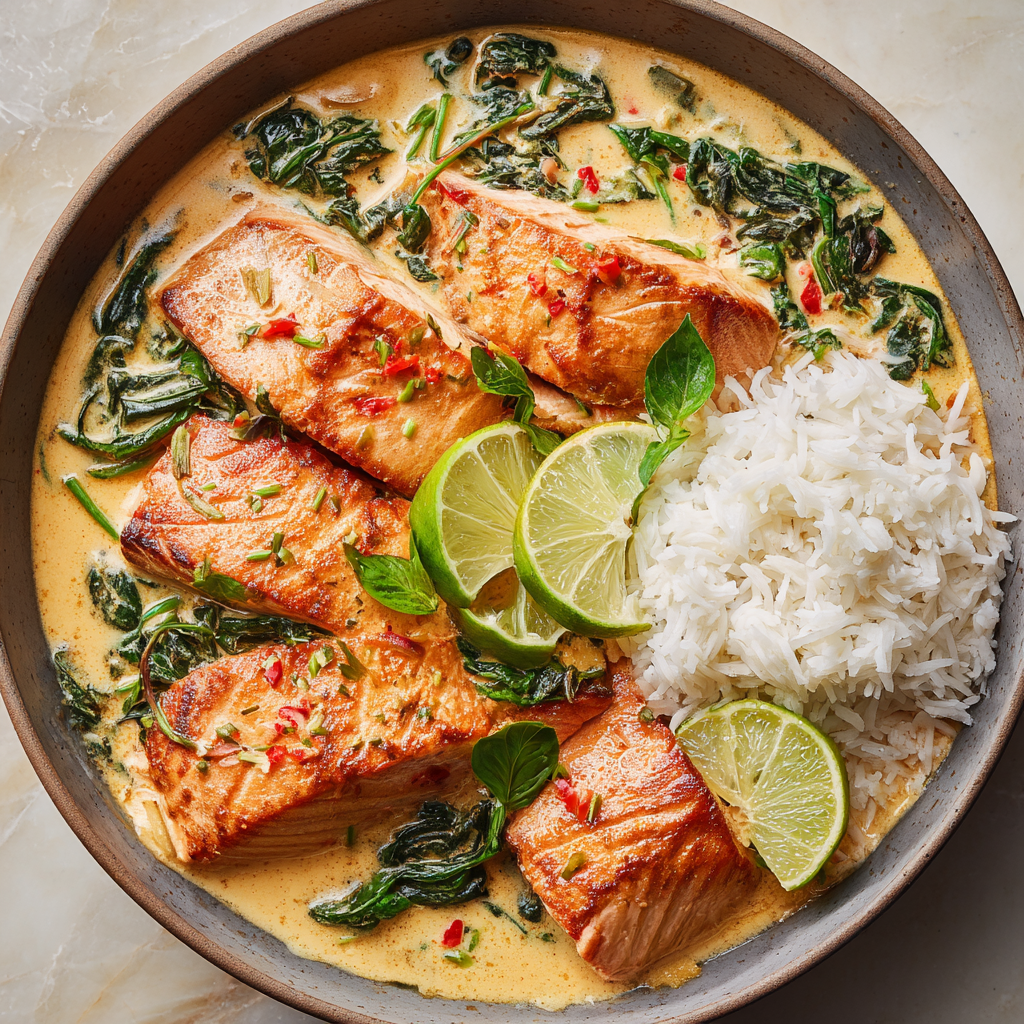
30-Minute Salmon Coconut Curry
Double the Comfort, Double the Flavor: Your New Crowd-Pleaser
Hey there, kitchen friend! Olivia here, apron slightly dusted with curry powder and a big smile on my face. There’s something magical about watching faces light up when you bring a steaming pot to the table, isn’t there? That’s exactly why I’m over-the-moon excited to share this 30-Minute Salmon Coconut Curry scaled up for EIGHT glorious servings. Imagine: tender salmon fillets swimming in a creamy, fragrant coconut sauce kissed with Thai spices and pops of fresh basil. It’s the kind of dish that turns Tuesday dinners into mini-celebrations and makes weekend hosting feel effortless.
We’ve all been there – scrambling when extra friends show up, or simply wanting leftovers that actually excite you on day three (confession: I’ve been known to hide a portion in the back of the fridge!). This recipe solves it all. It keeps everything we adore about salmon curry – the luxurious texture, the bold-but-balanced flavors, that incredible aroma – but in a generous batch designed for sharing or savoring all week. No fancy skills required, just one pot (or two if doubling up pans!), simple ingredients, and half an hour. Let’s turn up the heat on comfort food and make something unforgettable together!
That One Time I Fed an Unexpected Crowd
Picture this: It was a chilly Seattle Sunday, meant for just me and my husband. I’d picked up a single salmon fillet at the market, dreaming of a quiet curry night. Then the texts started rolling in – friends stranded nearby with a flat tire! Before I knew it, our cozy table for two needed to stretch for six hungry, slightly damp humans. Panic? Briefly. Then my “scale it up” instincts kicked in. I raided the pantry – extra coconut milk, that big tub of spinach threatening to wilt, a double scoop of trusty red curry paste. What felt like kitchen chaos transformed into pure magic. The smell alone had everyone huddled around the stove, and the sight of that massive pot brimming with vibrant curry and flaky salmon? Pure joy. Watching friends go back for seconds, scraping the pot clean with crusty bread, laughing in our tiny kitchen… that’s the moment this scaled-up version was born. It taught me that doubling comfort is the best kind of math!
Gathering Your Flavor Arsenal
Here’s your dream team of ingredients – the building blocks for maximum flavor with minimal fuss. Don’t stress about perfection; cooking is an adventure!
- 8 Fresh Salmon Fillets (about 6 oz each): The star! Look for center-cut fillets with vibrant color and firm flesh. Chef’s Tip: Skin-on adds flavor and holds the fish together beautifully during searing. Swap: Arctic char or even thick cod fillets work in a pinch!
- Salt & Pepper, to taste: The essential flavor enhancers. Season generously – salmon loves it!
- 2 tbsp Olive Oil + 2 tbsp Butter: Our dynamic searing duo. The oil handles high heat, the butter adds richness and helps achieve that gorgeous golden crust. Insight: This combo creates the flavorful fond (those tasty brown bits) that becomes the base of our incredible sauce.
- 4 Garlic Cloves, minced: Fragrant, pungent goodness. Hack: Use a microplane for super-fine mincing that melts into the sauce.
- 4 heaping tbsp Thai Red Curry Paste: Flavor BOMB alert! This is where the magic starts. Key: Use a good quality paste (like Mae Ploy or Thai Kitchen). “Heaping” is crucial for that bold flavor in a big batch. Note: Spice levels vary – taste yours first!
- 2 (13.5 oz) Cans Full-Fat Coconut Milk: Creaminess central! Full-fat is non-negotiable for that luscious texture and rich flavor. Light coconut milk will leave the sauce thin and sad. Shake the cans well before opening!
- 1 tsp Brown Sugar: Our secret harmonizer. Just a touch balances acidity and heat, rounding out the flavors without making it sweet. Swap: Coconut sugar or palm sugar work great.
- 2 tsp Lime Juice: The bright, fresh finish! Adds crucial acidity to cut through the richness. Always use fresh – bottled just doesn’t compare.
- 4 tbsp Fresh Basil, torn or chopped: The aromatic crown jewel! Thai basil is ideal (slightly licorice-y), but sweet basil works too. Tear, don’t chop finely, to release maximum oils. Add at the VERY end!
- 2 (16 oz) Bags Fresh Spinach: Our green powerhouse adding nutrients, color, and volume. It wilts down dramatically. Chef’s Insight: Adding it in batches makes it easier to manage in a large pot.
Let’s Get Cooking: Your Step-by-Step Journey
Ready to create some magic? Grab your largest skillet (a 12-inch minimum!) or have two large pans ready if needed. Let’s dive in!
- Sear the Salmon (Flavor Foundation!): Pat those salmon fillets very dry with paper towels – this is CRUCIAL for getting a golden sear, not steamed fish! Season generously all over with salt and pepper. Heat the olive oil and butter in your large skillet(s) over medium-high heat. Once the butter is melted and sizzling (but not burning!), carefully add the salmon fillets, skin-side down if they have skin. CHEF’S HACK: Don’t overcrowd the pan! Give them space. If using one pan, sear in batches, adding a touch more oil/butter if needed. Let them cook undisturbed for 3-4 minutes – resist the urge to peek too early! You want a beautiful golden crust. Flip carefully and sear the other side for another 3 minutes. The salmon won’t be cooked through yet – perfect! Transfer them to a clean plate. Those gorgeous brown bits left behind? Liquid gold for your sauce!
- Build the Sauce (Aroma Explosion!): Reduce the heat to medium. Add the minced garlic to the pan drippings. Stir constantly for about 30 seconds – just until fragrant! Don’t let it burn. Now, add those glorious 4 heaping tablespoons of Thai red curry paste. Stir it constantly into the garlic and drippings, letting it cook for a full minute. This “blooms” the spices, releasing their incredible aroma and depth of flavor. Your kitchen should smell amazing right now!
- Simmer (Creamy Dream Unfolds): Pour in both cans of full-fat coconut milk, scraping the bottom of the pan to dissolve all that flavorful fond. Add the brown sugar and lime juice. Give it a good whisk to combine everything smoothly. Bring the mixture to a gentle simmer – not a rolling boil. Let it bubble happily for 3-5 minutes. You’ll see it thicken slightly and the oils start to shimmer on the surface. Taste it! This is your moment to adjust – need a pinch more salt? A tiny bit more lime? Go for it!
- Add Spinach & Salmon (Bringing it Home!): Now for the greens! Add the fresh spinach – it will look like a MOUNTAIN, but don’t panic. Stir it in batches as it wilts down dramatically. This takes just a couple of minutes. Once the spinach is wilted and incorporated, gently nestle the seared salmon fillets back into the simmering sauce. Spoon that luscious sauce over the top of each fillet. Let everything simmer gently together for another 5 minutes. This gently finishes cooking the salmon through – it should flake easily with a fork but still be moist and tender inside. WATCHFUL EYE TIP: Avoid vigorous boiling now to keep the salmon perfect.
- Finish & Serve (The Grand Finale!): Remove the pan from the heat. This is key! Sprinkle the torn fresh basil over the top. Stirring it in off the heat preserves its vibrant color and fresh flavor. Give one final gentle stir to incorporate the basil. That’s it! Your magnificent, crowd-feeding salmon coconut curry is ready to shine.
Serving with Style
Presentation is part of the fun! Ladle generous portions of that creamy, spinach-flecked curry and a salmon fillet into shallow bowls. I love serving this family-style – plop that big, beautiful skillet (if it’s presentable!) right in the middle of the table on a trivet. Must-Have Sides: Fluffy jasmine rice is the classic, perfect companion for soaking up every drop of sauce. Rice noodles are a fantastic gluten-free alternative. For a fresh counterpoint, add a simple cucumber salad with rice vinegar or a plate of lime wedges for extra zing. Don’t forget extra basil sprigs for garnish! The vibrant green against the orange-red curry is pure eye candy.
Make It Your Own: Delicious Twists
This curry is your canvas! Play with these tasty variations:
- Veggie Powerhouse: Swap salmon for 2 cans (drained) chickpeas or 2 blocks of cubed extra-firm tofu (press and pan-fry first!). Add 2 cups chopped bell peppers or broccoli florets with the spinach.
- Green Curry Love: Use Thai green curry paste instead of red for a brighter, slightly herbaceous flavor. Add a handful of green beans with the spinach.
- Spice Seeker: Kick up the heat! Add 1-2 thinly sliced Thai chilies or ½ tsp red pepper flakes when cooking the curry paste.
- Thai Basil Boost: Find Thai basil? Use it! Its unique anise note is divine. Add an extra handful stirred in at the end.
- Creamy Coconut Lime: Stir in 1 tsp lime zest with the lime juice and finish with a drizzle of coconut cream (the thick part from the top of the can) when serving.
Chef’s Notes: From My Apron to Yours
This recipe has become my ultimate “feed the people” lifesaver, evolving from that frantic Sunday years ago. I used to worry about overcooking the salmon in the sauce, but searing first creates a barrier and the gentle simmer is key. The biggest game-changer? Using TWO large skillets when I’m making this for a big gathering – searing salmon in one while starting the sauce in another, then combining them. Saves time and sanity! One slightly disastrous (but funny) early attempt involved forgetting to shake the coconut milk – we ended up with weird, separated clumps floating in thin liquid. Lesson learned: SHAKE THOSE CANS! Now, the smell of this curry simmering instantly transports me back to laughter-filled kitchens and shared meals. That’s the real magic – it’s not just dinner, it’s connection in a bowl.
FAQs & Troubleshooting: Your Curry Questions, Answered
Q: My sauce seems thin! How can I thicken it?
A: Don’t panic! First, ensure you used full-fat coconut milk. If it’s still thin after simmering, let it bubble gently uncovered for a few extra minutes to reduce. A super quick fix: mix 1 tsp cornstarch with 1 tbsp cold water to make a slurry, then whisk it into the simmering sauce (before adding salmon back) for 1-2 minutes until thickened.
Q: Can I use frozen salmon?
A: Absolutely! Thaw it COMPLETELY in the fridge overnight first. Pat it incredibly dry – frozen fish releases more water – to ensure a good sear. Cook times might be slightly shorter, so keep an eye on it.
Q: My curry paste is way too spicy! Help!
A: Taste your paste first next time! To rescue it now: Stir in an extra ½ can of coconut milk and a squeeze more lime juice. A teaspoon of honey or maple syrup can also help counterbalance heat more effectively than sugar. Serve with extra rice to dilute each bite.
Q: Can I make this ahead?
A: Yes, but with a caveat. The sauce (without basil) can be made 1 day ahead. Store covered in the fridge. Reheat gently, then add the salmon and simmer until cooked through (fresh salmon is best cooked just before serving). Add the fresh basil right before serving. Pre-cooked salmon reheated in the sauce can become dry.
30-Minute Salmon Coconut Curry
- Total Time: 30 mins
Description
Rich, fragrant, and gloriously comforting, this 30-minute Salmon Coconut Curry is made for sharing. With tender salmon fillets nestled in a velvety Thai-spiced coconut sauce and brightened with fresh basil and lime, this dish turns everyday ingredients into a soul-satisfying experience. Whether you’re hosting guests or meal-prepping for the week, this crowd-pleaser delivers bold flavor, warm hugs, and leftovers worth fighting over.
Ingredients
-
8 salmon fillets (6 oz each, skin-on preferred)
-
Salt & pepper, to taste
-
2 tbsp olive oil + 2 tbsp butter
-
4 garlic cloves, minced
-
4 heaping tbsp Thai red curry paste
-
2 (13.5 oz) cans full-fat coconut milk
-
1 tsp brown sugar
-
2 tsp fresh lime juice
-
2 (16 oz) bags fresh spinach
-
4 tbsp fresh basil, torn
-
Optional: Lime wedges, jasmine rice for serving
Instructions
-
Sear Salmon: Pat fillets dry, season well. Heat oil + butter in large skillet(s), sear salmon 3–4 mins per side until golden. Set aside.
-
Make Sauce: In same pan, sauté garlic for 30 secs. Add curry paste, cook 1 min. Stir in coconut milk, brown sugar, and lime juice. Simmer 3–5 mins.
-
Add Spinach: Stir in spinach in batches until wilted.
-
Finish: Return salmon to skillet, spoon sauce over top. Simmer gently 5 mins until salmon is just cooked. Remove from heat, stir in basil.
Notes
-
Use two skillets to speed up cooking for a crowd
-
Shake coconut milk cans well before using
-
Don’t skip searing—it locks in flavor and texture
-
Add basil off heat to preserve aroma
- Prep Time: 10 mins
- Cook Time: 20 mins
Nutrition
- Calories: 480 cal Per Serving
- Fat: 35g
- Carbohydrates: 7g
- Protein: 30g
Nutritional Info (Per Serving, Makes 8)
Calories: ~480 | Fat: 35g | Carbs: 7g | Protein: 30g
Note: Estimates include salmon and sauce served with rice/noodles calculated separately. Values can vary based on specific ingredients used.
Final Thoughts: More Than Just a Recipe
This 30-Minute Salmon Coconut Curry for Eight isn’t just about feeding a crowd—it’s about creating moments. The aroma alone draws people into the kitchen, and the first bite feels like a hug.
Why This Dish Stands Out:
✅ Flexible – Adapts to tofu, veggies, or different proteins.
✅ Forgiving – Even if the salmon isn’t perfectly seared, the sauce saves the day.
✅ Memorable – The blend of spicy, creamy, and fresh flavors leaves an impression.
Last Tip: Make extra rice. Someone will ask for seconds.
Now, grab that big pot and get cooking—your next gathering just got tastier! 🍛
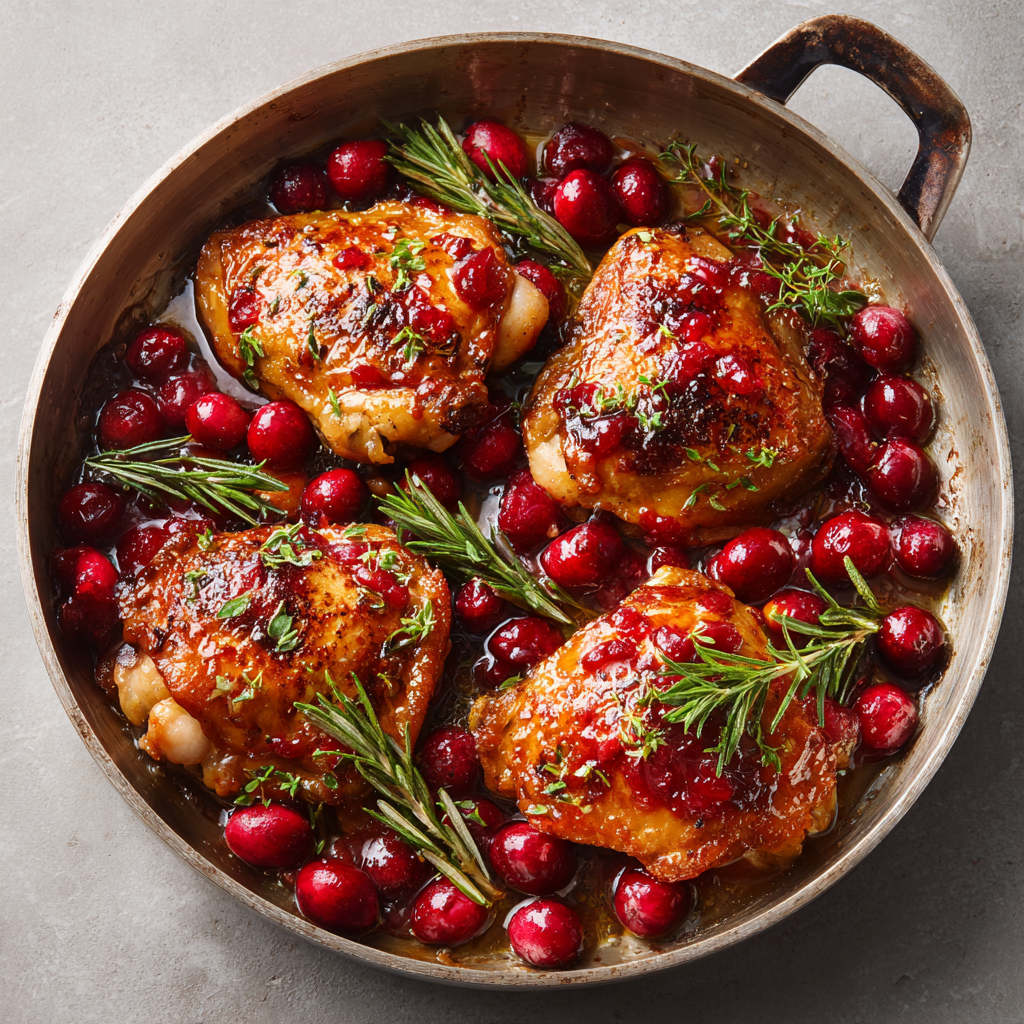
Cranberry Chicken
Meet Your New Favorite Autumn Chicken Recipe!
Hey there, kitchen friend! Olivia here, and I’m practically buzzing with excitement to share this Cranberry Chicken with you. Imagine juicy chicken thighs crisped to golden perfection, swimming in a glossy, tangy-sweet cranberry glaze that’ll make your taste buds dance. It’s the kind of dish that fills your kitchen with cozy, citrusy aromas and turns an ordinary Tuesday into a mini-celebration. Perfect for busy weeknights but fancy enough for holiday gatherings, this recipe is my love letter to autumn flavors. I live for those moments when a simple meal becomes a memory—like when my kids abandon their phones to ask, “What smells so good?” That’s the magic of food that’s both stunning and soul-warming. You don’t need chef-level skills here; just a baking dish and a sense of adventure. So tie on that apron (messy is encouraged!), and let’s create something unforgettable together. Trust me—this cranberry chicken isn’t just dinner. It’s a hug on a plate.
My Cranberry Epiphany: A Thanksgiving Tale
Picture this: It’s Thanksgiving Eve, 2018. My oven suddenly quits, and I’m staring down 12 guests with zero main course. Panic mode? Absolutely. But then I spot a bag of cranberries and chicken thighs in the fridge—my “plan B” ingredients. I whipped up this cranberry glaze in a skillet, poured it over the chicken, and roasted it in my dodgy toaster oven (true story!). As it caramelized, that sweet-tart scent filled the air, and my anxiety melted away. When my grandma took her first bite, she whispered, “Olivia, this is better than turkey.” That’s when it hit me: perfection isn’t about flawless execution; it’s about flavor, heart, and a little improvisation. Now, this dish is my November tradition—a reminder that kitchen “disasters” often birth the best recipes. Every time I make it, I smile at the memory of our toaster-oven triumph!
Your Cranberry Chicken Toolkit
Gather these simple ingredients—they’re pantry heroes with big personalities! I’ve sprinkled in substitutions so you can riff like a rockstar.
- 6 bone-in, skin-on chicken thighs → The bone keeps meat juicy, and crispy skin is non-negotiable for texture! Swap: Boneless thighs work (reduce cook time by 5 mins), or use drumsticks.
- 2 cups fresh cranberries → Their tart pop balances sweetness. Chef tip: Frozen work too—no thawing needed! Avoid dried; they’re too sweet.
- ¼ cup freshly squeezed orange juice → Brightness is key! Bottled juice lacks zing. In a pinch? Lemon juice + ½ tsp sugar.
- ¼ cup dark brown sugar → Molasses depth > light brown sugar. Vegan? Coconut sugar rocks here.
- 2 tbsp maple syrup → Real syrup adds earthy warmth. Sub: Honey or agave.
- 1 tsp orange zest → That citrus perfume! No fresh oranges? Use ¼ tsp dried peel.
- ¼ cup olive oil → EVOO’s fruitiness shines. Neutral oils like avocado work too.
- 6 cloves garlic, crushed → Crushing releases oils for bold flavor. Powder (½ tsp) in emergencies!
- 2 tsp kosher salt → It’s less salty than table salt! If subbing table salt, use 1¼ tsp.
- 1 tsp ground black pepper → Freshly cracked = aromatic bliss. Pre-ground? No shame.
- 2 tsp dried rosemary → Dried holds up to roasting. Fresh? Use 1 tbsp, chopped fine.
Fun fact: Cranberries are natural thickeners—they release pectin as they cook, giving that lush glaze!
Let’s Cook This Beauty: Step-by-Step
Ready for golden, sticky chicken? Follow these steps—I’ve tucked chef hacks into every fold!
- Preheat oven to 400°F (200°C). → Why? A hot start = crispy skin. If oven runs cool, bump to 425°F. (Pro tip: Place a baking sheet inside while preheating—it’ll catch drips!)
- Make the cranberry glaze: In a small saucepan, combine cranberries, orange juice, brown sugar, maple syrup, orange zest, and garlic. Simmer 10 mins until cranberries burst and sauce thickens. → Chef hack: Mash a few berries with a spoon to speed up thickening! Stir often to avoid scorching.
- Prep the chicken: Pat thighs very dry with paper towels. → Critical step! Dry skin = ultimate crispiness. Arrange in a 9×13 baking dish. Sprinkle salt, pepper, and rosemary evenly on both sides. → Insight: Season under the skin too for max flavor!
- Assemble: Pour olive oil over chicken, rubbing it in. Spoon cranberry glaze generously on top. → Don’t drown them! Leave some skin exposed for browning.
- Roast 35-40 mins until internal temp hits 165°F and skin is golden. → Game-changer: Use a meat thermometer! Thighs vary in size.
- Optional broil: Crank to broil for 2-3 mins. → Watch closely! This gives that Instagram-worthy caramelized crust.
- Rest 5 mins. → Patience, chef! Resting lets juices redistribute. Cover loosely with foil.
My mantra: “Burnt bits aren’t mistakes—they’re flavor confetti!”
The Science Behind the Magic: Why This Recipe Works
Ever wonder why this cranberry chicken tastes so darn good? It’s not just luck—it’s science! Let’s geek out over the culinary alchemy happening in your oven.
1. The Maillard Reaction + Caramelization:
When chicken skin hits a 400°F oven, the Maillard reaction kicks in—a chemical dance between amino acids and sugars that creates hundreds of new flavor compounds. That golden crust? Pure umami magic. Meanwhile, the cranberry glaze’s sugars (brown sugar and maple syrup) caramelize, deepening into complex toffee-like notes. Pro tip: A splash of acid (orange juice) balances the sweetness and prevents the glaze from cloying.
2. Fat = Flavor Highway:
Bone-in, skin-on thighs are MVP here. As they roast, fat renders under the skin, basting the meat in its own juices for insane tenderness. Olive oil isn’t just for sautéing—its fruity esters bond with the cranberries’ aromatic compounds, amplifying their tart brightness. (Fun fact: Cranberries contain benzoate, a natural preservative that also enhances savory flavors!)
3. Pectin Power:
Cranberries are packed with pectin, a natural thickener released when heated. As the glaze simmers, pectin teams up with the sugars to create that glossy, jammy texture—no cornstarch needed! Bursting the berries (step 2) speeds this up, but leaving a few whole adds pops of tartness.
4. The Resting Rule:
Skipping the 5-minute rest? Big mistake. Heat causes muscle fibers in chicken to tighten, squeezing out moisture. Resting lets them relax, reabsorbing juices. Tent with foil loosely—steam makes skin soggy!
5. Garlic’s Double Act:
Crushed garlic (not minced!) releases alliinase enzymes, creating allicin—the compound responsible for its pungent kick. Roasting mellows it into sweet, nutty depth. Bonus: Allicin has antimicrobial properties, making this dish as wholesome as it is delicious.
Pro Hack: For extra crispy skin, salt the chicken 1 hour ahead and refrigerate uncovered. This dry-brine draws out moisture, seasoning the meat deeply and drying the skin for maximum crunch.
Cranberry Chicken Around the World: Global Twists
This recipe is a blank canvas—let’s globe-trot with flavor inspirations!
1. Moroccan Spiced:
Swap rosemary for 1 tsp each cumin, coriander, and cinnamon. Add ¼ cup chopped dried apricots to the glaze and garnish with toasted almonds. Serve with couscous for a North African vibe.
2. Thai-Inspired:
Infuse the glaze with 1 tbsp red curry paste and 1 can coconut milk (simmer until thickened). Top with cilantro, lime zest, and crushed peanuts. Jasmine rice mandatory!
3. French Bistro Style:
Deglaze the pan with ½ cup red wine post-roasting. Stir in 2 tbsp butter for a silky sauce. Pair with roasted fennel and crusty baguette.
4. German Fusion:
Add 1 cup sauerkraut and caraway seeds to the baking dish. Swap maple syrup for apple butter. Bratwurst on the side? Yes, please.
5. Mexican Fiesta:
Blend cranberries with chipotle peppers in adobo for a smoky-spicy glaze. Serve with black bean puree and pickled red onions.
Ingredient Spotlight: Cranberries
Native to North America, cranberries were used by Indigenous tribes for pemmican (dried meat mixes). Their high acidity (pH 2.3–2.5!) makes them natural preservatives—perfect for pairing with rich meats.
From My Table to Yours: Reader Stories & Adaptations
This recipe has sparked kitchen adventures worldwide! Here are my favorite reader twists:
1. The “Clean Out the Fridge” Version:
Submitted by Marco, Italy: “No cranberries? I used pomegranate molasses + chopped figs. Unorthodox but incredible!”
2. The 10-Minute Shortcut:
From busy mom Leah: “Air fryer hack: Cook chicken at 380°F for 15 mins, glaze, then 5 more mins. Crispy in half the time!”
3. The Holiday Showstopper:
Food blogger Priya’s take: “I layer this over saffron risotto and garnish with edible gold flakes. Guests lose their minds.”
4. The Paleo Power Bowl:
CrossFit devotee Jake’s riff: “Roasted sweet potatoes + kale under the chicken. Drizzled with tahini. Meal prep hero!”
5. The Sweet Heat Surprise:
Texan firefighter Carlos’s secret: “I add a shot of espresso to the glaze. Sounds weird, but the bitterness plays nice with the berries.”
Your Turn!
Tag #OliviasCranberryChicken with your creations. Each month, I feature one reader’s twist in my newsletter—winner gets a custom apron!
Plating Perfection: How to Serve
Presentation is everything! Scoop a chicken thigh onto warm plates (those juices are liquid gold). Drizzle extra glaze from the dish, and garnish with fresh rosemary or orange zest. Pair with:
- Creamy mashed potatoes → They soak up the cranberry goodness like a dream.
- Roasted Brussels sprouts → Their bitterness balances the sweet glaze.
- Crusty bread → For swiping every last drop of sauce. No leftovers allowed!
For gatherings, serve family-style right in the baking dish—rustic and inviting!
Mix It Up: 5 Flavor Twists
This recipe is your canvas! Try these riffs:
- Spicy Kick: Add 1 diced jalapeño to the glaze. → Fiery + fruity = wow!
- Herb Garden: Swap rosemary for thyme or sage. → Earthy vibes for days.
- Slow-Cooker Style: Skip roasting. Cook chicken and glaze on LOW for 6 hours. → Set-and-forget magic!
- Vegan Vibes: Use cauliflower steaks or tofu. Roast 25 mins. → Glaze is naturally plant-based!
- Festive Fusion: Stir ½ cup bourbon into the glaze. → Hello, holiday cocktail vibes!
Olivia’s Kitchen Confessions
This recipe has evolved like my cooking journey! Originally, I used canned cranberry sauce (shh!), but fresh berries transformed it. My kids now call it “red chicken” and demand it monthly. One hilarious fail: I once subbed lavender for rosemary—big mistake! It tasted like potpourri chicken. Lesson learned: Stick to savory herbs. Over time, I’ve added the broil step because we all deserve that sticky, crackly skin. Pro tip: Double the glaze and freeze half—it’s killer on pork chops or baked Brie! At its heart, this dish is about joy, not perfection. So crank up the music, spill some cranberries, and savor the chaos.
Your Cranberry Chicken Questions, Answered!
Let’s troubleshoot common hiccups—you’ve got this!
- Q: My glaze is too tart! Help!
→ A: Cranberries vary in bitterness. Next time, add 1 extra tbsp maple syrup pre-roasting. Too late? Stir 1 tsp honey into the pan juices before serving. - Q: Skin isn’t crispy. What went wrong?
→ A: Two culprits: 1) Didn’t pat chicken dry enough—moisture is the enemy of crisp! 2) Overcrowded the pan. Space thighs evenly. Still soggy? Broil 5 mins next time. - Q: Can I use chicken breasts?
→ A: Yes, but reduce cook time to 25-30 mins (165°F internal temp). Breasts dry out faster—brush extra glaze halfway through! - Q: Sauce is too thin after roasting.
→ A: Transfer pan juices to a saucepan. Simmer 5 mins to reduce. Thicken with 1 tsp cornstarch + 1 tbsp water if needed.
Cranberry Chicken
- Total Time: 50 mins
Description
Crispy golden chicken meets tangy-sweet cranberry glaze in this irresistibly comforting, 40-minute dinner. With fresh citrus, earthy rosemary, and bubbling cranberries, it brings fall’s greatest hits straight to your plate. Elegant enough for a dinner party, easy enough for a Tuesday. This is the cozy, crowd-pleasing hug your table needs.
Ingredients
-
6 bone-in, skin-on chicken thighs
-
2 cups fresh (or frozen) cranberries
-
¼ cup orange juice
-
¼ cup dark brown sugar
-
2 tbsp maple syrup
-
1 tsp orange zest
-
6 cloves garlic, crushed
-
¼ cup olive oil
-
2 tsp kosher salt
-
1 tsp ground black pepper
-
2 tsp dried rosemary
Instructions
-
Preheat oven to 400°F (200°C).
-
Make the glaze: Simmer cranberries, orange juice, sugar, maple syrup, zest, and garlic in a small pot for 10 mins. Mash berries gently to thicken.
-
Prep chicken: Pat thighs dry. Season with salt, pepper, and rosemary. Arrange in a baking dish.
-
Assemble: Rub with olive oil, spoon glaze on top (leave some skin exposed).
-
Roast 35–40 mins until chicken hits 165°F internally.
-
Broil (optional) 2–3 mins for crispy, caramelized skin.
-
Rest 5 mins. Serve with extra glaze from the pan.
Notes
-
Pat chicken super dry for crisp skin
-
Broil at the end for that sticky, golden finish
-
Frozen cranberries = totally fine (no thawing needed!)
-
Double the glaze—it freezes like a dream!
- Prep Time: 10 mins
- Cook Time: 35–40 mins
Nutrition
- Calories: 390cal Per Serving
- Fat: 25g
- Carbohydrates: 12g
- Protein: 28g
Nutritional Snapshot (Per Serving)
Calories: 390 | Net Carbs: 12g | Protein: 28g | Fat: 25g
Note: Stats are approximate. Using skinless chicken reduces fat by ~8g/serving.
Final Thoughts: More Than a Recipe
This cranberry chicken isn’t just about feeding hungry bellies—it’s about the stories we create while cooking. Maybe it’s the dish your toddler finally gobbles up without protest, or the meal you proudly serve to in-laws. Perhaps it’s your “I survived this Monday” comfort food. However it lands on your table, I hope it reminds you that great food doesn’t require perfection. Burned the edges? Call it “caramelized.” Forgot the rosemary? Your dish is now “minimalist.” The real secret ingredient is always joy.
Now, go forth and roast with abandon! And remember: If my toaster-oven Thanksgiving disaster could birth something beautiful, your kitchen wins are just waiting to happen.
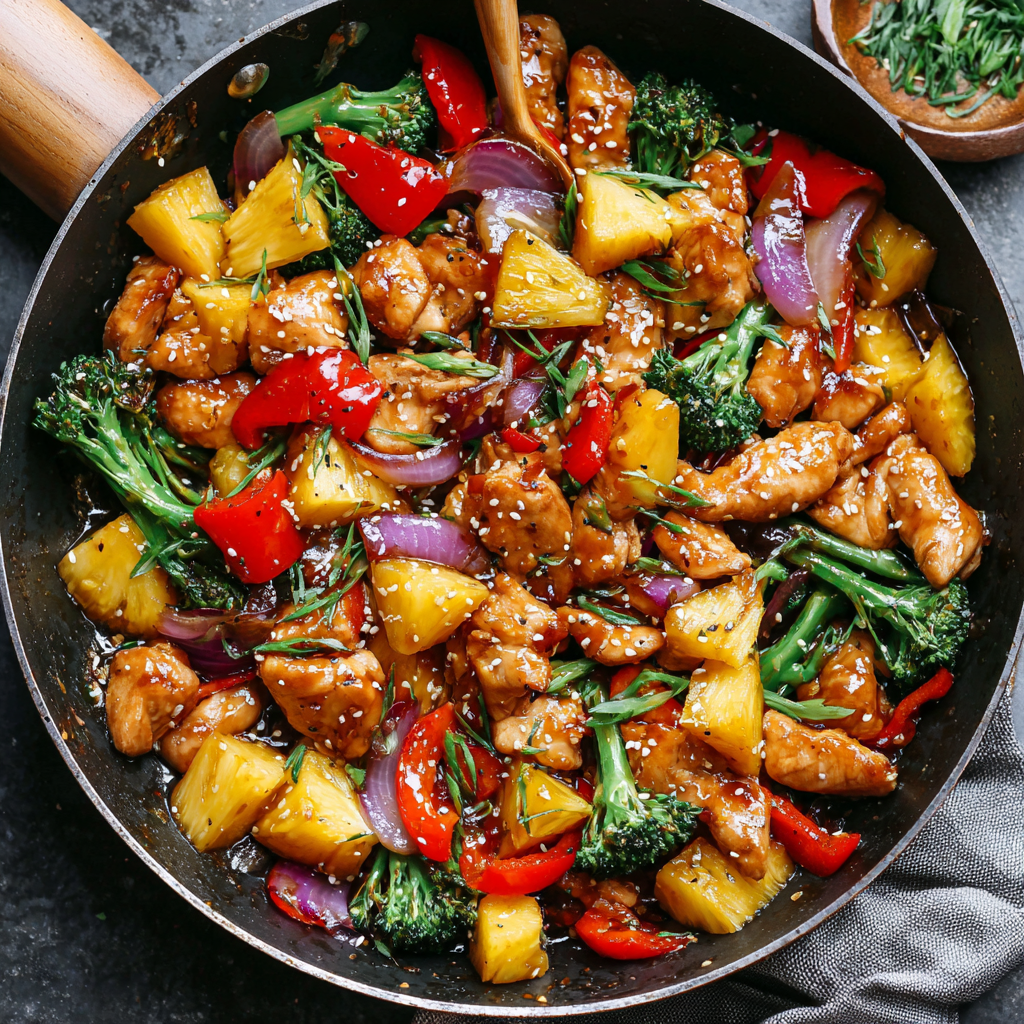
Pineapple Chicken
Bring the Tropics to Your Table with Sizzling Pineapple Chicken!
Hey there, kitchen adventurers! Olivia here, apron dusted with cornstarch and a huge grin on my face because today? We’re making magic happen in under 30 minutes. Picture this: golden chicken glazed in sticky-sweet pineapple goodness, crisp peppers doing a happy dance in the skillet, and that irresistible garlic-ginger aroma that’ll have your family drifting into the kitchen like cartoon characters following a pie. This Pineapple Chicken stir-fry isn’t just dinner—it’s a mini-vacation on a plate. Whether you’re wrangling homework chaos or craving a taste of sunshine after a gray day, this recipe’s your golden ticket. I designed it for real life: fast, flexible, and foolproof. No fancy skills needed—just a hot pan and that gorgeous enthusiasm of yours! So grab your favorite wooden spoon (mine’s stained turmeric-yellow from curry experiments) and let’s turn “What’s for dinner?” into “Wow, can we have this again tomorrow?” Trust me, this dish? It’s a hug from the inside.
My First Taste of Paradise (and a Kitchen Fire Drill!)
Rewind to my college days: tiny apartment, tinier budget, and a tragic habit of burning toast. My roommate Jade, a Hawaii native, decided to cure my culinary blues with her grandma’s “emergency happiness stir-fry.” We cranked up Hawaiian music, chopped pineapples laughing about dorm life, and then—smoke alarm symphony! We’d cranked the heat too high, sending bell peppers into charred confetti. Jade yelled, “Abort mission!” as we frantically waved towels. We salvaged it (barely!), eating straight from the pan while perched on milk crates. That smoky-sweet mess tasted like victory. Now, every time I make this, I smile at Jade’s voice in my head: “Medium-high heat, Liv, not volcano mode!” It’s proof that even kitchen flops become treasured stories. This dish? It’s resilience with a side of pineapple.
Your Tropical Toolkit: Ingredients & Pro Tips
Gather these vibrant players—and remember, flexibility is your superpower!
- 1½ lbs chicken breasts, diced – Thighs work too for extra juiciness! Dice uniform for even cooking.
- 1 small red onion, diced – Adds zingy crunch. Swap for shallots if you’re feeling fancy.
- 1 red + 1 yellow bell pepper, diced – Color explosion! Use orange or green if that’s in your fridge.
- 2 cloves garlic, minced – Fresh is best—bottled lacks oomph. Double if you’re a garlic fiend!
- 1 tsp minced ginger – Freeze ginger knobs and grate frozen—no peeling, maximum zing!
- 1 small head broccoli, chopped – Stems work too—slice thin for quick cooking.
- 1 (20 oz) can pineapple chunks (reserve juice!) – Key flavor bomb! Save that liquid gold for the sauce.
- 2 tbsp oil – Sesame for nutty depth, vegetable for neutral. Peanut oil’s great too!
- Salt & pepper – Season chicken generously—it’s your flavor foundation.
- Sesame seeds – Toasty garnish. Black sesame makes it Instagram-pretty!
For the Sauce (aka Liquid Sunshine):
- ¼ cup pineapple juice – From the can! Fresh juice lacks tangy brightness.
- 2 tbsp rice wine vinegar – Apple cider vinegar in a pinch, but reduce by 1 tsp—it’s stronger!
- ¼ cup honey – Agave or maple syrup for vegan twist. Brown sugar works too!
- ¼ cup soy sauce – Tamari or coconut aminos for gluten-free magic.
- ⅓ cup chicken broth – Veggie broth keeps it plant-friendly. Water in emergencies!
- 1½ tsp sesame oil – Stir in LAST—heat kills its delicate flavor.
- 2 tbsp cornstarch – Non-negotiable thickener! Arrowroot works for paleo diets.
Let’s Stir-Fry! Your Foolproof Roadmap
Ready for sizzle therapy? Follow these steps—I’ve packed ’em with hacks!
- Whisk that sunshine sauce! In a bowl, combine pineapple juice, vinegar, honey, soy sauce, broth, and cornstarch. Whisk until silky—no lumps allowed! Cornstarch loves to clump, so take 30 extra seconds. Set sauce near stove. Pro hack: Add a splash of sriracha here if you like heat!
- Brown that chicken! Heat oil in a large skillet over medium-high. Season chicken with salt and pepper. Cook 5-6 minutes until lightly golden but not fully cooked. Don’t overcrowd the pan—cook in batches if needed! Browning = flavor, so resist stirring constantly. Remove chicken to a plate. It’ll finish cooking later!
- Sizzle those veggies! In the same skillet, add onion, bell peppers, broccoli, garlic, and ginger. Sauté 4-5 minutes until crisp-tender. Garlic and ginger burn fast—add them 1 minute after veggies. Stir nonstop! Broccoli stems? Add them first; florets later.
- Bring the party together! Return chicken to the pan. Add pineapple chunks. Pour sauce over everything. Scrape any browned bits from the pan—that’s flavor gold! Sauce will look thin at first—trust the process.
- Simmer to perfection! Stir gently as sauce bubbles 3-5 minutes until glossy and thick enough to coat the back of a spoon. Bubbles should be lazy and thick—if it’s too thin, simmer 1 more minute. Too thick? Splash in broth. Remove from heat, then stir in sesame oil. Boom—tropical magic!
The Cultural Roots of Pineapple Chicken – A Global Love Affair
Pineapple chicken isn’t just a quick weeknight meal—it’s a dish with a passport stamped by multiple culinary traditions. While many associate it with American-Chinese takeout, its roots stretch from the tropical plantations of Hawaii to the bustling street markets of Thailand.
Hawaii’s Sweet Legacy
In Hawaii, pineapple isn’t just a fruit; it’s a cultural icon. Introduced in the 18th century, pineapples became synonymous with hospitality (hence the door decor!). Native Hawaiians paired them with pork in huli huli dishes, but when Asian immigrants brought stir-frying techniques, pineapple chicken was born. The tangy-sweet balance mirrors the islands’ poke bowls—fresh, vibrant, and uncomplicated.
Thai Twist: Pad Prik King
Across the Pacific, Thailand’s pad prik king (stir-fried curry with chicken) often features pineapple for a sour counterpoint to spicy red curry paste. Unlike the saucy American version, Thai pineapple chicken is drier, with crisper veggies and a fierier kick.
American-Chinese Fusion
Then there’s the U.S. takeout classic—thick, glossy sauce clinging to tender chicken, a product of 20th-century Chinese immigrants adapting recipes to local tastes. Canned pineapple made it affordable, and cornstarch gave it that irresistible cling.
Why It Works Everywhere?
-
Sweet-Savory Balance: Universal appeal—kids and adults alike love it.
-
Adaptability: From Thai chilies to Hawaiian sea salt, it’s a canvas for local flavors.
-
Quick Comfort: Stir-fries are global comfort food, perfect for busy lives.
Next time you take a bite, remember: you’re tasting a world of history!
The Science of the Sizzle – Why This Recipe Works
Ever wonder why pineapple chicken is foolproof? It’s not luck—it’s science! Let’s break down the magic behind each step.
1. Velveting the Chicken
Cornstarch isn’t just for thickening the sauce; it’s the secret to silky chicken. When you coat diced chicken in cornstarch before frying, it creates a protective layer that:
-
Locks in juices (no rubbery meat!).
-
Boosts browning (hello, Maillard reaction!).
-
Prevents protein strands from tightening too fast.
Pro Tip: For extra tenderness, marinate chicken in 1 tsp baking soda + 1 tbsp water for 15 minutes before cooking (rinse well!).
2. Pineapple’s Dual Power
-
Enzyme Action: Fresh pineapple contains bromelain, which tenderizes meat. Canned pineapple (used here) is heat-treated, so it won’t turn chicken mushy but still adds bright acidity.
-
Caramelization: The natural sugars in pineapple juice reduce into a complex, sticky glaze.
3. Sauce Chemistry
The sauce thickens perfectly because:
-
Cornstarch granules swell at 203°F (95°C), creating a glossy texture.
-
Acid (vinegar/pineapple juice) balances sweetness and prevents clumping.
-
Sesame oil added last preserves its delicate nutty aroma (heat destroys it!).
Fun Fact: Stir-frying over high heat creates wok hei (“breath of the wok”)—those smoky, charred notes that elevate homemade versions above takeout!
Beyond the Plate – Creative Uses for Leftovers
Got extra pineapple chicken? Don’t reheat—reinvent! Here are five genius ways to repurpose it:
1. Pineapple Chicken Tacos
-
Shred leftover chicken, pile onto corn tortillas with shredded cabbage, cilantro, and a squeeze of lime.
-
Bonus: Drizzle with sriracha mayo (mix 2 tbsp mayo + 1 tsp sriracha).
2. Tropical Fried Rice
-
Sauté day-old rice with eggs, then stir in chopped leftovers.
-
Pro Move: Add frozen peas and a splash of coconut milk for richness.
3. Hawaiian Pizza Toast
-
Spread naan or sourdough with pizza sauce, top with chicken, pineapple, and mozzarella. Broil 3 minutes!
4. Buddha Bowls
-
Layer quinoa, spinach, chicken, and roasted sweet potatoes. Drizzle with reserved sauce.
5. Crispy Spring Rolls
-
Wrap chicken/veggie mix in rice paper, air-fry at 400°F for 8 minutes. Serve with sweet chili sauce.
Zero-Waste Tip: Freeze sauce in ice cube trays for quick stir-fries later!
Plating Your Tropical Masterpiece
Dish this up like a pro! Fluffy jasmine rice is my go-to—it soaks up that glossy sauce like a dream. For fun, serve in hollowed-out pineapple halves (hello, vacation vibes!). Or pile it over noodles: rice noodles keep it light, udon adds chew. Top with sesame seeds and a cilantro sprinkle if you’re extra. Family-style is best: plonk the skillet right on the table with forks for sharing. Add a lime wedge squeeze for zing! Psst… leftovers? Even better next day—if they last that long.
Shake It Up! 5 Delicious Twists
Make this recipe your own with these riffs:
- Spicy Mango Tango – Swap pineapple for mango chunks, add 1 tbsp chili paste to sauce.
- Teriyaki Twist – Replace honey with 3 tbsp brown sugar + 1 tbsp mirin.
- Veggie Power – Skip chicken, use tofu or chickpeas. Double broccoli and add snap peas!
- Cashew Crunch – Stir in ½ cup roasted cashews with pineapple.
- Pineapple Pepper Express – Use only red bell peppers + 1 diced jalapeño for heat.
Confessions from My Cozy Kitchen
This recipe’s evolved more than my taste in aprons! Originally, I used ketchup (cringe!) until Jade schooled me on pineapple juice’s natural tang. My “hack” for ginger? Frozen grated nuggets—I stash ’em in ice cube trays! One Tuesday disaster: I subbed cornstarch with flour… and created wallpaper paste. Lesson learned! Now, I double the sauce because my kiddo loves it on rice bowls. Funny story: My dog, Butters, once stole a pineapple chunk mid-photo shoot. He’s now my official taste-tester (sans chicken, of course!). Moral? Embrace the mess—it’s where flavor memories are born.
Your Pineapple Chicken Questions, Solved!
Q: My sauce turned out gloopy! What happened?
A> Too much cornstarch or over-simmering! Next time, mix cornstarch with 1 tbsp cold water first. If it’s already thick, stir in broth 1 tbsp at a time off-heat.
Q: Can I use fresh pineapple?
A> Absolutely! Use 1½ cups fresh chunks. Simmer sauce 1 extra minute—canned juice has more concentrated tang. Pro tip: Microwave fresh pineapple 10 seconds to boost juices.
Q: Veggies got soggy. Help!
A> High heat is key! Ensure your pan is ripping hot before adding veggies. Stir constantly, and pull them when bright-colored with a slight crunch. They’ll soften in the sauce later.
Q: Make-ahead tips for busy nights?
A> Chop veggies/chicken up to 2 days ahead—store separately. Whisk sauce and refrigerate (cornstarch may settle; re-whisk before using). Cook time: 15 minutes flat!
Pineapple Chicken
- Total Time: 25–30 mins
Description
Ready for a flavor vacation? This 30-minute Pineapple Chicken delivers tropical vibes with zero stress—juicy chicken, caramelized pineapple, and crisp veggies glazed in a golden, sticky-sweet sauce. It’s bright, bold, and beautifully simple. Whether you’re craving a sunny escape or feeding hangry humans on a weeknight, this dish is your tropical kitchen hero.
Ingredients
-
1½ lbs chicken breasts, diced
-
1 small red onion, diced
-
1 red + 1 yellow bell pepper, diced
-
1 small head broccoli, chopped
-
2 cloves garlic, minced
-
1 tsp minced ginger
-
1 (20 oz) can pineapple chunks (reserve juice)
-
2 tbsp oil (sesame or neutral)
-
Salt & pepper
-
Sesame seeds, for garnish
For the Sauce:
-
¼ cup pineapple juice (from the can)
-
¼ cup honey
-
¼ cup soy sauce
-
¼ cup rice vinegar
-
⅓ cup chicken broth
-
1½ tsp sesame oil (stir in last)
-
2 tbsp cornstarch
Instructions
-
Whisk Sauce: Mix all sauce ingredients except sesame oil until smooth.
-
Sear Chicken: Heat oil in a large skillet over medium-high. Season chicken. Sear 5–6 mins until golden. Set aside.
-
Stir-Fry Veggies: In same pan, sauté onion, peppers, and broccoli 4–5 mins. Add garlic and ginger after 2 mins.
-
Bring It Together: Return chicken, add pineapple chunks and sauce. Stir and simmer 3–5 mins until thick and glossy.
-
Finish: Remove from heat, stir in sesame oil. Garnish with sesame seeds.
Notes
-
High heat = crisp veggies
-
Double the sauce for rice bowls later
-
Serve in pineapple halves for a wow moment
-
Use frozen broccoli? Thaw and pat dry first
- Prep Time: 10 mins
- Cook Time: 15–20 mins
Nutrition
- Calories: 390 cal Per Serving
- Fat: 18g
- Carbohydrates: 20g
- Protein: 30g
Nutritional Sunshine (Per Serving)
Calories: 390 | Net Carbs: 20g | Protein: 30g | Fat: 18g
Note: Using low-sodium soy sauce and omitting honey reduces sodium/sugar. Add extra veggies to boost fiber!
Final Thoughts: More Than Just a Meal
Pineapple chicken is a reminder that cooking is equal parts creativity and connection. Whether it’s Jade’s smoke-alarm adventures in a college kitchen or your toddler stealing pineapple chunks off the counter, this dish gathers stories as fast as it gathers flavor. It’s resilient (forgiving substitutions!), globally inspired, and endlessly adaptable—much like the cooks who make it.
So tonight, when you hear that sizzle and smell ginger curling into the air, know you’re not just feeding hungry mouths. You’re weaving a little tropical sunshine into the everyday. And that? That’s pure magic.
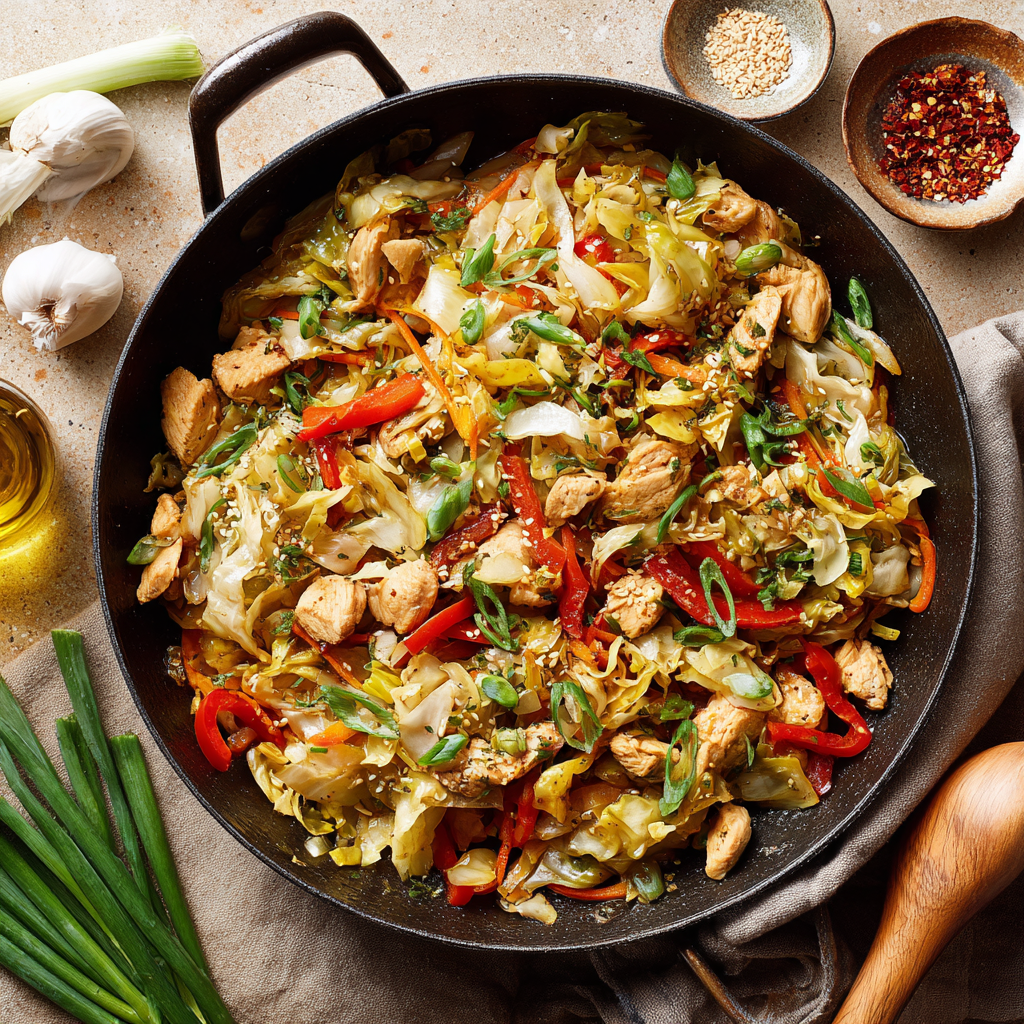
Chicken Cabbage Stir-Fry
Why This Stir-Fry Will Become Your Weeknight Hero
Hey there, friend! Olivia here, waving from my flour-dusted countertop. You know that moment when you fling open the fridge after a crazy day, staring at chicken breasts and a half-head of cabbage like they’re a puzzle? Yeah, we’ve all been there. That’s exactly why this Chicken Cabbage Stir-Fry is my forever love letter to busy kitchens. Imagine tender chicken, rainbow-bright veggies, and a savory sauce clinging to every bite—all ready in 25 minutes flat. No fancy skills needed, just one sizzling skillet and that glorious “ahhh” feeling when dinner solves life’s chaos.
This isn’t just food; it’s a confidence boost. Maybe you’re new to stir-frying or just craving something wholesome without the cleanup marathon. I designed this recipe to be forgiving, flexible, and stupidly delicious. We’re talking crispy cabbage that stays vibrant, chicken that stays juicy, and a sauce you’ll want to slurp with a spoon. And that smell? Garlic + sesame + caramelizing veggies = instant kitchen therapy. So tie on your messiest apron (solidarity, my friend!), and let’s turn humble ingredients into pure magic. Trust me—this dish will hug you back.
The Midnight Stir-Fry That Started It All
Picture this: It’s 11 PM during my college days, my tiny apartment kitchen lit by a single bulb. My roommate, Maya, stumbles in after a brutal double shift. We’re both broke, exhausted, and staring into our sad fridge—nothing but a lonely chicken breast, wilting cabbage, and a bell pepper past its prime. “Stir-fry?” I whisper, like it’s a secret rebellion against instant ramen. We hack everything into haphazard chunks, splash in soy sauce like it’s liquid gold, and giggle as sesame oil perfumes the air. That thrown-together mess? Pure bliss on rice. No fancy techniques, just hunger and heart.
Years later, that chaotic midnight experiment evolved into this recipe. It’s still my go-to when life feels scrambled—a reminder that great food isn’t about perfection. It’s about the cabbage crunch that makes you grin, the way the sauce pools into rice like a savory embrace, and how feeding someone says, “I see you.” Every time I make it, I think of Maya’s tired smile. Now, I’m passing that cozy victory to you. Let’s create your own delicious memories!
Your Flavor-Packed Toolkit
Grab these simple stars! I’ll share swaps and secrets so you can riff like a pro. Pro tip: Chop everything first—stir-fries move FAST!
- 1 tbsp butter – Adds rich depth. Swap with olive oil or avocado oil, but butter’s caramelizing magic is *chef’s kiss*.
- 1 medium onion, sliced – Sweetness foundation. Red onion works for color!
- 2 cloves garlic, minced – Non-negotiable flavor bomb. Use pre-minced to save time—no shame!
- 1 lb chicken breast, diced – Cut uniform 1-inch pieces for even cooking. Thighs add more richness if you prefer.
- 2 cups cabbage, chopped – Green or Napa cabbage both rock. Core it first! It stays crisp—that’s the joy.
- 1 bell pepper, sliced – Any color! Red/yellow add sweetness. Too pricey? Skip or use frozen.
- 1 carrot, julienned – Buy matchstick carrots to cheat. Zucchini ribbons also work.
- 2 tbsp soy sauce – The umami backbone. Coconut aminos for gluten-free.
- 1 tbsp oyster sauce (optional) – Deepens savoriness. Skip if vegan, or sub hoisin + pinch of sugar.
- 1 tsp sesame oil – Stir in LAST. Its nutty aroma fades if cooked too long.
- ½ tsp black pepper + ½ tsp salt – Season in layers! Taste before adding extra salt.
- ¼ tsp crushed red pepper flakes (optional) – My “wake-up” touch. Start small!
- 1 tsp cornstarch mixed with 2 tbsp water (optional) – Thickens sauce beautifully. Arrowroot works too.
- Green onions, for garnish – Freshness and crunch. Scallions = stir-fry confetti!
Let’s Fire Up the Skillet!
Ready? Channel your inner wok master. I’ll guide you step-by-step with hacks to avoid soggy veggies and boost flavor. Key: HIGH heat, quick moves!
- Sizzle your base: Melt butter in a large skillet or wok over medium heat. Add onion and garlic—sauté 2-3 minutes until fragrant. Chef’s hack: Stir constantly! Garlic burns fast. If it does, wipe the pan and restart—it’s worth it.
- Brown that chicken: Crank heat to medium-high. Add chicken in a single layer—don’t crowd! Cook 3 minutes undisturbed for golden edges. Flip, cook 4-5 more minutes until no pink remains. Secret: Undercook slightly—it’ll finish with veggies!
- Veggie party time: Toss in cabbage, bell pepper, and carrot. Stir-fry 4-5 minutes until vibrant but crisp. Hack: Heard sizzling stop? That’s moisture! Turn up heat and stir fast to evaporate.
- Saucy magic: Pour in soy sauce, oyster sauce (if using), sesame oil, pepper, salt, and red pepper flakes. Toss like you mean it—coat everything! Tip: Slide veggies up the skillet sides to heat sauce at the base for 30 seconds first.
- Thicken (optional but divine): Stir cornstarch slurry into the bubbling sauce. Cook 1-2 minutes until glossy. Watch it transform! If too thick, splash in broth or water.
- Finish strong: Kill the heat. Scatter green onions on top. Last-minute stir preserves crunch!
The Science Behind the Perfect Stir-Fry – Why High Heat & Quick Cooking Matter
Ever wonder why restaurant stir-fries taste so much better than your home attempts? It’s not just the chef’s skills—it’s the science of high-heat cooking. Stir-frying is all about the Maillard reaction (that magical browning that creates deep flavor) and retaining crisp textures. Here’s why this method works:
-
High Heat = Faster Cooking = Better Texture
-
Vegetables like cabbage and bell peppers contain cellulose, which breaks down slowly. High heat (400°F+) cooks them quickly, preserving their crunch.
-
Chicken proteins seize up at lower temps, releasing moisture and turning rubbery. Searing locks in juices.
-
-
The “No Crowding” Rule
-
Overloading the pan drops the temperature, causing food to steam instead of fry. Result? Soggy veggies and chewy meat.
-
Pro Tip: Cook in batches if needed, or use a carbon steel wok (it heats evenly and recovers temperature fast).
-
-
Sauce Chemistry
-
Soy sauce contains glutamates (umami), while oyster sauce adds sweetness and viscosity. Cornstarch slurry thickens via starch gelatinization—just 1 tsp makes sauce cling perfectly.
-
Sesame oil’s flavor compounds are volatile; adding it last preserves its nutty aroma.
-
Bonus Hack: Ice-cold meat is harder to slice thinly. Pop chicken in the freezer for 15 minutes before dicing for cleaner cuts!
The Global Stir-Fry Playbook – How This Recipe Adapts Across Cuisines
This stir-fry is a blank canvas—here’s how to take it on a world tour with pantry staples:
1. Chinese-Style (The Classic)
-
Swap butter for peanut oil.
-
Add 1 tsp grated ginger + ½ tsp five-spice powder.
-
Finish with a drizzle of chili oil and Sichuan peppercorns for tingling heat.
2. Thai-Inspired
-
Replace soy sauce with fish sauce + lime juice (1:1 ratio).
-
Toss in 1 tbsp Thai basil at the end.
-
Garnish with crushed peanuts and a pinch of palm sugar.
3. Korean Fusion
-
Use gochujang (1 tbsp) instead of oyster sauce.
-
Add kimchi for tangy crunch.
-
Top with a fried egg (runny yolk = instant sauce).
4. Mexican Fiesta
-
Swap cabbage for shredded red cabbage + lime zest.
-
Season with cumin + smoked paprika.
-
Serve with warm tortillas and avocado crema.
Why This Works: Stir-fries are universal because they rely on aromatics (garlic/ginger) + acid (lime/vinegar) + umami (soy/fish sauce). Mix and match based on what’s in your fridge!
The Psychology of a Weeknight Win – Why This Recipe Reduces Decision Fatigue
After a long day, your brain is fried (pun intended). Here’s why this stir-fry is a mental health hack disguised as dinner:
-
The “No Overthinking” Formula
-
Template cooking (protein + veg + sauce) eliminates decision paralysis.
-
Studies show that limited choices reduce stress—this recipe’s flexibility means you can’t mess it up.
-
-
The Smell = Instant Comfort
-
Garlic and sesame oil trigger nostalgia and appetite via the olfactory system.
-
A 2019 study found that savory aromas lower cortisol levels (hello, stress relief).
-
-
The 25-Minute Confidence Boost
-
Quick wins release dopamine. Chopping veggies = tangible progress.
-
“I made this!” satisfaction beats takeout guilt.
-
Pro Tip: Double the recipe and refrigerate half. Reheating it tomorrow = future-you feels like a genius.
Plating Like a Pro (Minimal Effort, Max Wow)
This dish is a stunner straight from the skillet! For family style, pile it high in a shallow bowl. Rice is classic—jasmine or brown rice soak up sauce beautifully. Noodles? Toss with udon or soba for carb-lovers. Add flair with extra green onions, sesame seeds, or a lime wedge squeeze. My move: Serve with chili crisp on the side for heat-seekers. It’s cozy enough for Tuesday nights but vibrant enough to impress guests!
Shake It Up! 5 Tasty Twists
Make this recipe yours! Here are my favorite riffs:
- Thai-Inspired: Swap soy sauce for 2 tbsp peanut sauce + 1 tbsp lime juice. Top with crushed peanuts!
- Vegetarian Powerhouse: Replace chicken with tofu or chickpeas. Add mushrooms for meaty depth.
- Spicy Garlic Noodles: Toss hot stir-fry with cooked ramen noodles. Double the garlic and red pepper!
- Ginger-Sesame: Add 1 tbsp grated ginger with garlic. Drizzle extra sesame oil at the end.
- Keto-Friendly: Skip cornstarch and carrots. Serve over cauliflower rice—still delish!
Olivia’s Real-Kitchen Confessions
This recipe? It’s survived kitchen disasters! Once, I used fish sauce instead of soy sauce (yikes)—salty tears ensued. Now I label bottles! Over time, I’ve learned: don’t skip the butter (it’s the flavor anchor), and undercook veggies slightly—they keep cooking off-heat. Also, my apron is always stained with sesame oil, and I embrace it! This stir-fry has graced my table for breakups, birthdays, and “I can’t adult today” nights. It’s forgiving—swap veggies based on your crisper drawer. No cabbage? Kale works. No peppers? Snap peas shine. Make it your comfort blanket.
Your Stir-Fry Questions, Solved!
Let’s tackle common hiccups so you cook stress-free:
- Why is my stir-fry soggy? Overcrowding or low heat! Cook in batches if needed. Ensure your skillet is HOT before adding veggies—they should sizzle on contact. Also, salt draws water from cabbage, so add it late in step 4.
- Can I make this ahead? Absolutely! Store cooked stir-fry in an airtight container for 3 days. Reheat in a skillet (not microwave) to revive crispness. Add a splash of water or broth to loosen sauce.
- Too salty? Help! Balance with acidity! A squeeze of lime or rice vinegar brightens it. No lime? Stir in 1 tsp honey or a splash of unsweetened coconut milk to mellow.
- Can I use frozen veggies? Yes—but thaw and pat dry FIRST. Excess water = steam, not sear. Frozen peppers and carrots work; avoid frozen cabbage (it gets mushy).
Chicken Cabbage Stir-Fry
- Total Time: 25 mins
Description
Fast, flexible, and packed with feel-good flavor—this stir-fry is your answer to the “what’s for dinner?” panic. Juicy chicken, crisp cabbage, and a glossy umami sauce all come together in 25 minutes, using just one pan and whatever veggies you’ve got. It’s cozy, colorful, and gloriously low-fuss—a comfort meal that doubles as a confidence boost.
Ingredients
-
1 tbsp butter (or oil)
-
1 onion, sliced
-
2 garlic cloves, minced
-
1 lb chicken breast, diced
-
2 cups cabbage, chopped
-
1 bell pepper, sliced
-
1 carrot, julienned
-
2 tbsp soy sauce
-
1 tbsp oyster sauce (optional)
-
1 tsp sesame oil (stir in last!)
-
½ tsp salt + ½ tsp black pepper
-
¼ tsp red pepper flakes (optional)
-
1 tsp cornstarch + 2 tbsp water (optional thickener)
-
Green onions, for garnish
Instructions
-
Aromatics: Melt butter over medium heat. Add onion and garlic, stir 2–3 mins until fragrant.
-
Chicken: Raise heat, sear chicken 6–8 mins until browned and just cooked through.
-
Veggies: Add cabbage, pepper, and carrot. Stir-fry 4–5 mins until crisp-tender.
-
Sauce Time: Add soy sauce, oyster sauce, sesame oil, seasonings, and stir well.
-
Optional Thickener: Stir in cornstarch slurry and cook 1–2 mins until sauce thickens.
-
Finish: Remove from heat. Garnish with green onions and serve hot!
Notes
-
Use high heat and avoid crowding the pan
-
Add salt after veggies to avoid sogginess
-
Stir sauce ingredients at the skillet’s center for even heating
-
Great over rice, noodles, or cauliflower rice
- Prep Time: 10 mins
- Cook Time: 15 mins
Nutrition
- Calories: 270 cal Per Serving
- Fat: 12g
- Carbohydrates: 10g
- Protein: 28g
Quick Nutrition Snapshot
For my health-savvy friends! Approximate per serving (based on 4 servings):
Calories: 270 | Net Carbs: 10g | Protein: 28g | Fat: 12g
Note: Values include oyster sauce and cornstarch. Omit oyster sauce to reduce sodium. Add rice/noodles for extra carbs.
Final Thoughts: More Than a Meal
This stir-fry isn’t just about feeding your body—it’s a small act of rebellion against chaotic days. It’s the crispy cabbage defiance of “I don’t have time,” the sizzle that says “I’m worth 25 minutes.” Whether you’re a college kid with a hot plate or a parent juggling Zoom calls, this dish meets you where you are.
So tonight, when the fridge seems bleak, remember: chicken + cabbage + courage = dinner magic. And hey, if you burn the garlic? Welcome to the club. We’ve got extra forks.
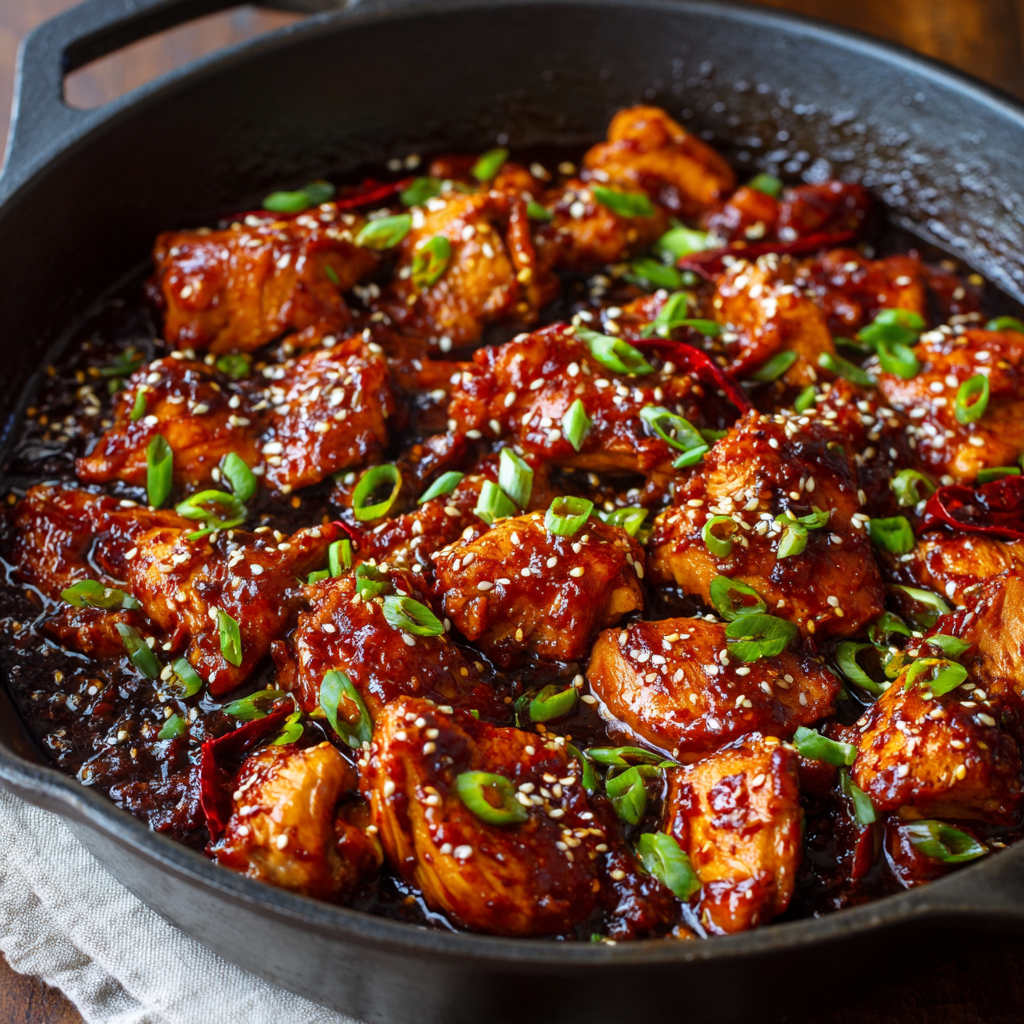
Sticky Honey Gochujang Chicken
Sticky Honey Gochujang Chicken: Your New Weeknight Obsession
Hey there, kitchen friend! Olivia here, waving from my flour-dusted countertop. Can you smell that? It’s the sweet-spicy perfume of caramelizing honey and gochujang hitting a hot pan—a scent that instantly transports me to my happiest place. If you’re craving a dinner that’s faster than takeout but tastes like a flavor fireworks show, you’ve hit the jackpot. This Sticky Honey Gochujang Chicken is my weeknight superhero: 20 minutes, one skillet, and guaranteed empty plates. Imagine tender chicken thighs glazed in a sauce that’s all things magical—fiery from Korean chili paste, golden-sweet from honey, with garlicky depth and that addictive sticky pull. It’s the kind of dish that makes you sneak “just one more bite” straight from the pan (no judgment here!). Whether you’re cooking for picky teens, impressing a date, or treating yourself after a long day, this recipe is your ticket to dinnertime glory. Grab your favorite apron—let’s make magic happen!
The Night I Fell in Love with Gochujang
Picture this: It’s midnight in my tiny first apartment kitchen, rain tapping against the window. My best friend Maya and I just got home from a chaotic double shift at the café, starving and exhausted. We were rummaging through my near-empty fridge—just chicken thighs, a half-used tub of gochujang from a forgotten kimchi experiment, and a bear-shaped honey bottle. “Let’s wing it,” Maya said, already chopping garlic. Twenty minutes later, we sat cross-legged on the floor, chopsticks clacking over a sizzling skillet, giggling as the spicy-sweet sauce made our noses run. That messy, improvised feast became our secret ritual after every tough day. Now, whenever I make this chicken, I still text Maya a photo with the caption: “Emergency comfort food activated.” It’s proof that the best recipes aren’t just about ingredients—they’re about the joy and connection we stir into every bite.
What You’ll Need
- 1½ lbs boneless, skinless chicken thighs – Thighs stay juicy even if you overcook them slightly (unforgiving chicken breasts? Hard pass!). Swap: Chicken breast works if sliced thin, or use tofu cubes for veggie pals!
- 2 tbsp Gochujang (Korean chili paste) – The star! This fermented gem brings heat, umami, and a hint of sweetness. Find it in Asian markets or the international aisle. Spice level: medium-hot. Can’t find it? Mix 1 tbsp sriracha + 1 tbsp miso paste as a quick fix.
- 3 tbsp honey – Balances the heat and creates that glossy stickiness. Chef’s trick: Warm your measuring spoon with hot water first—the honey slides right out! Maple syrup works too.
- 2 tbsp soy sauce – Salty depth that makes flavors pop. Need gluten-free? Tamari is your BFF. Too salty? Use low-sodium soy sauce.
- 2 cloves garlic, minced – Non-negotiable for fragrance! Lazy hack? ½ tsp garlic powder. But fresh is best.
- 1 tbsp vegetable oil – High smoke point = perfect sear. Avocado or canola oil also great. Skip olive oil—it burns too easily here.
- Garnish: Sesame seeds + scallions – These aren’t just pretty! Sesame adds nuttiness, scallions give fresh crunch. No scallions? Try cilantro or thinly sliced radishes.
Pro Tip: Double the sauce ingredients and stash half in a jar—it’s incredible on roasted veggies, shrimp, or even as a burger glaze!
Let’s Get Cooking: Your Foolproof Roadmap
Step 1: Sauce Alchemy! In a medium bowl, combine the gochujang, honey, soy sauce, and minced garlic. Whisk until it’s smooth and looks like molten lava (the good kind!). Chef’s Hack: If your honey is stiff, microwave the jar for 10 seconds first. Taste a dab—adjust honey for sweetness or a splash of rice vinegar for tang if you like!
Step 2: Chicken Sizzle Time! Heat vegetable oil in a large skillet (cast iron or non-stick!) over medium-high heat. Pat chicken thighs super dry with paper towels—this is KEY for golden edges! Add chicken in a single layer (don’t crowd the pan; cook in batches if needed). Sear 6-8 minutes, flipping once, until deeply golden and cooked through. Listen for that satisfying sizzle! No stirring constantly—let it develop a crust.
Step 3: The Sticky Magic Lower heat to medium. Pour that gorgeous sauce over the chicken—it’ll bubble and sputter excitedly! Stir constantly for 2-3 minutes as the sauce reduces into a thick, glossy cloak. Watch closely: When it leaves a trail on the pan bottom when scraped (like parting the Red Sea!), it’s done. Undercook sauce = runny. Overcook = burnt bitterness. Trust your instincts!
Step 4: The Grand Finale Kill the heat. Sprinkle generously with sesame seeds and chopped scallions. Pro Move: Let it rest 2 minutes—the sauce thickens more and clings perfectly.
The Science Behind the Sticky Glaze – Why This Recipe Works
Ever wonder why this Sticky Honey Gochujang Chicken clings to your taste buds like a deliciously persistent koala? There’s actual food science at play here—let’s geek out for a second.
The Maillard Reaction & Perfect Sear
That golden-brown crust on your chicken thighs? Thank the Maillard reaction, the magical chemical process where amino acids and reducing sugars transform under heat, creating complex, savory flavors. Patting the chicken dry before searing isn’t just a fussy step—it ensures maximum browning by eliminating moisture that would otherwise steam the meat. And using high-smoke-point oil (like vegetable or avocado oil) prevents burning while achieving that crisp exterior.
Gochujang: The Umami Bomb
Gochujang isn’t just spicy—it’s a fermented powerhouse of glutamates (natural umami compounds) thanks to its soybean and rice components. When combined with honey’s fructose and soy sauce’s saltiness, it creates a flavor trifecta: sweet, salty, and deeply savory. Fermentation also means gochujang has a subtle tanginess, balancing the richness of the dish.
The Sticky Sauce Secret
Honey isn’t just a sweetener—it’s a natural thickener. When heated, its sugars caramelize and reduce, creating that glossy, clingy texture. Adding the sauce only at the end prevents burning (sugar scorches easily!) while letting the chicken’s fond (those crispy browned bits in the pan) dissolve into the glaze for extra depth.
Why Thighs Triumph
Chicken thighs are forgiving because their higher fat content keeps them juicy even if slightly overcooked. Breasts, with their lean muscle fibers, tighten up fast, leading to dryness. For vegetarians, extra-firm tofu or cauliflower florets work beautifully—just coat them in cornstarch first for a crispy bite.
Pro Tip: For next-level stickiness, add 1 tsp of cornstarch slurry to the sauce—it’ll give you that lacquered takeout-style glaze.
The Cultural Roots of Gochujang – More Than Just a Condiment
Before this ruby-red paste became your fridge’s MVP, it had a rich, centuries-old history in Korean cuisine. Let’s take a quick trip to its origins—and why it’s a global darling today.
From Joseon Dynasty to Your Kitchen
Gochujang’s roots trace back to 18th-century Korea, where it was made in onggi (traditional clay pots) during late winter. Families fermented a mix of chili powder, glutinous rice, fermented soybeans (meju), and salt, then aged it under sunlight for months. This slow fermentation developed its deep umami and subtle sweetness—a far cry from today’s instant sauces!
Gochujang’s Modern Rise
Thanks to Korean pop culture (hello, K-dramas and mukbang videos!), gochujang has gone global. But traditional versions still shine in dishes like bibimbap, tteokbokki (spicy rice cakes), and bulgogi. Unlike Western hot sauces (looking at you, Tabasco), gochujang isn’t just heat—it’s layered complexity with a funky, sweet, and smoky personality.
Health Perks? Yes, Please!
Fermented foods like gochujang are gut-friendly, packed with probiotics and capsaicin (the compound in chilies linked to metabolism boosts). Plus, it’s often lower in sugar than BBQ or teriyaki sauces. Just watch the sodium if you’re sensitive!
Fun Fact: In Korea, some families still make “gochujang kimchi,” blending the paste into kimchi for extra punch.
Leftover Wizardry – 5 Ways to Reinvent Your Sticky Chicken
Got extra Sticky Honey Gochujang Chicken? Don’t just reheat—reinvent it! Here are five genius ways to give leftovers a glow-up.
1. Gochujang Fried Rice
Tear leftover chicken into bits and toss with day-old rice, scrambled eggs, and peas. Stir-fry with a splash of sesame oil and extra gochujang. Top with a runny fried egg—yolk porn guaranteed.
2. Korean-Style Tacos
Pile chicken onto warm corn tortillas with quick-pickled carrots, cilantro, and a drizzle of sriracha mayo. Crumbled cotija cheese optional but highly recommended.
3. Loaded Sweet Potato Bowls
Roast halved sweet potatoes, then stuff with chicken, kimchi, spinach, and a dollop of Greek yogurt (or coconut yogurt for dairy-free). Boom—balanced meal.
4. Spicy Chicken Sliders
Shred chicken, mix with coleslaw (mayo + lime + cabbage), and pile onto Hawaiian rolls. Add a slice of cheddar and broil for melty goodness.
5. Breakfast Hash
Sauté diced potatoes, onions, and chicken in a skillet. Crack eggs on top, cover until whites set, and finish with scallions. Brunch hero!
Pro Tip: Freeze leftover sauce in ice cube trays—future you will high-five present you when it’s stir-fry night.
Serving It Up: How to Shine
Slide that glistening chicken into a shallow bowl—let those sticky trails drape dramatically! For a cozy weeknight vibe, pile it atop steamed jasmine rice (the sauce soaks in beautifully) or slurpable noodles like udon or ramen. Craving crunch? Add quick-pickled cucumbers (mix sliced cukes with rice vinegar, sugar, salt) or a heap of roasted broccoli. Family-style is my jam: Set the skillet right on the table with fluffy rice, lettuce cups for wrapping, and extra scallions. Don’t forget cold beer or sparkling limeade to tame the heat! This dish loves an audience, so gather your crew fast—it disappears quicker than cookies at a bake sale.
Shake It Up: 5 Delicious Twists
- Pineapple Punch: Add ½ cup fresh pineapple chunks with the sauce. Tropical sweetness + spice = vacation vibes!
- Veggie Loaded: Toss in bell peppers, carrots, or snap peas when searing chicken. Sauce coats everything gloriously.
- “Crackling” Crispy: For extra texture, coat chicken in 2 tbsp cornstarch before searing. Hello, crunch!
- Honey-Lime Zen: Swap lime juice for 1 tbsp soy sauce + add zest. Fresher, brighter profile.
- Fiery & Fearless: Add 1 tsp grated ginger + ½ tsp Korean chili flakes (gochugaru) to the sauce. For heat seekers only!
Olivia’s Kitchen Confessions
This recipe has evolved from my “midnight desperation dinner” to a dish I’ve served at fancy potlucks (shh, they don’t know it’s easy!). Once, I accidentally used salted butter instead of oil—shockingly delicious, but my smoke alarm sang opera! Over time, I learned two game-changers: 1) Don’t skip drying the chicken—wet meat steams instead of sears. 2) Embrace the sauce bubble. That furious boil is where the sticky magic happens! My toddler now demands “red chicken” weekly, so I keep gochujang stocked like diapers. Funny how a humble paste can become a family heirloom, right? If you make it, tag me @OliviasCozyKitchen—I live for your saucy skillet photos!
Your Questions, Answered!
Q: My sauce burned! What did I do wrong?
A> Heat was likely too high in Step 3! Medium heat is perfect—the sauce should bubble gently, not volcano-erupt. If it starts darkening too fast, pull the pan off heat for 15 seconds while stirring, then return.
Q: Can I make this ahead?
A> Cook the chicken and sauce separately. Store in the fridge up to 2 days. When ready, reheat chicken in a skillet, then add sauce and simmer 2 minutes. Fresh is best though—that sticky texture shines brightest right off the stove!
Q: Too spicy for my kids? Help!
A> Easy fix! Reduce gochujang to 1 tbsp and add 1 extra tbsp honey. Serve with cooling sides (rice, cucumber slices, avocado). My kiddo-approved version also adds 1 tbsp ketchup for sweetness—no shame!
Q: Why thighs over breasts?
A> Thighs have more fat, so they stay succulent even with high-heat cooking. Breasts dry out fast in this quick recipe—if you use them, slice thin and reduce cook time by 2 minutes.
Sticky Honey Gochujang Chicken
- Total Time: 20 mins
Description
Spicy, sticky, and sweet in all the right ways, this skillet wonder brings big flavor with minimal fuss. Ready in 20 minutes, it’s your new weeknight rescue mission—bold, addictive, and way better than takeout. With juicy chicken thighs glazed in a fiery-sweet gochujang sauce, it’s a dish you’ll crave again before you’ve even finished dinner.
Ingredients
-
1½ lbs boneless, skinless chicken thighs
-
2 tbsp gochujang (Korean chili paste)
-
3 tbsp honey
-
2 tbsp soy sauce (or tamari for gluten-free)
-
2 garlic cloves, minced
-
1 tbsp vegetable oil
-
Garnish: sesame seeds + chopped scallions
Swaps & Hacks:
-
Chicken breast (thin sliced) or tofu
-
Maple syrup instead of honey
-
Cilantro or radishes if no scallions
Instructions
-
Mix Sauce: In a bowl, whisk gochujang, honey, soy sauce, and garlic until smooth.
-
Sear Chicken: Heat oil in a large skillet over medium-high. Pat chicken dry and sear 6–8 mins, flipping once, until golden and cooked through.
-
Glaze & Bubble: Reduce heat to medium. Pour sauce over chicken and stir constantly 2–3 mins until thick, glossy, and sticky.
-
Garnish & Rest: Sprinkle with sesame seeds and scallions. Let sit 2 mins for ultimate clingy sauce perfection.
Notes
-
Dry chicken well—crispy edges need low moisture
-
Watch the sauce closely—it thickens fast!
-
Double sauce batch = instant flavor upgrade for veggies or shrimp
- Prep Time: 5 mins
- Cook Time: 15 mins
Nutrition
- Calories: 350cal Per Serving
- Fat: 20g
- Carbohydrates: 12g
- Protein: 28g
Nutritional Per Serving (Approx):
Calories: 350 | Net Carbs: 12g | Protein: 28g | Fat: 20g
Note: Using chicken breast? Calories drop to ~290, fat to 8g. Vegan version (tofu + maple syrup): ~280 calories.
Final Thoughts: Why This Recipe Deserves a Spot in Your Rotation
This isn’t just another “quick dinner.” It’s a flavor-packed, memory-making, multitasking marvel that proves weeknight meals don’t need to be boring. Whether you’re a gochujang newbie or a fermented chili devotee, this dish bridges comfort and adventure in every bite. It’s flexible enough for meal prep, impressive enough for guests, and simple enough for those “I can’t even” nights.
So here’s to sticky fingers, satisfied bellies, and the joy of discovering a recipe that feels like both a hug and a high-five. Now go forth and make it yours—tag me when you do!
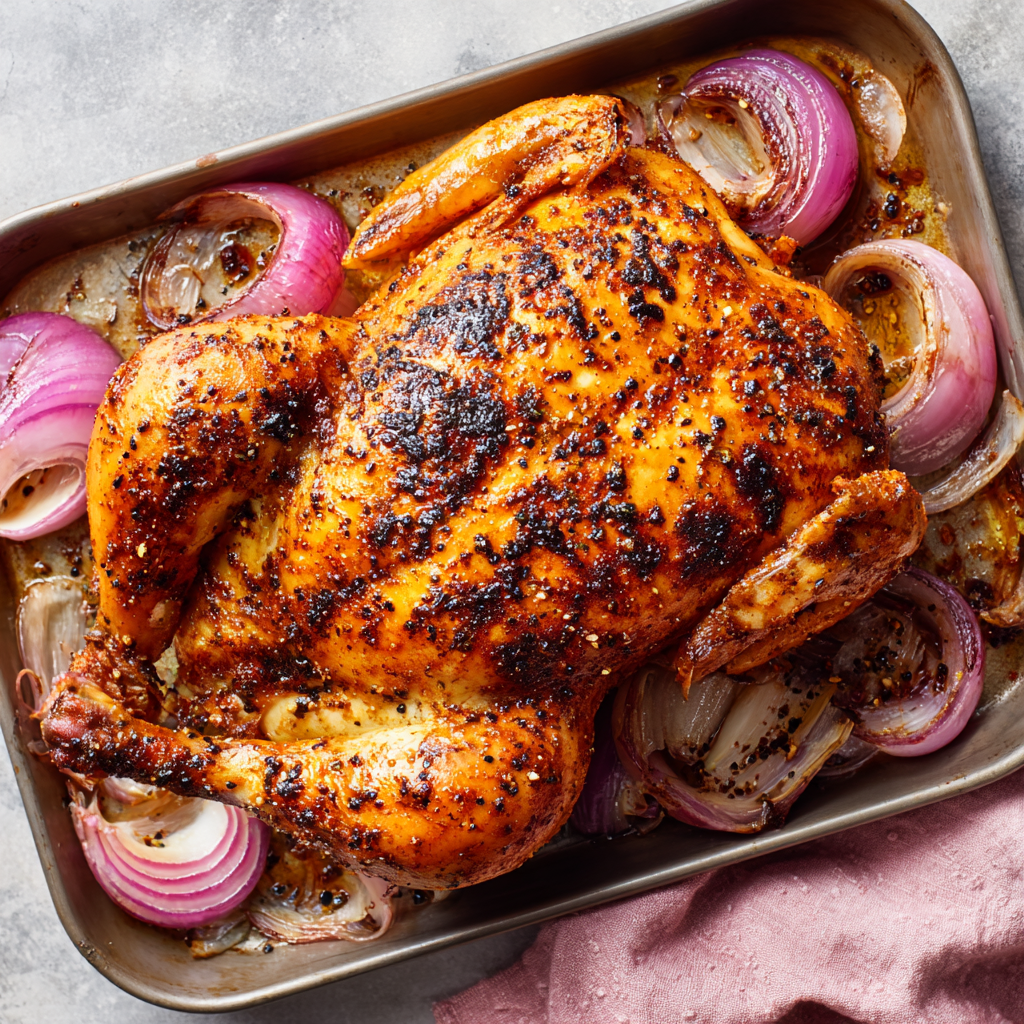
Roast Sticky Chicken – Rotisserie Style
Why This Chicken Will Become Your Kitchen Hero
Hey there, friend! Olivia here, waving from my flour-dusted countertop. Can you smell that? It’s the kind of aroma that makes neighbors peek over fences and kids magically appear in the kitchen – golden, sticky, rotisserie-style chicken, crackling away in the oven. This isn’t just dinner; it’s a warm hug on a plate, the kind of recipe that turns Tuesday into a celebration. And guess what? You don’t need fancy gear or chef-level skills. Just your trusty oven and a sprinkle of patience.
For years, I chased that elusive rotisserie magic – juicy meat pulling away from the bone, skin so flavorful and crisp you fight over it. Grocery store versions are great in a pinch, but nothing beats the pride (and unbeatable taste!) of making it YOURSELF. This Roast Sticky Chicken? It’s my ultimate weeknight warrior and Sunday showstopper. We’re talking minimal hands-on prep (seriously, 15 minutes!), pantry spices doing a flavor tango, and a low-and-slow roast that does all the heavy lifting while you binge your favorite show. It’s perfect for feeding a crowd, meal-prepping dreamy lunches, or just treating yourself. Ready to make your kitchen smell like heaven? Let’s get sticky!
The Chicken That Started It All (And Almost Torched My Kitchen!)
Picture this: It’s my first big dinner party after moving into my tiny apartment. I was determined to impress with a “simple” roast chicken. Simple? Ha! I cranked the oven sky-high, convinced high heat = faster perfection. Spoiler: It resulted in charred skin, dry meat, and enough smoke to trigger the fire alarm – mid-appetizers! My guests cheered (bless them), eating cheese and crackers while I frantically waved a towel at the shrieking alarm.
That disaster became my mission. I tinkered for months – testing temperatures, spice blends, brines, you name it. The breakthrough came during a lazy Sunday. Inspired by rotisserie joints that cook low and slow, I tried a crazy-low 250°F (120°C). Five hours later? Magic. The skin was burnished mahogany, sticky with rendered juices and spices. The meat? Unbelievably tender, falling off the bone. No smoke alarms, just pure, sticky, soul-warming triumph. This recipe is my redemption chicken – proof that sometimes, the slow road is the *only* road to flavor town.
Your Flavor Arsenal (Pantry Power to the Rescue!)
Gather these simple heroes! Don’t stress over exact brands – this blend is incredibly forgiving.
- 4 tsp Salt: The flavor backbone! Coarse kosher salt works best for even seasoning. Chef’s Tip: If using table salt, reduce to 3 tsp – it’s denser!
- 2 tsp Paprika: Sweet or smoked? Smoked adds incredible depth (my fave!), sweet gives classic warmth. Choose your adventure!
- 1 tsp Onion Powder: Instant savory punch. No sub needed, but 1 tbsp finely minced dried onion works in a pinch.
- 1 tsp Dried Thyme: Earthy, cozy notes. Rosemary or poultry seasoning (use 1.5 tsp) make great swaps if thyme isn’t your jam.
- 1 tsp White Pepper: Lends a subtle, unique heat. Secret Weapon: Black pepper works fine (use same amount), but white pepper is traditional for that authentic rotisserie taste.
- ½ tsp Black Pepper: Freshly ground is ideal for brightest flavor.
- ½ tsp Cayenne Pepper: Just enough kick! Omit if sensitive to heat, or add a pinch more for fire lovers.
- ½ tsp Garlic Powder: Essential savory magic. Granulated garlic works too.
- 2 whole Chickens (about 4 lbs each): Size matters! Smaller birds cook faster. Pat them DRY inside and out for maximum crispiness. Budget Hack: One big chicken works too – adjust cooking time slightly.
- 2 Onions, Quartered: These aren’t just for show! They steam inside the cavity, keeping the breast meat incredibly moist and adding subtle sweetness to the drippings. Yellow or white onions are perfect.
Why This Blend Rocks: The salt tenderizes, the spices create that iconic rotisserie crust, and the low heat slowly renders the fat, basting the chicken in its own glorious juices. Pure alchemy!
Let’s Get Cooking: Your Path to Sticky Perfection
Don’t let the 5-hour cook time fool you – active work is minimal! Here’s your foolproof roadmap:
- Mix the Magic Dust: Grab a small bowl. Dump in ALL the spices – salt, paprika, onion powder, thyme, white pepper, black pepper, cayenne, and garlic powder. Whisk them like you mean it! This is your flavor bomb. Chef’s Hack: Make a double or triple batch! Store it in a jar for instant chicken (or pork chops, roasted potatoes…) glory later.
- Rub It Real Good: Place your thoroughly dried chickens on a clean surface. Sprinkle the spice mix GENEROUSLY all over – top, bottom, sides, wings, legs. Don’t be shy! The Pro Move: Gently lift the skin over the breast and thighs and rub spice directly onto the meat. This is KEY for deep flavor penetration! Stuff the cavity of each chicken with those quartered onions – they’re your moisture guardians.
- Patience Pays Off (The Overnight Chill): Place the chickens on a rack set over a baking sheet or plate. DO NOT COVER TIGHTLY. Loosely tent with foil if needed, but airflow is good. Pop them in the fridge, uncovered, for at least 4 hours, but overnight is GOLD. This dry-brine draws out moisture, concentrates flavors, and seasons the meat right through. Trust me, it’s the difference between good and “OH WOW!”
- Low & Slow Roast: Preheat your oven to a low and lovely 250°F (120°C). Place chickens BREAST SIDE DOWN directly in your roasting pan (no rack needed!). Why breast down? It protects the delicate white meat during the long cook, keeping it supremely juicy. Slide them into the oven, uncovered. Relax! For the next 5 hours, life is good. Basting Bonus (Optional): Every 1.5-2 hours, carefully open the oven and spoon those gorgeous pan juices collecting in the bottom back over the chickens. More flavor, more stickiness!
- The Grand Flip & Crisp Finale: After 4.5 hours, it’s showtime! Carefully (steam is hot!) flip the chickens breast side UP. This exposes the skin to direct heat for the final 30 minutes, transforming it into that irresistible, sticky, crispy dream. You’ll see the magic happening!
- Rest is Best: Once gloriously golden and an instant-read thermometer reads 165°F (74°C) in the thickest part of the thigh (not touching bone), pull them out. TENT LOOSELY with foil and let them rest for 20-30 minutes. DO NOT SKIP THIS! Resting lets the juices redistribute, ensuring every bite is moist. Cutting too soon = dry chicken tragedy.
Plating Up the Love
This chicken is a star! For maximum “wow,” place the whole bird (or birds) on a large wooden board or platter. Scatter with fresh thyme sprigs or rosemary for a pop of green. Let everyone admire that sticky crust! Carve tableside or in the kitchen – the meat will be so tender, it practically falls off the bone. Serve those delicious roasted onions from the cavity alongside – they’re flavor bombs! Pour the incredible pan juices into a small pitcher or bowl for drizzling. Perfect partners? Creamy mashed potatoes to soak up the juice, simple roasted veggies, or a bright, crunchy salad to cut the richness.
Make It Your Own! Flavor Twists & Swaps
This recipe is your canvas! Get creative:
- Citrus Zing: Add 1 tsp dried orange peel or lemon pepper to the rub. Stuff the cavity with lemon or orange halves alongside the onions.
- Herb Garden Delight: Swap thyme for 1 tsp dried rosemary or oregano. Toss a few fresh sage leaves under the skin.
- Spicy Cajun Kick: Increase cayenne to 1 tsp and add ½ tsp dried oregano. Fantastic for a bold twist!
- Gluten-Free/Dairy-Free: This recipe is naturally both! Just ensure your spices are pure (no anti-caking additives containing gluten).
- Chicken Pieces Hack: Don’t have whole birds? Use 8 lbs of bone-in, skin-on chicken thighs or drumsticks. Reduce cook time to 3-3.5 hours (check temp at 3 hours!). Rub spice mix everywhere!
Olivia’s Behind-the-Scenes Scoop
Confession: The “sticky” name came from my husband. After his third piece one night, he mumbled, “Soooo sticky… good…” with sauce on his chin. It stuck! (Pun intended!). This recipe has evolved – I initially basted every 30 minutes obsessively (hello, oven light!). Now I know relaxing works just fine. The overnight chill was a game-changer discovered when I prepped birds for a party and forgot them in the fridge an extra day – best mistake ever! The biggest lesson? Low heat isn’t lazy, it’s smart cooking. It renders fat slowly, keeps collagen melting into gelatin (hello, juiciness!), and lets spices meld into something magical. Don’t fear the time – embrace the ease and the incredible payoff!
Your Chicken Questions, Answered!
Q: Do I *really* need to cook it for 5 hours? That seems so long!
A: Yes! The low temperature is crucial. High heat dries out the meat before the fat renders and connective tissues break down. 250°F allows for gentle, even cooking, resulting in that fall-apart tenderness and sticky crust. Trust the process!
Q: My skin isn’t super crispy! What went wrong?
A: A few culprits: 1) Not patting the chicken bone-dry before rubbing (moisture = steam, not crisp). 2) Skipping the overnight chill – drying in the fridge is key for crisp skin. 3) Not flipping breast-side up for the final crisping blast. Ensure the last 30 minutes happen breast-up! 4) Covering during roasting – keep it uncovered!
Q: Can I use just one chicken?
A: Absolutely! Use a 4-5 lb bird. The cook time might be slightly less – start checking the internal temperature at the 4.5-hour mark. The spice mix amount is perfect for one larger chicken too.
Q: Help! My pan juices are smoking/burning.
A: This can happen, especially near the end. Add about ½ cup of water or chicken broth to the pan when you flip the chicken breast-side up. This creates steam, prevents burning, and makes more delicious jus!
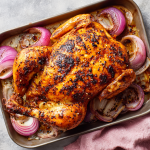
Roast Sticky Chicken – Rotisserie Style
- Total Time: 22 minute
Description
Meet the chicken that turns ovens into magic-makers. With pantry spices, no fancy equipment, and a whisper of patience, this rotisserie-style roast becomes your ultimate cozy, crowd-pleasing go-to. Juicy, fall-apart tender, and cloaked in a sticky, spiced crust—it’s what weeknight dreams and Sunday feasts are made of. And the best part? The oven does most of the work. Let’s turn up the flavor and bring home that golden rotisserie glow.
Ingredients
-
2 whole chickens (4 lbs each), patted dry
-
2 onions, quartered (for stuffing)
Spice Rub: -
4 tsp kosher salt (or 3 tsp table salt)
-
2 tsp smoked or sweet paprika
-
1 tsp onion powder
-
1 tsp dried thyme
-
1 tsp white pepper
-
½ tsp black pepper
-
½ tsp cayenne (adjust to taste)
-
½ tsp garlic powder
Instructions
-
Spice Mix: Combine all rub ingredients in a small bowl.
-
Prep Chickens: Rub spice mix generously all over the chickens (including under the skin). Stuff cavities with onion quarters.
-
Overnight Chill: Place uncovered in the fridge for 4+ hours (overnight is ideal) for ultra-flavorful, crisp skin.
-
Roast Low & Slow: Preheat oven to 250°F (120°C). Roast chickens breast-side down in a roasting pan for 4.5 hours. Optional: baste with pan juices every 2 hours.
-
Flip & Crisp: Flip chickens breast-side up. Roast 30 more mins until skin is golden and internal temp hits 165°F (74°C).
-
Rest: Let rest 20–30 mins, tented loosely with foil, before carving.
Notes
-
Always dry the skin before seasoning
-
Don’t skip the chill – it’s the crisping secret
-
Flip for the final 30 minutes for max crust
-
Add broth to pan if drippings start to burn
- Prep Time: 15 mins
- Cook Time: 5 hrs
Nutrition
- Calories: 400cal Per Serving
- Sodium: 900mg
- Fat: 22g
- Carbohydrates: 2g
- Protein: 45g
Nutritional Info (Approximate Per Serving)
Calories: ~400 | Protein: 45g | Fat: 22g (Saturated Fat: 6g) | Carbohydrates: 2g | Fiber: 0g | Sugar: 1g | Sodium: 900mg
Note: Nutrition is estimated based on one serving (approx 6oz cooked meat with skin) from a 4lb chicken. Sodium is higher due to the dry brine – much is left in the pan/drippings.
—
Final Thoughts: Why This Recipe Deserves a Spot in Your Rotation
This Roast Sticky Chicken isn’t just a recipe—it’s a game-changer. It’s the kind of dish that makes you feel like a kitchen rockstar with minimal effort. Whether you’re feeding a family, meal-prepping, or craving something soul-satisfying, this chicken delivers every time.
Why You’ll Love It Forever:
✅ Foolproof: No fancy techniques—just patience and trust in low heat.
✅ Budget-Friendly: Spices and chicken are pantry staples.
✅ Leftover Gold: Reinvents into countless meals.
✅ Impressive Enough for Guests: Looks and tastes like you spent hours (but we know the truth!).
So tie on that apron, preheat your oven, and let this chicken work its magic. One bite of that crispy, sticky, juicy goodness, and you’ll wonder how you ever lived without it. Happy cooking!
Recent Posts
- Thai Shrimp Lettuce Wraps : Fresh, Flavorful & Ready in 20 Minutes
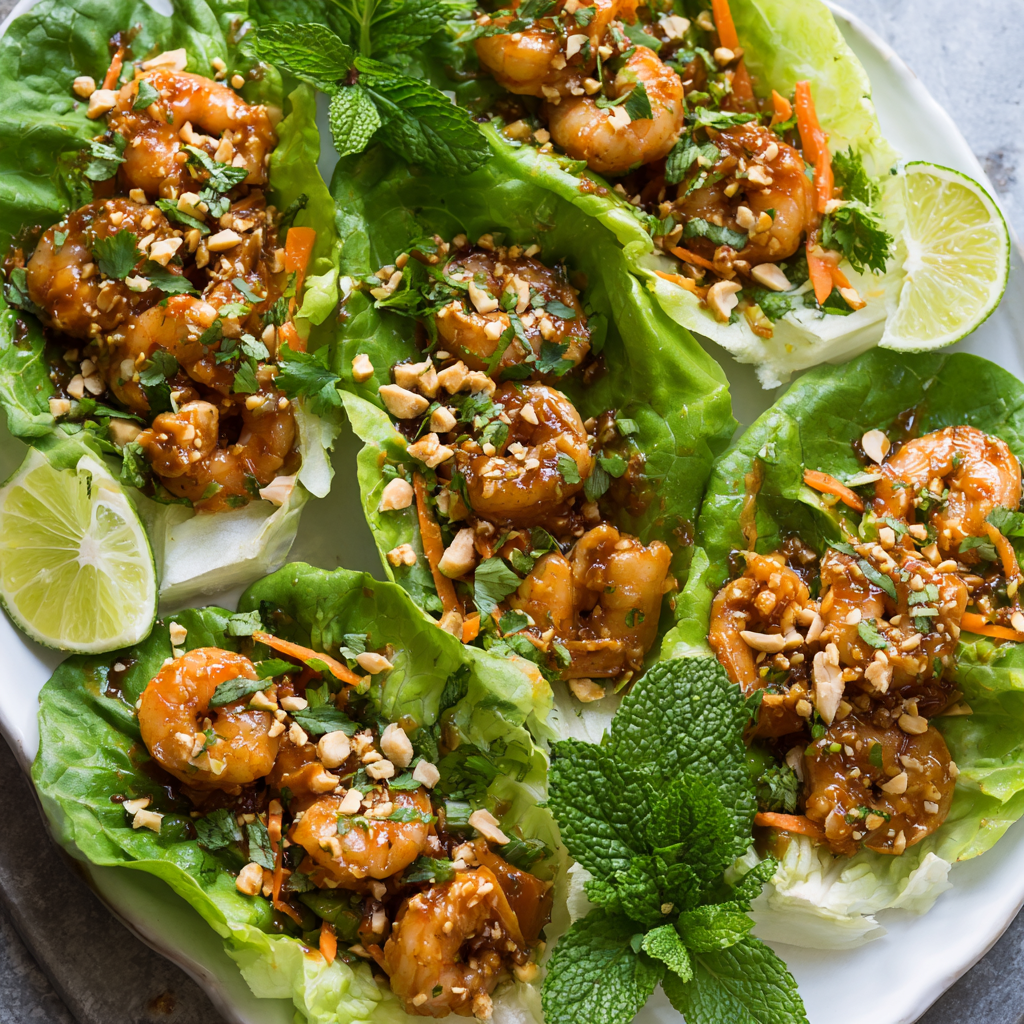
- Easy Hawaiian Pineapple Cake with Cream Cheese Frosting

- Strawberry Rhubarb Pie : A Sweet & Tangy Classic with a Flaky Crust
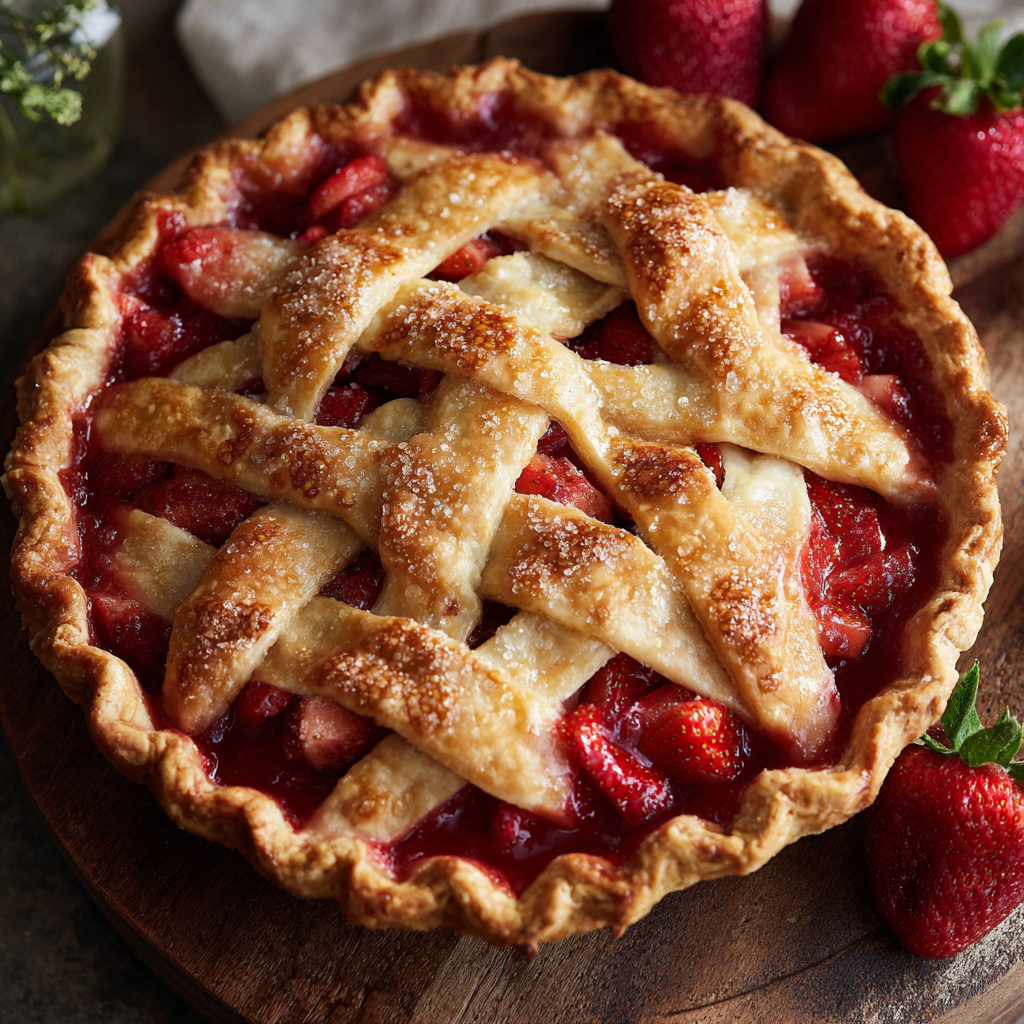
- Crispy Seafood Egg Rolls : Golden, Crunchy & Loaded with Flavor
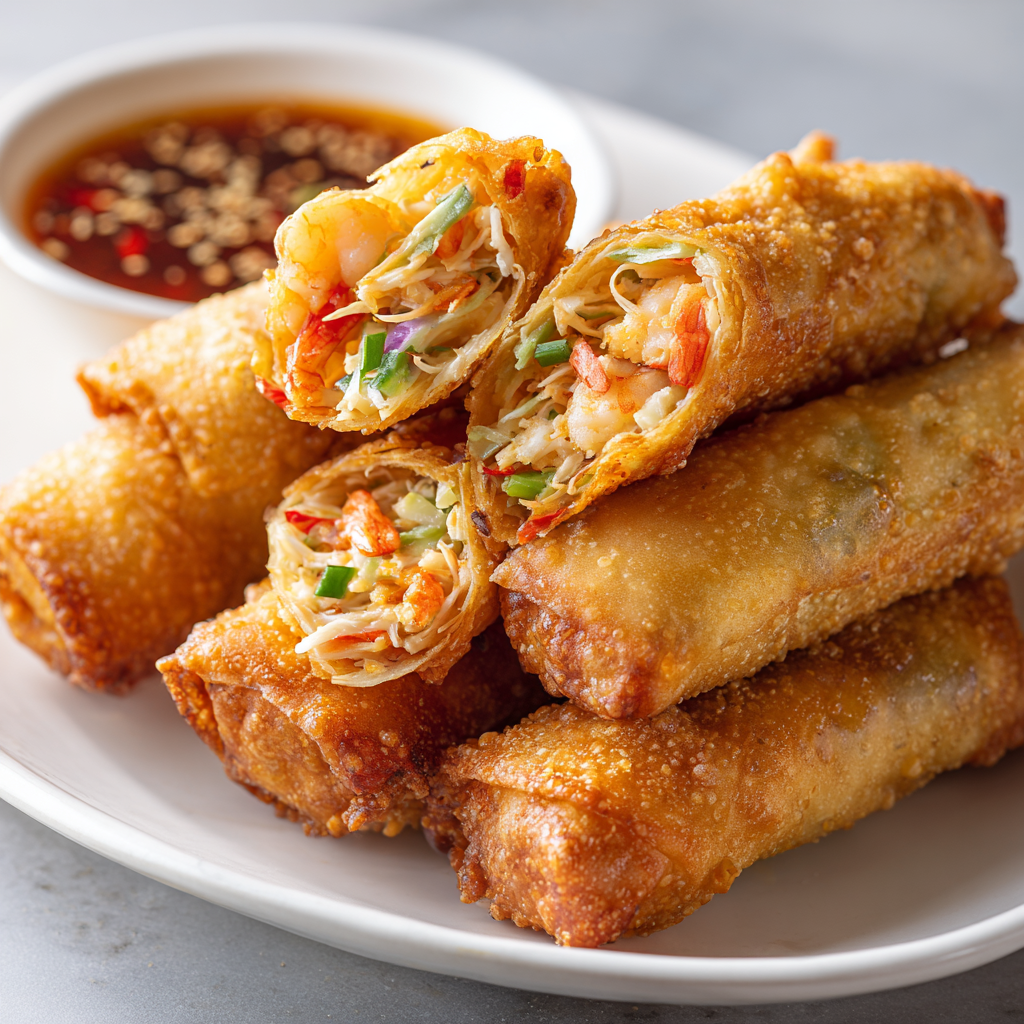
- Chocolate Dump Cake : Rich, Gooey, and Amazingly Easy