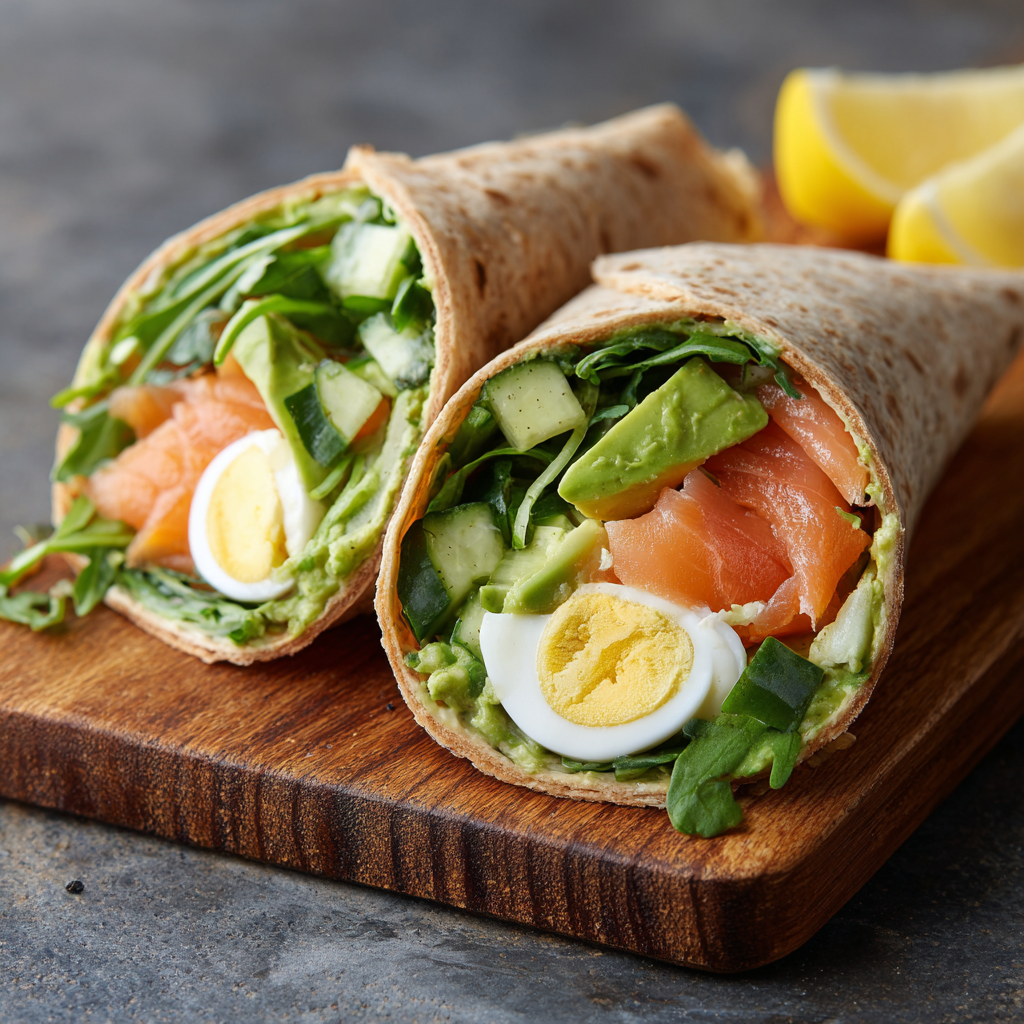
Smoked Salmon and Avocado Wrap : Protein-Packed, Heart-Healthy Meal
Your New Go-To Lunch Hero is Here!
Picture this: you’re rummaging through the fridge, stomach grumbling, torn between wanting something delicious, nourishing, and fast. You deserve a meal that feels like a treat but fuels your body like a champion. You, my friend, are moments away from meeting your new kitchen best friend: the Smoked Salmon & Avocado Wrap.
This isn’t just any wrap. It’s a vibrant, protein-packed bundle of joy that comes together in about 10 minutes flat. We’re talking creamy avocado, silky smoked salmon, hearty hard-boiled egg, and a crisp crunch of cucumber, all hugged by a wholesome tortilla. It’s a heart-healthy powerhouse loaded with omega-3s, lean protein, and good fats that will keep you energized for hours. Perfect for a desk lunch that doesn’t disappoint, a light yet satisfying dinner, or that crucial post-workout refuel. Let’s roll up our sleeves (and this glorious wrap) together!
More Than a Wrap: A Sunny Sunday Tradition
This recipe always takes me straight back to lazy Sunday mornings with my family. After a long week, we’d ditch the big, heavy breakfast for what we called “Build-Your-Own-Brunch Buffet.” The kitchen counter would become a mosaic of colors: a platter of ruby-red smoked salmon, a bowl of perfectly sliced hard-boiled eggs, another of chunky avocado, and every fresh herb and veggie we had.
The real magic wasn’t just in the eating, but in the creating. We’d stand around, assembling our masterpieces, comparing notes (“Did you try the dill in yours?”), and laughing. My wrap was always overloaded—I’m an “everything but the kitchen sink” kind of assembler. That spirit of ease, freshness, and sharing is baked right into this recipe. Every time I make one now, it feels like a little, delicious dose of Sunday calm, no matter what day it is.
Gathering Your Flavor Dream Team
Here’s the beautiful part: you only need a handful of fresh, fantastic ingredients. Quality matters here, as each component shines. Let’s break it down:
- 1 large whole grain tortilla or wrap: This is our foundation! I love the nutty flavor and extra fiber of whole grain, but a spinach wrap, a low-carb tortilla, or even a large, pliable lettuce leaf (for a gluten-free option) works perfectly. Chef’s Tip: Look for tortillas without hydrogenated oils for a cleaner choice.
- 2 oz (about 3-4 slices) good-quality smoked salmon: The star! Opt for cold-smoked salmon (lox-style) for its delicate, silky texture. You can find it pre-sliced at most deli counters. A sustainable or wild-caught option is a great choice if available.
- ½ a ripe avocado, sliced or mashed: Our creamy, heart-healthy glue. A perfectly ripe avocado should yield slightly to gentle pressure. Substitution Tip: In a pinch, a tablespoon of hummus or mashed white beans can offer a similar creaminess.
- 1 hard-boiled egg, sliced: Adds incredible protein and richness. I’ll share my foolproof boiling method in the steps! Chef’s Insight: A slightly soft-centered jammy egg is a delicious, messy alternative if you’re eating immediately!
- ¼ cup cucumber, thinly sliced or julienned: This is our crucial CRUNCH. It lightens every bite. English or Persian cucumbers have fewer seeds and thinner skins.
- A small handful of baby spinach, arugula, or microgreens (optional): I almost never skip this! It adds a peppery note (arugula), a nutrient boost (spinach), or a fancy touch (microgreens).
- Fresh lemon juice, salt, and black pepper: The seasonings that make everything pop! A squeeze of bright lemon over the salmon and avocado is non-negotiable for me. Freshly cracked pepper makes all the difference.
Let’s Build the Perfect Bite: Step-by-Step
Ready? This is the fun, no-stress part. Follow these steps, and you’ll be a wrap-rolling pro in no time.
- Prep Your Station (2 mins): Get all your ingredients out and prepped. Slice the egg, cucumber, and avocado. Having everything ready to go (the French call this mise en place) makes assembly a breeze and keeps you from forgetting anything.
- The Tortilla Warm-Up (30 secs): This is my secret for a crack-free wrap! Warm your tortilla in a dry skillet over medium heat for about 15-20 seconds per side, OR microwave it between two damp paper towels for 10-15 seconds. This makes it pliable and prevents tearing when you roll. Little Chef Hack: Don’t skip this! A cold tortilla from the fridge will almost always crack.
- Spread & Layer with Love (3 mins): Lay your warm tortilla flat. Spread the mashed avocado (or lay the slices) in the center, leaving about 2 inches bare on the sides. This is your moisture barrier and flavor base. Now, layer on the smoked salmon, followed by the elegant egg slices, the crisp cucumber, and finally, your greens if using. Commentary: Try to keep the fillings in a neat, horizontal line down the center—it makes rolling infinitely easier.
- The Seasoning Shower (1 min): Give your creation a generous squeeze of fresh lemon juice right over everything. The acid cuts through the richness beautifully. Now, season with a pinch of salt (go easy, as the salmon is salty) and a good grind of black pepper.
- The Masterful Roll (1 min): Here’s the technique: Fold the two sides (left and right) of the tortilla inward over the ends of your filling. Then, starting from the side closest to you, use your fingers to tightly tuck and roll the tortilla away from you, keeping the side folds in place. Imagine you’re rolling a sleeping bag tightly! Apply gentle pressure as you roll. Pro Tip: If you’re packing it for later, wrap it snugly in parchment paper or foil, twisting the ends like a candy wrapper. It holds its shape and makes for a neat, portable package.
- Slice & Savor (1 min): Using a sharp serrated knife, slice the wrap in half on a slight diagonal. Admire your beautiful, colorful cross-section! Serve immediately for the ultimate fresh, crisp experience.
How to Serve Your Masterpiece
This wrap is a complete meal all on its own! For a real treat, I love serving it with a side of bubbly sparkling water with an extra lemon wedge, or a simple, tangy side salad dressed with a lemon vinaigrette. If I’m feeling fancy for guests, I’ll slice it into four “pinwheels” and arrange them on a platter with a little bowl of extra lemon-dill yogurt for dipping. It instantly becomes party food!
Make It Your Own: 5 Tasty Twists
The beauty of this formula is its flexibility. Don’t be afraid to play!
- The “Everything Bagel”: Add a schmear of whipped cream cheese before the avocado, and sprinkle everything bagel seasoning over the fillings.
- Mediterranean Sunshine: Swap the cucumber for chopped Kalamata olives and roasted red peppers. Add a pinch of dried oregano.
- Dairy-Free Delight: Skip any cream cheese variations and add a layer of smashed chickpeas with lemon for extra protein and creaminess.
- Herb Garden Fresh: Scatter loads of fresh dill, chives, or parsley over the salmon. It’s a game-changer.
- Spicy Kick: Add a few slices of pickled jalapeño or a drizzle of sriracha or sriracha mayo for a sweet heat.
Olivia’s Kitchen Notes
This recipe has evolved from my “use whatever’s left in the fridge” lunches into a trusted classic. I’ve learned a few things along the way! First, if your avocado isn’t quite ripe, don’t despair. Mash it with that lemon juice, salt, and pepper right on the tortilla—it almost “cures” it and improves the flavor. Second, I once tried to use a flavored tortilla that was too small… let’s just say the Great Wrap Explosion of 2020 was a messy lesson in not overstuffing! Finally, this recipe is a fantastic template. Got leftover grilled chicken? Use it. Have some quinoa? Sprinkle it in. Trust your taste buds and what you have on hand.
Your Questions, Answered!
Q: Can I make this ahead of time for meal prep?
A: You can, with one caveat: the avocado may brown slightly. To combat this, make sure it’s well-coated with lemon juice, wrap it VERY tightly in parchment paper and then foil or plastic wrap, and store it upright in the fridge. Eat within 24 hours for best texture. Prepping the ingredients separately and assembling the morning of is your best bet.
Q: My wrap always falls apart when I eat it. Help!
A: The twin pillars of wrap integrity are: 1) Don’t overfill it. Less is more. 2) Roll it TIGHTLY. That initial tuck is crucial. Also, ensure your tortilla is warm and pliable before you start. If all else fails, eating it with the parchment paper pulled halfway down (like a burrito) is a totally acceptable life hack.
Q: What’s the best way to hard-boil eggs so they peel easily?
A: My foolproof method: Place eggs in a saucepan, cover with cold water by an inch. Bring to a full boil, then immediately cover and remove from heat. Let sit for 10-12 minutes. Transfer to an ice bath to cool completely. The shock helps separate the membrane from the egg. Also, slightly older eggs peel better than super-fresh ones!
Q: Can I use canned salmon instead?
A: Absolutely! Drain a can of wild salmon, flake it, and mix it with a little lemon juice and dill. It’s a more budget-friendly and equally delicious protein swap. The flavor will be different but still fantastic.
Smoked Salmon and Avocado Wrap : Protein-Packed, Heart-Healthy Meal
Description
When you want a lunch that’s quick but still feels special, this Smoked Salmon & Avocado Wrap is a perfect go-to. It’s creamy, crunchy, and satisfying, with healthy fats and protein to keep you full and focused. Best part: it comes together in about 10 minutes with zero cooking (if your egg is already boiled).
Ingredients
-
1 large whole grain tortilla (or wrap of choice)
-
2 oz smoked salmon
-
½ ripe avocado, sliced or mashed
-
1 hard-boiled egg, sliced
-
¼ cup cucumber, thinly sliced
-
Small handful spinach or arugula (optional)
-
Squeeze of fresh lemon juice
-
Pinch of salt and black pepper
Optional add-ons
-
Cream cheese or hummus spread
-
Fresh dill or chives
-
Everything bagel seasoning
-
Sliced tomatoes
Instructions
-
Warm the tortilla
Heat in a dry pan 20 seconds per side or microwave 10–15 seconds until soft and flexible. -
Add the base
Spread or layer the avocado across the center, leaving space at the edges. -
Layer fillings
Add smoked salmon, egg slices, cucumber, and greens. -
Season
Squeeze lemon juice over the top and add a light pinch of salt and pepper. -
Wrap tightly
Fold in the sides, then roll from the bottom up, keeping it snug. -
Slice & serve
Cut in half and enjoy immediately.
Notes
-
Warm wraps don’t crack — always soften first.
-
Don’t overfill — easier rolling, cleaner eating.
-
Use ripe avocado for creaminess and structure.
-
Add lemon to avocado to boost flavor and slow browning.
-
Roll tight like a burrito for a wrap that holds together.
Nutritional Information*
*This is an estimate for one whole wrap using a standard whole grain tortilla and the ingredients listed. Values may vary based on specific brands and amounts used.
- Calories: ~350
- Protein: 20g
- Carbohydrates: 24g
- Dietary Fiber: 8g
- Total Fat: 22g (Rich in heart-healthy mono- and polyunsaturated fats)
- Prep Time: 10 minutes
- Total Time: 10 minutes
- Servings: 1
Final Thoughts
This isn’t just a recipe—it’s an invitation to reclaim your lunch break, fuel your body with joy, and savor a moment of calm in a busy day. The Smoked Salmon & Avocado Wrap is more than a meal; it’s proof that eating well doesn’t have to be complicated or time-consuming. With a handful of fresh ingredients and 10 minutes, you can create something that feels special, nourishing, and deeply satisfying.
It’s a reminder that the best food often comes from simple, quality ingredients combined with a little intention. Whether you’re packing it for work, whipping it up for a quick dinner, or slicing it into elegant pinwheels for friends, this wrap meets you where you are—and always delivers.
So the next time you’re staring into the fridge, wondering what to make, remember: your lunch hero has arrived. Roll it up, take that first crunchy, creamy, bright bite, and enjoy. You’ve earned it.
Happy wrapping!
Olivia
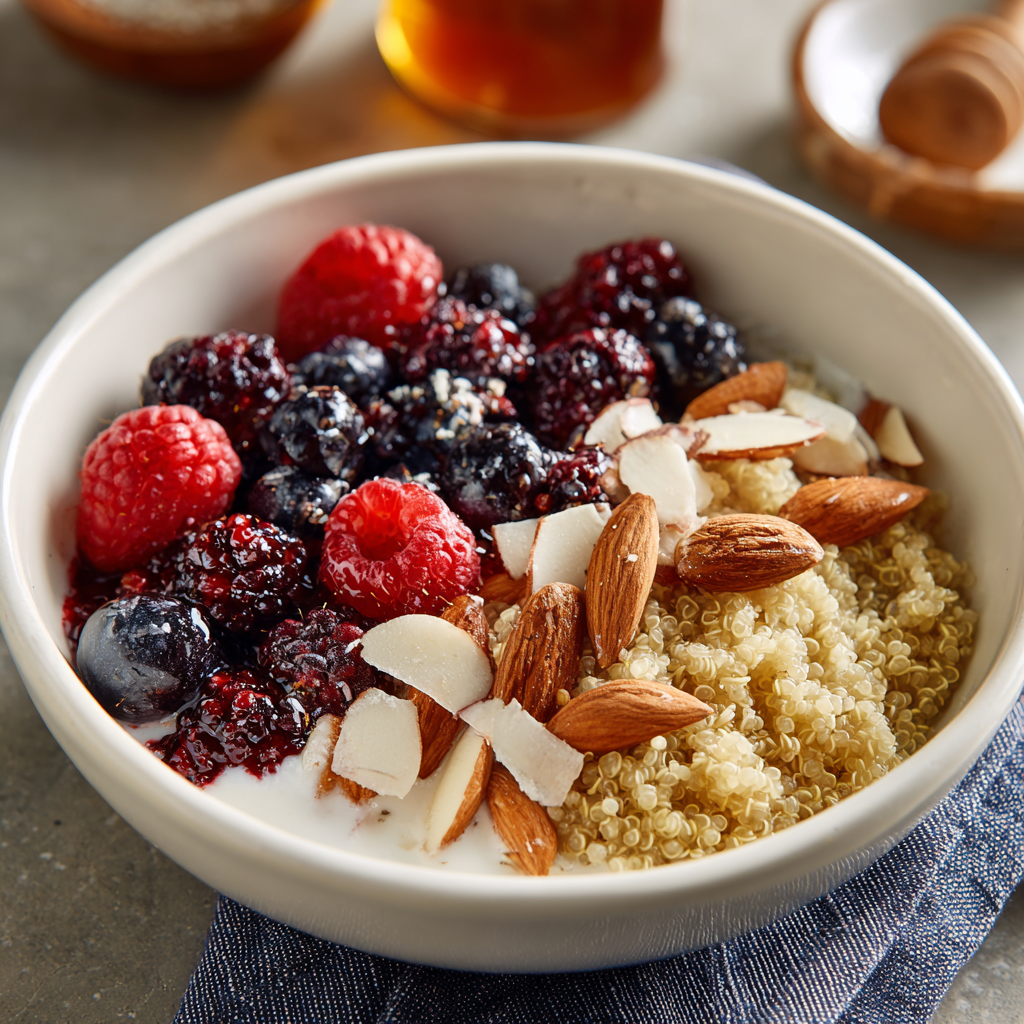
Quinoa Berry Breakfast Bowl : Wholesome, Sweet & Protein-Packed
Rise, Shine, and Nourish: Your New Favorite Morning Ritual Awaits
Good morning, sunshine! Is there anything better than starting your day with a breakfast that actually makes you excited to get out of bed? I’m talking about the kind of meal that feels like a warm hug, fuels your adventures, and tastes so good you almost can’t believe it’s good for you. If your current morning routine involves a sad, rushed slice of toast or a granola bar you barely taste, my friend, it’s time for an upgrade. And I have just the thing to make your mornings sparkle.
Let me introduce you to my Quinoa Berry Breakfast Bowl. This isn’t just a bowl of food; it’s a vibrant, protein-packed, joy-in-a-bowl masterpiece that will change the way you think about breakfast. Imagine this: a fluffy, warm base of nutty quinoa, swimming in creamy coconut milk, topped with a confetti of juicy, sweet-tart berries, a satisfying crunch of toasted almonds, and a sweet kiss of maple syrup. Every spoonful is a perfect harmony of textures and flavors—wholesome, sweet, and deeply satisfying.
I know what you might be thinking: “Quinoa for breakfast? Olivia, have you lost it?” But trust me on this. Quinoa is the ultimate breakfast superfood. It’s a complete protein, packed with fiber, and it gives you steady, lasting energy—no mid-morning slump in sight. Paired with antioxidant-rich berries and healthy fats, this bowl is a powerhouse. It’s plant-based, gluten-free, and endlessly customizable. Best of all? It comes together in about the time it takes to brew your coffee. So, grab your favorite bowl, and let’s make a morning masterpiece together.
How a Tiny Seed Saved My Chaotic Mornings
This recipe was born out of pure, unadulterated morning chaos. Picture it: a few years back, I was juggling a new blog, a freelance job, and a life that felt like it was moving at warp speed. My breakfasts were an afterthought—coffee, and maybe a sad banana if I was lucky. I’d crash by 10:30 AM, hangry and foggy-brained. One day, after a particularly disastrous morning, I stared into my pantry and saw a forgotten bag of quinoa. On a whim, I cooked a big batch that night.
The next morning, I threw some of that quinoa in a bowl, poured over the last of the coconut milk from a curry night, and scavenged the fridge for toppings. Some frozen berries, a handful of almonds, a drizzle of syrup. That first bite was a revelation. It was warm, comforting, substantial, and sweet. I felt nourished. It became my non-negotiable morning anchor. That simple bowl was more than fuel; it was a act of self-care. It was the calm, delicious center of my hectic days. Now, it’s my go-to for busy mornings, lazy weekend brunches, and anytime I need a delicious reset. It’s a little bowl of love, and I’m so thrilled to share it with you.
Gathering Your Sunshine: The Ingredients Breakdown
Here’s everything you’ll need to build your breakfast masterpiece. I’ve included my little chef insights and swaps so you can make this bowl your own with what you have on hand!
- 1 cup cooked quinoa: This is your powerhouse base! I love using tri-color quinoa for visual flair, but any color works. Chef’s Insight: Cook your quinoa in vegetable broth instead of water for an extra layer of savory depth that plays beautifully with the sweet toppings. No pre-cooked quinoa? See the FAQ for my perfect fluffy quinoa method!
- 1/2 cup mixed berries: Fresh or frozen are perfect. I adore the mix of strawberries, blueberries, and raspberries. Substitution Tip: No berries? Try diced apple, pear, or mango! In winter, stewed cinnamon apples are divine.
- 2 tablespoons sliced almonds: For that essential CRUNCH. Chef’s Hack: Toast them in a dry pan for 2-3 minutes until fragrant. It unlocks a whole new world of nutty flavor.
- 1 tablespoon ground flax seeds: A stealthy nutrient boost! They add omega-3s and fiber. Chef’s Insight: Using ground flax (flax meal) is key so your body can absorb all the goodness. You can buy it pre-ground or whizz whole seeds in a coffee grinder.
- 1–2 tablespoons pure maple syrup: Nature’s liquid gold! Start with 1 tbsp and add more to taste. Substitution Tip: Honey, agave, or even a mashed ripe banana blended in with the quinoa work wonderfully.
- 1/4 cup coconut milk: I use canned full-fat coconut milk for incredible creaminess. Substitution Tip: Any milk works here! Almond, oat, dairy—use what you love. For extra protein, vanilla protein milk is a fantastic choice.
- Optional Toppings: This is your playground! Shredded coconut, chia seeds, banana slices, cacao nibs, a spoonful of nut butter, or a sprinkle of cinnamon. Go wild!
Let’s Build Your Bowl: Simple Steps to Breakfast Bliss
Follow these steps, and in mere minutes, you’ll have a restaurant-worthy breakfast that’s all yours. I’ve sprinkled in my favorite tips to ensure your success!
- Warm Your Quinoa (The Cozy Factor): If you prefer a warm breakfast—which I highly recommend on chilly mornings—add your cooked quinoa to a small saucepan with a splash of water or your milk of choice. Warm it over low heat, stirring gently, for 3-5 minutes until heated through. Chef’s Hack: You can also do this in the microwave in a bowl for 60-90 seconds. The goal is just to take the chill off and make it welcoming.
- Bowl Foundation: Spoon your lovely, warm (or cool) quinoa into your favorite bowl. The wider the bowl, the more room for artistic topping placement—just saying!
- The Creamy Cascade: Pour that luscious coconut milk (or your chosen milk) right over the center of the quinoa. Watch it pool and seep into all the little crevices. This is the “sauce” that brings everything together.
- Artful Arrangement (The Fun Part!): Now, let’s decorate! Scatter your mixed berries over one section. Sprinkle the toasted almonds over another. Dust the ground flax seeds across the top. Chef’s Tip: I like to keep my toppings in little piles rather than all mixed together—it’s prettier and lets you get a different flavor combo with each bite.
- The Sweet Finish: Drizzle that beautiful maple syrup in a zig-zag or spiral pattern over everything. The berries will glisten, and the almonds will get a little sticky-sweet goodness.
- Final Flourish: Add any of your optional toppings here. A sprinkle of shredded coconut? A few banana slices fanned out? A dollop of almond butter? This is your signature. Make it beautiful!
- Serve Immediately: Grab a spoon and dive right in while the textures are perfect—warm quinoa, cool berries, creamy milk. It’s a symphony in a bowl.
How to Serve It Up: Making It Special
Presentation is part of the joy! Serve this bowl in a wide, shallow bowl to show off all the gorgeous colors. I love pairing it with a big mug of hot coffee or a bright herbal tea. For a real “treat yourself” moment, light a candle, put on some morning jazz, and actually sit down to enjoy it. If you’re serving a crowd, set up a breakfast bowl bar with bowls of quinoa, small dishes of all the toppings, and little pitchers of different milks and syrups. Let everyone build their own masterpiece—it’s a guaranteed brunch hit!
Make It Your Own: Delicious Twists & Swaps
This recipe is a beautiful canvas. Here are a few ways to paint a different flavor picture:
- Tropical Vacation Bowl: Swap berries for diced mango and pineapple. Use coconut milk, top with toasted coconut flakes, macadamia nuts, and a drizzle of honey.
- Chocolate Berry Bliss Bowl: Stir 1 tablespoon of unsweetened cocoa powder into the warm quinoa. Top with berries, almonds, and a drizzle of peanut butter.
- Apple Pie Bowl: Use warm stewed cinnamon apples instead of berries. Use almond milk, top with walnuts, and a sprinkle of granola for extra crunch.
- Savory Sunrise Bowl: Skip the syrup and berries. Top quinoa with a fried or poached egg, sautéed spinach, avocado slices, everything bagel seasoning, and a splash of hot sauce.
- High-Protein Power Bowl: Use vanilla protein milk. Stir a scoop of vanilla protein powder into the quinoa while warming (add a little extra milk to keep it creamy). Top with berries and nuts.
From My Kitchen to Yours: A Few Parting Thoughts
This recipe has evolved so much from that first desperate pantry raid. I’ve learned that toasting the nuts is non-negotiable for me—it just elevates everything. I also almost always double or triple the quinoa I cook on Sunday, so I have my base ready for the whole week. It keeps beautifully in the fridge for 4-5 days. My husband, who was once a skeptic, now requests it! He calls it his “power bowl.” The funniest kitchen fail related to this? I once accidentally used cayenne pepper instead of cinnamon when making the apple pie variation. That was a… spicy start to the day! Let’s just say I’ve labeled my spice jars very clearly since then. The moral of the story? Cook with love, laugh at the mistakes, and always taste as you go.
Your Questions, Answered: FAQs & Troubleshooting
Q: My quinoa sometimes turns out bitter or mushy. What am I doing wrong?
A: Bitterness often comes from not rinsing quinoa thoroughly before cooking. It has a natural coating called saponin that can taste soapy. Give it a good rinse in a fine-mesh strainer under cold water until the water runs clear. For perfect, fluffy quinoa, use the absorption method: For 1 cup of quinoa, use 2 cups of liquid (water or broth). Bring to a boil, reduce to a simmer, cover, and cook for 15 minutes. Remove from heat and let it sit, covered, for 10 minutes. THEN fluff with a fork. This steam-rest is the secret to fluffiness!
Q: Can I make this the night before as overnight oats-style?
A> Absolutely! It makes a fantastic chilled “quinoa porridge.” Just mix the cooked quinoa, milk, maple syrup, and flax seeds in a jar. Seal and refrigerate overnight. In the morning, give it a stir (it will thicken), add your berries and nuts, and enjoy cold. The texture is pudding-like and delicious.
Q: Is this really filling enough for breakfast?
A> I promise, it is! The combo of complex carbs from quinoa, fiber from berries and flax, protein from quinoa and nuts, and healthy fats from the nuts/milk creates a satiating meal that digests slowly. If you’re extra hungry, don’t be shy—add an extra spoonful of nut butter or a side of Greek yogurt for even more staying power.
Q: My bowl got soggy after I added the milk. Help!
A> No worries! This is meant to be a creamy, porridge-like dish, but if you prefer more texture, you have two options: 1) Serve the milk on the side and pour over each bite as you go. 2) Use a thicker milk like Greek yogurt thinned with a splash of regular milk, or a dollop of coconut cream instead of the runnier liquid.
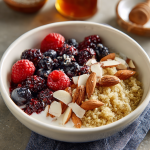
Quinoa Berry Breakfast Bowl : Wholesome, Sweet & Protein-Packed
Description
Good morning! If you want a breakfast that’s quick, colorful, and actually keeps you full, this Quinoa Berry Breakfast Bowl is a winner. It’s creamy, naturally sweet, loaded with fiber and protein, and easy to customize with whatever you have on hand. Perfect for busy mornings or slow, cozy starts.
Ingredients
-
1 cup cooked quinoa
-
1/2 cup mixed berries (fresh or frozen)
-
2 tbsp sliced almonds (toasted if possible)
-
1 tbsp ground flaxseed
-
1–2 tbsp pure maple syrup (to taste)
-
1/4 cup coconut milk (or any milk you like)
Optional toppings
-
Banana slices
-
Chia seeds
-
Shredded coconut
-
Nut butter
-
Cinnamon
-
Granola
Instructions
-
Warm the quinoa (optional)
Add cooked quinoa to a small saucepan with a splash of milk or water. Heat gently for 3–5 minutes, or microwave 60–90 seconds until warm. -
Build the base
Spoon quinoa into a bowl. -
Add milk
Pour coconut milk (or your preferred milk) over the quinoa. -
Add toppings
Top with berries, sliced almonds, and ground flaxseed. -
Sweeten
Drizzle maple syrup over the top. -
Finish & serve
Add any extra toppings and enjoy right away.
Notes
-
Rinse quinoa well before cooking to remove bitterness.
-
Batch-cook quinoa for the week — it keeps 4–5 days in the fridge.
-
Toast the almonds in a dry pan for 2–3 minutes for deeper flavor.
-
Use frozen berries straight from the freezer — they thaw quickly in the warm quinoa.
-
Add protein with protein milk, yogurt, or a spoon of nut butter.
Nutritional Snapshot (A Per Serving Estimate)
Please note: This is an approximation based on the specific ingredients listed and can vary with substitutions.
Servings: 1 | Calories: ~350 | Protein: ~9g | Fat: ~12g | Carbohydrates: ~45g | Fiber: ~8g
Prep time: 5 minutes | Cook time: 0–10 minutes (using pre-cooked quinoa) | Total time: 10 minutes
Final Thoughts
This Quinoa Berry Breakfast Bowl is more than just a recipe—it’s an invitation to reclaim your mornings. In a world that often feels rushed and chaotic, this bowl is a gentle reminder to pause, nourish yourself, and find joy in the simple act of preparing something beautiful and wholesome.
From that first life-changing bite born out of pantry chaos to the countless mornings it has anchored me since, this recipe has become a ritual of care. It’s proof that eating well doesn’t have to be complicated or time-consuming. With a handful of vibrant ingredients and a few peaceful minutes, you can create a meal that truly fuels your body and brightens your day.
So tomorrow morning, before the rush begins, I encourage you to try it. Let the nutty aroma of warm quinoa fill your kitchen. Take a moment to artfully arrange those jewel-like berries. Drizzle that maple syrup with a flourish. Then, sit down—even just for five minutes—and savor it. Taste the comfort, feel the energy, and enjoy the quiet satisfaction of starting your day with intention.
Here’s to mornings that sparkle, to food that feels like a hug, and to you—deserving every delicious, nourishing bite.
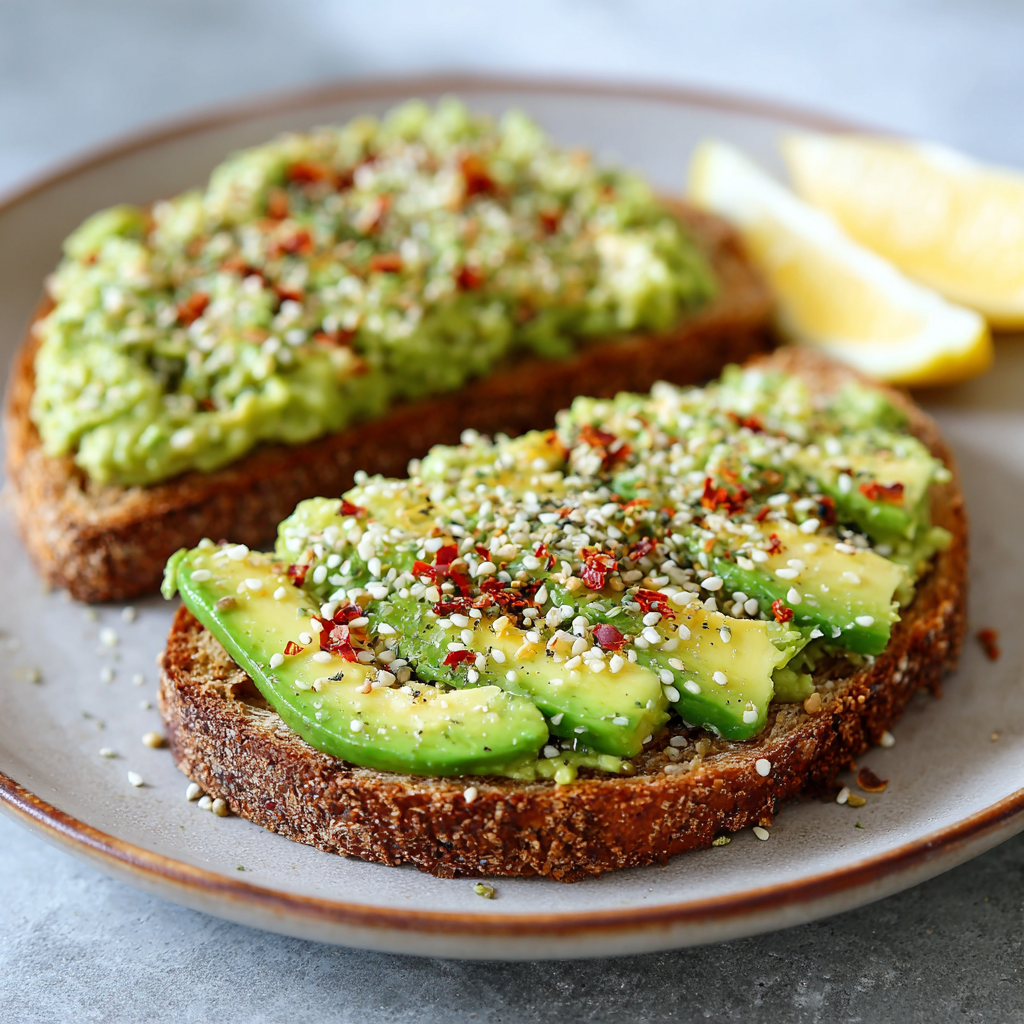
Avocado Toast on Whole Grain Bread : Quick, Nutritious & Delicious
Why This Isn’t Just Avocado Toast (It’s a Ritual)
Good morning, sunshine! Or hey, good afternoon, or good… whenever you’re reading this with a rumbly tummy and a craving for something creamy, satisfying, and downright good for you. Let’s talk about the humble, sometimes misunderstood, absolute rockstar of simple meals: avocado toast.
I know, I know. You’ve seen it a million times. It’s the poster child for millennial brunch, the subject of countless eye-rolls about simplicity priced like luxury. But hear me out. When you strip away the hype, what you have is a perfect canvas. A 5-minute masterpiece that can fuel your body, delight your taste buds, and become a daily ritual you actually look forward to. This isn’t about following a trend; it’s about mastering a foundational skill.
My version, which I’m so excited to share with you today, is built on a few key principles: texture contrast (creamy meets crunchy), nutritional balance (healthy fats + fiber + protein), and most importantly, flavor layers. We’re not just smashing avocado on bread. We’re creating a moment. Whether it’s your pre-workout fuel, a post-school snack for the kids, or a lazy Saturday treat for yourself, this avocado toast on whole grain bread is designed to make you feel nourished, energized, and seriously happy.
So, tie on that apron (messy is welcome here), grab a perfectly ripe avocado, and let’s turn the simple into the spectacular. No fancy skills required—just a hungry heart and a love for good food.
The Brunch That Started It All: A Love Letter to Simple Food
My love affair with avocado toast didn’t start in a trendy cafe. It started in my Aunt Clara’s sun-drenched California kitchen, circa 2008, long before it was a “thing.” I was visiting, jet-lagged and groggy, and she handed me a plate with a single slice of thick, nutty bread piled high with the most vibrant green mash I’d ever seen. “Eat,” she said. “It’s California penicillin.”
I took a bite. The bread was warm and substantial, giving a hearty *crackle* under my teeth. The avocado was cool, rich, and seasoned with just a flaky salt and a squeeze from a lemon tree outside her window. She’d scattered some weird little seeds on top (hemp seeds, I’d later learn) for crunch. It was so simple it felt profound. We sat at her counter, not talking much, just enjoying the quiet morning, the crunch of toast, and the shared understanding that sometimes the best food doesn’t need a recipe at all—it just needs good ingredients and a generous spirit.
That moment, that feeling of calm, satiating joy, is what I try to recreate every time I make this. It’s my edible deep breath. It reminds me that cooking doesn’t have to be complicated to be meaningful. Every time I mash an avocado, I’m back in that sunny kitchen, and I’m sharing a bit of that California calm with you.
Your Building Blocks: Choosing the Best Ingredients
Great avocado toast is like a great outfit: it all comes down to quality basics. Let’s break down each component, because every single one matters. Here’s what you’ll need for one perfect, generous slice (double, triple, quadruple as needed!):
- 1 slice whole grain bread: This is your foundation. Look for bread with visible grains and seeds, a short ingredient list (think: whole wheat flour, oats, sunflower seeds, flax), and no added sugars. Chef’s Insight: The density and nuttiness of a good whole grain bread stand up to the creamy avocado without getting soggy. Substitution Tip: Sourdough is a fabulous, tangy alternative. For gluten-free, a sturdy seeded GF loaf works wonders.
- ½ ripe avocado: The star of the show! “Ripe” means it yields gently to a soft squeeze near the stem. Avoid rock-hard or mushy avocados. Chef’s Insight: I prefer Haas avocados for their richer, nuttier flavor and creamier texture compared to the larger, sometimes watery Florida varieties.
- Pinch of flaky sea salt: Not all salt is created equal. Flaky sea salt (like Maldon) or a good kosher salt provides little bursts of flavor that table salt can’t match. Chef’s Insight: The texture and clean taste of flaky salt elevate this from a snack to a experience.
- 1 tsp hemp seeds (hearts): My not-so-secret weapon. These tiny, nutty seeds add a delightful crunch, a complete plant-based protein punch, and a boost of omega-3s. Substitution Tip: If you don’t have hemp seeds, try everything bagel seasoning, toasted sesame seeds, or even a sprinkle of chia seeds.
- The “Make It Your Own” Toppings (Optional but encouraged!):
- Red pepper flakes: For a gentle, warming heat.
- Fresh lemon or lime juice: A tiny squeeze brightens the rich avocado and slows browning.
- Cherry tomatoes, sliced: Adds freshness, color, and a juicy pop.
- A perfectly fried or poached egg: Turns your toast into a protein-packed, decadent meal. The runny yolk is *chef’s kiss*.
Let’s Make It: Your Foolproof, Flavor-Packed Steps
Okay, friends! Time to assemble our masterpiece. Follow these steps, and in about five minutes, you’ll have a plate of pure joy.
- Toast Your Foundation. Pop your slice of whole grain bread into the toaster, toaster oven, or even a hot skillet. We’re going for deeply golden and thoroughly crisp. Why? A sturdy, well-toasted base is crucial—it’s the armor that prevents sogginess once you add the creamy avocado. Little Chef Hack: If using a skillet, toast it dry over medium heat for 2-3 minutes per side until it’s fragrant and has some color. This gives it an incredible, rustic flavor.
- Mash with Personality. While the bread toasts, halve your avocado, remove the pit, and scoop the flesh of one half into a small bowl. Grab a fork and mash! Now, here’s a personal preference: I like it creamy with some satisfying chunks. Don’t turn it into a completely smooth puree. Those little bits of avocado give you something to bite into. Little Chef Hack: If you’re adding lemon juice or red pepper flakes, mix them into the mash now so the flavors can marry.
- Spread with Abandon. The moment your toast pops, get it on a plate. Immediately, take your mashed avocado and spread it evenly right to the edges. Doing this while the bread is hot helps the avocado cling and warm up slightly, which is magical. Don’t be shy—pile it on!
- Season with Intention. This is where you awaken the flavors. Take that pinch of flaky sea salt and, holding your hand up high, sprinkle it evenly over the green landscape. The height helps distribute the salt evenly. Then, scatter your hemp seeds over the top for that nutritional crunch.
- Top with Flair (The Fun Part!). This is your stage. Slice a few cherry tomatoes and artfully arrange them? Go for it. Add a few more pinches of red pepper flakes for a kick? Yes, please. For an egg: fry one sunny-side up in a little olive oil until the whites are set but the yolk is gloriously runny, then gently slide it on top. Let it be the crown jewel.
The key through all of this? Move with purpose, but enjoy the process. This is a 5-minute act of self-care.
How to Serve Your Masterpiece
This toast deserves a moment. Serve it immediately, on a simple plate that lets its colors shine. I love eating mine straight off the cutting board if I’m flying solo. For a brunch spread, pair it with a bright side of mixed berries or a simple green salad. If you’ve added an egg, have a knife and fork ready for the delicious, messy excavation. And always, always have extra napkins nearby—the best food is often the one you can’t eat neatly!
Mix It Up! 5 Delicious Twists on the Classic
Once you’ve mastered the basic blueprint, the world is your oyster (or, well, your avocado). Try these fun variations:
- Mediterranean Fiesta: Top with crumbled feta, chopped Kalamata olives, a drizzle of olive oil, and a sprinkle of dried oregano.
- Everything Bagel Style: Swap hemp seeds for a generous sprinkle of everything bagel seasoning. Add a schmear of cream cheese under the avocado for ultimate decadence.
- Spicy Sriracha & Sesame: Drizzle with sriracha and a sprinkle of black and white sesame seeds. Add sliced radish for extra crunch.
- Caprese-Inspired: Layer sliced fresh mozzarella or burrata under the avocado, then add halved cherry tomatoes, fresh basil leaves, and a balsamic glaze drizzle.
- Protein Powerhouse (Vegan): Mash in a tablespoon of chickpeas or white beans with the avocado for extra fiber and protein. Top with microgreens.
Olivia’s Kitchen Notes & Stories
This recipe has lived a hundred lives in my kitchen. It’s been my 6 AM pre-gym fuel (extra hemp seeds!), my “I’m working through lunch” desk meal, and my go-to for calming a hangry toddler (cut into fun shapes, obviously). The biggest evolution? Learning that the avocado doesn’t have to be perfect. A few brown spots? Scoop ’em out and carry on. An avocado slightly under-ripe? Mash it finer and add a tiny drizzle of olive oil for creaminess. A little over-ripe? It’s perfect for mashing!
One of my favorite kitchen blunders turned into a win: I once ran out of whole grain bread and used a cinnamon-raisin bagel thin. Skeptical, I topped it with the avocado, salt, and hemp seeds. The sweet-salty-creamy combo was bizarrely incredible. So don’t be afraid to experiment! The worst that can happen is you make a weird snack and order pizza. The best? You discover your new favorite thing.
Your Questions, Answered!
Q: How do I prevent the avocado from browning if I want to make this ahead for a crowd?
A: The key is air exposure. You can mash the avocado with lemon/lime juice (the acid slows oxidation) and press plastic wrap directly onto the surface before refrigerating. For individual portions, assemble the toast *just* before serving. You can also prep the mashed, lemon-spiked avocado and toasted bread separately, then spread and top when ready to eat.
Q: My toast gets soggy so fast! What am I doing wrong?
A: Two likely culprits: 1) Your bread isn’t toasted enough. It needs to be *crisp* to act as a barrier. 2) You’re using an over-ripe or watery avocado. Make sure your avocado is just-ripe and drain any excess liquid from the mash if needed. Always spread the avocado on hot toast right after it comes out of the toaster!
Q: Is this actually filling enough for a meal?
A> The basic version is a fantastic snack or light breakfast. To transform it into a satiating meal, add a protein source. My top picks: a fried/poached egg, a handful of chickpeas mashed into the avocado, a couple slices of smoked salmon, or a sprinkle of nutritional yeast for a cheesy, protein-packed vegan boost.
Q: Can I use frozen avocado?
A> You can, but the texture will be different. Thawed frozen avocado often becomes quite watery and mushy, perfect for smoothies but less ideal for the chunky texture we love on toast. For the best experience, fresh is the way to go. If you must use frozen, thaw it in a strainer over a bowl to drain excess liquid before mashing.
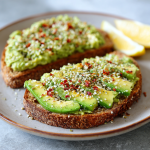
Avocado Toast on Whole Grain Bread : Quick, Nutritious & Delicious
Description
Avocado toast isn’t just trendy — it’s one of the fastest, most satisfying breakfasts you can make. With creamy avocado, crunchy whole grain bread, and a few smart toppings, you get great texture, healthy fats, and steady energy. It takes only minutes, but it feels like a small morning win every time.
Ingredients
-
1 slice whole grain bread
-
½ ripe avocado
-
Pinch flaky sea salt (or kosher salt)
-
1 tsp hemp seeds (or sesame seeds / everything seasoning)
-
Optional: squeeze of lemon or lime juice
Optional toppings
-
Cherry tomatoes, sliced
-
Red pepper flakes
-
Fried or poached egg
-
Avocado slices instead of mashed (for texture)
Instructions
-
Toast the bread
Toast the whole grain bread until golden and crisp. -
Prepare the avocado
Scoop avocado into a small bowl. Mash with a fork until mostly smooth with a few chunks.
Add a small squeeze of lemon or lime if using. -
Spread
Spread the mashed avocado evenly over the hot toast. -
Season and top
Sprinkle with salt and hemp seeds (or your chosen topping).
Add any extras like tomatoes or red pepper flakes. -
Serve immediately
Enjoy while the toast is still warm and crisp.
Notes
-
Use truly ripe avocado — it should give slightly when pressed.
-
Toast well — extra crunch prevents soggy bread.
-
Season enough — avocado needs salt to taste its best.
-
Add protein — an egg or seeds makes it more filling.
-
Mash chunky, not smooth — better texture and bite.
Nutritional Info (Per Slice, Basic Recipe)
This is an estimate and can vary based on your specific bread and avocado size. Toppings will change the values.
Calories: ~220 | Protein: 6g | Carbohydrates: 20g | Fiber: 8g | Fat: 14g (Primarily healthy monounsaturated fats)
Prep Time: 5 minutes | Cook Time: 2 minutes (for toasting) | Total Time: 7 minutes | Servings: 1
Final Thoughts: Why This Isn’t Just Avocado Toast (It’s a Ritual)
At its surface, this is a recipe for avocado toast. But really, it’s an invitation—to slow down, to nourish yourself with intention, and to find joy in the simplest of acts. In a world that often feels hurried and complex, there is profound comfort in creating something both wholesome and delightful in just a few minutes.
This isn’t about chasing a trend or crafting a picture-perfect brunch for social media. It’s about the ritual: the satisfying crackle of toasted bread, the vibrant green of mashed avocado, the ritualistic sprinkle of flaky salt. It’s a small, daily practice of mindfulness. Whether you’re fueling a busy day, sharing a quiet moment, or feeding someone you love, this recipe is a tool for connection—to good food, to fond memories, and to your own well-being.
Remember Aunt Clara’s sun-drenched kitchen. Remember that the “best” version is the one you make with what you have, seasoned with a generous spirit. The beauty of this canvas is its flexibility—its ability to be a protein-packed powerhouse, a Mediterranean getaway, or a nostalgic bite of California calm, all with a few tweaks.
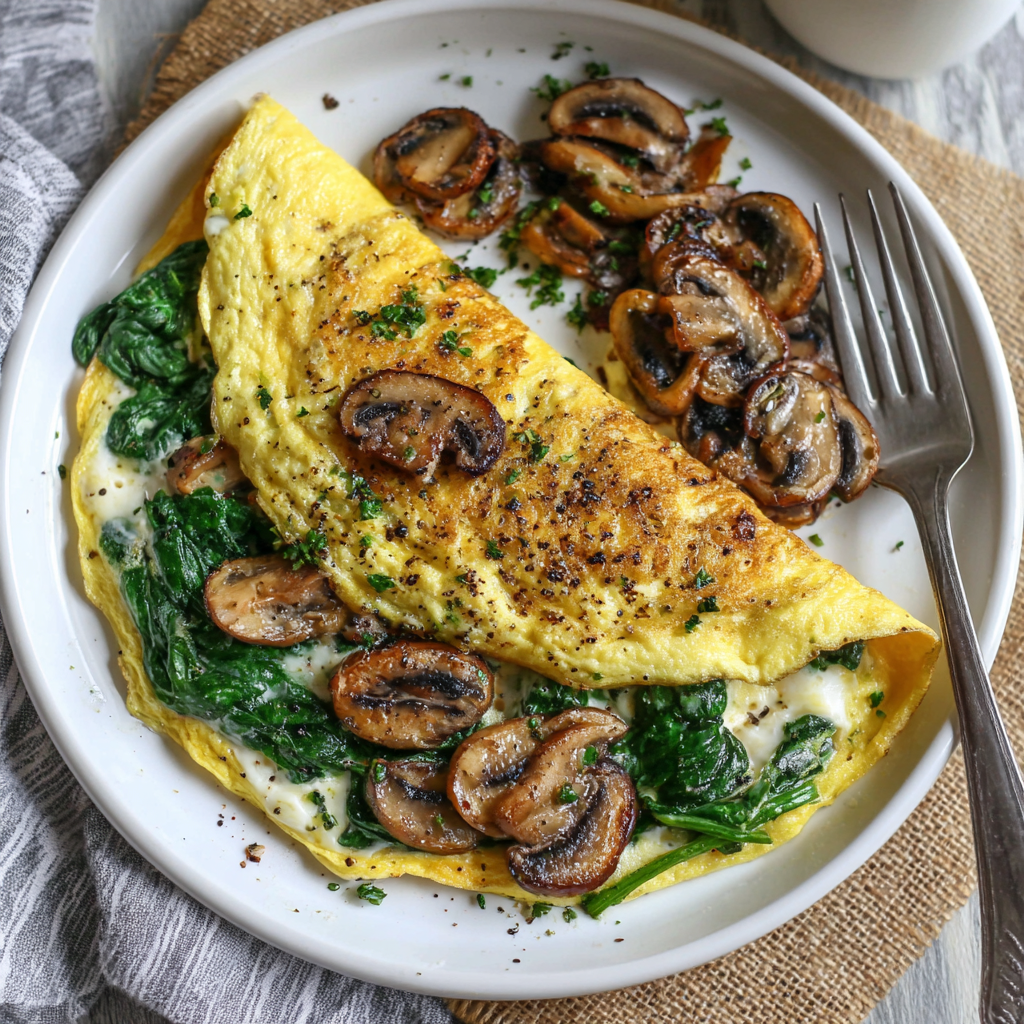
Spinach and Mushroom Egg White Omelette : Light, Protein-Packed Breakfast
Welcome to a Lighter, Brighter Morning!
Hey there, friend! Can you smell that? It’s the scent of coffee brewing, the quiet sizzle from a pan on the stove, and the promise of a brand new day. If you’re anything like me, your morning routine sets the tone for everything that follows. And what better way to kick things off than with a breakfast that makes you feel amazing? Not just full, but genuinely nourished, energized, and ready to tackle your to-do list with a smile.
Today, we’re ditching the heavy, grease-laden breakfasts and celebrating something beautifully simple: the mighty Spinach and Mushroom Egg White Omelette. Now, I know what you might be thinking—”egg whites? Aren’t those… boring?” Trust me, I hear you! I used to be a devout whole-egg enthusiast, convinced that yolks were the sole carriers of flavor. But this recipe? It’s a total game-changer. It’s my go-to when I want something that feels clean, light, and packed with pure, sustained energy.
This isn’t about deprivation; it’s about celebration. We’re celebrating the earthy depth of sautéed mushrooms, the vibrant green pop of fresh spinach, and the incredible, cloud-like fluffiness you can achieve with egg whites. It’s a canvas for your favorite flavors—a sprinkle of tangy feta, a few creamy avocado slices, or a dash of your favorite hot sauce. It comes together in about the time it takes for your toast to pop, and it delivers a powerful punch of protein to keep you going strong all morning long. So, grab your favorite non-stick skillet and let’s turn a few simple ingredients into your new favorite feel-good breakfast.
The Omelette That Saved My Saturday Mornings
This recipe has a special place in my heart because it perfectly solved a classic weekend dilemma. Picture this: It’s a lazy Saturday. You’ve just come back from a long walk or maybe a fun workout class, and you’re ravenous. But you also have that post-exercise glow and you don’t want to weigh yourself down with a heavy, nap-inducing brunch. You want something satisfying that honors that energetic, “I did something good for myself” feeling.
That was me, every single weekend. I’d stare into the fridge, craving something substantial but not stodgy. One Saturday, after a particularly sweaty morning, I saw a carton of egg whites I’d bought for baking and a fridge drawer full of veggies begging to be used. I threw them together with a hopeful heart. The result was this incredibly fluffy, bright, and filling omelette. I ate it right off the pan, standing in my sunlit kitchen, and it was pure joy. It became my little ritual—a reward for moving my body and a gift of clean energy for the rest of my day off. It’s proof that the food that makes you feel your best doesn’t have to be complicated. Sometimes, it’s just a few good things, cooked with intention, in a quiet kitchen.
Gathering Your Flavorful, Power-Packed Ingredients
Here’s everything you need to make one perfect, plate-sized omelette. The beauty is in the simplicity, and each ingredient plays a starring role. Let’s break it down:
- 4 large egg whites: This is our protein-packed base! For the fluffiest results, I like to separate the eggs myself. Pro tip: Ensure no trace of yolk gets in, as fat can prevent the whites from achieving maximum volume. If you’re in a hurry, carton egg whites work just fine—look for a brand with no added preservatives for the cleanest flavor.
- ½ cup fresh spinach, chopped: I’m talking about big handfuls here! Spinach wilts down dramatically, so don’t be shy. It adds iron, a beautiful color, and a mild, fresh flavor. If you only have baby spinach, you can skip the chopping.
- ½ cup mushrooms, sliced: Cremini or white button mushrooms are perfect. They sauté into little flavor bombs with a meaty, umami texture. Slice them evenly so they cook at the same rate. Feeling fancy? Try shiitakes for an even deeper, woodsier taste.
- 1 tbsp onion, finely diced (optional): This is my “flavor booster” add-in. A little onion adds a sweet, aromatic base note. If you’re not an onion person, a pinch of onion powder works, or you can skip it entirely.
- 1 tsp olive oil or nonstick spray: Just enough to coat the pan and create a non-stick barrier. I love a light drizzle of good olive oil for a hint of flavor, but a spritz of avocado or coconut oil spray is great for keeping things ultra-light.
- Salt & black pepper to taste: Season as you go! A pinch of salt on the veggies as they cook, and another on the egg whites, makes all the difference. Freshly cracked black pepper is non-negotiable for me.
- Optional toppings: feta cheese, avocado slices, or hot sauce: This is where you make it your own! A tiny sprinkle of crumbled feta adds a salty tang. Creamy avocado brings healthy fats and richness. And a dash of your favorite hot sauce (I’m a Cholula girl) ties everything together with a zing.
Let’s Cook! Your Step-by-Step Guide to Fluffy Perfection
Ready to create some magic? Follow these steps, and you’ll have a restaurant-worthy omelette in minutes. I’m sharing all my little chef hacks along the way!
- Prep Your Station: Before you even turn on the heat, get everything ready. Chop your spinach, slice your mushrooms, and dice your onion if using. Crack and separate your eggs (or have your carton ready). Having your “mise en place” (everything in its place) makes the cooking process smooth and stress-free. Trust me on this—it’s the secret to never burning your veggies while you frantically separate eggs!
- Sauté the Veggies: Heat your olive oil or spray in a quality 8-inch nonstick skillet over medium heat. Toss in the mushrooms (and onions). Here’s a tip: Don’t crowd the pan and don’t stir them constantly! Let them sit for a minute to get a nice golden-brown sear, which builds incredible flavor. Sauté for 3-4 minutes until they’re softened and fragrant.
- Wilt the Greens: Add the massive pile of chopped spinach to the pan. It will look like a lot, but it wilts down in about 60 seconds! Stir it gently with the mushrooms just until it turns bright green and limp. Immediately remove the whole veggie mixture to a plate. This step is crucial—if we leave the veggies in the pan, they’ll release moisture and make our omelette soggy. We want that filling dry and happy.
- Create the Egg Cloud: Give the pan a quick wipe with a paper towel if needed, then return it to medium heat. Pour in your egg whites. Immediately tilt the pan in a circular motion to let the whites spread into a beautiful, even circle covering the bottom.
- The Gentle Lift: As the edges begin to set and turn opaque (about 1-2 minutes), take your spatula and gently lift one edge. Tilt the pan so the uncooked, runny egg white on top flows underneath the cooked part. Do this around the edges a couple of times. This technique ensures even cooking and no raw patches, giving you that perfect, fully-set yet tender omelette.
- Fill and Fold: Once the surface is mostly set with just a little shimmer on top, spoon your spinach and mushroom mixture onto one half of the omelette. Now, with confidence, use your spatula to fold the empty half over the filling. It’s like tucking in a flavor blanket! Let it cook for another 30-60 seconds to warm the filling through and set the fold.
- Slide and Serve: Here’s the grand finale: tilt your pan over your plate and let the omelette slide gracefully out. No fighting, no tearing—just a perfect, golden package ready for toppings.
Plating with Pizzazz
Presentation is part of the joy! Slide your gorgeous omelette onto a warm plate. Let the vibrant green spinach peek out from the side. Add your toppings: a few artful slices of avocado, a sprinkle of bright white feta, or a zig-zag of hot sauce. I love serving this with a side of juicy cherry tomatoes or a small handful of peppery arugula tossed in lemon juice. It adds fresh texture and color, making your breakfast feel like a special café treat, right at home.
Make It Your Own: Creative Twists
- The “Everything Green”: Swap mushrooms for chopped asparagus tips and add a handful of fresh herbs like chives or dill to the egg whites before cooking.
- Mediterranean Sunshine: Use sun-dried tomatoes (packed in oil, chopped) and a spoonful of chopped kalamata olives in the filling. Top with a dollop of Greek yogurt.
- Southwest Fiesta: Add diced bell pepper and a pinch of cumin to the sauté. Fill with a tablespoon of black beans and top with salsa and a lime wedge.
- Dairy-Free Delight: Skip the feta and top with nutritional yeast for a cheesy flavor, or add creamy sliced avocado.
- Herb-Infused Whites: Whisk a teaspoon of fresh, finely chopped herbs (parsley, chervil, tarragon) directly into the egg whites before they hit the pan for an aromatic lift.
Olivia’s Kitchen Notes
This recipe has evolved from a “what’s in the fridge?” experiment to a beloved staple. My biggest lesson learned? Patience with the pan. I used to crank the heat to high, wanting it done fast. That only leads to a rubbery, brown-bottomed omelette. Medium heat is your best friend for gentle, even cooking. Also, I’ve learned to embrace the “messy first omelette” rule. The first one is for the cook (that’s you!), eaten straight from the pan to perfect your technique. The second one is the photogenic masterpiece. It’s a delicious rule, if you ask me. Finally, don’t be afraid to season each layer—a little salt on the veggies, a little on the eggs. It builds depth in every single bite.
Your Questions, Answered!
Q: My omelette always sticks and tears! Help!
A: The likely culprits are heat and your pan. First, ensure you’re using a good quality non-stick skillet in good condition. Second, make sure your pan is properly heated with oil before adding the eggs. Medium heat is key—too hot causes sticking. Finally, a little more fat (a teaspoon of oil or butter) never hurt for extra insurance.
Q: Can I make this with whole eggs instead?
A: Absolutely! For a whole-egg version, use 2 large eggs. Whisk them well with a tablespoon of water or milk for extra fluff. The cooking method remains the same, though it may cook a touch quicker.
Q: My egg whites turn out flat and rubbery. What am I doing wrong?
A> Rubberiness usually means overcooking. Cook just until the surface is set and no longer runny. The residual heat will finish the job once it’s folded and plated. Also, avoid over-mixing the whites—just a quick whisk to break them up is plenty. Over-whisking can deflate them.
Q: Can I prep the filling ahead of time?
A: Yes! Sauté a big batch of mushrooms and spinach at the start of the week. Store it in an airtight container in the fridge for 3-4 days. When you’re ready for breakfast, just warm a spoonful in the pan before adding your fresh egg whites. Weekday breakfast saved!

Spinach and Mushroom Egg White Omelette : Light, Protein-Packed Breakfast
Description
If you want a breakfast that’s quick, filling, and energizing without feeling heavy, this Spinach and Mushroom Egg White Omelette is a perfect choice. It’s fluffy, savory, and loaded with nutrients, yet comes together in just minutes. Great for busy mornings or post-workout meals, it delivers clean protein and fresh flavor in every bite.
Ingredients
-
4 large egg whites
-
½ cup fresh spinach, chopped
-
½ cup mushrooms, sliced
-
1 tbsp finely diced onion (optional)
-
1 tsp olive oil or nonstick spray
-
Salt and black pepper, to taste
Optional toppings
-
Crumbled feta
-
Avocado slices
-
Hot sauce or fresh herbs
Instructions
-
Prep ingredients
Chop spinach, slice mushrooms, and dice onion if using. -
Cook the vegetables
Heat oil in an 8-inch nonstick skillet over medium heat.
Add mushrooms and onion. Cook 3–4 minutes until softened and lightly browned. -
Add spinach
Stir in spinach and cook about 1 minute until wilted.
Transfer vegetables to a plate. -
Cook the egg whites
Lightly recoat the pan if needed. Pour in egg whites and season with salt and pepper.
Tilt pan to spread evenly. -
Set and fill
When edges are set, gently lift them with a spatula and tilt the pan so uncooked egg flows underneath.
Once mostly set, add vegetables to one half. -
Fold and finish
Fold the omelette over the filling. Cook 30–60 seconds more, then slide onto a plate.
Notes
-
Use medium heat — too high makes egg whites rubbery.
-
Don’t overcook — remove when just set for the best texture.
-
Cook veggies first — this prevents excess moisture.
-
Use a good nonstick pan — it makes folding much easier.
-
Add herbs to the whites — chopped chives or parsley boost flavor.
Nutritional Information (Per Omelette, without optional toppings)
Calories: ~100 | Protein: 14g | Carbohydrates: 3g | Fat: 3g | Fiber: 1g
Note: This is an estimate. Adding toppings like feta or avocado will increase the fat (healthy fats!) and calorie count.
Final Thoughts: A Simple Recipe, A Brighter Start
This isn’t just an omelette recipe. It’s an invitation to begin your day with intention and kindness—to yourself.
We often rush through mornings, grabbing whatever is easiest. But this recipe is a gentle reminder that taking a few mindful minutes to nourish your body can transform your entire outlook. It’s more than eggs and veggies; it’s a ritual of self-care that says, “I am worth this small, good thing.”
What I love most about this dish is its beautiful flexibility. It’s a loyal base for whatever you crave or whatever your fridge holds. It meets you where you are—whether you need a post-workout recharge, a quiet weekend treat, or a swift, protein-packed weekday launchpad. It proves that eating well doesn’t require complexity or deprivation, but rather a handful of fresh ingredients and a little know-how.
So, here’s my wish for you: Let this be more than a meal. Let it be a moment of calm in your morning. Let the sizzle of the mushrooms and the bright green wilt of the spinach be a small meditation. Enjoy the simple act of creating something good for your body.
May your skillet be non-stick, your egg whites fluffy, and your mornings feel lighter and brighter because of it.
Here’s to good food and good days,
Olivia
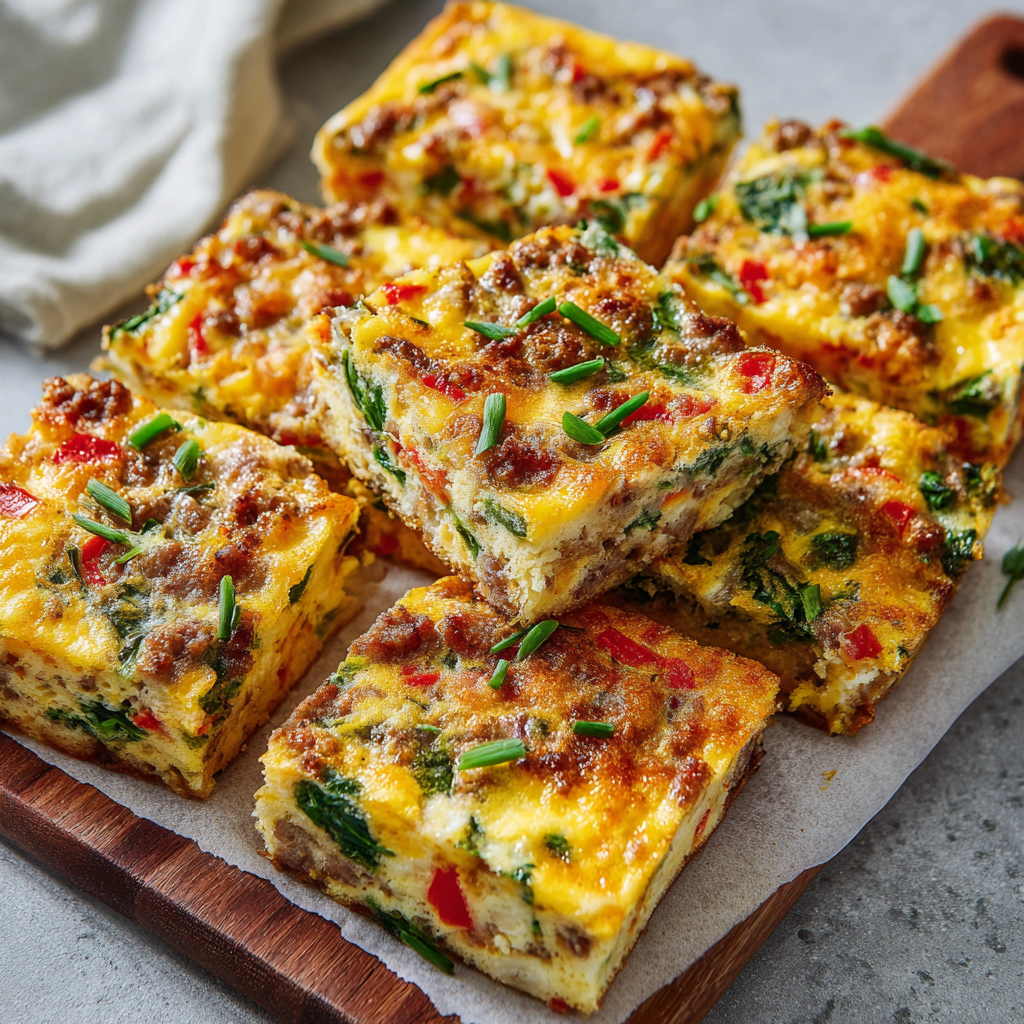
Sheet-Pan Frittata Slices : Meal Prep Magic with 30–40g Protein
Your New Breakfast BFF: The Sheet-Pan Frittata Slice
Okay, let’s talk about weekday mornings. You know the drill. The alarm blares, your to-do list already feels a mile long, and the last thing you have brain space for is figuring out a breakfast that’s both delicious and actually keeps you full past 10 AM. You’re stuck between a sad, lonely granola bar and the siren call of the drive-thru. I’ve been there more times than I’d like to admit, usually while wearing one slipper and trying to find my car keys in the fruit bowl.
But what if I told you your breakfast salvation is waiting for you on a single sheet pan? Enter the hero we all need: Sheet-Pan Frittata Slices. This isn’t just another egg recipe. This is your weekly meal prep magic trick, your protein-packed secret weapon, and your ticket to calm, delicious mornings. Imagine baking one gorgeous, veggie-and-cheese-studded egg masterpiece, slicing it into perfect, handheld squares, and having a powerhouse breakfast ready to grab-and-go for days. No more scrambling in the morning scramble! Each slice packs a serious 30-40 grams of protein to fuel your adventures, whether that’s a busy workday, a killer workout, or just keeping up with life. It’s hearty, customizable, and tastes like you fussed—but the secret is, you only really cook once. So, tie on that apron (embrace the mess!), and let’s make mornings something to look forward to, together.
Why This Recipe Has My Heart: A Tale of Two Kitchens
This recipe is more than just eggs in a pan; it’s a little piece of my culinary lineage. My grandma, who we called Nana, was the queen of “feeding the crowd.” Every Sunday after church, her kitchen would be a whirlwind of laughter, clattering plates, and the most incredible aromas. She didn’t believe in making one thing at a time. If she was cooking, she was cooking for an army—or at least for any neighbor, cousin, or stray friend who might stop by.
One sleepy Sunday, I was helping her prep brunch. She had a mountain of eggs, leftover roasted potatoes from dinner, and some wilting spinach that needed a purpose. Instead of making individual omelets, she poured it all into her biggest, heaviest baking sheet—the one that barely fit in her oven. “Why make ten when you can make one big one, Livvy?” she’d say with a wink. That giant, golden-brown frittata emerged, was cut into a grid of squares, and disappeared faster than you could say “seconds, please.” It was effortless hospitality. It was genius. My sheet-pan frittata is a direct descendant of Nana’s “big pan” philosophy: simple, generous, and designed to bring people together (or in our modern case, to bring peace to your weekly routine). Every time I make it, I think of her, and I hope this recipe helps you create your own little moments of kitchen magic, too.
Gathering Your Frittata Crew: Ingredients & Smart Swaps
Here’s where the fun begins! This is your canvas. I’ll give you the classic blueprint, but remember, the best frittata is the one that uses what you love (and what’s lurking in your fridge).
- 10 large eggs: The star of the show! They provide the structure and that incredible protein punch. For a richer flavor, I sometimes use 8 whole eggs and 4 extra egg whites.
- 1/2 cup milk or unsweetened almond milk: This is the key to a tender, fluffy texture, not a rubbery one. The milk proteins and fats work magic. Any milk you have works—dairy, oat, cashew. Just avoid flavored varieties!
- 1 cup cooked breakfast sausage, turkey bacon, or diced ham: Hello, savory protein! Chef’s Insight: Make sure your meat is cooked and crumbled/diced before adding. This prevents excess grease from making the frittata soggy. Vegetarian? Swap in a cup of canned (drained) black beans or chickpeas for a plant-based protein boost.
- 1 cup chopped spinach or kale: We’re getting our greens in! I prefer baby spinach as it’s tender, but chopped kale adds a nice heartiness. No need to cook it first—the oven will wilt it perfectly. Zucchini (grated and squeezed dry) or broccoli florets are fantastic too.
- 1/2 cup diced bell pepper: For color, crunch, and sweetness. I love the red or orange ones for their vibrancy! Frozen diced peppers work in a pinch—just thaw and pat them dry.
- 1/2 cup shredded cheddar or feta cheese: The glorious glue of flavor! Cheddar is melty and classic. Crumbled feta or goat cheese adds a tangy punch. Feel free to use a blend. Pro-tip: shred your own cheddar for better meltability (pre-shredded has anti-caking agents).
- Salt and pepper to taste: Don’t be shy! Eggs need seasoning. I start with 3/4 tsp kosher salt and 1/4 tsp black pepper in the egg mix.
- Optional: chopped green onion or herbs for topping: The fresh finish! A sprinkle of chives, green onion, or parsley after baking makes it look and taste restaurant-worthy.
Let’s Build Some Breakfast Magic: Step-by-Step
Ready? This is the easy part. I’ll walk you through every step with my favorite kitchen hacks to guarantee success.
Step 1: Preheat & Prep Your Pan (The No-Stick Secret)
First, crank that oven to 375°F (190°C). This is the sweet spot for even cooking without over-browning. Now, for your pan: a standard 9×13-inch baking sheet or dish is perfect. Here’s my golden rule: line it with parchment paper. Not just grease it—line it. This guarantees your frittata will lift out in one beautiful piece for easy slicing. No scraping, no sticking. Just blissful cleanup. If you don’t have parchment, a good spray of oil will do in a pinch.
Step 2: The Whisking Ritual
Grab your biggest mixing bowl. Crack in all 10 eggs. Add the milk, salt, and pepper. Now, whisk with purpose! You’re not just combining; you’re incorporating air. Whisk until the mixture is completely uniform—no streaks of egg white visible. This takes a good 60 seconds. This effort is what gives you that lovely, consistent texture. Little Chef Hack: Add a tiny pinch of baking powder (1/8 tsp) here for an extra-airy lift. It’s a game-changer!
Step 3: The Mix-In Mingle
Time to invite the fillings to the party! Add your cooked meat, chopped veggies, and most of your cheese (save a small handful for the top). Give it all a good stir with a fork or spatula. The goal is an even distribution so every bite is a treasure hunt of goodies. Don’t over-mix, just combine.
Step 4: The Big Pour & Final Touch
Carefully pour your egg-and-filling mixture into your prepared pan. Use a spatula to scrape every last bit out. Now, gently shake the pan or tap it on the counter to settle everything evenly. Sprinkle that reserved handful of cheese over the top. This creates a gorgeous, golden, cheesy crust.
Step 5: Bake to Perfection
Slide your pan into the middle of the preheated oven. Now, resist the urge to open the door! Let it bake, undisturbed, for 20-25 minutes. How do you know it’s done? The edges will be set and pulling away slightly, the top will be beautifully golden, and most importantly, the center should be just set—no jiggly liquid when you give the pan a gentle shake. A toothpick inserted near the center should come out clean.
Step 6: The Cool-Down (Patience is a Virtue!)
This might be the hardest step. Take the pan out and let it cool on a rack for at least 10-15 minutes. This allows the frittata to firm up, making slicing clean and easy. If you cut it steaming hot, it will fall apart. Use this time to pour that coffee you’ve earned!
How to Serve Your Frittata Slices: Beyond the Plate
Here’s where your meal prep pays off! Once cooled, use a sharp knife to slice your frittata into 6 large squares (for max protein) or 8 smaller rectangles. For serving, I love to slide a spatula under a slice and serve it on a piece of toasted whole-grain bread for an open-faced sandwich. Or, pile a slice atop a simple arugula salad with a lemony vinaigrette for a fantastic lunch. For the ultimate grab-and-go, just wrap each slice in a little parchment paper and foil—breakfast is literally in your hand!
Make It Your Own: 5 Flavor Twists to Try
Don’t stop at one version! This recipe is a shape-shifter. Here are a few of my favorite spins:
- Mediterranean: Swap in crumbled feta, sun-dried tomatoes, chopped Kalamata olives, and fresh oregano.
- Southwest Fiesta: Use pepper jack cheese, add a can of diced green chiles, swap bell peppers for corn, and top with avocado and salsa after reheating.
- Everything Bagel: Stir 2 tbsp of everything bagel seasoning into the egg mix and use a mix of cream cheese dollops and cheddar.
- Dairy-Free/Paleo: Omit the milk or use almond milk, skip the cheese, and load up on more veggies and compliant protein like sugar-free bacon or chicken apple sausage.
- “Clean Out the Fridge”: Got 1/4 cup of mushrooms, a handful of cherry tomatoes, and some leftover roasted asparagus? Chop ’em up and throw them in! This recipe is famously forgiving.
Chef’s Notes: From My Messy Kitchen to Yours
This recipe has evolved from that first giant pan in Nana’s kitchen. I’ve learned a few things: First, the parchment paper trick was born from a disastrous morning where I spent 15 minutes chiseling egg off my favorite pan. Never again! Second, I used to cram in every veggie known to man, but I’ve learned that a 2:1 ratio of egg to total fillings is perfect—any more and it doesn’t hold together as well. Finally, don’t underestimate the power of a good hot sauce drizzle or a dollop of herby yogurt on top when serving. It takes it from “meal prep” to “café-worthy” in two seconds flat. The beauty is, once you nail the basic method, you can truly let your imagination (and your fridge contents) run wild.
FAQs & Troubleshooting: Your Questions, Answered
Q: My frittata turned out watery/soggy. What happened?
A: This is almost always due to excess moisture from the veggies. Make sure your cooked meat isn’t greasy (drain it well on paper towels). For vegetables like zucchini or mushrooms, sauté them first to drive off water, or use the “squeeze dry” method for thawed frozen spinach. Also, ensure your milk is measured accurately—too much can thin the mixture.
Q: Can I freeze these slices? How do I reheat them?
A: Absolutely! They freeze like a dream. Let slices cool completely, then wrap individually in plastic wrap and place in a freezer bag. They’ll keep for 1-2 months. To reheat from frozen, unwrap and microwave for 60-90 seconds, or thaw overnight in the fridge and warm in a toaster oven or skillet for the best texture.
Q: How long do they last in the fridge?
A: Stored in an airtight container, they are perfect for 4-5 days. They are the ultimate make-ahead breakfast!
Q: Can I make this without a sheet pan?
A: Of course! A 9×13-inch ceramic or glass baking dish works identically. The baking time might be a few minutes longer as it’s a bit deeper. Just keep an eye on the “set in the center” test.

Sheet-Pan Frittata Slices : Meal Prep Magic with 30–40g Protein
Description
Busy mornings don’t have to mean boring breakfasts. This Sheet-Pan Frittata is a simple, make-once, eat-all-week solution that’s hearty, customizable, and packed with protein. You mix, pour, and bake everything in one pan, then slice it into grab-and-go portions. It’s perfect for meal prep and tastes just as good reheated as it does fresh from the oven.
Ingredients
-
10 large eggs
-
½ cup milk (or unsweetened almond milk)
-
1 cup cooked breakfast sausage, diced ham, or turkey bacon (cooked and crumbled)
-
1 cup chopped fresh spinach or kale
-
½ cup diced bell pepper
-
½ cup shredded cheddar cheese (or feta/goat cheese)
-
¾ tsp salt
-
¼ tsp black pepper
-
Optional: chopped green onions or fresh herbs for topping
Instructions
-
Preheat oven to 375°F (190°C). Line a 9×13-inch pan with parchment paper or grease well.
-
Whisk eggs
In a large bowl, whisk eggs, milk, salt, and pepper until fully blended and slightly frothy. -
Add fillings
Stir in cooked meat, chopped greens, bell pepper, and most of the cheese (save a little for the top). -
Pour and top
Pour mixture into the prepared pan and spread evenly. Sprinkle remaining cheese on top. -
Bake
Bake 20–25 minutes, until the center is set and a knife inserted comes out clean. -
Cool and slice
Let cool 10–15 minutes, then slice into squares or rectangles.
Notes
-
Use cooked, dry fillings — excess moisture from veggies or meat can make the frittata watery.
-
Whisk well — fully blended eggs give a better texture.
-
Don’t overload — too many add-ins can make slices fall apart.
-
Line with parchment — makes lifting and slicing much easier.
-
Meal prep friendly — store slices in the fridge up to 5 days or freeze individually.
Nutritional Info (A Per-Slice Estimate)
These numbers are for 1 of 6 slices, made with whole milk, pork breakfast sausage, spinach, bell pepper, and cheddar cheese. Remember, your specific counts will vary based on your ingredient choices!
- Calories: ~320
- Protein: 30–35g (Your muscle-building MVP!)
- Carbohydrates: 4g
- Fat: 20g
- Fiber: 1g
Prep Time: 10 mins | Cook Time: 25 mins | Total Time: 35 mins | Servings: 6-8
Final Thoughts: Your Week, Transformed
So, there you have it. The humble sheet-pan frittata slice—more than a recipe, it’s a strategy. A strategy for reclaiming your mornings, nourishing your body with something real, and carrying a little bit of that “Sunday comfort” into every busy day.
It’s the ultimate kitchen chameleon, ready to morph into whatever flavor adventure you’re craving. It’s a tangible link to the past, a nod to the wisdom of feeding people generously and simply. Most importantly, it’s a promise to your future self: tomorrow morning doesn’t have to be hectic. It can be calm, delicious, and powered by something you made with your own two hands.
Whip up a batch this weekend. Slice it, pack it, and feel that little surge of victory each time you grab a piece on the go. Here’s to less scrambling and more savoring. Happy prepping!

Creamy Bacon Ranch Roll-Ups : Easy Party-Ready Tortilla Wraps
Creamy Bacon Ranch Roll-Ups: Your New Go-To Party Hero
Hey there, friend! Come on in, grab an apron, and let’s get rolling. Literally. If you’ve ever found yourself staring into the fridge, willing a magical, crowd-pleasing appetizer to appear an hour before guests arrive, you and I are kindred spirits. We’ve all been there. The good news? The secret to stress-free, always-delicious party food isn’t a secret at all. It’s waiting right here, in these incredibly simple, flavor-packed Creamy Bacon Ranch Roll-Ups.
Picture this: a soft flour tortilla, slathered with a tangy, herby ranch cream cheese, loaded with crispy bacon, sharp cheddar, and a pop of fresh green onion. Rolled tight, sliced into beautiful little pinwheels, and served up cold. Every single bite is a perfect harmony of creamy, crunchy, salty, and fresh. They disappear from the platter faster than you can say “More, please!” and the best part? You can make them in the quiet of your morning, stash them in the fridge, and become the chilled-out, confident host you were always meant to be by party time.
This isn’t just a recipe; it’s a trusty sidekick. It’s for game day screams, potluck smiles, after-school hunger, and those “I just need a little something tasty” moments. You don’t need any fancy skills—just a bowl, a spoon, and about ten minutes of hands-on fun. So, let’s turn simple ingredients into your next unforgettable bite. Ready? Let’s make some magic happen.
The Party That Started It All
I have to tell you about the first time these roll-ups truly saved my sanity. It was years ago, my first big “grown-up” holiday party in my tiny apartment. I had ambitiously planned a menu that was far too complex, my kitchen looked like a tornado had hit a farmers market, and I was about 45 minutes from my friends arriving in a full-blown panic. My mom, sensing the impending meltdown from 300 miles away, called.
After listening to my frantic list of soufflés and sauces, she simply said, “Liv, stop. What do you have in your fridge right now?” I listed off cream cheese, leftover bacon from breakfast, a packet of ranch mix, and tortillas. “Perfect,” she laughed. “Now, soften that cheese, mix it all together, spread it, roll it, slice it. Put it on your nicest plate. No one will know you didn’t plan it.”
Twenty minutes later, I had a stunning platter of colorful pinwheels. They were the first thing to vanish that night. Friends asked for the recipe, convinced it was some complicated chef’s creation. I just smiled. That night taught me a priceless lesson: the best recipes aren’t about showing off. They’re about sharing joy, creating connection, and giving yourself the grace to keep things deliciously simple. Every time I make these, I think of my mom’s calm voice and that feeling of last-minute triumph.
Gathering Your Flavor Crew
Here’s the beautiful cast of characters that makes these roll-ups so irresistible. I’ve added my little chef insights and swaps so you can make this recipe your own!
- 8 large flour tortillas: The blank canvas! I like the burrito-size ones for nice, hefty roll-ups. For a lighter option, you can use spinach or tomato herb wraps for extra color and flavor. Chef’s Tip: Let them sit at room temp for 10 minutes before rolling—they’re less likely to crack.
- 8 oz cream cheese, softened: This is the creamy glue that holds everything together. Full-fat is best here for the ultimate rich texture and stability. For softening, leave it out for an hour, or microwave a cold block for 15-20 seconds. Not melty, just spreadable!
- 1 packet (1 oz) ranch seasoning mix: Our flavor powerhouse! It brings the tang, herbs, and garlicky goodness. For a from-scratch twist, mix 2 tsp dried dill, 1½ tsp garlic powder, 1 tsp onion powder, ½ tsp black pepper, and a pinch of salt.
- 1 cup shredded cheddar cheese: I love the sharpness of a good aged cheddar against the creamy base. Pre-shredded is convenient, but block cheese you shred yourself melts into the mix more cohesively and tastes fresher.
- ½ cup cooked and crumbled bacon: The salty, smoky crunch! Real bacon bits make a world of difference. Cook it until crisp, drain well, and let it cool before adding. For a shortcut, good-quality pre-cooked bacon works. Turkey bacon is a great lighter swap.
- ¼ cup finely chopped green onions: The essential fresh finish! They cut through the richness beautifully. Use both the green and white parts. In a pinch, a tablespoon of dried chives can sub, but fresh is ideal.
- ¼ cup finely chopped red bell pepper (optional): My “secret” for a pop of color and a subtle sweet crunch. It’s optional, but highly recommended for texture and visual appeal. Yellow pepper or very finely minced celery work too!
Let’s Roll! Your Foolproof Guide
Okay, team. This is where the fun happens. Follow these steps, and you’ll have perfect roll-ups every single time.
- Create the Dreamy Filling. In a medium bowl, plop in your beautifully softened cream cheese and the entire packet of ranch seasoning. Grab a sturdy spatula or wooden spoon and mix, mix, mix until it’s completely smooth and no dry seasoning pockets remain. This is your flavor base—get it nice and homogenous! Little Chef Hack: If your cream cheese is still a bit stiff, a quick 10-second blast in the microwave for the whole mixture can make it wonderfully pliable.
- Fold in the Goodies. Now, add your shredded cheddar, crumbled bacon, green onions, and that pretty red bell pepper if you’re using it. Here’s the key: fold gently until everything is just evenly distributed. You don’t want to over-mix and break down your beautiful bacon bits or turn the cheese into a paste. We want distinct, happy little bites of each ingredient.
- Spread with Abandon. Lay a tortilla flat on your clean counter or a cutting board. Using a butter knife or an offset spatula, spread a generous, even layer of the cream cheese mixture over the entire surface, going all the way to the edges. Don’t be shy! A good, even ⅛-inch layer ensures every slice is packed with flavor and holds together. Repeat with all 8 tortillas.
- The Art of the Tight Roll. Starting at the edge closest to you, gently but firmly begin rolling the tortilla away from you. Keep it snug as you go. Think “firm but gentle”—you want a compact roll without squeezing the filling out the ends. When you get to the end, place the roll seam-side down on a plate or baking sheet. The weight of the roll will help “seal” it shut. Repeat with all your tortilla masterpieces.
- The Chill (The Most Important “Passive” Step). For pinwheels, this is non-negotiable. Cover your rolls tightly with plastic wrap and pop them in the fridge for at least 30 minutes, but ideally 1-2 hours. This firms up the filling, sets the shape, and makes slicing cleanly an absolute breeze. If you’re enjoying them as whole wraps, you can skip this and dig right in!
- Slice and Reveal the Magic. Using a very sharp serrated knife (this is crucial for clean cuts!), trim off the very ends of each roll where the filling might be sparse. Then, slice the rest into 1-inch pieces. Wipe your knife clean between cuts for pretty pinwheels. Arrange them on a platter, watch everyone’s eyes light up, and take a bow.
Plating Your Party Perfection
Presentation is the final sprinkle of joy! For a party platter, I love arranging the pinwheels in a concentric circle on a large white plate or a rustic wooden board. Tuck in a few sprigs of fresh dill or parsley for a green accent. If you’re packing them for lunch, keep 3-4 slices in a small container with some grapes or carrot sticks. Serving them as whole wraps? Just wrap the bottom half in a cute parchment paper sleeve to keep hands clean. No matter how you serve them, they promise to be the star of the snack table.
Make It Your Own: Endless Twists!
The beauty of this recipe is its adaptability. Play with these fun variations:
- Southwest Fiesta: Swap ranch for taco seasoning. Add a drained can of black beans and a handful of corn to the filling.
- Veggie Lover’s Delight: Skip the bacon. Add ½ cup finely chopped sun-dried tomatoes (oil-packed, drained) and ¼ cup chopped black olives.
- Buffalo Chicken: Mix in ½ cup shredded rotisserie chicken and 2-3 tablespoons of buffalo sauce to the cream cheese base. Blue cheese crumbles are a fantastic add-in here too!
- Everything Bagel: Use everything bagel seasoning instead of ranch. Add a thin layer of sliced smoked salmon before rolling for a next-level treat.
- Low-Carb/Keto: Use large, pliable lettuce leaves (like butter lettuce) instead of tortillas for fresh, crunchy wraps.
From My Kitchen to Yours: Chef’s Notes
This recipe has been my faithful companion for over a decade, and it’s evolved in the best ways. I once tried to “healthify” it with fat-free cream cheese and it was a gloopy, sad disaster—lesson learned, embrace the full-fat joy! I’ve also learned that letting guests slice their own giant roll at a casual gathering is a hilarious and interactive way to serve it. One time, a friend’s toddler declared the pinwheels “flavor wheels” and now that’s the only name my nieces and nephews will use for them. The recipe may start with precise measurements, but it lives and grows with your stories and your taste buds. Don’t be afraid to play, to substitute, and to make it yours. That’s what home cooking is all about.
Your Questions, Answered!
Q: Can I make these ahead of time?
A: Absolutely! They are the ultimate make-ahead appetizer. You can assemble the whole rolls, wrap them tightly in plastic wrap, and store them in the fridge for up to 24 hours before slicing. You can also slice them and store the pinwheels in a single layer in an airtight container for up to a day. I don’t recommend freezing them, as the texture of the cream cheese and tortillas can suffer.
Q: My tortillas keep cracking when I roll them. Help!
A: This usually means your tortillas are too cold or stale. Let them sit out on the counter for 10-15 minutes to come to room temperature. You can also very briefly warm them, one at a time, in a dry skillet for 5-10 seconds per side to make them ultra-pliable. Just don’t get them hot, just warm.
Q: The filling is oozing out the ends when I slice. What did I do wrong?
A: Two likely culprits: 1) You didn’t chill them long enough. That firm-up time is essential. 2) You may have over-filled the very ends. Next time, spread the mixture evenly but leave a tiny, tiny bare margin (like ¼ inch) at the far edge before you start rolling. This gives the filling somewhere to go as you roll and creates a cleaner seal.
Q: Can I use a different kind of cheese?
A: Of course! Pepper Jack adds a nice kick, a Monterey Jack blend is mellower, or even a Swiss with some finely diced ham would be delicious. Just keep it to a similarly textured shredded cheese for the best results.

Creamy Bacon Ranch Roll-Ups : Easy Party-Ready Tortilla Wraps
Description
Need a fast, no-cook appetizer that always disappears first? These Creamy Bacon Ranch Roll-Ups are the answer. They’re cool, creamy, salty, and packed with flavor in every bite. Perfect for parties, lunchboxes, game day, or quick snacks, they come together in minutes and can be made ahead for zero stress later.
Ingredients
-
8 large flour tortillas
-
8 oz (225 g) cream cheese, softened
-
1 packet (1 oz) ranch seasoning mix
-
1 cup shredded cheddar cheese
-
½ cup cooked bacon, crumbled
-
¼ cup finely chopped green onions
-
¼ cup finely chopped red bell pepper (optional)
Instructions
-
Make the filling
In a medium bowl, mix softened cream cheese and ranch seasoning until smooth. -
Add mix-ins
Stir in cheddar cheese, bacon, green onions, and bell pepper until evenly combined. -
Spread
Lay out a tortilla and spread a thin, even layer of the mixture over the entire surface. -
Roll
Roll the tortilla up tightly into a log. Place seam-side down. Repeat with remaining tortillas. -
Chill
Wrap rolls and refrigerate at least 30–60 minutes to firm up (this makes slicing easier). -
Slice
Use a sharp knife to cut into 1-inch pinwheels. Arrange and serve cold.
Notes
-
Soft tortillas roll better — let them sit at room temp first so they don’t crack.
-
Crispy bacon works best — soft bacon can make the filling mushy.
-
Don’t overfill — a thin layer holds together better when sliced.
-
Make ahead — whole rolls can be refrigerated up to 24 hours before slicing.
-
Clean cuts — wipe your knife between slices for neat pinwheels.
Nutritional Info (Aproximate, per 1 full roll-up)
Calories: 280 | Fat: 20g | Carbs: 15g | Protein: 9g | Sugar: 1g | Fiber: 1g
Prep Time: 10 minutes | Chill Time (optional): 30 minutes | Total Time: 10–40 minutes
Perfect For: Potlucks, school lunches, game day snacks, or quick dinners!
Final Thoughts: Your Culinary Secret Weapon
These Creamy Bacon Ranch Roll-Ups are more than a recipe—they’re a memory in the making, a party-saver, and a testament to the magic of simple, honest ingredients coming together. They remind us that the best food doesn’t have to be complicated; it just has to be made with a little joy and shared with people you care about.
Whether you’re hosting a crowd, surprising the family, or just treating yourself, these roll-ups deliver satisfaction in every bite. They’re forgiving, adaptable, and endlessly delicious—a true hero in the kitchen. So here’s to less stress, more flavor, and the confidence that comes with having a guaranteed win tucked in your recipe box.
Now go on—roll ‘em up, slice ‘em, watch ‘em disappear, and savor the compliments. You’ve got this.

Classic Popovers : Light, Puffy & Perfect Every Time
Easy Homemade Popover Recipe – Light and Airy with Crisp Edges
The Magic of the Popover: Your New Kitchen Superpower
Hey there, friend! Come on in, grab an apron, and let’s talk about one of the most magical, satisfying, and downright impressive things you can bake with just a bowl and a whisk. I’m talking about classic popovers. If you’ve never experienced the joy of pulling a tray of these golden, towering puffs from your oven, you are in for the absolute best kind of treat.
What’s not to love? They’re crispy and shatteringly golden on the outside, with a soft, steamy, and slightly eggy interior that’s just begging for a pat of melting butter or a drizzle of honey. The best part? They look like you spent years in a fancy pastry school, but the reality is gloriously simple: no yeast, no kneading, no complicated techniques. Just a humble batter of pantry staples that performs a little bit of oven sorcery.
Whether you’re dreaming of a cozy weekend breakfast, need a show-stopping side for your Sunday roast, or just want to bake something that will make everyone at the table go “WOW,” this popover recipe is your secret weapon. I’ve made these a hundred different ways, in a dozen different kitchens, and I’m here to guide you to popover perfection. So, let’s preheat that oven and make some magic together. Trust me, once you see them puff, you’ll be hooked for life.
My First Popover (& The Day I Fell in Love with Steam)
My popover story starts not in a fancy restaurant, but in my Nana’s warm, always-smelling-of-cinnamon kitchen. I must have been about ten, and I was her designated “batter whisker.” One rainy afternoon, instead of our usual chocolate chip cookies, she pulled out this weird, bumpy-looking metal pan. “Today, Olivia,” she said with a wink, “we’re making edible clouds.” I was skeptical. The batter was thinner than pancake mix, and she poured it into these scary-hot, butter-sizzling cups. “Now we wait,” she said, “and we do NOT open that door.”
I pressed my nose against the oven window, watching in pure disbelief as those sad little puddles of batter began to climb. They swelled upwards, forming crazy, uneven tops that looked like chef’s hats. When she finally pulled them out—golden, towering, and steaming—I was convinced it was actual magic. We ripped one open right there, the heat warming our faces, and slathered it with her homemade strawberry jam. The contrast of the crisp shell and the tender, almost hollow inside was a revelation. It was the day I learned that sometimes, the simplest recipes hold the most wonder. That sense of awe? I still feel it every single time I bake a batch.
Gathering Your Clouds: The Simple Ingredients
See? I told you it was simple! These are the building blocks for your edible architecture. Using room-temperature ingredients is a little chef’s secret for a smoother batter and better rise. If you forgot to take things out, place your eggs in a bowl of warm water for 5 minutes, and microwave the milk in 10-second bursts until it’s no longer cold.
- 1 cup all-purpose flour – The sturdy backbone. It gives structure to all those air pockets. For a slightly more tender popover, you can swap in 1/4 cup cake flour, but all-purpose works beautifully.
- 1 cup whole milk, at room temperature – The liquid that creates steam (the key to the “pop”!). Whole milk gives the best richness and browning. In a pinch, 2% works, but avoid skim for the best texture.
- 2 large eggs, at room temperature – The heroes! Eggs provide structure, richness, and help with the lift. They are non-negotiable for that classic texture.
- 1/2 teaspoon salt – The flavor enhancer. It balances everything and makes the popovers taste wonderfully of themselves. Don’t skip it!
- 1 tablespoon melted butter (plus more for greasing) – For flavor and a touch of tenderness. The butter for greasing is CRUCIAL—it helps create that crispy, flavorful exterior. Don’t be shy with it!
Let’s Make Some Magic: Step-by-Step Popover Perfection
Ready? Let’s do this. Follow these steps, embrace the “no-peeking” rule, and you’re guaranteed success.
Step 1: Preheat & Heat the Pan (This is the #1 Secret!)
Preheat your oven to a hot 425°F (220°C). Now, here’s the game-changer: place your empty popover pan or muffin tin right on the middle rack while the oven preheats. We want those cups screaming hot. This flash of heat when the batter hits is what starts the explosive rise and gives you that crispy bottom.
Step 2: Whisk Together the Wet Team
In a large bowl, whisk the room-temperature eggs and milk together until they’re completely combined and look a little frothy on top. This incorporates air, which is a good thing! A few bubbles are your friends.
Step 3: Bring in the Dry Crew
Add the flour and salt directly to the wet ingredients. Now, whisk! Go for it until the batter is mostly smooth. A few tiny lumps are absolutely fine—overmixing is the enemy of tenderness. Once it’s combined, whisk in the tablespoon of melted butter until it’s fully incorporated. The batter will be thin, like heavy cream. This is perfect. Let it rest for 5-10 minutes while your pan gets nuclear hot.
Step 4: The Sizzle & Pour
Carefully (I mean, oven-mitt hands, please!) pull the hot pan out of the oven. Immediately, add a small pat of butter or brush melted butter into each scorching-hot cup. It will sizzle and maybe even brown—that’s what you want! Quickly, divide the batter among the cups, filling each one about halfway to 2/3 full. The hot pan will start cooking the batter instantly.
Step 5: The Bake (& The Faith)
Slide the pan back into the oven quickly and close the door. Bake at 425°F for 20 minutes. DO NOT OPEN THE OVEN DOOR. I know it’s tempting, but that rush of cold air can deflate your rising masterpieces. After 20 minutes, reduce the heat to 350°F (without opening the door!) and bake for another 10-15 minutes. They’re done when they are a deep, glorious golden brown and feel dry/crisp to the touch.
Step 6: The Grand Finale
Pull them out! You might hear a faint crackling sound—that’s the music of success. Immediately, use a knife to loosen each popover and transfer them to a wire rack. This stops the bottoms from getting soggy. Poke a small slit in the side of each with a knife to let the steam escape and prevent sogginess inside.
Serving Your Edible Clouds
Popovers are at their peak the moment they are cool enough to handle. Serve them piled high in a basket or bowl, with all the accompaniments on the side. For breakfast or brunch, offer soft salted butter, local honey, fruit jams, or lemon curd. As a dinner side to roast beef, stew, or holiday ham, they are sublime with whipped honey butter or just a flaky sea salt sprinkle. The goal: let everyone tear into their warm, hollow popover and fill it with their own little bit of joy.
Play With Your Food: Fun Variations
Once you’ve mastered the classic, try these delicious twists!
- Herb & Cheese: Fold 1/2 cup grated Gruyère or sharp cheddar and 1 tablespoon of chopped fresh herbs (chives, thyme, rosemary) into the batter.
- Everything Bagel: Brush baked popovers with melted butter and sprinkle generously with everything bagel seasoning right after they come out of the oven.
- Sweet Cinnamon Sugar: Whisk 2 tablespoons of sugar into the dry ingredients. After baking, brush with butter and roll in cinnamon sugar while warm.
- Dairy-Free: Use a plain, unsweetened almond or oat milk and a neutral oil (like avocado) in place of the milk and butter.
- Yorkshire Pudding: For a savory version, use the fat from a beef roast (drippings) to grease the hot pan instead of butter. Serve with gravy!
Olivia’s Chef Notes & Kitchen Confessions
This recipe has been my faithful companion for years, evolving from my Nana’s vague “a bit of this, a cup of that” to this foolproof version. My biggest kitchen fail? I once got impatient and used a cold pan. The result was sad, muffin-like lumps. I learned my lesson! I’ve also found that a proper popover pan with tall, straight sides really does give the most dramatic “pop,” but a standard muffin tin makes absolutely delicious, slightly wider ones—no special equipment needed to start.
The funniest moment was when my dog, Biscuit, sat staring at the oven the entire bake time, head cocked, as if also wondering how on earth they were growing. He now knows the sound of the popover pan hitting the counter means buttery scraps are coming his way. Remember, baking is part science, part love. Don’t stress the small lumps, embrace the sizzle, and always, always make a mess. That’s where the memories are.
Popover FAQs & Troubleshooting
Q: My popovers didn’t pop! They’re dense. What happened?
A: The most common culprits are: 1) The pan wasn’t hot enough. Make sure you preheat it fully in the oven. 2) The oven door was opened too early. Treat it like a sacred rule! 3) The batter was overmixed, developing too much gluten. Mix just until combined.
Q: Can I make the batter ahead of time?
A: You can! Whisk it up, cover, and refrigerate for up to 24 hours. Let it come to room temperature for about 30 minutes and give it a gentle whisk before pouring into the hot pan. The rest can actually improve the texture.
Q: Why did they collapse after I took them out?
A: A small amount of deflation is normal as they cool. To minimize it, make sure they are fully baked (deep golden brown) and immediately poke a small slit in the side to release steam. Transferring them to a wire rack also helps.
Q: Can I use gluten-free flour?
A: Yes, but results vary. Use a 1:1 gluten-free all-purpose flour blend that contains xanthan gum. The texture may be slightly more delicate, but they will still puff beautifully!

Classic Popovers : Light, Puffy & Perfect Every Time
Description
These golden, towering puffs have a crisp shell, a soft steamy interior, and are shockingly easy to make. No yeast, no kneading—just simple pantry staples and a little oven magic.
Ingredients
-
1 cup all-purpose flour (or swap ¼ cup for cake flour for extra tenderness)
-
1 cup whole milk, room temperature (2% works in a pinch, skim not recommended)
-
2 large eggs, room temperature
-
½ tsp salt
-
1 tbsp melted butter (plus extra for greasing)
Optional Variations:
-
Herb & Cheese: Add ½ cup grated Gruyère or sharp cheddar + 1 tbsp fresh herbs
-
Everything Bagel: Brush with melted butter and sprinkle everything bagel seasoning
-
Sweet Cinnamon Sugar: Mix 2 tbsp sugar into dry ingredients; roll baked popovers in butter + cinnamon sugar
-
Dairy-Free: Use almond or oat milk + neutral oil instead of milk/butter
-
Instructions
Step 1: Preheat & Heat the Pan
Preheat oven to 425°F (220°C). Place your popover pan or muffin tin on the middle rack while the oven heats—this ensures the cups are screaming hot.
Step 2: Whisk Wet Ingredients
In a bowl, whisk together eggs and milk until frothy. A few bubbles are good!
Step 3: Add Dry Ingredients
Whisk in flour and salt until mostly smooth (tiny lumps are fine). Stir in melted butter. Batter should be thin, like heavy cream. Let rest 5–10 minutes.
Step 4: Sizzle & Pour
Remove hot pan carefully. Grease each cup with butter—it should sizzle. Pour batter into cups, filling ½ to 2/3 full.
Step 5: Bake
Bake at 425°F for 20 minutes without opening the door. Reduce heat to 350°F and bake 10–15 more minutes until deep golden and crisp.
Step 6: Cool Properly
Immediately loosen popovers with a knife and transfer to a wire rack. Poke a small slit in each to release steam and prevent sogginess.
Notes
Dense Popovers: Pan wasn’t hot enough, oven opened too early, or batter overmixed.
Collapsed After Cooling: Normal, but minimize by fully baking, slitting sides, and cooling on a wire rack.
Make Ahead: Batter can be refrigerated up to 24 hours; bring to room temp and whisk before baking.
Gluten-Free: Use a 1:1 GF all-purpose flour with xanthan gum. Texture slightly more delicate but still puffs.
Nutritional Information (Per Popover, Approximate)
Calories: 130 | Protein: 5g | Carbohydrates: 13g | Fat: 6g | Fiber: 0g
Remember, these are best enjoyed fresh and as part of a moment shared with others. So bake, share, and savor!
Final Thoughts
So there you have it—the simple, magical science of homemade popovers. From my Nana’s kitchen to yours, this recipe is more than just bread; it’s a little edible wonder, a lesson in patience, and proof that some of the most impressive things in life come from the humblest beginnings.
Remember, the keys are simple: a hot pan, a well-heated oven, and the discipline not to peek. Whether you stick to the classic version or embark on cheesy, herby, or sweet variations, each batch is a chance to create something truly special. Don’t be discouraged if your first batch isn’t perfect—mine weren’t either. Every popover tells a story, and even the slightly dense ones still taste wonderful slathered in jam.
At its heart, this recipe is about embracing the joy of process and the thrill of result. It’s about the sizzle of butter in a hot pan, the quiet mystery of the oven, and the collective “wow” when you bring your golden, towering creations to the table.
So go ahead—preheat that pan, whisk that batter, and bake with confidence. You’re not just making popovers; you’re making memories, one puffed-up, steamy, delicious cloud at a time.
Happy baking!
Olivia
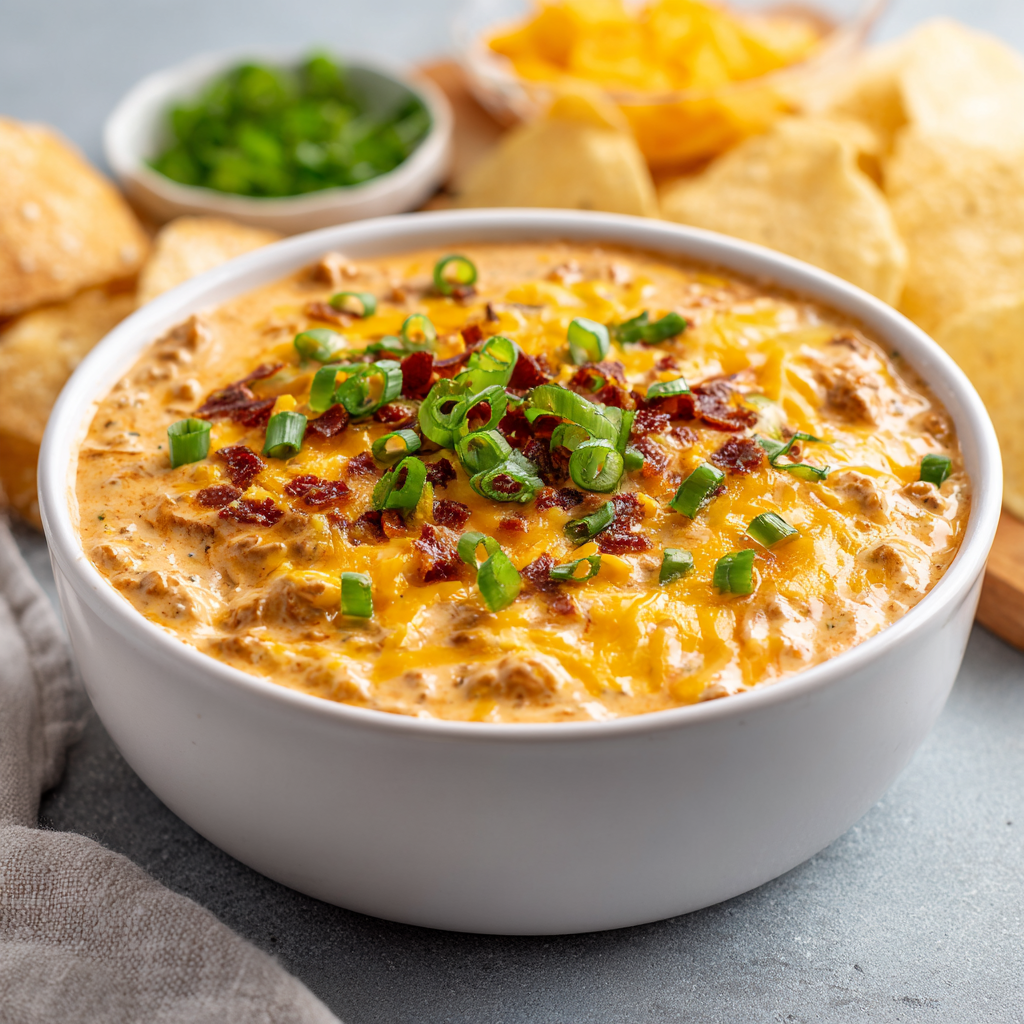
Quick and Easy Boat Dip : Creamy, Zesty, and Party-Ready
Quick and Easy Boat Dip: Your New Secret Weapon for Fun
Hey there, friend! Come on in, grab an apron (don’t worry, mine’s already got a few smudges), and let’s talk about one of life’s greatest pleasures: a truly epic, crowd-devoured dip. If your idea of a perfect snack involves creamy, zesty, and absolutely zero fuss, then you and I are about to become best kitchen confidantes. I’m talking about my legendary Quick and Easy Boat Dip. The name says it all—it’s the hero of lake days, the MVP of last-minute game nights, and the life of the party when friends show up unannounced (the best kind of friends, in my opinion).
What I love most about this recipe is its beautiful, beautiful simplicity. We’re talking 5 minutes, one bowl, and ingredients you probably already have doing a happy little dance in your fridge and pantry. No cooking, no complicated techniques, just a quick stir that results in pure magic. It’s creamy from the sour cream, tangy and gently spicy from the Rotel tomatoes, perfectly cheesy, and seasoned with that familiar, cozy taco flavor we all adore. This isn’t just a dip; it’s a conversation starter, a chip’s best friend, and your ticket to being deemed the “host with the most” without breaking a sweat. So, let’s make a mess, make some memories, and make a dip that’s guaranteed to disappear faster than you can say, “Wait, did you try that boat dip?”
From the Dock to the Dinner Party: A Dip’s Journey
This dip’s origin story is as casual and fun as the recipe itself. Picture this: a few summers back, we were packing for a long, sunny day on my uncle’s boat. The rule was everyone brings one thing. I, of course, volunteered for snack duty, but I’d spent the morning baking for the blog and had precisely zero time left. I did a frantic fridge forage and pulled out half a tub of sour cream, a bag of cheese, and a can of Rotel that had been hanging around. In a total “why not?” moment, I dumped them in a bowl, shook some taco seasoning over the top, gave it a stir, and threw it in the cooler.
Fast forward a few hours, anchored in a calm cove. I pulled out this hastily-mixed concoction with a bag of chips, slightly embarrassed next to the beautiful sandwiches and fruit skewers. But you know what happened? That container was scraped CLEAN. People were using chip fragments like little spoons to get every last bit. “What *is* this?!” “You have to give me the recipe!” The accidental dip was the star. That’s when I knew it had a permanent place in my repertoire. It’s proof that the best food isn’t about perfection; it’s about flavor, fun, and feeding the people you’re with, whether you’re on a boat or just dreaming of one.
Gathering Your Flavor Crew: Ingredients & Chef Insights
Here’s the dream team that makes this dip so irresistible. Each one plays a crucial role, and I’ve got some fun swaps and tips to make it your own!
- 1 cup sour cream: This is our creamy, tangy base. It creates the luxurious texture we’re after. Chef’s Insight: For a protein-packed, lighter twist, swap in full-fat plain Greek yogurt. It’s just as thick and tangy!
- 1 can (10 oz) Rotel Original Diced Tomatoes & Green Chilies, drained: The flavor MVP! It brings juicy tomato bits, a touch of vinegar tang, and a gentle, accessible heat. Chef’s Tip: DRAIN IT WELL. I give it a good press in the can’s lid or a small sieve. Less liquid means a thicker, more scoopable dip.
- 1 cup shredded sharp cheddar cheese: Salty, cheesy goodness that brings body and that classic melty flavor (even though we don’t melt it!). Chef’s Insight: Pre-shredded works in a pinch, but grating a block of cheddar yourself makes it melt into the dip more cohesively and tastes fresher.
- 2 tablespoons taco seasoning: Our flavor booster! It’s a instant blend of chili powder, cumin, garlic, and more. Chef’s Tip: Use your favorite store-bought packet or 2 tbsp of a homemade blend. Taste as you go—you can always add more!
- 2 tablespoons chopped green onions (plus more for garnish): The fresh finish! They add a necessary pop of color and a mild, oniony crunch that cuts the richness perfectly.
Let’s Make It! Your Foolproof, 5-Minute Roadmap
See? I told you this was easy. Let’s walk through it together. I’ll be right here with my spatula, sharing all my little kitchen hacks.
- The Flavor Foundation: In a medium mixing bowl, plop in your sour cream. Sprinkle the taco seasoning over the top. Now, take a spatula or spoon and stir, stir, stir until it’s completely smooth and that orangey seasoning is evenly distributed. No white streaks! This first step ensures every single bite is perfectly seasoned. Chef’s Hack: If you have time, let this mixture sit for 5 minutes before adding anything else. It lets the dried spices in the seasoning “bloom” a little in the fat of the sour cream, deepening the flavor.
- Add the Fun Mix-Ins: Time for texture! Grab your well-drained can of Rotel and gently fold it into the seasoned sour cream. “Folding” just means using a gentler motion to combine without crushing all the tomato pieces. Next, add your glorious pile of shredded cheese and the chopped green onions. Chef’s Hack: Reserve a small pinch of cheese and green onions for a pretty garnish on top later!
- Bring It All Together: Now, mix everything until it’s happily combined. You want little bursts of red tomato and green onion in every creamy, cheesy scoop. Don’t over-mix into a homogenous pink paste—a little variation is beautiful!
- The Patience Payoff (Optional, but Recommended): Okay, the hard part. If you can possibly wait, cover the bowl with plastic wrap and pop it in the fridge for at least 30 minutes. I know, I know! But this chill time lets the flavors get to know each other and mingle beautifully. The dip also firms up just a bit, making it the ideal scooping consistency. Chef’s Tip: If you’re truly in a “dip emergency,” it’s still delicious right away. But the wait is worth it!
- The Grand Finale: When you’re ready to serve, give it one last stir. Transfer it to a cute serving bowl, and sprinkle the top with those reserved green onions and a little extra cheese. It makes it look like you fussed (we’ll keep our secret).
Setting the Scene: How to Serve Your Masterpiece
Presentation is part of the fun! I love using a wide, shallow bowl so everyone can dive in easily. Place it right in the center of a big platter and surround it with an array of dippers. Sturdy, salty tortilla chips are the classic and perfect vehicle. But don’t stop there! Add some buttery crackers, crisp bell pepper strips, cucumber rounds, or thick slices of toasted baguette for variety. For a lake day or picnic, I simply put the whole storage container in the cooler with a bag of chips tucked alongside—easy, transportable, and always a hit.
Make It Your Own: Delicious Twists & Swaps
Once you’ve mastered the base, the world is your dip bowl! Here are a few of my favorite riffs:
- Fiesta Ranch Style: Swap the taco seasoning for a packet of dry ranch seasoning. It’s a cooler, herby twist that’s equally addictive.
- Spicy Southwest: Use Hot Rotel instead of Original, add a diced jalapeño (seeds removed if you’re wary of heat), and swap the cheddar for pepper jack cheese.
- Loaded “Baked Potato”: Add 1/2 cup of real crumbled bacon and swap 1/4 cup of the cheddar for grated parmesan. A drizzle of chive sour cream on top? Divine.
- Light & Lean: Use full-fat Greek yogurt, reduced-fat cheese, and load up the platter with every veggie you can find.
- Beefy Taco Dip: For a heartier version, brown 1/2 pound of ground beef with a pinch of salt, drain it well, let it cool, and fold it in with the other ingredients.
Olivia’s Notebook: Extra Bites of Wisdom
This recipe has evolved from that frantic boat day into my most-requested party staple. I’ve learned a few things along the way! First, the dip actually gets better on day two, so making it ahead is a fantastic strategy. Just hold the garnish until serving. Second, I once accidentally used a can of *undrained* Rotel and learned the hard way that a watery dip is a sad dip. Drain, drain, drain! And finally, don’t be afraid to double or even triple the batch for a big crowd. It scales up perfectly, and I’ve never, ever had leftovers. The biggest compliment is an empty bowl and a chorus of “Is there any more?”
Your Questions, Answered: Dip Dilemmas Solved
Q: My dip turned out a bit watery. What happened?
A: The most common culprit is not draining the Rotel well enough. Next time, really press the liquid out in a sieve or with the lid of the can. Also, make sure your sour cream is full-fat if possible; low-fat versions can sometimes release more moisture.
Q: Can I make this ahead of time?
A> Absolutely! In fact, I encourage it. Make it up to 24 hours in advance, cover tightly, and store it in the fridge. The flavors will meld and deepen beautifully. Just give it a good stir and add your fresh garnish right before serving.
Q: What can I use if I don’t have Rotel?
A> No problem! You can use a 10-oz can of plain diced tomatoes (well-drained) mixed with a 4-oz can of diced green chilies. You might want to add a tiny pinch of salt and a squeeze of lime juice to brighten it up.
Q: Help! I only have mild cheddar. How can I boost the flavor?
A> Great question. First, use sharp cheddar next time for a bigger punch. For now, try adding an extra tablespoon of taco seasoning, a pinch of garlic powder, or even a dash of smoked paprika to amp up the flavor profile.

Quick and Easy Boat Dip : Creamy, Zesty, and Party-Ready
Description
This 5-minute, no-cook dip is creamy, tangy, cheesy, and just a little zesty—the ultimate crowd-pleaser for game nights, lake days, or any snack attack.
Ingredients
-
1 cup sour cream (or full-fat Greek yogurt for a lighter twist)
-
1 can (10 oz) Rotel Original Diced Tomatoes & Green Chilies, drained
-
1 cup shredded sharp cheddar cheese
-
2 tbsp taco seasoning (store-bought or homemade)
-
2 tbsp chopped green onions, plus extra for garnish
Optional Twists:
-
Fiesta Ranch: Replace taco seasoning with ranch seasoning
-
Spicy Southwest: Use Hot Rotel, add 1 diced jalapeño, swap cheddar for pepper jack
-
Loaded Baked Potato: Fold in ½ cup crumbled bacon, swap ¼ cup cheddar for parmesan, top with chive sour cream
-
Light & Lean: Use Greek yogurt + reduced-fat cheese + extra veggies
-
Beefy Taco Dip: Fold in ½ lb cooked ground beef
Instructions
-
Mix the Base: In a medium bowl, combine sour cream and taco seasoning. Stir until smooth and evenly blended. Optional: let sit 5 minutes to bloom the spices.
-
Add Mix-Ins: Gently fold in drained Rotel, shredded cheddar, and chopped green onions. Reserve a pinch of cheese and onions for garnish.
-
Chill (Optional but Recommended): Cover and refrigerate at least 30 minutes for flavors to meld.
-
Serve: Stir once more, transfer to a serving bowl, and top with reserved cheese and green onions. Surround with tortilla chips, crackers, or veggies for dipping.
Notes
-
Watery Dip? Drain Rotel well, and use full-fat sour cream.
-
Make Ahead: Mix up to 24 hours in advance; garnish right before serving.
-
No Rotel? Use diced tomatoes + diced green chilies; add a pinch of salt and a squeeze of lime.
-
Mild Cheddar? Boost flavor with extra taco seasoning, garlic powder, or smoked paprika.
Quick Nutritional Snapshot
Please note: This is an approximate estimate per serving (based on 8 servings), calculated using full-fat sour cream and cheddar. Values will change with substitutions.
- Calories: ~120
- Protein: 4g
- Carbohydrates: 4g
- Fat: 9g
- Fiber: 1g
- Sodium: 310mg
Final Thoughts
Let’s be honest: the best recipes aren’t about complexity—they’re about connection. This Quick and Easy Boat Dip proves that the most memorable moments often come from the simplest creations. It’s a humble bowl of joy that turns strangers into friends, quiet gatherings into lively parties, and any ordinary day into a little celebration.
Whether you’re on a sun-drenched boat, hosting a last-minute game night, or simply treating yourself to a delicious snack, this dip is your trusty sidekick. It asks for so little—just five minutes and a willingness to share—and gives back so much: laughter, compliments, and the satisfied silence of people happily dipping away.
So here’s to the unplanned moments, the fridge-forage victories, and the magic that happens when good food meets good company. May your chips be sturdy, your dip bowl always within reach, and your gatherings filled with the kind of easy joy this recipe represents.
Now, grab that bowl and start stirring. Your secret weapon for fun is ready.

Butter Swim Biscuits : Ultra Buttery & Fluffy Southern-Style Treats
Butter Swim Biscuits: Your New Favorite Recipe for Unspeakably Good, Buttery Comfort
Hey there, friend! Come on in, pull up a stool, and let’s talk about one of life’s simplest, most profound joys: a warm, freshly baked biscuit. Not just any biscuit, though. I’m talking about the kind of biscuit that makes you close your eyes and sigh with the first buttery, flaky bite. The kind that requires zero fancy equipment, zero rolling-pin acrobatics, and absolutely zero stress. I’m so excited to share with you the magic of Butter Swim Biscuits.
If you’ve never heard of them, the name says it all. These glorious, Southern-style biscuits quite literally take a swim in a pool of melted butter before they hit the oven’s heat. It sounds decadent (and, okay, it totally is), but it’s also a stroke of sheer genius. This method gifts you with the most incredible contrast of textures: a shatteringly crisp, golden-brown crust that gives way to a cloud-soft, fluffy, and richly flavored interior. Every single square is infused with that unmistakable, heavenly butteriness.
I promise you, this is the biscuit recipe that will change your game. It’s for the nights you’re whipping up a pot of chili, the mornings you’re hosting a lazy brunch, and every single time you need a warm hug from the oven. So, tie on that apron, and let’s make something unforgettable together. Trust me, your kitchen is about to smell like a dream.
The Biscuit That Started It All: A Memory From My Grandma’s Table
My love affair with biscuits didn’t start in a fancy cooking class. It began at my Grandma Eleanor’s linoleum-topped kitchen table, dusted with a perpetual sprinkle of flour. She was a woman of few words but immense culinary warmth, and her biscuits were legendary. They were tall, flaky, and required a patience I, as a fidgety kid, just didn’t have. I’d watch, mesmerized, as she worked the cold butter into the flour with her swift, knowing hands.
Years later, when I stumbled upon the concept of “butter swim” biscuits, it felt like a revelation. It was the antithesis of Grandma’s meticulous method—wildly simple, almost reckless in its butter commitment. I was skeptical. Could something so easy really deliver? I tried it one rainy Sunday, and the moment I pulled that pan from the oven—seeing those biscuits puffed high, golden, and swimming in a bubbling, fragrant butter moat—I was transported right back to that linoleum table. The smell was identical: toasty, buttery, loving. While the technique was different, the soul was the same. It was a hug in food form. This recipe became my bridge between honoring the past and embracing the joyful simplicity of modern home cooking. It proved that incredible flavor doesn’t have to be complicated; sometimes, it just needs to take a good, long swim in butter.
Gathering Your Cast of Characters (It’s a Short & Sweet List!)
Part of the beauty of this recipe is its short, pantry-friendly ingredient list. Each one plays a crucial role in creating biscuit magic. Here’s what you’ll need:
- 2 ½ cups all-purpose flour – The foundation. I use regular, unbleached all-purpose flour for the perfect balance of structure and tenderness. For a slightly more robust flavor, you can swap in ½ cup of whole wheat pastry flour, but stick mostly to AP for that classic fluffy texture.
- 1 tablespoon baking powder – This is our primary leavening agent, the little miracle worker that makes our biscuits rise sky-high without any yeast. Make sure yours is fresh! If it’s been in the pantry for over a year, it may have lost its oomph.
- 1 tablespoon granulated sugar – Just a touch! It’s not for sweetness, really, but to help with browning and to balance the tang of the buttermilk. It creates that perfect golden top.
- 1 teaspoon salt – Non-negotiable. Salt is the flavor enhancer that makes the butter and flour sing. I use fine sea salt. If you only have table salt, you might use a scant teaspoon.
- 1 ¾ cups buttermilk – The secret to tenderness and tang. The acid in buttermilk reacts with the baking powder for maximum lift and gives that iconic flavor. Chef’s Hack: For the best rise, use it cold straight from the fridge. No buttermilk? No panic! Make a quick “soured milk” by adding 1 tablespoon of white vinegar or lemon juice to a liquid measuring cup, then filling it to the 1 ¾ cup line with regular milk. Let it sit for 5 minutes until it curdles slightly.
- ½ cup (1 stick) unsalted butter, melted – The star of the show, the swimming pool itself! I prefer unsalted so I can control the salt level. Melt it gently—you don’t want it boiling or browning. This butter is going to create that incredible crispy, flavorful crust and rich interior.
Let’s Make Some Magic: Step-by-Step to Biscuit Heaven
Ready? This is where the fun happens. Preheat your oven to a hot 450°F (232°C). That high heat is key for the initial explosive rise and beautiful color.
- Mix the Dry Team. In a large mixing bowl, whisk together the flour, baking powder, sugar, and salt. I mean really whisk it! You want those leaveners and salt completely distributed throughout the flour. This ensures every bite is even and perfect. No one wants a pocket of baking powder, trust me.
- Bring in the Buttermilk. Make a well in the center of your dry ingredients and pour in that cold buttermilk. Now, with a sturdy wooden spoon or a rubber spatula, gently stir until just combined. I’ll say it again: JUST COMBINED. The batter will be wet, lumpy, and shaggy—that’s exactly what you want. Over-mixing is the enemy of tender biscuits; it develops the gluten and makes them tough. A few dry streaks are totally fine. Walk away from the spoon!
- Prepare the Butter Pool. Take your 8×8-inch baking dish (glass or metal both work great) and pour in the melted butter. Swirl it around so it coats the bottom evenly. See that pool? That’s your ticket to flavor town.
- The Big Plunge. Here’s the fun part. Spoon the thick, shaggy dough right on top of the melted butter. I do it in 9 roughly equal dollops to make spreading easier. Then, using the back of your spoon or a small offset spatula, gently nudge and spread the dough to the edges of the pan. Don’t press down hard or compact it; you’re just coaxing it into an even layer. It’s okay if some butter pools up around the edges—that’s the whole point!
- Score the Dough. Take a sharp knife or a bench scraper and score the dough into 9 squares. You’re not cutting all the way through to the bottom of the pan—just making guide marks about halfway down. This does two things: it gives the biscuits a “break here” line for serving, and it allows heat to penetrate more evenly during baking for a more uniform rise.
- Bake to Golden Perfection. Carefully slide the pan into your preheated oven. Now, resist the urge to open the door! Let the magic happen for 20-25 minutes. You’ll know they’re done when the tops are a deep, gorgeous golden brown, and the edges are crispy and pulling away from the sides of the pan. Your kitchen will smell absolutely incredible.
- The (Brief) Patience Test. When you pull them out, you’ll see that beautiful butter still bubbling around the biscuits. Let the pan rest on a wire rack for 5-10 minutes. This allows the biscuits to reabsorb some of that surface butter, making them impossibly moist, and lets them set just enough so you can lift them out cleanly.
How to Serve These Buttery Beauties
Getting these from pan to plate is a joyful, delicious event. Use a spatula to lift out each square, letting any excess butter drip back into the pan. I love serving them in a warm basket lined with a tea towel. They are the ultimate sidekick to a big bowl of soup, stew, or chili, where they’re perfect for sopping up every last drop. For brunch, they’re divine split and topped with sausage gravy, jam, or honey. Honestly, one of my favorite ways is all on its own, still warm, with just a tiny extra smear of butter. Pure bliss.
Make It Your Own: Delicious Twists & Swaps
Once you’ve mastered the classic, try playing with flavors! Here are a few of my favorite riffs:
- Herb & Garlic: Whisk 1 teaspoon of garlic powder and 2 tablespoons of finely chopped fresh herbs (chives, rosemary, or thyme) into the dry ingredients.
- Cheesy Pull-Apart: Fold 1 cup of shredded sharp cheddar cheese into the dough with the buttermilk. Sprinkle another ¼ cup on top before baking for a cheesy crust.
- Everything Bagel: After spooning the dough into the butter, sprinkle the top generously with everything bagel seasoning before scoring and baking.
- Sweet Cinnamon Swirl: Mix ¼ cup sugar with 1 tablespoon cinnamon. After spreading the dough in the pan, sprinkle this mixture evenly over the top and swirl it lightly with a knife before scoring.
- Dairy-Free: Use a plant-based milk + vinegar “buttermilk” and a high-quality vegan butter stick. The texture will be slightly different but still delicious!
Olivia’s Kitchen Notes & Stories
This recipe has become a staple in my home, and it’s evolved in the funniest ways. The first time I made it, I was so nervous about the amount of butter that I actually *reduced* it. Big mistake. The biscuits were… fine. They were *cute*. But they weren’t the transcendent, crispy-edged wonders they were meant to be. I learned my lesson: you must commit to the swim! Trust the process.
I also have a favorite kitchen fail story. Once, I was chatting away with a friend while making these and accidentally used baking soda instead of baking powder. The result was biscuits that tasted… metallic and weirdly flat. We still ate them (because butter), but it was a powerful lesson in paying attention to your labels! Now, I always do the “sniff test” – baking powder is neutral, baking soda has a distinct smell. Little checks make a big difference!
Your Questions, Answered: FAQ & Troubleshooting
Q: My biscuits are dense and didn’t rise much. What happened?
A: The most common culprits are old baking powder (it loses potency over time) or over-mixing the dough. Remember, mix just until the flour disappears! Also, ensure your oven is fully preheated. That initial blast of heat is crucial for the rise.
Q: Can I make the dough ahead of time?
A: For the best results, I recommend mixing and baking immediately. The reaction between the cold buttermilk and baking powder starts right away. If you let the batter sit, you’ll get less rise. However, you can mix the dry ingredients the night before to save a step in the morning!
Q: The bottom seems overly greasy. Did I do something wrong?
A> Not necessarily! Some butter will always remain in the pan—that’s normal. The 5-10 minute rest after baking is vital for the biscuits to absorb some of that surface butter. If it still seems excessive, you can gently lift each biscuit and place it on a piece of paper towel for a moment before serving.
Q: Can I use a different size pan?
A: An 8×8 is ideal. A 9-inch round cake pan will work, but the biscuits will be slightly thinner. A 9×13 would make them too thin and they’d bake too quickly. Stick to 8×8 for the perfect thick, fluffy square.

Butter Swim Biscuits : Ultra Buttery & Fluffy Southern-Style Treats
Description
These biscuits are pure comfort: golden, flaky, buttery, and ridiculously easy. The trick? They literally swim in melted butter before baking, creating a crisp exterior and a cloud-soft, tender interior. Perfect with soups, chili, brunch, or just a slab of butter on top.
Ingredients
-
2 ½ cups all-purpose flour (or 2 cups AP + ½ cup whole wheat pastry flour)
-
1 tbsp baking powder (fresh!)
-
1 tbsp granulated sugar
-
1 tsp salt
-
1 ¾ cups cold buttermilk (or milk + 1 tbsp vinegar/lemon juice)
-
½ cup (1 stick) unsalted butter, melted
Optional Twists:
-
Herbs & Garlic: 1 tsp garlic powder + 2 tbsp fresh chopped herbs
-
Cheesy Pull-Apart: Fold in 1 cup shredded cheddar + sprinkle ¼ cup on top
-
Everything Bagel: Sprinkle seasoning on top before scoring
-
Sweet Cinnamon Swirl: ¼ cup sugar + 1 tbsp cinnamon, lightly swirled on top
-
Dairy-Free: Plant milk + vinegar “buttermilk” and vegan butter
Instructions
-
Preheat Oven: 450°F (232°C). Use an 8×8-inch pan.
-
Mix Dry Ingredients: Whisk flour, baking powder, sugar, and salt until evenly combined.
-
Add Buttermilk: Pour cold buttermilk into the center and stir gently just until combined. The batter should be wet and shaggy—some streaks of flour are fine.
-
Prepare Butter Pool: Pour melted butter into the pan, swirling to coat evenly.
-
Spoon & Spread: Drop 9 dollops of dough into the butter. Using a spoon or spatula, gently spread to the pan edges. Some butter pooling at the edges is perfect!
-
Score the Dough: Lightly mark the dough into 9 squares without cutting all the way through.
-
Bake: 20–25 minutes, until tops are deep golden brown and edges pull slightly from the pan.
-
Rest: Let biscuits sit 5–10 minutes to reabsorb butter and firm up.
Notes
-
Dense biscuits: Check baking powder freshness, don’t over-mix, ensure oven is preheated.
-
Bottom too greasy: Rest for 5–10 minutes; excess butter is normal.
-
Make-ahead: Mix dry ingredients the night before, add buttermilk and bake immediately for best rise.
-
Pan size: 8×8 is ideal; smaller = thicker, larger = thinner.
Nutritional Information (Per Biscuit)
This is a treat, through and through! Approximate values per biscuit (based on 9 biscuits):
Calories: 260 | Fat: 16g | Saturated Fat: 10g | Carbohydrates: 26g | Protein: 4g | Sodium: 430mg | Sugar: 2g
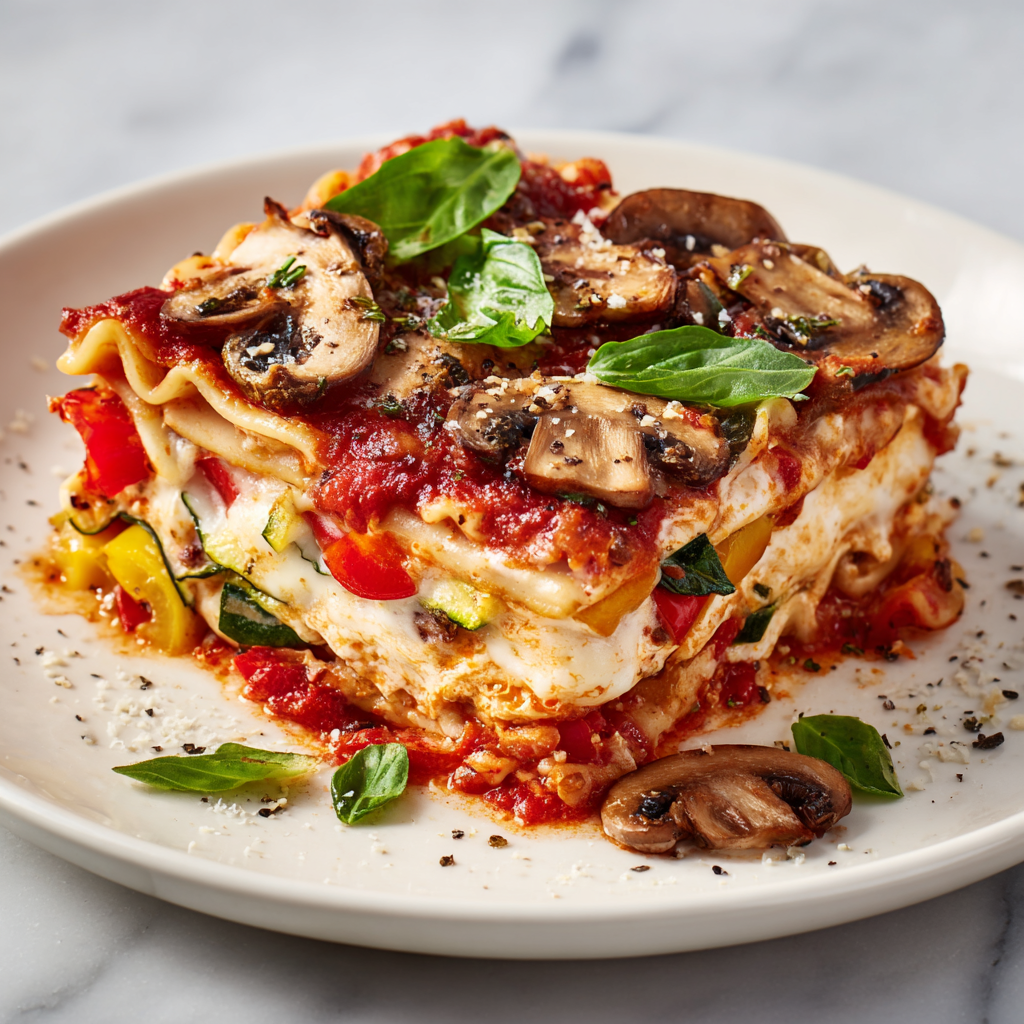
Vegetarian Lasagna with Layers of Flavor : A Meatless Classic
The Coziest Slice of Comfort: Your New Go-To Vegetarian Lasagna
Hey there, friend! Come on in, pull up a stool, and let’s talk about one of life’s greatest edible hugs: a truly spectacular vegetarian lasagna. I’m Olivia, and if there’s one thing I know for sure, it’s that a bubbling, golden-topped pan of lasagna has this magical power to gather people, soothe souls, and turn any ordinary Wednesday into a tiny celebration. You know the scene – the incredible aroma of tomatoes and herbs wafting from the oven, the promise of oozy, stretchy cheese, and that first perfect square you slide onto a plate, layers holding together just so.
Now, I hear you. “Lasagna? That’s a project.” But trust me, this isn’t about culinary gymnastics. This is about layering love, quite literally. We’re ditching the meat but doubling down on deep, satisfying flavor with a garden’s worth of vibrant veggies, creamy ricotta, and a rich, garlicky marinara. This vegetarian lasagna recipe is my love letter to cozy cooking – it’s nourishing, impressively delicious, and proof that meatless meals can be the undisputed star of the dinner table. Whether you’re feeding a hungry family, prepping meals for the week, or needing a show-stopping dish to bring to a potluck, this layered masterpiece has got your back. So, tie on that apron (messy is totally welcome here), and let’s build something beautiful together.
More Than Layers: A Pan Full of Memories
This recipe always takes me right back to my Nonna’s warm, always-slightly-floury kitchen. She was a lasagna purist – her meaty, hours-simmered ragù version was legendary. When I first told her I was exploring vegetarian cooking, she patted my hand and said, “Cara, if there’s no meat, what’s the point?” Talk about a challenge! I spent months trying to create a version that would even get a nod of approval from her. The breakthrough came one summer when my garden was overflowing with zucchini and basil. I loaded a lasagna with every fresh vegetable I had, focusing on texture and savory depth. When Nonna took her first bite, she was quiet for a moment (agonizing for me!). Then she smiled, that knowing twinkle in her eye. “Okay,” she said. “This… this has a point.” It wasn’t her lasagna, but it had become unmistakably mine – a dish that celebrated abundance, seasonality, and the simple joy of sharing a full, flavorful plate. Now, every time I layer the noodles and cheese, I think of that garden bounty and her hard-won smile.
Gathering Your Flavor Builders
Here’s where the magic starts! These ingredients are all about building layers of texture and taste. Don’t stress about exact measurements – cooking is about feeling, too!
- 9 lasagna noodles (regular or oven-ready): The foundation! I often use regular noodles and boil them just shy of al dente (they’ll finish cooking in the oven). Chef’s Insight: If you’re using oven-ready, just make sure your sauce layers are a little saucier to hydrate them.
- 2 cups marinara sauce: Your flavor backbone. Use a good-quality jarred sauce to save time, or your favorite homemade recipe. Substitution Tip: A simple can of crushed San Marzano tomatoes seasoned with salt, garlic, and a pinch of red pepper flakes works beautifully too!
- 1 tbsp olive oil: For sautéing our veggie dream team.
- 1 zucchini, sliced thin: Adds a lovely, mild sweetness and structure. Slice it on a slight angle for pretty, elongated pieces.
- 1 cup mushrooms, sliced: Our secret weapon for that “meaty,” umami depth. Cremini or baby bellas are perfect here.
- 1 red bell pepper, chopped: Brings a pop of color and a subtle, sweet smokiness.
- 2 cups fresh spinach: It wilts down to almost nothing, sneaking in gorgeous color and nutrients. Chef’s Insight: Roughly chop it after wilting for easier layering!
- 1½ cups ricotta cheese: The creamy, dreamy layer. Look for whole-milk ricotta for the best flavor and texture.
- 1½ cups shredded mozzarella: For that iconic, stretchy, golden melt. I like to shred a block myself – it melts far better than pre-shredded (which has anti-caking agents).
- ½ cup grated parmesan: The salty, nutty flavor booster. Freshly grated Parmigiano-Reggiano is worth every penny.
- 1 egg: The binder for our ricotta layer, helping it stay firm and sliceable.
- 2 cloves garlic, minced: Because… well, garlic. Is anything truly cozy without it?
- ½ tsp dried oregano: That classic Italian herb flavor. Rubbing it between your palms before adding wakes up the oils!
- Salt & pepper to taste: Your most important tools. Season each layer as you build.
- Fresh basil (optional, for garnish): The fresh, aromatic finish that makes it look and taste like a restaurant dish.
Let’s Build Your Masterpiece: Step-by-Step
Step 1: Preheat & Prep. Fire up your oven to 375°F (190°C). This is our target for cheesy, bubbly perfection. Grab your favorite 9×13 inch baking dish – no need to grease it, the sauce will handle that.
Step 2: Sauté the Veggie Symphony. In a large skillet, heat the olive oil over medium heat. Add the garlic and let it sizzle for just 30 seconds until fragrant – don’t let it brown! Toss in the zucchini, mushrooms, and bell pepper. We’re not just softening them; we’re concentrating their flavors. Sauté for 7-8 minutes until they’re tender and any liquid from the mushrooms has evaporated. Chef’s Hack: This step is KEY to avoiding a watery lasagna! Now, add the massive pile of spinach and a pinch of salt. It will wilt down dramatically in about a minute. Stir in the oregano, give it one last taste for seasoning, then set this colorful mix aside.
Step 3: Create the Creamy Ricotta Heart. In a medium bowl, combine the ricotta, egg, half of the parmesan (save the rest for the top!), a good pinch of salt, and a few cracks of black pepper. Mix it until it’s smooth and homogenous. This creamy, cheesy mixture is going to be our luxurious separator between the noodles and veggies.
Step 4: The Joyful Layering Process. This is the fun, therapeutic part! Spread about ½ cup of marinara sauce thinly over the bottom of your baking dish. This prevents sticking and starts the flavor party. Place 3 noodles side-by-side to create your first layer. Now, dollop and spread half of the ricotta mixture over the noodles. Follow with half of your sautéed veggie mix, then sprinkle over a handful of mozzarella. That’s one complete layer! Repeat: sauce, noodles, the remaining ricotta, the remaining veggies, more mozzarella. For your final layer, top with the last 3 noodles, spread the remaining sauce evenly over top (make sure the noodle edges are covered so they don’t dry out!), and finish with the last of the mozzarella and that reserved parmesan. Chef’s Tip: Don’t press down too hard as you build. Let those layers stay fluffy!
Step 5: Bake to Golden, Bubbly Bliss. Cover the dish tightly with aluminum foil. This creates a steamy environment that cooks the noodles and melds the flavors without over-browning the cheese. Bake for 25 minutes. Then, carefully remove the foil (steam alert!), and bake for another 15-20 minutes, until the top is beautifully spotted with gold and the sauce is bubbling around the edges.
Step 6: The Crucial Rest. I know, the temptation is REAL. But please, let the lasagna rest on a cooling rack for at least 10-15 minutes before you cut into it. This allows the layers to set, ensuring you get those clean, photogenic squares instead of a delicious but sloppy pile. Use this time to tear up some fresh basil for garnish!
Serving Up the Cozy
Slide a spatula under a generous square and lift it onto a warm plate. That cross-section of red, white, and green is your reward! I love serving this with a simple, crisp green salad dressed with a bright lemon vinaigrette to cut through the richness. A chunk of crusty garlic bread is never a wrong answer for sauce-mopping, either. For a true family-style vibe, just plop the baking dish right in the center of the table, hand everyone a fork (kidding… mostly), and watch it disappear.
Make It Your Own: Creative Twists
- Pesto Swirl: Swap one cup of marinara for a cup of basil pesto. Layer it with the sauce or swirl it into the ricotta mix for a herby punch.
- Roasted Veggie Power: Instead of sautéing, toss the zucchini, pepper, and mushrooms with oil, salt, and pepper and roast at 400°F until caramelized for deeper flavor.
- Spinach & Artichoke: Replace the veggie mix with a thawed, squeezed box of frozen chopped spinach and a can of chopped artichoke hearts mixed right into the ricotta.
- Gluten-Free/Dairy-Smart: Use your favorite GF noodles. For dairy-free, try a firm tofu ricotta (blend crumbled tofu with nutritional yeast, lemon, and salt) and vegan mozzarella shreds.
- Extra Protein Boost: Stir a cup of cooked brown lentils or plant-based crumbles into your marinara sauce.
Olivia’s Kitchen Notes
This recipe is a living, breathing thing in my kitchen! I’ve made it in a hundred tiny ways over the years. Once, I accidentally used wonton wrappers because I was out of noodles (surprisingly delicious in a pinch, but not recommended for the purists!). Another time, I added too much spinach and it turned into The Incredible Hulk lasagna – still tasty. The biggest evolution has been in the veggie prep; I used to just layer them in raw, but sautéing first is the absolute game-changer for texture and preventing a soggy bottom. Don’t be afraid to play with the seasons – butternut squash and sage in the fall, asparagus and leeks in the spring. It’s your canvas!
Your Lasagna Questions, Answered
Q: My lasagna always turns out watery. What am I doing wrong?
A: The most common culprit is excess moisture from the vegetables. Sautéing them as directed drives off that liquid. Also, make sure your ricotta isn’t overly wet (draining it in a fine-mesh strainer for 10 minutes can help). Letting it rest before slicing is non-negotiable for letting everything set up!
Q: Can I assemble this ahead of time?
A: Absolutely! Assemble the whole thing, cover tightly, and refrigerate for up to 24 hours. When you’re ready, you may need to add 5-10 minutes to the bake time since it’s starting from cold. You can also freeze the unbaked lasagna for up to 3 months. Thaw in the fridge overnight before baking.
Q: Do I HAVE to boil the noodles if I’m not using oven-ready?
A: For traditional noodles, I recommend boiling them for about 2-3 minutes LESS than the package says for al dente. They’ll finish cooking in the saucy oven environment. If you use them completely raw, they’ll soak up too much sauce and might still be too firm.
Q: The top isn’t browning enough after I remove the foil.
A> No worries! Crank your oven to broil for the last 2-3 minutes, but WATCH IT LIKE A HAWK. It can go from golden to charcoal in seconds. Also, ensure your top cheese layer is generous – more cheese = better browning.
Vegetarian Lasagna with Layers of Flavor : A Meatless Classic
Description
Hey there! This vegetarian lasagna is the ultimate comfort food: layers of tender noodles, sautéed veggies, creamy ricotta, and melty mozzarella, all wrapped in a garlicky marinara. It’s warm, satisfying, and perfect for family dinners, meal prep, or a cozy night in.
Ingredients
-
9 lasagna noodles (regular or oven-ready)
-
2 cups marinara sauce (store-bought or homemade)
-
1 tbsp olive oil
-
1 zucchini, sliced thin
-
1 cup mushrooms, sliced
-
1 red bell pepper, chopped
-
2 cups fresh spinach
-
1½ cups ricotta cheese
-
1½ cups shredded mozzarella
-
½ cup grated parmesan, divided
-
1 egg
-
2 cloves garlic, minced
-
½ tsp dried oregano
-
Salt & pepper to taste
-
Fresh basil, for garnish (optional)
Instructions
-
Preheat Oven: Set to 375°F (190°C). Use a 9×13 inch baking dish.
-
Sauté Veggies: Heat olive oil in a skillet. Add garlic, then zucchini, mushrooms, and bell pepper. Cook 7–8 minutes until tender. Add spinach and a pinch of salt; wilt about 1 minute. Stir in oregano, taste, and adjust seasoning.
-
Mix Ricotta Layer: In a bowl, combine ricotta, egg, half of parmesan, salt, and pepper. Stir until smooth.
-
Layer the Lasagna:
-
Spread ½ cup marinara on the dish bottom.
-
Layer 3 noodles, half the ricotta, half the veggies, and a sprinkle of mozzarella.
-
Repeat: noodles, ricotta, veggies, mozzarella.
-
Top with remaining noodles, sauce, mozzarella, and reserved parmesan.
-
-
Bake: Cover with foil, bake 25 minutes. Remove foil and bake another 15–20 minutes until top is golden and sauce bubbles.
-
Rest & Serve: Let lasagna rest 10–15 minutes before slicing. Garnish with fresh basil if desired. Serve with a side salad or garlic bread.
Notes
-
Lasagna gets watery? Likely from excess veggie moisture—sauté them first.
-
Make-ahead: Assemble and refrigerate up to 24 hours; add a few minutes to bake. Freeze unbaked lasagna up to 3 months.
-
Noodles: Boil regular noodles 2–3 minutes less than package instructions for al dente.
Nutritional Information (Per Serving)
Calories: 370 | Protein: 19g | Carbohydrates: 34g | Fat: 18g | Saturated Fat: 8g | Cholesterol: 70mg | Sodium: 680mg | Fiber: 4g | Sugar: 6g
Prep Time: 20 minutes | Cook Time: 40 minutes | Total Time: 1 hour | Category: Main Course | Method: Baking
Final Thoughts: The Coziest Slice of Comfort
There you have it—a pan full of layered love, ready to transform your kitchen into the heart of the home. This vegetarian lasagna isn’t just a recipe; it’s an edible embrace, a reminder that the most satisfying meals are often the ones built slowly, with care and attention to every colorful, flavorful layer.
Whether you’re cooking for a crowd, meal prepping for the week ahead, or simply craving a nourishing dinner that feels like a celebration, this lasagna delivers. It’s proof that vegetarian cooking can be deeply comforting, richly flavorful, and utterly crave-worthy—no compromises needed.
So the next time you’re in need of a culinary hug, remember this: great food isn’t about perfection. It’s about the sizzle of garlic in the pan, the vibrant colors of fresh veggies, the joy of layering, and the shared silence around the table as everyone takes that first, perfect bite. It’s about creating your own version, with your favorite seasonal twists, and maybe even earning your own version of Nonna’s nod of approval.