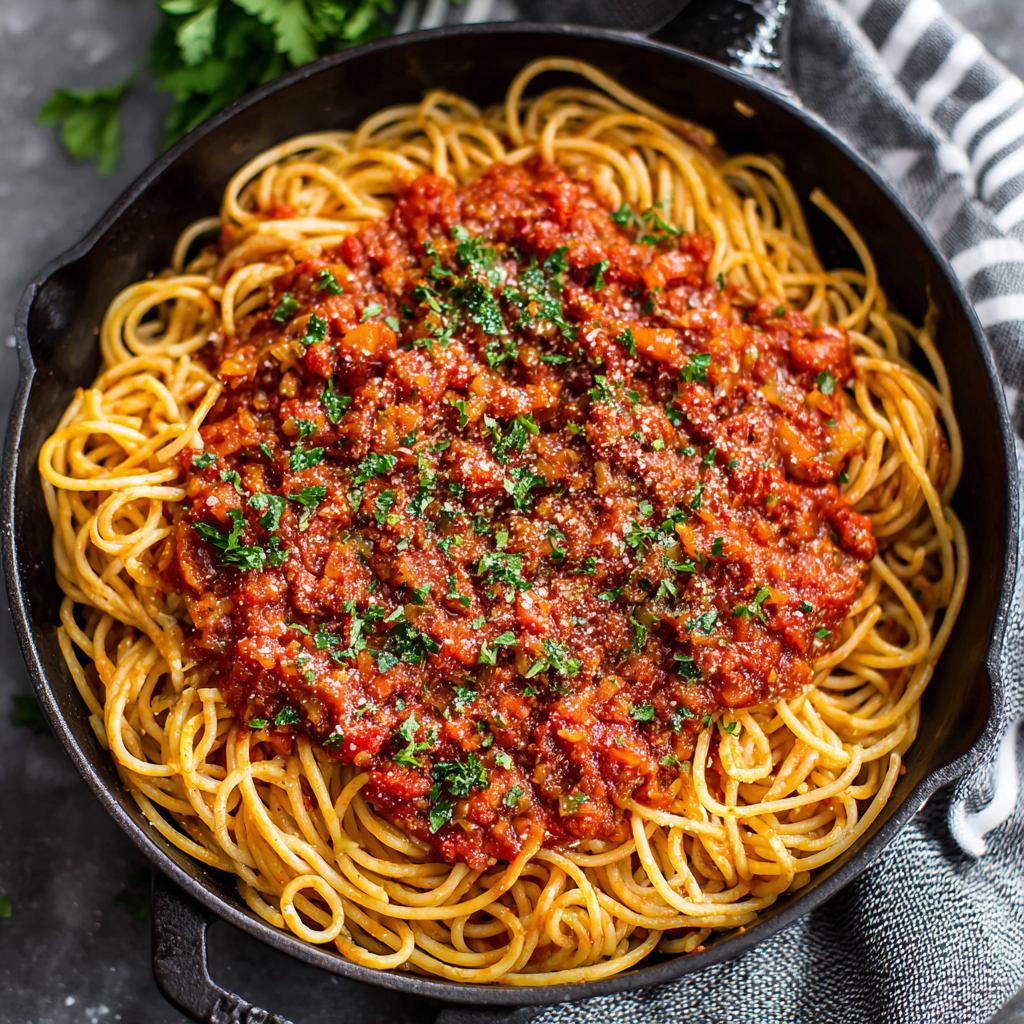
Homemade Spaghetti Sauce: The Ultimate Cozy, Flavor-Packed Recipe
Hey friends, Olivia here! Can we just take a moment to appreciate the magic of a truly great spaghetti sauce? That incredible, soul-warming smell that starts with a sizzle of onions and garlic and ends with a pot of rich, ruby-red sauce simmering on your stovetop. It’s the soundtrack to a perfect pasta night, the hero of a weeknight dinner, and the secret handshake of home cooks everywhere.
But let’s be real for a second. For years, I thought the “from scratch” version was a full-day affair, reserved for nonnas and chefs with endless time. I’d reach for a jar, feeling a tiny pang of “I could do better.” And then, one snowy Sunday, I did. I gathered a handful of simple, wholesome ingredients, turned on some music, and gave it a go. What happened in that pot? Pure alchemy. The flavor was so much deeper, brighter, and more real than anything I’d unscrewed from a jar. And the best part? It wasn’t complicated at all.
This recipe is my love letter to that moment. It’s my go-to, my forever sauce, the one I make in big batches so I always have a taste of home in my freezer. It’s classic, healthy, and bursting with flavor, but it’s also incredibly approachable. You don’t need fancy skills or all afternoon. You just need a good pot and a desire to create something wonderful. This sauce turns simple spaghetti into a celebration, a loaf of crusty bread into a vehicle for joy, and your kitchen into the coziest room in the house. So, tie on your apron (messy is encouraged!), and let’s make something unforgettable together.
The Sauce That Started It All: A Kitchen Memory
My obsession with this sauce has roots in a slightly chaotic, utterly perfect childhood memory. Picture me, about eight years old, standing on a wobbly step-stool in my grandma’s kitchen. The counters were a battlefield of tomato-splattered spoons and onion skins. The air was thick with the scent of garlic and dried oregano, a smell I now equate with pure love.
Grandma wasn’t measuring anything. She’d toss a glug of oil into her ancient, well-loved pot, and the dance would begin. “Listen to the onion, Livvy,” she’d say, as they sizzled. “When they get quiet and sweet, they’re ready for the garlic.” She’d let me stir the tomato paste, watching it caramelize and darken, calling it “giving it a little tan.” To my young mind, it was witchcraft. She’d hand me the wooden spoon for the long, lazy simmer, teaching me that patience wasn’t just a virtue—it was the main ingredient.
That sauce wasn’t just dinner; it was the centerpiece of our family Sunday. It meant cousins crowded around the table, laughter bouncing off the walls, and the profound comfort of being fed by someone who loved you. This recipe is my homage to that feeling. It’s streamlined for our busy lives but holds onto that essential, slow-simmered soul. Every time I make it, I’m back on that step-stool, learning that the best food isn’t about perfection. It’s about presence, patience, and sharing the delicious results with the people you love.
Your Flavor Toolkit: Ingredients & Why They Matter
Great flavor starts with understanding your ingredients. Here’s exactly what you’ll need and why each one plays a starring role. I’ve also included my favorite swaps and chef secrets!
- 2 tablespoons extra virgin olive oil: This is our flavor foundation. Extra virgin has a fruitier, more robust taste than regular olive oil, which adds depth right from the start. Chef’s Tip: If you’re out, any neutral oil like avocado or even butter works in a pinch!
- 1 medium onion, finely diced: Onions are the sweet, aromatic base of almost every great sauce. Finely dicing them ensures they melt beautifully into the sauce. Substitution: A large shallot or two works wonderfully for a milder, slightly sweeter flavor.
- 4 cloves garlic, minced: The aromatic heartthrob! Fresh is non-negotiable here—it provides a pungent, fragrant kick that powdered garlic just can’t match. Chef’s Insight: Don’t add it with the onions! Garlic burns fast. We add it later to keep its flavor bright and potent.
- 28 oz can crushed tomatoes: The star of the show! Look for a brand with no added sugar or citric acid—just pure tomatoes. Crushed tomatoes give us the perfect saucy texture straight from the can. Chef’s Secret: I often give the can a good shake or stir before opening to blend any separated liquid.
- 2 tablespoons tomato paste: This is our flavor concentrate. It adds a rich, intense tomatoey depth and helps thicken the sauce. We’ll “cook it out” to mellow its raw taste.
- 1 teaspoon each dried oregano & basil: The classic Italian herb duo. Dried herbs are perfect here because their flavor stands up to and infuses the long simmer. Pro Tip: Rub them between your palms as you add them to wake up their oils!
- ½ teaspoon salt & ¼ teaspoon black pepper: Season as you go! Salt enhances all the other flavors. We start with this amount and adjust at the end.
- Pinch of red pepper flakes (optional): Just a pinch adds a gentle, warming heat in the background. It’s my not-so-secret weapon for a more complex sauce.
- 1 teaspoon sugar or 2 tablespoons grated carrot (optional): This is your “balance” button. If your tomatoes are a bit sharp or acidic, a tiny bit of sugar or the natural sweetness of grated carrot (which melts right in!) can smooth everything out perfectly.
- Fresh basil or parsley, chopped (optional): The finishing flourish! A sprinkle of fresh herbs added right before serving brings a vibrant, garden-fresh aroma that ties the whole dish together.
Let’s Get Cooking: Step-by-Step Instructions
Ready to create some magic? Follow these steps, and you’ll have a sauce that’ll make your house smell like an Italian trattoria.
Step 1: Build Your Flavor Base. Heat the olive oil in a large, heavy-bottomed saucepan or Dutch oven over medium heat. Add the diced onion and a tiny pinch of salt (this helps them sweat). Now, here’s my first big tip: be patient here. Sauté for 4-5 minutes, stirring occasionally, until the onions are soft, translucent, and smell sweet. They shouldn’t brown! We’re coaxing out their natural sugars, not frying them.
Step 2: Wake Up the Aromatics. Push the onions to the side of the pan. Add the minced garlic to the cleared space and let it cook for just 30 seconds to 1 minute. You’ll know it’s ready when that incredible, fragrant smell hits you. Stir it into the onions immediately so it doesn’t burn. Burnt garlic tastes bitter, and we want fragrant and sweet!
Step 3: The Flavor Power-Up. Now, add the tomato paste right into the center of the pan with the onions and garlic. Let it cook for 1-2 minutes, stirring constantly. Watch as it darkens from bright red to a rusty, brick red. This step, called “cooking out” the paste, is a GAME CHANGER. It removes any tinny or raw flavor and gives the sauce an incredible, caramelized depth.
Step 4: Bring It All Together. Pour in the crushed tomatoes. Then, fill the empty can about a quarter full with water, swish it around to get every last bit of tomato, and add that to the pot too. This ensures no flavor is left behind and helps with consistency. Add the dried oregano, basil, salt, pepper, and red pepper flakes (if using). Give everything a big, enthusiastic stir.
Step 5: The Simmer (This is Where the Magic Happens). Bring the sauce to a gentle bubble, then immediately reduce the heat to low. Let it simmer uncovered for at least 25 minutes, but ideally 40 minutes to an hour if you have time. Stir it occasionally to prevent sticking. As it simmers, the sauce will reduce, thicken, and the flavors will marry and intensify. Your kitchen will smell absolutely heavenly. This is the “patience pays off” part!
Step 6: Taste and Balance. After simmering, take a spoonful (let it cool a bit first!). Taste it. Does it need more salt? A grind of pepper? If it tastes a little too sharp or acidic, this is when you add that optional teaspoon of sugar or grated carrot. Stir it in and let it cook for another 5 minutes. Chef’s Hack: For an ultra-smooth, velvety texture, you can use an immersion blender right in the pot for a few pulses.
Step 7: Finish with Flair. Turn off the heat. If you’re using fresh basil or parsley, stir it in now. The residual heat will wilt it perfectly and release its aromatic oils. Your masterpiece is ready!
How to Serve Your Homemade Masterpiece
This sauce is the ultimate versatile star! Of course, toss it with al dente spaghetti for the classic experience. But don’t stop there! I love serving it over thick, tubular rigatoni that catches the sauce in every bite, or swirling it into a dish of creamy polenta. For a next-level meal, use it as the base for a baked ziti or homemade lasagna. No matter how you serve it, remember the golden rule: reserve a cup of the starchy pasta water before you drain your noodles! Adding a splash back when you toss the pasta and sauce helps the sauce cling to every strand beautifully. Finish with a drizzle of good olive oil, a sprinkle of Parmesan or Pecorino cheese, and maybe a few more fresh basil leaves. Perfection.
Make It Your Own: Delicious Recipe Variations
- “Sunday Gravy” Style: Brown ½ lb of Italian sausage or ground beef in the pot before adding the onions. Remove the meat, then proceed. Add it back with the tomatoes for a hearty, meaty sauce.
- Vegan & Rich: Add ¼ cup of rinsed, drained green or brown lentils with the tomatoes. They’ll break down as they simmer, adding incredible body and a meaty texture without any meat!
- Roasted Red Pepper Twist: Blend one jar of roasted red peppers until smooth and stir it in with the crushed tomatoes. It adds a sweet, smoky dimension and a gorgeous color.
- Creamy Vodka Sauce (Quick!): After the sauce is done, stir in ½ cup of heavy cream and 2 tablespoons of vodka (the alcohol cooks off, promise!). Let it simmer for 5 more minutes for a luxurious, pink-hued sauce.
- Puttanesca-Inspired: Love bold flavors? In the last 10 minutes of simmering, stir in 2 tablespoons of rinsed capers, ½ cup chopped Kalamata olives, and a few anchovy fillets (they’ll melt in, adding salty depth, not fishiness!).
Chef Olivia’s Notes & Kitchen Stories
This recipe has been my kitchen companion for years, and it’s evolved with me. The first time I made it, I was so nervous I quadruple-checked every measurement. Now, I make it by heart, often while dancing to 80s hits or listening to an audiobook. It’s my therapy. One hilarious fail? I once thought “simmer” meant “rapid boil.” I walked away and came back to a pot that looked like a tomato volcano had erupted all over my stovetop. Lesson learned: a gentle bubble is your friend!
Over time, I’ve learned to double or triple the batch every time. I freeze it in 2-cup portions in zip-top bags (lay them flat to save space!). Having this homemade sauce at the ready on a busy Tuesday is a gift to my future self. It’s also become my go-to hostess gift or meal for a friend in need. Nothing says “I care about you” like a jar of something made slowly, with love. Remember, cooking is a journey, not a test. Have fun with it, taste as you go, and make it yours.
Your Questions, Answered: FAQs & Troubleshooting
Q: My sauce tastes a bit acidic or sharp. What did I do wrong?
A: You didn’t do anything wrong! Tomatoes vary in acidity based on brand and season. This is totally normal and an easy fix. First, make sure you simmered it long enough (at least 25 mins) to mellow the flavors. If it’s still sharp, stir in that optional 1 tsp of sugar or grated carrot. Start with a little, let it cook for 5 minutes, then taste again. The goal is balance, not sweetness.
Q: Can I use fresh herbs instead of dried?
A> Absolutely, but the timing changes. Dried herbs are added at the beginning to infuse the whole sauce. If using fresh, add sturdier herbs like rosemary or thyme with the onions, but save delicate herbs like fresh basil or parsley to stir in right at the end, off the heat. Use about three times the amount of fresh herbs (so 1 tsp dried = 1 tbsp fresh).
Q: My sauce is too thin! How do I thicken it?
A> No worries! The simplest fix is to just let it simmer uncovered for another 10-15 minutes; the excess liquid will evaporate. If you’re in a rush, make a “slurry”: mix 1 tablespoon of cornstarch with 2 tablespoons of cold water until smooth. Stir this into the simmering sauce and cook for 1-2 minutes until thickened.
Q: How long does this homemade sauce last, and can I freeze it?
A> Stored in an airtight container, it will last in the fridge for 4-5 days. And yes, it freezes beautifully for up to 3 months! Let it cool completely, then portion it into freezer-safe jars (leave headspace) or zip-top bags. Thaw overnight in the fridge or reheat gently from frozen in a saucepan.
Homemade Spaghetti Sauce : Classic, Healthy & Full of Flavor
Description
A cozy, flavor-packed, from-scratch sauce that turns any pasta night into a celebration. Versatile, comforting, and surprisingly easy to make.
Ingredients
-
2 tbsp extra virgin olive oil (or neutral oil/butter)
-
1 medium onion, finely diced (or 2 shallots)
-
4 cloves garlic, minced
-
28 oz can crushed tomatoes
-
2 tbsp tomato paste
-
1 tsp dried oregano
-
1 tsp dried basil
-
½ tsp salt (adjust to taste)
-
¼ tsp black pepper (adjust to taste)
-
Pinch red pepper flakes (optional)
-
1 tsp sugar or 2 tbsp grated carrot (optional, for acidity balance)
-
Fresh basil or parsley, chopped (optional, for garnish)
Optional Variations:
-
½ lb Italian sausage or ground beef (“Sunday Gravy” style)
-
¼ cup cooked lentils for vegan richness
-
1 jar roasted red peppers, blended
-
½ cup heavy cream + 2 tbsp vodka (creamy vodka sauce)
-
2 tbsp capers + ½ cup chopped olives + anchovy fillets (puttanesca-style)
Instructions
-
Build the Flavor Base
-
Heat olive oil in a large saucepan or Dutch oven over medium heat.
-
Add diced onions and a pinch of salt; sauté 4–5 mins until soft and translucent.
-
-
Wake Up the Aromatics
-
Push onions aside; add garlic to the empty space and cook 30 sec–1 min. Stir immediately with onions to prevent burning.
-
-
Cook the Tomato Paste
-
Add tomato paste to the pan; cook 1–2 mins until it darkens to a rusty red. This deepens flavor and removes raw taste.
-
-
Add Tomatoes & Seasonings
-
Pour in crushed tomatoes and a splash of water from the can to capture all the tomato goodness.
-
Add oregano, basil, salt, pepper, and red pepper flakes. Stir well.
-
-
Simmer & Develop Flavor
-
Bring to a gentle bubble, reduce heat to low, and simmer uncovered 25–60 mins, stirring occasionally.
-
-
Taste & Balance
-
Taste the sauce; adjust salt, pepper, or add sugar/grated carrot if too acidic. Simmer 5 more minutes if adjusted. Optional: blend with an immersion blender for a smooth texture.
-
-
Finish with Fresh Herbs
-
Stir in chopped fresh basil or parsley off the heat for aroma and color.
-
Notes
-
Meaty Sunday Gravy: Brown sausage or beef before onions; add back with tomatoes.
-
Vegan/Protein Boost: Stir in lentils while simmering.
-
Smoky Roasted Red Pepper: Blend peppers with sauce for a colorful twist.
-
Creamy Vodka: Stir in cream + vodka at the end, simmer 5 mins.
-
Bold Puttanesca: Add capers, olives, anchovies in the last 10 mins.
Final Thoughts
And so, here we are—standing side by side in our separate kitchens, wooden spoon in hand, the scent of garlic and simmering tomatoes wrapping around us like the warmest hug. This sauce, my friends, is so much more than a recipe. It’s an invitation.
It’s an invitation to slow down, just for a little while. To resist the siren call of convenience and instead give yourself the gift of forty minutes at the stove, stirring, tasting, adjusting. In a world that constantly demands our speed and efficiency, choosing to make something from scratch is a quiet act of rebellion—and a deeply generous one, both to yourself and to the people you’ll feed.
I think about that eight-year-old version of me, wobbling on that step-stool, watching my grandmother’s hands move with the easy confidence of someone who had made this sauce a thousand times before. She wasn’t trying to impress anyone. She wasn’t following a rigid formula. She was simply cooking—with presence, with intuition, with love. And that’s what I want for you, too.
This recipe is your starting line, not your finish. Maybe the first time, you follow it exactly, measuring each teaspoon and setting a timer. The second time, you might find yourself reaching for that pinch of red pepper flake, or remembering you have a Parm rind in the fridge that would be magnificent simmered in there. The third time? You might not need the recipe at all. You’ll know by the smell when the tomato paste has darkened enough. You’ll know by the sound when the onions are ready. The sauce will become yours—inflected with your taste, your rhythm, your story.
That’s the secret handshake of home cooks, by the way. It’s not about having a nonna’s intuition handed down through bloodlines. It’s about showing up, again and again, until the pot recognizes you.