Spice Up Your Weeknight with Kung Pao Beef
Hey there, friend! Come on in, pull up a stool, and let’s get something sizzling. Is there anything more exciting than the sound of a stir-fry hitting a hot wok? That instant hiss, the incredible aroma that explodes into the air… it’s pure kitchen magic. And today, we’re making one of my all-time favorites: a bold, beautiful, and unapologetically flavorful Kung Pao Beef.
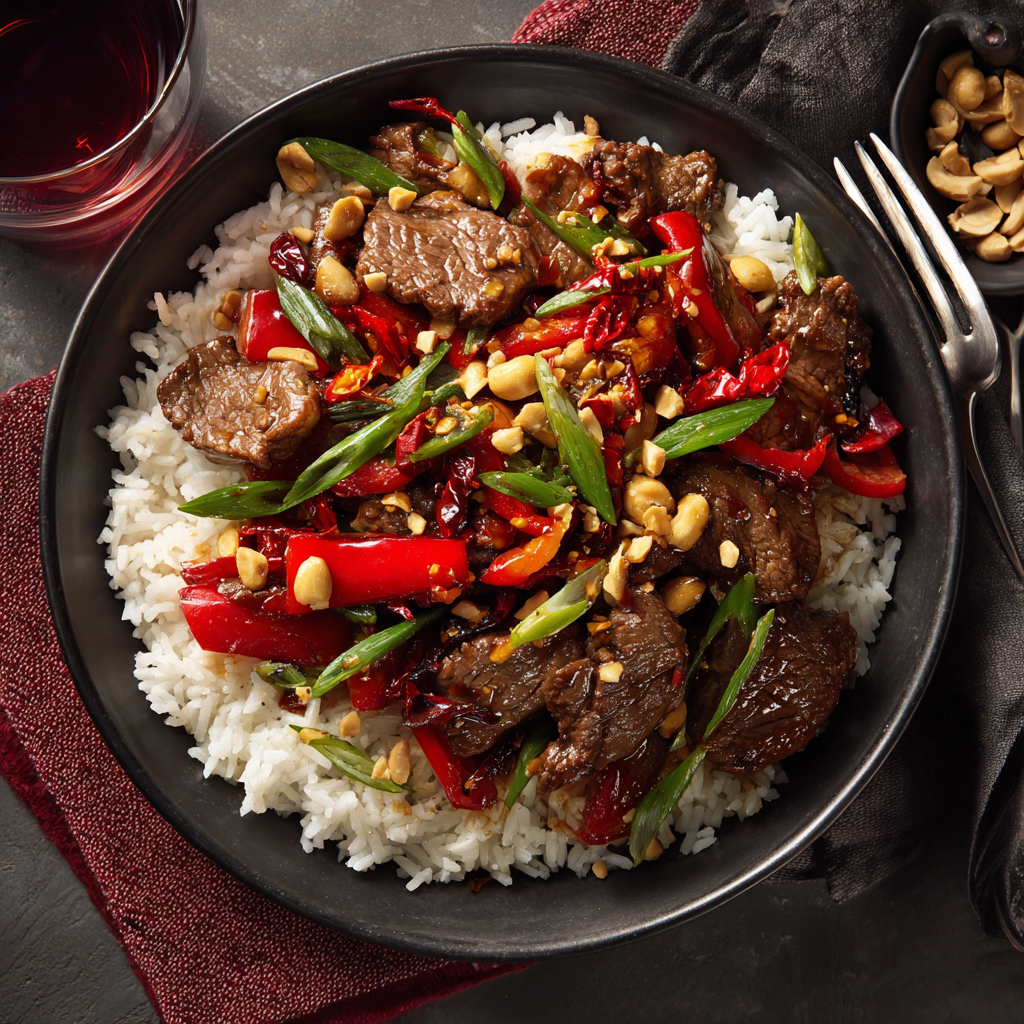
If you’ve ever stared longingly at a takeout menu, dreaming of that perfect combination of spicy, savory, sweet, and nutty, I’m here to tell you something wonderful: you can make it even better at home. This isn’t just another stir-fry; this is a journey to the heart of Sichuan cuisine, right from your own stovetop. We’re talking tender slices of beef, a sauce that clings and glazes, the smoky punch of dried chilies, and the satisfying crunch of roasted peanuts. It’s a symphony of texture and taste, and it comes together in less time than it takes for delivery to arrive.
I know “restaurant-style” recipes can feel intimidating, but trust me, this one is our little secret to an incredible meal. You don’t need a chef’s degree or a kitchen full of fancy equipment—just a big appetite and a willingness to embrace a little bit of heat. So, tie on your favorite apron (the messy one with all the stories), and let’s create some stir-fry magic together. This Kung Pao Beef is about to become your new weeknight hero.
The Kung Pao That Won Over My Heart
My love affair with Kung Pao started in the most unromantic of places: a tiny, hole-in-the-wall restaurant during a rainy college evening. My best friend, a fearless food adventurer, dragged me there, promising it would “change my life.” I, a self-proclaimed spice-wimp, was terrified. When that first plate of Kung Pao Chicken arrived, speckled with ominous-looking dried chilies, I hesitated. But one bite—a perfect forkful of savory sauce, crunchy peanut, and tender meat—and I was a convert. It wasn’t just heat; it was depth, a complex warmth that built with every bite. We sat there for hours, our noses running, laughing as we polished off the entire plate. That dish taught me a valuable lesson: the best food isn’t just about flavor, it’s about the experience, the adventure, and the people you share it with. This beef version is my personal homage to that night—a little bolder, a bit heartier, and every bit as memorable.
Gathering Your Kung Pao Toolkit
Great cooking starts with great ingredients! Here’s everything you’ll need to build those incredible layers of flavor. Don’t stress if you need to make a swap or two—I’ve included my favorite tips and tricks for each one.
For the Stir-Fry:
- 1 lb sirloin, thinly sliced against the grain: Sirloin is my go-to for its great balance of flavor and tenderness. The key here is to slice against the grain—it’s the ultimate secret to melt-in-your-mouth beef, no matter the cut! Chef’s Swap: Flank steak or skirt steak work beautifully too.
- 2 tbsp vegetable oil: We need a neutral oil with a high smoke point for that super-hot sear. Canola or peanut oil are perfect pals here.
- 8–10 dried red chilies: These are for aroma and that deep, smoky heat, not just brutal spice. You can often find them in the international aisle. Don’t be scared! Chef’s Tip: For less heat, give them a quick snip and shake out some of the seeds.
- 3 garlic cloves, minced & 1-inch piece fresh ginger, minced: The dynamic duo! They form the aromatic foundation of the dish. Please, please use fresh—it makes a world of difference.
- 1 red bell pepper, thinly sliced & ½ yellow onion, thinly sliced: These add sweetness, color, and a lovely crunch. Feel free to toss in some broccoli or snap peas for a garden twist!
- ¼ cup roasted peanuts: The classic crunch! Their salty, toasty flavor is non-negotiable for me. Chef’s Swap: Cashews are a delicious, buttery alternative.
- 2 green onions, chopped (for garnish): A fresh, sharp pop of color and flavor to finish everything off beautifully.
For the Sauce:
- 2 tbsp soy sauce: This is our salty, umami base. I use regular soy sauce.
- 1 tbsp dark soy sauce: This is the magic ingredient for that deep, dark color and a slightly sweeter, molasses-like flavor. If you don’t have it, just use an extra tablespoon of regular soy sauce.
- 1 tbsp rice vinegar: A tiny bit of brightness to cut through the richness. White wine vinegar can pinch-hit in a bind.
- 1 tbsp hoisin sauce: This adds a touch of sweet, savory complexity. It’s a wonderful flavor booster!
- 1 tbsp sugar: Just enough to balance the salt and spice. Brown sugar works well, too.
- ¼ cup water: This creates just enough sauce to coat everything without being soupy.
- 1 tsp cornstarch: Our sauce thickener! It gives the sauce that glossy, clingy quality that’s so perfect over rice.
Let’s Get Cooking: Your Step-by-Step Guide to Stir-Fry Success
Alright, it’s showtime! The key to a great stir-fry is having everything prepped and within arm’s reach. This is a fast, fiery dance, and we don’t want to be scrambling. Let’s do this!
- Make the Sauce: In a small bowl or (my favorite) a liquid measuring cup, whisk together all the sauce ingredients—soy sauces, rice vinegar, hoisin, sugar, water, and cornstarch. Keep whisking until the cornstarch is completely dissolved and there are no lumps. Chef’s Hack: Doing this first is a game-changer. It means no last-minute fumbling, and your sauce will be silky smooth, not clumpy. Set this flavor bomb right by your stove.
- Sear the Beef: Place your wok or a large, heavy-bottomed skillet over high heat. Let it get seriously hot—you should see a faint wisp of smoke rising from the surface. Add 1 tablespoon of oil and swirl it around. Now, add your beef in a single layer. Resist the urge to stir immediately! Let it sear for about a minute to get a beautiful brown crust. Then, toss and continue cooking until it’s just browned on all sides (about 2-3 minutes total). It will not be cooked through, and that’s perfect! Scoop it out and onto a clean plate. Chef’s Tip: Crowding the pan will steam the beef. If needed, cook it in two batches for the best sear.
- Toast the Chilies: Add the remaining 1 tablespoon of oil to the same pan. Toss in your dried red chilies and stir-fry them for just about 30 seconds. You’ll know they’re ready when they become fragrant and darken slightly. This step wakes up their oils and releases that incredible smoky aroma. Be careful not to burn them!
- Aromatics & Veggies: Immediately add the minced garlic and ginger to the chilies. Stir-fry for a mere 20 seconds—just until you catch their incredible scent. Then, toss in your sliced onion and bell pepper. Cook, stirring constantly, for 2-3 minutes. We want them to be vibrant and crisp-tender, with a bit of a char in spots, not soft and mushy.
- Bring It All Home: Now for the grand finale! Return the seared beef (and any accumulated juices) to the pan. Give your pre-made sauce another quick whisk (the cornstarch can settle) and pour it over everything. Add the roasted peanuts. Toss, toss, toss! Keep everything moving for 1-2 minutes. You’ll see the sauce come to a bubble and transform from thin and cloudy to thick, glossy, and gorgeous, coating every single ingredient.
- Serve Immediately: The stir-fry is at its absolute peak the moment it leaves the wok. Transfer it to a serving platter and shower it with those chopped green onions. The contrast of the hot, savory beef with the cool, fresh scallions is just *chef’s kiss*.
Plating Your Masterpiece
This Kung Pao Beef is a star that deserves a great stage! I love serving it family-style, right in the middle of the table, with a big, fluffy mound of steamed jasmine rice to soak up every last drop of that incredible sauce. For a full “fakeaway” feast, add some simple sides: quick-pickled cucumber slices for a tangy crunch, or a light cucumber salad to cool the palate. It’s a vibrant, colorful dish that looks just as spectacular as it tastes.
Make It Your Own: Delicious Twists on Classic Kung Pao
One of the best things about this recipe is how adaptable it is! Play with your food and make it suit your mood.
- Kung Pao Chicken: The classic! Simply swap the beef for 1 lb of boneless, skinless chicken thighs or breasts, sliced into bite-sized pieces.
- Vegetable Lover’s Delight: Go meat-free! Use extra-firm tofu (pressed and cubed) or a can of drained chickpeas. Load up on veggies like broccoli, carrots, and zucchini.
- Pork or Shrimp: Thinly sliced pork tenderloin or plump, raw shrimp are fantastic protein alternatives. Adjust the cooking time accordingly—shrimp will cook in just 1-2 minutes!
- Extra Spicy Firecracker: For true heat-seekers, add 1-2 teaspoons of Sichuan peppercorns with the dried chilies for that classic “mala” tingly numbness, or a big spoonful of chili crisp at the end.
- Gluten-Free Friendly: Easily done! Use tamari or a certified gluten-free soy sauce, and double-check that your hoisin sauce is gluten-free.
Chef’s Notes & Kitchen Confessions
This recipe has been a work-in-progress in my kitchen for years! The first time I made it, I was so nervous about the chilies that I only used two, and let’s just say it was… beige and bland. It’s evolved into this bold version, which is a staple for our “Friday Night Fakeaway” tradition. My biggest kitchen confession? I once, in a frantic pre-dinner scramble, used balsamic vinegar instead of rice vinegar. It was… different! Not terrible, but definitely a unique twist. It just goes to show that even a “mistake” can lead to something new. The beauty of cooking is making a recipe your own. Don’t be afraid to taste and adjust as you go—maybe you want a little more hoisin for sweetness or another dash of vinegar for tang. You’re the chef of your own kitchen!
Your Kung Pao Questions, Answered!
I’ve gotten so many questions about this recipe over the years. Here are the answers to the most common head-scratchers to ensure your stir-fry is a flawless success.
Q: My beef turned out tough. What did I do wrong?
A: The number one culprit is usually not slicing against the grain. Look for the lines running through the meat (the grain) and slice perpendicular to them. This shortens the muscle fibers, making the beef much more tender. Also, make sure your pan is screaming hot before the beef hits it, and don’t overcook it in this first step—it will finish cooking in the sauce.
Q: How can I control the spice level? It’s too hot/not hot enough for me.
A: You have total control! For a milder dish, remove the seeds from the dried chilies before adding them, or use fewer chilies. You can even just let them toast whole for flavor and then remove them before eating. For more heat, break the chilies into smaller pieces to release more capsaicin, or add a 1/2 teaspoon of crushed red pepper flakes with the sauce.
Q: My sauce didn’t thicken. How can I fix it?
A: This usually happens if the cornstarch wasn’t fully dissolved or if the pan wasn’t hot enough. To fix it, mix another teaspoon of cornstarch with a tablespoon of cold water in a small bowl until smooth. Push your stir-fry to one side of the pan, pour in the new cornstarch slurry, and let it cook for 15-20 seconds until it thickens, then stir it into the rest of the dish.
Q: Can I make this ahead of time?
A> You can do all the prep ahead! Slice the beef and veggies, and make the sauce, storing each component separately in the fridge for up to 24 hours. The actual stir-frying is best done right before serving to preserve the beautiful textures. Leftovers, however, are still delicious for lunch the next day!
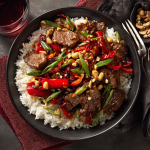
Kung Pao Beef : Spicy, Savory Stir-Fry with Classic Sichuan Flair
Description
Kung Pao Beef
Bold, spicy, nutty, and savory stir-fry
Ingredients
For the Stir-Fry
-
1 lb sirloin, thinly sliced against the grain
-
2 tbsp vegetable oil (canola, peanut, or other high smoke-point oil)
-
8–10 dried red chilies
-
3 garlic cloves, minced
-
1-inch piece fresh ginger, minced
-
1 red bell pepper, thinly sliced
-
½ yellow onion, thinly sliced
-
¼ cup roasted peanuts
-
2 green onions, chopped (for garnish)
For the Sauce
-
2 tbsp soy sauce
-
1 tbsp dark soy sauce (or extra regular soy sauce)
-
1 tbsp rice vinegar (or white wine vinegar)
-
1 tbsp hoisin sauce
-
1 tbsp sugar (or brown sugar)
-
¼ cup water
-
1 tsp cornstarch
Instructions
1. Prepare the Sauce
-
In a small bowl, whisk together all sauce ingredients until cornstarch is fully dissolved. Set aside.
2. Sear the Beef
-
Heat 1 tbsp oil in a wok or large skillet over high heat until just smoking.
-
Add beef in a single layer. Let it sear 1 minute before tossing. Cook 2–3 minutes until browned but not fully cooked. Remove beef from pan.
3. Toast Chilies
-
Add remaining 1 tbsp oil. Stir-fry dried chilies for 30 seconds until fragrant and slightly darkened.
4. Cook Aromatics & Veggies
-
Add garlic and ginger; stir 20 seconds.
-
Toss in sliced onion and bell pepper; stir-fry 2–3 minutes until crisp-tender.
5. Combine Everything
-
Return beef and any juices to the pan.
-
Give sauce a quick whisk and pour over the mixture.
-
Add roasted peanuts. Stir-fry 1–2 minutes until sauce thickens, becomes glossy, and coats everything evenly.
6. Serve
-
Transfer to a platter. Sprinkle with chopped green onions.
-
Serve hot with steamed jasmine rice.
Notes
-
Milder: Remove chili seeds or reduce number of chilies.
-
Extra Spicy: Add Sichuan peppercorns or chili crisp.
-
Protein Swap: Chicken, shrimp, pork, or tofu work well.
-
Vegetables: Broccoli, snap peas, zucchini, or carrots can be added.
-
Gluten-Free: Use tamari or gluten-free soy sauce; check hoisin sauce label.
Nutritional Information*
Servings: 4 | Calories: ~360 | Protein: ~28g | Carbs: ~14g | Fat: ~22g
*Please note: These are estimates provided for informational purposes only. Actual values can vary based on specific ingredients used and portion sizes.
Don’t forget to save this recipe for later! Pin it to your favorite board.